
Residency Park
Park near Lucknow , Uttar Pradesh
2.7 km from Lucknow
The nearest town, for stays, food and fuel.
Residency Park, located along Mahatma Gandhi Marg in Lucknow, Uttar Pradesh, is a sprawling historical landmark preserving the ruins of the British Residency complex. Renowned for its pivotal role during the Siege of Lucknow in 1857, the site attracts travellers, history enthusiasts, and nature walkers looking to explore preserved heritage amidst quiet, manicured gardens. Visitors come to witness weathered brick structures scarred by cannonballs, walk shaded avenues, and experience an evocative chapter of regional history.
Getting there
By road
- From Lucknow8 min · 2.8 km
- From Lucknow Nearest town8 min · 2.8 km
- From Kanpur2 hr 5 min · 94 km
Typical drive times without traffic. Stations and airports from OLA Maps; distances and typical drive times from OpenStreetMap (© OpenStreetMap contributors); notes from creators' Reels.
About Residency Park
Written with AI from map data and general knowledge. Check prices and timings locally before you go.
About Residency Park Lucknow
Residency Park occupies a prominent place in the historical fabric of Lucknow, the capital of Uttar Pradesh. Originally constructed between the late eighteenth and early nineteenth centuries during the reign of Nawab Saadat Ali Khan II, the sprawling estate served as the official headquarters and residence of the British Resident General. Set against open greenery near the banks of the Gomti River, it once stood as a self-contained township comprising banquet halls, residential quarters, guardhouses, stables, and places of worship.
The complex earned worldwide renown during the Indian Rebellion of 1857, when it became the epicenter of the prolonged Siege of Lucknow. Rebel forces encircled the garrison for several months, resulting in fierce artillery exchanges and intense urban warfare. The buildings sustained catastrophic structural damage before relief forces arrived. After the conflict, the British chose to preserve the shattered complex largely as it stood, creating an open-air memorial rather than reconstructing the damaged quarters. Today, the Archaeological Survey of India maintains the preserved ruins within an expansive, tranquil urban park, allowing visitors to walk through history while enjoying peaceful botanical settings.
What to see within Residency Park
Walking through Residency Park reveals an array of hauntingly beautiful brick ruins surrounded by broad lawns, mature shade trees, and neatly bordered flowerbeds. One of the central structures is the ruined main Residency building, a multi-story edifice where high-ranking British officers lived and conducted administrative affairs. The exterior walls still bear deep indentations, fissures, and punctures caused by continuous cannonade and musket fire during the 1857 siege, offering an unvarnished physical record of the battles fought on these grounds.
Beneath the main house lies the tykhana, an underground cellar complex originally built as a cool retreat during scorching Awadhi summers. During the siege, this subterranean space provided shelter to hundreds of women and children from unrelenting artillery fire. Nearby, visitors will find the imposing shell of the Banquet Hall, known for its tall classical arches and soaring ceilings that hint at early nineteenth-century European architectural flair. Other notable ruins spread across the grounds include Dr. Fayrer's House, the Begum Kothi, and the ruined church of St. Mary. Adjacent to the church grounds lies a quiet cemetery shaded by banyan and tamarind trees, housing the graves of numerous soldiers and civilians who perished during the conflict, including Sir Henry Lawrence. A museum established within the complex houses original lithographs, period paintings, hand-drawn maps, and artifacts uncovered from the site, giving deeper historical context to the structures outside.
Read more
Best time to visit Residency Park
Lucknow experiences distinct seasonal variations characteristic of the northern Gangetic plains, making seasonal timing an important factor for exploring Residency Park. The ideal period to visit falls between October and March. During these late autumn, winter, and early spring months, temperatures range from mild to pleasantly cool, accompanied by crisp sunshine. Because exploring the open grounds involves extensive walking along unshaded paths and outdoor brick structures, the temperate winter climate offers the most comfortable conditions for unhurried exploration.
Summer sets in from April and lasts until June, bringing intense heat and dry, hot winds known locally as loo. Daytime temperatures often soar well past forty degrees Celsius, rendering outdoor walks exhausting by mid-morning. If visiting during late spring or summer, plan your walk for the earliest morning hours before temperatures climb. The monsoon season extends from July through September, bringing frequent showers and high humidity. While the rains transform the lawns and gardens of Residency Park into vibrant shades of green, walking paths can become damp, and sudden heavy showers may interrupt outdoor sightseeing.
How to reach Residency Park
Residency Park is situated centrally on Mahatma Gandhi Marg in Lucknow, making it straightforward to reach from all major transport nodes in the city. Lucknow is well connected to the rest of Uttar Pradesh and major Indian metropolitan centers through an extensive network of national highways, expressways, and broad-gauge rail routes.
Travellers arriving by train can alight at Lucknow Junction or Charbagh Railway Station, located roughly four to five kilometres south of the park. Chaudhary Charan Singh International Airport, situated on the city outskirts, operates domestic flights to major hubs across India as well as select international routes. From the airport or railway stations, local transit options including app-based taxis, auto-rickshaws, city buses, and cycle rickshaws are readily accessible. Lucknow Metro also serves key transit corridors, and travellers can disembark at nearby metro stations before taking a short rickshaw ride along Mahatma Gandhi Marg to reach the park entrance.
Places to visit around Residency Park
A trip to Residency Park can easily be integrated into a broader heritage itinerary around Old and Central Lucknow, as several iconic landmarks lie within a short distance. Approximately two kilometres to the northwest stands the magnificent Bara Imambara complex, commissioned by Nawab Asaf-ud-Daula. This architectural marvel features the enormous central vaulted hall, the intriguing Bhulbhulaiya labyrinth, and the adjacent Stepwell or Baoli. Right outside its gates rises the imposing Rumi Darwaza, an ornate Turkish gate that serves as the emblem of Lucknow.
A short drive further reveals the Chota Imambada, Satkhanda watchtower, and the nearby Picture Gallery displaying royal Awadhi portraits. For travellers interested in cultural life and culinary heritage, the historic neighbourhoods of Chowk and Aminabad lie roughly two kilometres away. These buzzing bazaars are renowned for authentic Chikankari hand embroidery, attar perfumes, street delicacies, and traditional Awadhi kebabs. If you prefer contemporary urban spaces, Hazratganj provides a bustling avenue of heritage storefronts, while larger parks like Dr. B. R. Ambedkar Memorial and Janeshwar Mishra Park offer expansive landscaped spaces across the Gomti River.
Tips for your visit
To make the most of your time at Residency Park, set aside at least two hours to explore both the open grounds and the on-site museum. Wear comfortable, supportive walking shoes, as the pathways traverse sprawling turf, paved alleys, and gravel trails. Because the ruins are fragile historical remnants made of aged brick and lime mortar, avoid climbing on vulnerable walls or defacing surfaces.
Carrying drinking water and sun protection is recommended, especially on sunny afternoons. While the expansive trees cast welcoming shade across parts of the garden, much of the route between ruined structures is exposed to direct sunlight. Remember to verify the current opening hours and any nominal admission requirements locally or on official portals, as operating schedules may vary on public holidays. Photographers will find early morning and late afternoon light best suited for capturing the rich red tones of the weathered brickwork set against deep green foliage.
Where to stay near Lucknow
Finding suitable lodging near Residency Park is easy given Lucknow's broad range of accommodations catering to heritage travellers, backpackers, and families alike. The city center around Hazratganj and along Mahatma Gandhi Marg offers convenient access to historic monuments, commercial districts, and transit hubs. For those seeking atmospheric stays, peaceful homestays and retreats situated within the city or on its greener fringes provide an immersive cultural experience.
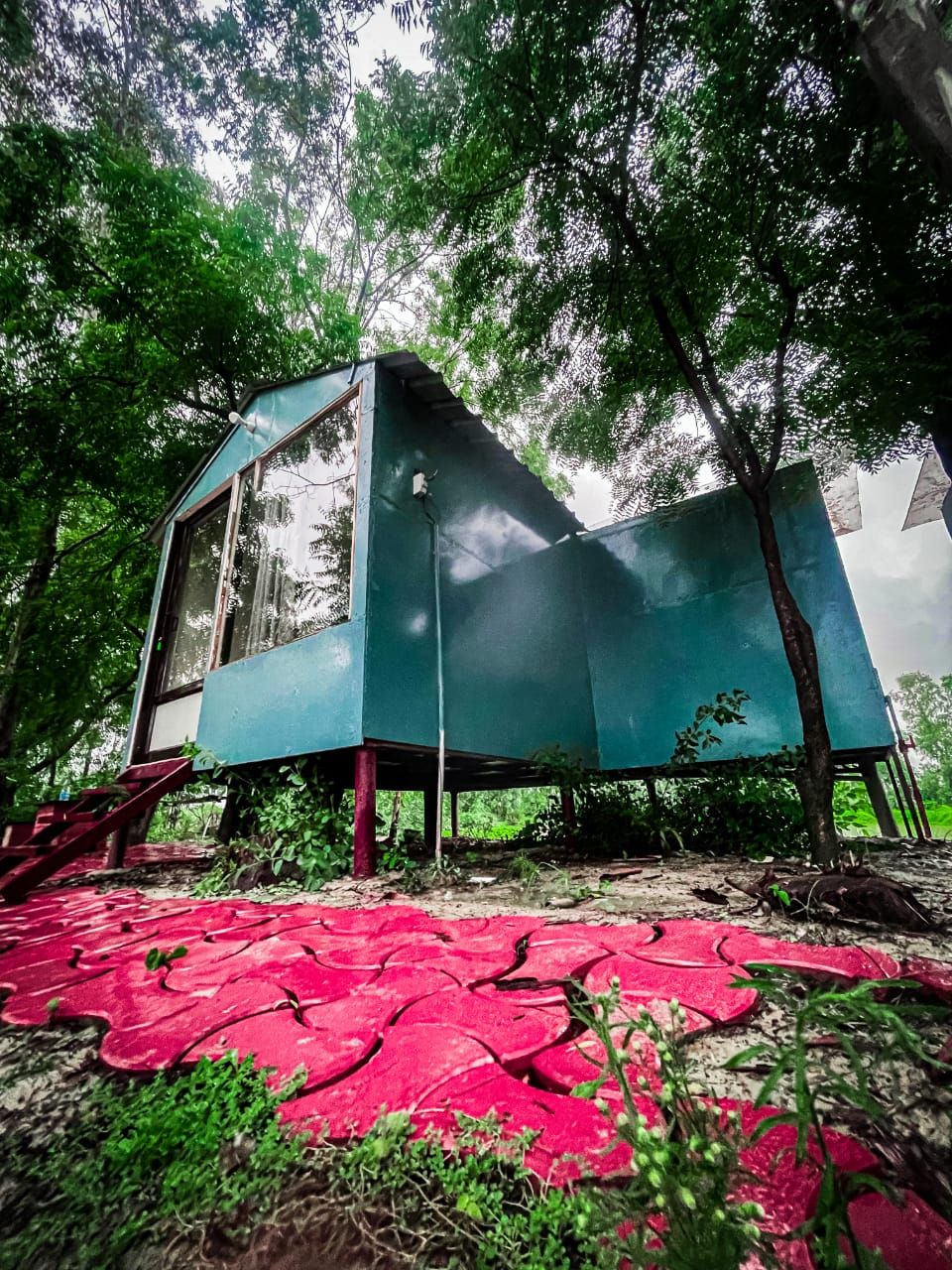
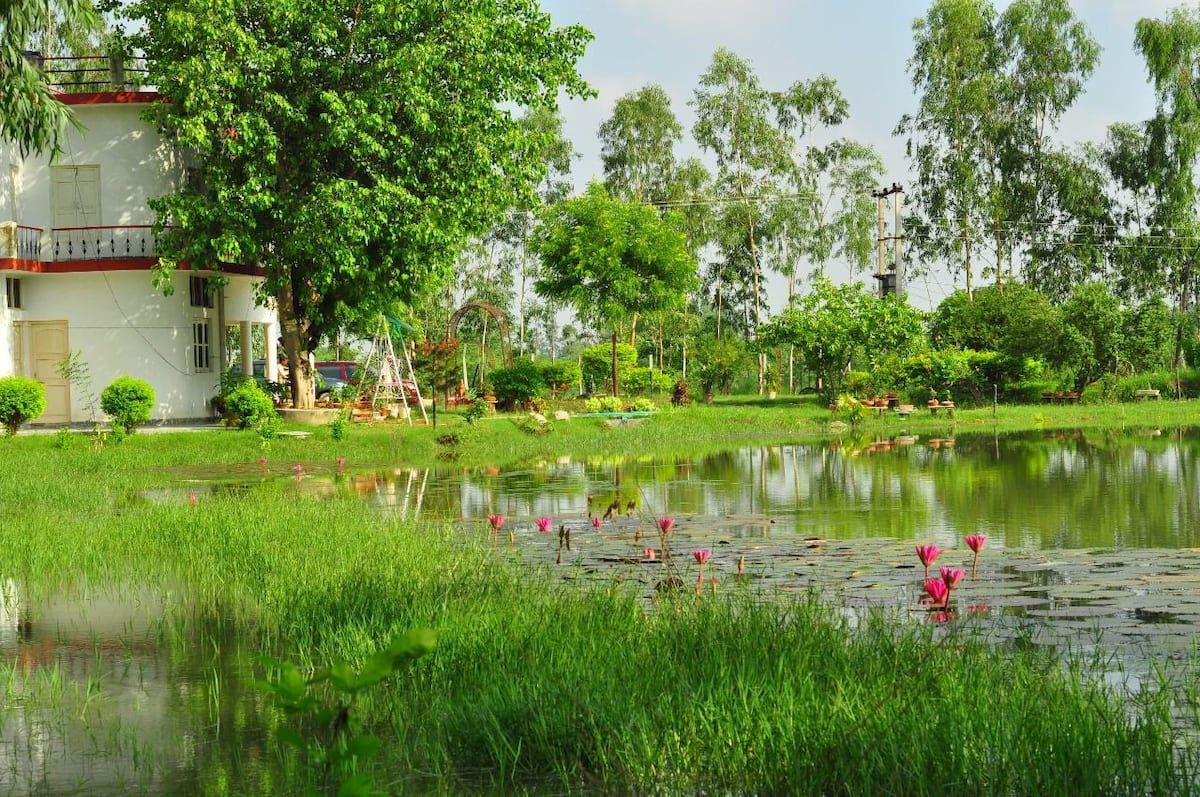
Travellers looking to spend their nights in distinctive rural environments, riverside orchards, farm stays, or nature-oriented campsites in the broader Awadh region can search for local listings on HireACamp. Booking a stay nearby allows you to enjoy early-morning access to Lucknow's storied monuments and unwind in serene outdoor surroundings after a day of sightseeing.
Frequently asked questions
What is the historical significance of Residency Park?
Residency Park was the site of the dramatic Siege of Lucknow during the 1857 uprising. Its preserved ruins and cannon-scarred walls stand today as a memorial to the fierce battles fought between Indian rebel forces and the British garrison.
Where is Residency Park located in Lucknow?
Residency Park is situated on Mahatma Gandhi Marg in central Lucknow, close to the Gomti River and roughly two kilometres from major Old Lucknow landmarks like Bara Imambara.
Is there a museum inside Residency Park?
Yes, an on-site museum housed within one of the restored buildings displays period lithographs, siege models, historical paintings, and excavated artifacts from the nineteenth century.
How much time is needed to explore Residency Park?
Most visitors spend between one and a half to two hours strolling the landscaped gardens, examining the ruined quarters, and visiting the memorial museum.
Can I visit other major Lucknow attractions from Residency Park on the same day?
Yes, major historic attractions including the Bara Imambara, Rumi Darwaza, Chota Imambada, and the vibrant markets of Chowk and Hazratganj are within two to three kilometres of the park.
Where you'll be
Mahatma Gandhi Marg, Lucknow, UP · 2 stays nearby shown with prices
Stays near Residency Park
Book a place to stay close by
More places near Residency Park
Within 20 km


Lists for this area
Ranked by how many creators recommend each place


Built from 0 Instagram posts by 0 creators. Every tip links back to the post it came from, and where creators disagree we show both sides.






