
Shri Amarnath Cave Temple
Temple near Mamal, Jammu and Kashmir
1.4 km from Mamal
The nearest town, for stays, food and fuel.
Shri Amarnath Cave Temple is a sacred Hindu pilgrimage shrine situated high in the Greater Himalayas of Jammu and Kashmir, accessible from the picturesque valley of Pahalgam. Nestled inside a dramatic limestone cavern at an altitude of nearly 3,888 metres, the shrine is renowned for its naturally forming ice stalagmite, revered by millions as an ice Shiva Lingam. Each summer, devotees and trekkers journey across rugged mountain passes, glacial rivers, and alpine meadows to reach this ancient sanctuary.
Getting there
By road
- From MamalNearest town8 min · 2.7 km
Typical drive times without traffic. Stations and airports from OLA Maps; distances and typical drive times from OpenStreetMap (© OpenStreetMap contributors); notes from creators' Reels.
About Shri Amarnath Cave Temple
Written with AI from map data and general knowledge. Check prices and timings locally before you go.
Significance of Shri Amarnath Cave Temple
Shri Amarnath Cave Temple is one of the most revered high-altitude pilgrimage destinations in India, set deep in the Himalayan mountains of Jammu and Kashmir. Situated at an elevation close to 3,888 metres above sea level, the cave rests in a rugged gorge surrounded by towering glaciated peaks. Inside the vast natural cavern, water droplets seep through the limestone ceiling and freeze upon contact with the frozen ground, gradually building a vertical ice stalagmite. Pilgrims venerate this natural ice formation as the physical manifestation of Lord Shiva, affectionately addressing it as Baba Barfani.
According to ancient legends recorded in regional scriptures, this secluded mountain cave was the sacred site where Lord Shiva chose to narrate the mystery of immortality and cosmic creation, known as the Amar Katha, to Goddess Parvati. To ensure no living being overheard the secrets, he discarded all earthly attachments and companion deities along the trail leading to the cave. Within the spacious chamber, two smaller ice formations also emerge naturally, symbolizing Goddess Parvati and Lord Ganesha. The combination of deep religious heritage and raw, untamed alpine scenery makes visiting the cave an unforgettable spiritual and outdoor journey.
Trekking Routes to the Cave
Reaching Shri Amarnath Cave Temple involves navigating high-altitude mountain trails, with two well-known trekking routes guiding pilgrims across the mountains. The traditional and historically preferred route begins near Pahalgam at Chandanwari. This classic path winds alongside the roaring Liddar River, climbs through birch forests toward the turquoise waters of Sheshnag Lake, and ascends across the challenging Mahagunas Pass before descending into the high plain of Panchtarni. Because the Pahalgam trail climbs gradually over multiple days, it offers travellers adequate time to acclimatize while walking through some of Kashmir's most picturesque alpine meadows.
The alternative path starts from Baltal, situated near Sonamarg. The Baltal route is considerably shorter in overall distance but features a steep, unrelenting climb along narrow cliff sides and scree-covered slopes. While seasoned trekkers can complete this route in a single day, the rapid gain in elevation demands peak physical endurance and steady footing. Both trails eventually converge near Sangam before the final stone staircase leading to the cave mouth. Trekkers must cross seasonal snow bridges and loose mountain paths, making careful footing and vigilance essential along the entire distance.
Read more
Best Time to Visit Shri Amarnath Cave Temple
A visit to Shri Amarnath Cave Temple is possible only during a limited window each year, typically starting in late June or early July and concluding around the full moon of Shravan Purnima in August. For the remainder of the year, the cave remains locked under heavy blankets of snow and ice, with surrounding mountain trails rendered impassable by extreme winter conditions.
Even during the summer pilgrimage window, weather in the high Himalayas is notoriously unpredictable. Sunny mornings can quickly turn into freezing afternoons with thick cloud cover, sharp gusts of wind, heavy rains, or unseasonal snowfall across the high passes. The ice stalagmite inside the cave is generally at its largest at the beginning of the pilgrimage season, gradually decreasing in size as the summer weeks advance. Travellers should stay updated on local weather forecasts and official travel updates, as adverse weather can lead to temporary halts along the trail for safety.
Tips for Your Visit to Shri Amarnath Cave Temple
Undertaking a high-altitude mountain trek to Shri Amarnath Cave Temple requires thorough physical preparation and sensible planning. Because the route ascends above 3,500 metres, acute mountain sickness is a genuine concern for unacclimatized travellers. Spend at least a day or two in lower valley towns like Pahalgam to let your body adjust before setting off. Maintain a slow, steady walking pace on the trail, drink plenty of water to stay hydrated in the dry mountain air, and carry light, energy-dense snacks such as dry fruits and glucose.
Appropriate clothing is essential for safety and comfort in changing mountain weather. Dress in multiple layers so you can add or remove garments as temperatures shift throughout the day. Pack quality thermal base layers, moisture-wicking shirts, warm fleece jackets, and a heavy waterproof and windproof outer jacket. Well-broken-in trekking boots with deep tread and ankle support are crucial for walking across loose stones and icy patches. A pair of trekking poles, warm gloves, a thermal cap, UV-blocking sunglasses to combat snow glare, and a compact personal first-aid kit should also be kept in your daypack.
Places to Visit Nearby
The broader Anantnag and Pahalgam region offers numerous captivating sights that complement a journey to the cave shrine. The verdant Liddar Valley, through which the traditional route passes, is renowned for its pine-covered hills, riverside trails, and clear fishing waters. Nearby, the freshwater oasis of Aripal Springs provides a serene spot to rest surrounded by shaded groves.
History and heritage enthusiasts will find remarkable archaeological treasures within driving distance. The Martand Sun Temple, located on a plateau overlooking the Kashmir Valley, stands as an eighth-century stone masterpiece of classical Kashmiri architecture. In the town of Mattan, visitors can visit the historic Mattan Temple and Gurudwara Shri Mattan Sahib, reflecting centuries of diverse religious devotion. Near Mattan, the ancient Bumzuva Cave and Temple showcases shrines carved into a limestone cliff. Travellers heading down towards Srinagar can also stop by the grand stone ruins of the Avantisvara Temple and Avantiswami Temple, famous for their intricately sculpted medieval courtyards.
Where to Stay
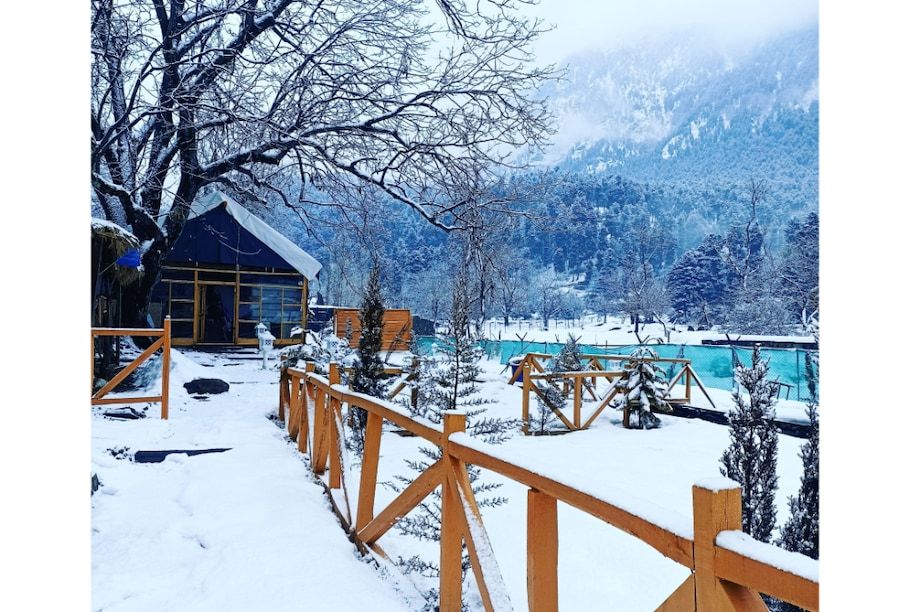
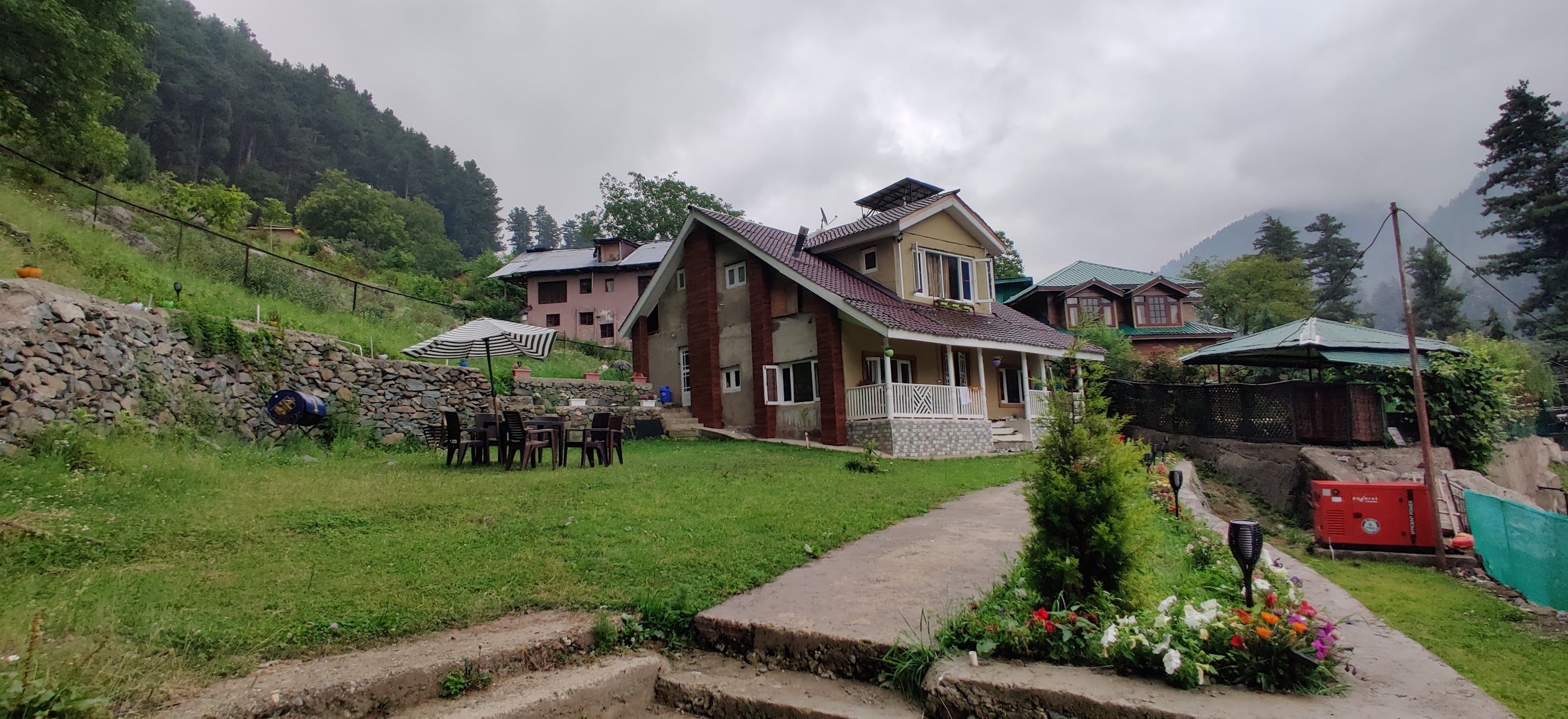
Pahalgam serves as the primary base for travellers heading toward Shri Amarnath Cave Temple, offering an array of peaceful stays in scenic settings. The town and its outskirts feature traditional Kashmiri homestays, comfortable guesthouses, and scenic riverside accommodations surrounded by cedar and pine forests.
During the pilgrimage season, designated transit settlements at Chandanwari, Sheshnag, and Panchtarni provide temporary tented accommodations to host trekkers on their multi-day walk. For those who want to rest in comfort before or after their Himalayan trek, vetted homestays, riverside cabins, and outdoor camping grounds across the Pahalgam area and Jammu and Kashmir can be booked through HireACamp.
Frequently asked questions
Where is Shri Amarnath Cave Temple located?
Shri Amarnath Cave Temple is situated at an elevation of roughly 3,888 metres in the Greater Himalayas of Jammu and Kashmir, accessible via trekking routes starting from Pahalgam or Baltal.
How difficult is the trek to Shri Amarnath Cave Temple?
The trek is considered moderately difficult to strenuous due to steep ascents, rocky terrain, and thin air at high altitude. Prior cardiovascular fitness and adequate acclimatization are essential.
Which route is better, Pahalgam or Baltal?
The Pahalgam route is longer and takes multiple days, but its gradual ascent makes acclimatization easier and the landscape is very scenic. The Baltal route is much shorter and can be done faster, but it has very steep, demanding inclines.
When can you visit Shri Amarnath Cave Temple?
The shrine is only accessible during the summer pilgrimage window, which typically runs for several weeks between late June or July and August, depending on weather and official schedules.
What is the natural ice formation inside the cave?
The shrine features an upright stalagmite of ice created by water freezing as it drips from the cave roof, which devotees worship as a naturally occurring Shiva Lingam.
Where you'll be
Shri Amarnath Cave Temple, Pahalgam · 2 stays nearby shown with prices
Stays near Shri Amarnath Cave Temple
Book a place to stay close by
More places near Shri Amarnath Cave Temple
Within 20 km
Built from 0 Instagram posts by 0 creators. Every tip links back to the post it came from, and where creators disagree we show both sides.






