
Sumargad Fort
Fort near Khed, Maharashtra
16 km from Khed
The nearest town, for stays, food and fuel.
Sumargad Fort is a rugged hill fortress situated in the Sahyadri mountain range near the town of Khed in Maharashtra. Surrounded by vertical cliffs and deep valleys, the fort is renowned among experienced trekkers for its challenging approach trail and remote atmosphere. Visitors make the journey to explore ancient rock-cut cisterns, historic stone ruins, and panoramic views stretching across the Konkan countryside.
Getting there
By road
- From KhedNearest town35 min · 20 km
- From Mahabaleshwar1 hr 35 min · 62 km
- From Pune3 hr 50 min · 169 km
- From Mumbai 4 hr 25 min · 212 km
Typical drive times without traffic. Stations and airports from OLA Maps; distances and typical drive times from OpenStreetMap (© OpenStreetMap contributors); notes from creators' Reels.
About Sumargad Fort
Written with AI from map data and general knowledge. Check prices and timings locally before you go.
History and significance of Sumargad Fort
Sumargad Fort occupies a strategic perch in the Western Ghats, traditionally forming a protective triangular network alongside the neighboring citadels of Rasalgad and Mahipatgad. While comprehensive chronicles of its earliest construction remain sparse, regional history notes that the fort was maintained to keep watch over movement across the ancient trade routes connecting the Konkan ports to the Deccan plateau.
During the Maratha period, the outpost served an important defensive role thanks to its naturally fortified topography. Sheer rock escarpments encircle the plateau, making the fort virtually impregnable to direct frontal attacks. Today, while most constructed walls and quarters have crumbled with time and weather, the bastions, carving fragments, and water systems that remain reflect the pragmatic military engineering typical of Sahyadri hill fortresses.
The trekking route to Sumargad Fort
Ascending Sumargad Fort is widely regarded as one of the more demanding hikes in the northern Ratnagiri district. Unlike popular hill forts that feature carved stone stairways or cleared trails, Sumargad remains largely untamed. The trek usually commences from base settlements near Khed, such as Dahivali or Wadi Jaitapur, or is tackled along the ridgeline that connects from Rasalgad.
The route passes through dense scrub forests before meeting steep ascents over scree and loose earth. Toward the upper reaches, hikers encounter exposed rock patches and eroded cliff steps where careful scrambling is necessary. The final stretch requires navigating narrow ledges that drop sharply into the valley below. Upon clearing these obstacles, the trail surfaces onto the wide, grassy summit where cool mountain winds and vast horizons await.
Read more
What to see atop Sumargad Fort
The summit of Sumargad Fort features a secluded plateau peppered with weathered historical artifacts. Foremost among these are several rock-hewn water tanks and cisterns. These reservoirs were engineered to capture monsoon runoff and provide a dependable year-round supply of drinking water for the resident garrison.
Walking across the plateau reveals stone plinths and collapsed foundations where administrative offices and living quarters once stood. Trekkers will also come across rustic stone shrines tucked into shaded rock cavities, honoring local guardian deities. The real highlight for many is the sheer natural perspective: the precipitous edges of the fort offer uninterrupted views of the deep Konkan valleys, the imposing bulk of Rasalgad to the south, and the undulating ridge of the Western Ghats.
Best time to visit Sumargad Fort
The most favorable window to plan a trek to Sumargad Fort is from October through February. During these post-monsoon and winter months, the climate is comparatively cool and dry, with clear skies that maximize visibility across the valleys. The vegetation stays green through early winter, making the rugged terrain visually spectacular without the excessive heat of summer.
The monsoon period between June and September brings heavy rainfall, roaring waterfalls, and lush scenery to the hills around Khed. However, the heavy rains make the steep rock scrambles and narrow earthen trails exceptionally slick and dangerous. Only experienced trekkers with appropriate safety gear should consider wet-weather climbs. By March, summer conditions set in, bringing intense daytime heat that makes the exposed climb strenuous.
How to reach Sumargad Fort
The primary jumping-off point for visiting Sumargad Fort is the town of Khed in Maharashtra. Khed is well connected by rail on the Konkan Railway network, receiving regular passenger and express trains from Mumbai, Pune, and coastal hubs. State transport buses and private vehicles also ply the Mumbai-Goa highway, offering regular transit to Khed.
From Khed, travellers can hire local transport to navigate the rural roads leading to the base hamlets at the foot of the hill. Those driving from nearby cities will pass through scenic countryside before joining narrower interior lanes. Because trailheads are not always clearly marked on modern maps, it is helpful to ask local villagers for directions to the customary starting point of the trail before setting out on foot.
Places to visit nearby
A visit to Sumargad is frequently paired with an exploration of neighboring Rasalgad Fort, located just a few kilometers away across the saddle. Rasalgad is substantially easier to navigate, featuring well-preserved ramparts, ancient cannons, and a maintained temple dedicated to the goddess Zolubai, making it a natural complement to a Sumargad hike.
Those interested in Maratha heritage can also head toward Pratapgad Fort, set higher along the ghats, which houses imposing bastions and the revered Shree Bhavani Mata Temple. Further along the highland routes lie the expansive plateaus of the Mahabaleshwar region, including viewpoints such as Table Land and the serene waters of Dhom Lake, which provide scenic stops for travellers continuing their journey through the Western Ghats.
Tips for your visit
Due to the isolated nature of the fortress and its steep approach, travellers should prepare thoroughly before undertaking the trek. Sturdy footwear with reliable traction is essential for dealing with loose gravel and bare rock faces. It is vital to carry an ample supply of drinking water and nourishing trail snacks, as there are no shops, vendors, or facilities along the path or atop the summit.
Starting early in the morning helps you avoid the harshest sunlight on the exposed ridge. If you are unfamiliar with the region, engaging a local guide from the base village is strongly advised, as forest undergrowth can obscure the trail during certain seasons. Finally, visitors should adhere strictly to basic outdoor ethics by carrying back all non-biodegradable waste and respecting the quiet heritage of the site.
Where to stay near Sumargad Fort
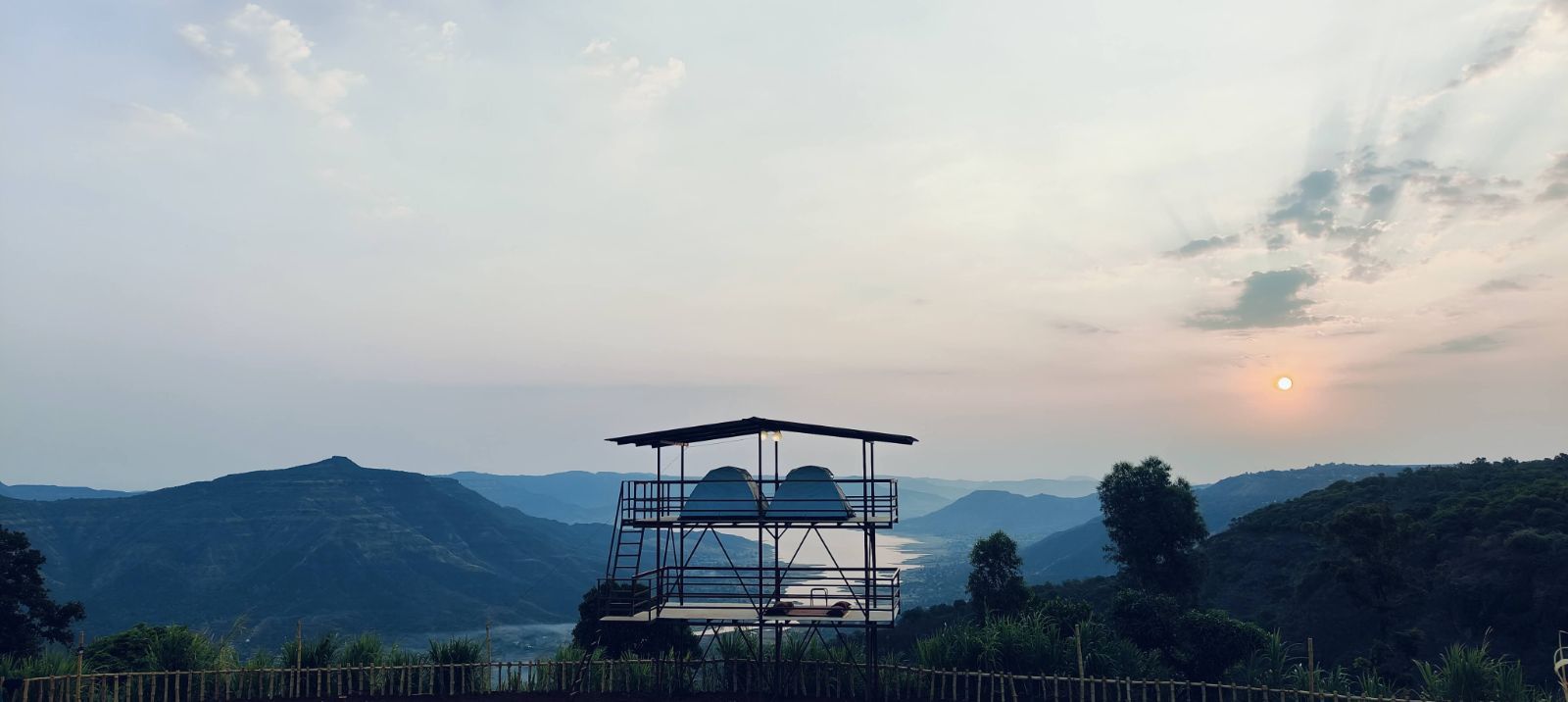
Accommodation directly adjacent to the base of Sumargad Fort is basic, limited primarily to village homestays or self-supported camping by seasoned outdoor enthusiasts. For travellers seeking structured lodgings, the town of Khed offers basic guesthouses and transit rooms. If you are looking for peaceful rural homestays, nature retreats, or scenic camping sites nestled in the foothills of the Sahyadri range, you can discover and reserve stays on HireACamp.
Frequently asked questions
How difficult is the trek to Sumargad Fort?
The trek to Sumargad Fort is moderately difficult to challenging, featuring steep scree paths, exposed ridgelines, and rock scrambles that require sure footing and basic climbing awareness.
Can Sumargad Fort be visited in a single day?
Yes, starting early in the day from Khed allows enough time to hike to the top, explore the summit, and descend back to the base village before evening.
Are there food and water stalls at the fort?
No, there are no stalls or vendors anywhere on the fort or along the trekking route. Travellers must carry all necessary water and food from the base village or town.
What is the nearest railway station to Sumargad Fort?
The nearest major railway station is Khed on the Konkan Railway network, which is well connected by trains arriving from Mumbai and Pune.
Do I need a guide to climb Sumargad Fort?
Hiring a guide from the base village is highly recommended, especially for first-time visitors, because the trail is untamed and certain turns can be difficult to locate in the forest.
Where you'll be
Khed, MH · 1 stay nearby shown with prices
Stays near Sumargad Fort
Book a place to stay close by
More places near Sumargad Fort
Within 20 km


Lists for this area
Ranked by how many creators recommend each place

Built from 0 Instagram posts by 0 creators. Every tip links back to the post it came from, and where creators disagree we show both sides.






