
Tira Sujanpur
Destination in Himachal Pradesh
Tira Sujanpur is a historic heritage town situated on the banks of the Beas River in the Hamirpur district of Himachal Pradesh. Known for its royal Katoch legacy, ancient shrines, and expansive public Chaugan, the town offers a tranquil glimpse into the cultural roots of the Kangra valley. Travellers visit to explore its hill fort ruins, admire intricate wall frescoes, and experience its centuries-old cultural traditions.
Getting there
By road
- From Chandigarh4 hr 5 min · 185 km
- From Ludhiana4 hr 10 min · 186 km
- From Amritsar4 hr 30 min · 212 km
- From Dehradun7 hr 30 min · 367 km
Typical drive times without traffic. Stations and airports from OLA Maps; distances and typical drive times from OpenStreetMap (© OpenStreetMap contributors); notes from creators' Reels.
About Tira Sujanpur
Written with AI from map data and general knowledge. Check prices and timings locally before you go.
The heritage and history of Tira Sujanpur
Tira Sujanpur sits in the rolling Shivalik foothills of Himachal Pradesh, bounded by the flowing waters of the Beas River. Originally founded in the mid-eighteenth century by Raja Abhay Chand of the Katoch dynasty, the town grew into a flourishing center of regional power and culture. It later served as the capital for Raja Sansar Chand, under whose patronage the Kangra school of miniature painting and distinctive hill architecture reached their peak.
The town gets its hyphenated name from two distinct quarters: Tira, the fortified palace complex perched high on a hill overlooking the river, and Sujanpur, the settlement that grew below on the valley floor. Today, it remains one of the few places in the lower Himachal region where royal history, riverside serenity, and traditional village life blend seamlessly together.
Things to see and do in Tira Sujanpur
The crown jewel of the town's historical landscape is the Sujanpur Fort, set on a commanding hillock. While time has weathered parts of the fortification, the remaining archways, watch towers, and ramparts still echo the power of the Katoch rulers. Walking through the ruins offers expansive views of the town below and the sweeping curves of the Beas River framed by lower Himalayan ridges.
Down in the town itself, heritage enthusiasts will find exquisite temple architecture. The Narbadeshwar Temple, commissioned by the royal family, is renowned for its vibrant wall paintings that depict scenes from the Ramayana, Mahabharata, and pastoral life, rendered in the delicate Pahari style. Unlike typical mountain shrines made of stone and slate, this temple reflects an artistic dialogue with classic North Indian masonry and frescoes.
Another significant monument is the Murli Manohar Temple, situated near the massive open lawn known as the Chaugan. Dedicated to Lord Krishna, the temple features sculpted stone panels and a peaceful courtyard. Spending an afternoon strolling around the perimeter of the Chaugan provides an authentic look at local life, as this vast green expanse serves as a gathering space for community events, morning walks, and games of cricket.
Read more
The famous Holi festival and cultural life
Tira Sujanpur is known across northern India for its state-level Holi celebration, an observance that dates back to the reign of Raja Sansar Chand. During the festival, the enormous Chaugan transforms into a vibrant fairground where local artisans, folk musicians, and performers gather. The celebration preserves classic Pahari traditions, inviting visitors to experience customary folk dance, vibrant colors, and regional crafts.
Outside of festival dates, the town maintains a steady, relaxed rhythm. Traditional markets line the narrow streets around the Chaugan, where shopkeepers sell local dry goods, handwoven fabrics, and traditional Himachali snacks. It is an unhurried destination where travelers can wander freely without the dense crowds typical of higher mountain resort hubs.
Places to visit around Tira Sujanpur
Tira Sujanpur serves as a practical base for exploring the surrounding temples, ridges, and valleys of Hamirpur and Kangra. A short drive away lies the revered Gasota Mahadev Temple, an ancient Shaivite site surrounded by farmlands and natural springs where pilgrims stop to pay homage.
Further south in the district is the sacred cave shrine of Baba Balak Nath at Deotsidh, set dramatically against natural cliffs. Pilgrims and travelers also frequent regional landmarks such as the Bilkeshwar Mahadev Temple, Awah Devi Temple, Chamukha Mahadev, and Nabahi Devi Temple, each offering its own mix of local mythology and panoramic views across the valley.
Those interested in nature walks and longer day journeys can head toward the Solasinghi Dhar ridge for pleasant hillside trails and vistas. History lovers can extend their exploration across regional borders to the ancient Kangra Fort, located about thirty-seven kilometers away in the Kangra valley, or head toward Rewalsar Lake, a tranquil body of water held sacred by Hindu, Buddhist, and Sikh traditions.
Best time to visit Tira Sujanpur
The climate in Tira Sujanpur is sub-tropical and considerably milder in winter than that of the high-altitude towns of upper Himachal Pradesh. Autumn and spring are generally the most comfortable seasons for outdoor exploration. From October through November, the post-monsoon air is crisp, the river flows clear, and daytime temperatures are ideal for walking through monuments and markets.
Winter, spanning from December to February, brings cool days and chilly nights, making it a great time for heritage walks under bright sunshine. March is particularly energetic due to the vibrant festivities of the annual Holi fair. Summers, from April to June, can get warm during midday hours, so early morning and late afternoon explorations are recommended. The monsoon season from July to September brings lush greenery to the riverbanks, though heavy rainfall can sometimes lead to localized road delays.
How to reach Tira Sujanpur
Tira Sujanpur is well connected by road to major towns across Himachal Pradesh and Punjab. Hamirpur, the district headquarters, lies roughly twenty-five kilometers to the southwest and serves as the primary transit hub with regular bus and taxi services running to Sujanpur.
For those traveling by train, the nearest broad-gauge railway stations are located at Una and Amb Andaura, which connect to major hubs like New Delhi and Chandigarh. From these railheads, one can hire a taxi or board state transport buses to reach the town via Hamirpur. The nearest commercial airport is Kangra Airport at Gaggal, from where travellers can reach Tira Sujanpur by road through Kangra and Palampur.
Where to stay in Tira Sujanpur
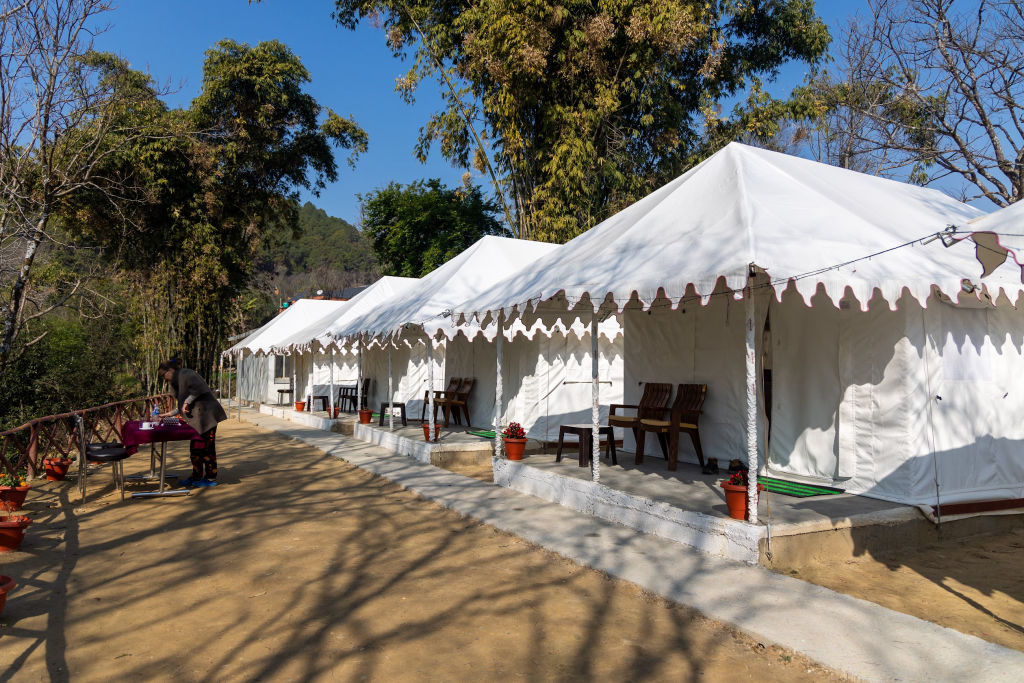
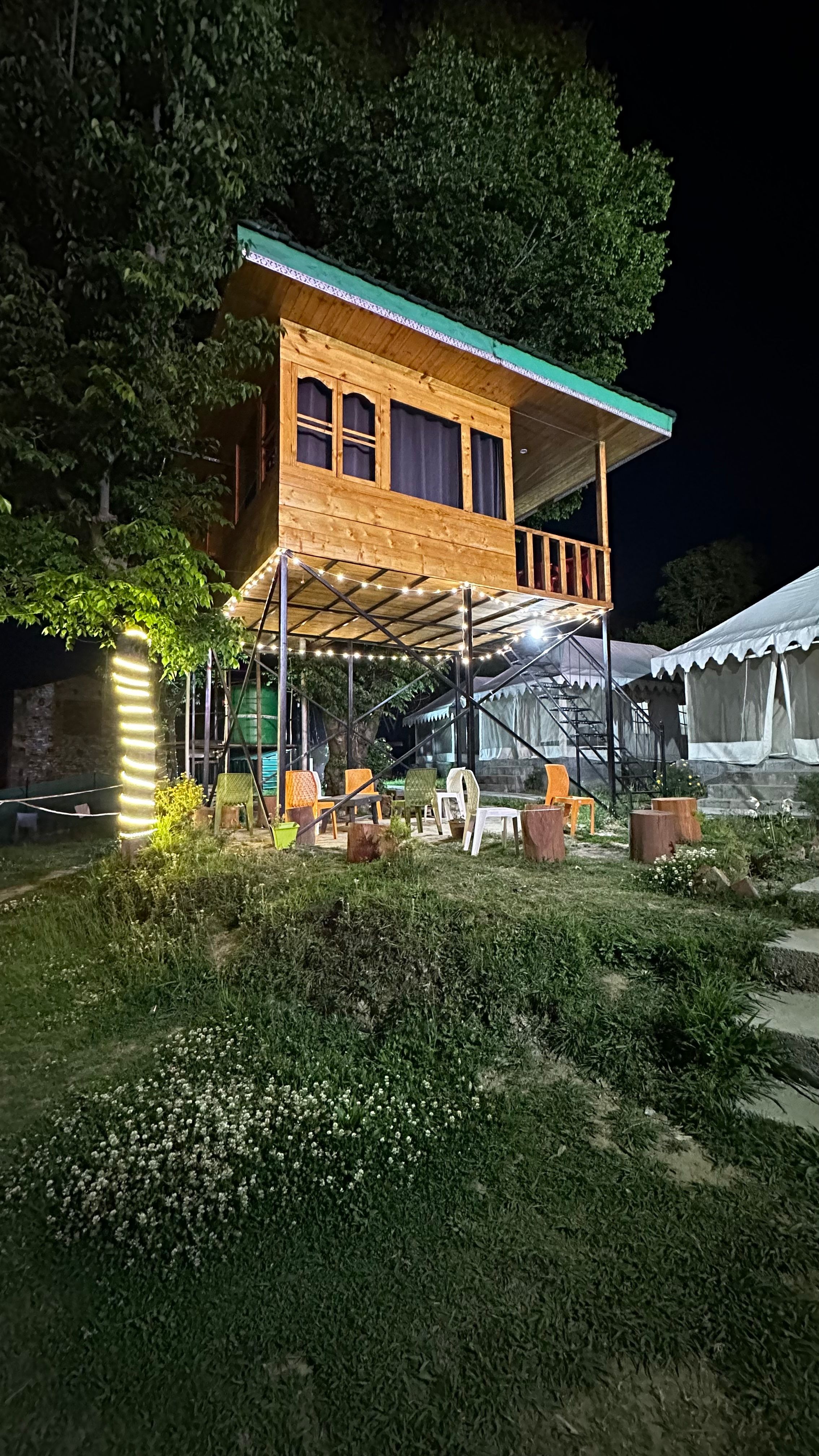
Accommodations in and around Tira Sujanpur include quiet guesthouses, riverside homestays, and rustic rural lodges that allow visitors to experience authentic Pahari hospitality. Staying in a family-run homestay offers the chance to sample local dishes prepared with fresh regional produce, such as traditional Himachali madra and freshly made flatbreads.
For travelers who prefer tranquil countryside surroundings or scenic riverside settings along the Beas, comfortable camps, homestays, and boutique stays in the area can be found on HireACamp. Booking in advance is recommended if you plan to visit during the busy Holi festival period.
Frequently asked questions
What is Tira Sujanpur famous for?
Tira Sujanpur is famous for its royal Katoch dynasty history, the ruins of Sujanpur Fort, the painted frescoes at Narbadeshwar Temple, and its historic state-level Holi celebration held on the town's vast Chaugan.
Which river flows near Tira Sujanpur?
The Beas River flows along the edge of Tira Sujanpur, shaping the local geography and providing a scenic backdrop to the historic ruins.
How far is Tira Sujanpur from Hamirpur?
Tira Sujanpur is located approximately twenty-five kilometers from Hamirpur and can be easily reached by local buses, shared vehicles, or private taxis.
What is the best season to explore Tira Sujanpur?
The best time to visit is from October to March, when the weather is pleasantly cool, skies are clear, and outdoor sightseeing is comfortable.
Where you'll be
2 stays nearby shown with prices
Stays near Tira Sujanpur
Book a place to stay close by
Things to do in Tira Sujanpur
48 places creators recommend within 30 km


Built from 0 Instagram posts by 0 creators. Every tip links back to the post it came from, and where creators disagree we show both sides.






