
Bhuleshwar Temple
Temple near Narayanmaharaj Bet
16 km from Narayanmaharaj Bet
The nearest town, for stays, food and fuel.
Bhuleshwar Temple is an ancient Hindu shrine dedicated to Lord Shiva, situated atop a prominent hill near Yewat in Maharashtra's Daund sub-district. Renowned for its intricate stone carvings, Hemadpanthi architectural heritage, and panoramic views across the Deccan plains, it attracts both heritage enthusiasts and pilgrims. Visitors come to admire the detailed rock sculptures, explore the atmospheric remnants of old fortifications, and enjoy a quiet retreat from the busy Pune corridor.
Getting there
By road
- From Narayanmaharaj BetNearest town36 min · 21 km
- From Pune1 hr 25 min · 51 km
- From Mumbai 3 hr 50 min · 204 km
- From Nashik5 hr · 236 km
Typical drive times without traffic. Stations and airports from OLA Maps; distances and typical drive times from OpenStreetMap (© OpenStreetMap contributors); notes from creators' Reels.
About Bhuleshwar Temple
Written with AI from map data and general knowledge. Check prices and timings locally before you go.
History and Architecture of Bhuleshwar Temple
Dating back to the Yadava era around the twelfth and thirteenth centuries, Bhuleshwar Temple stands as an enduring example of Hemadpanthi style stone masonry. The temple structure is composed of dark basalt rock, embellished with intricate carvings on its pillars, ceilings, and outer walls. Over the centuries, the site witnessed turbulent shifts in regional dynasties. The temple was fortified during later eras, with stone walls and bastions from the Adilshahi and Maratha periods still framing parts of the hilltop plateau.
The structure has survived both the natural wear of centuries and historical conflicts, retaining an evocative and timeless character. While the outer fortifications show signs of weathering, the inner sanctum and surrounding mandapa exhibit remarkable craftsmanship. Visitors who appreciate ancient Indian temple architecture will find scenes from Hindu epics, figures of celestial musicians, and ornate floral bands carved in high relief across virtually every surface.
The Hilltop Setting and Natural Landscape
Situated atop a solitary ridge overlooking the arid plains of the Daund region, Bhuleshwar Temple enjoys sweeping vistas across the rolling Deccan plateau. The hill rises prominently above the surrounding farmsteads and scrublands, catching steady breezes throughout the day. From the outer circumambulation path and the temple parapets, visitors can gaze across vast stretches of agricultural fields, winding village roads, and distant ridgelines.
The landscape reflects the typical beauty of rural Maharashtra. During the post-monsoon months, the scrubby hill turns a vibrant shade of green, with seasonal grasses and wildflowers softening the rugged basalt outcrops. In the drier winter and summer months, the golden hue of the plateau evokes a contemplative quiet. The elevated vantage point makes it an ideal spot for photography and quiet contemplation away from the bustle of city highways.
Read more
Things to See Inside Bhuleshwar Temple
Inside the temple complex, travellers are greeted by an abundance of sculpted detail that rewards careful exploration. The main hall rests on intricately carved stone pillars featuring detailed iconography of deities, guardians, and mythical creatures. One of the unique sculptural highlights of Bhuleshwar Temple is the depiction of Ganesha dressed in female attire, often referred to as Ganeshyani or Vinayaki, a relatively rare iconography in traditional Hindu temple art.
The inner sanctum houses the sacred Shiva lingam, which is the spiritual focal point of the temple. A well-known local belief associates the lingam with an offering cavity where sweets presented by devotees are said to disappear into the stone fissure. In addition to the main shrine, the perimeter of the temple features an array of niches containing images of various manifestations of Shiva and Parvati, along with sculptures depicting scenes from the Ramayana and Mahabharata.
Best Time to Visit Bhuleshwar Temple
The ideal time to visit Bhuleshwar Temple is between October and February, when Maharashtra experiences pleasant winter weather. Daytime temperatures during these months remain moderate, making the outdoor exploration of the temple grounds comfortable. The cool morning air and clear winter skies also provide crisp, long-range views across the surrounding countryside.
The monsoon season, spanning from July to September, brings another atmospheric window for travel. The surrounding countryside comes alive with lush greenery, and cloud cover shields the open hill from harsh midday sun. Travellers visiting during the rains should exercise caution, as the stone pathways and steps can become slick when wet. The summer months from March to May can be quite warm, so anyone travelling during this period is best advised to schedule their visit in the early morning or late afternoon to avoid peak heat.
How to Reach Bhuleshwar Temple
Bhuleshwar Temple is located in the Daund sub-district near the settlement of Yewat, easily accessible from Pune via the Pune-Solapur National Highway. The drive from Pune takes approximately an hour and a half depending on traffic conditions. After branching off the main highway near Yewat, a scenic and gradually winding country road leads directly up the hill toward the temple complex.
For travellers relying on public transportation, state transport buses run regularly along the Pune-Solapur corridor, dropping passengers near Yewat. From there, local autorickshaws or private vehicles can be hired to complete the ascent up the hill. Having a private vehicle or two-wheeler is generally the most convenient option, as it offers the flexibility to explore the surrounding rural landscapes at your own pace.
Tips for Travellers Visiting the Temple
Because Bhuleshwar Temple is an active place of worship, modest attire covering shoulders and knees is recommended. Visitors are required to remove footwear before entering the temple sanctum. During warm afternoons, the stone floor outside can absorb heat, making mornings or late afternoons more comfortable for walking barefoot around the courtyard.
Amenities directly atop the hill are modest, primarily consisting of small roadside stalls offering basic refreshments and items for offerings. Carrying adequate drinking water, a hat, and sun protection is advisable, especially on sunny days. Monkeys are occasionally present in the vicinity of the temple, so keep food items and personal belongings safely zipped inside bags.
Places to Explore Around Bhuleshwar
A journey to Bhuleshwar Temple can easily be paired with other scenic and historical stops in the wider district. For nature lovers and photography enthusiasts, Dive Ghat offers dramatic hillside curves and panoramic views across the valleys leading toward Saswad. Nearby water bodies such as Mastani Lake present peaceful backdrops for an afternoon pause amidst regional history.
Heritage enthusiasts can also extend their day trip by visiting other significant sites in the broader region, such as the historic Dhavaleshwar Fort or the grand Mahaganpati Temple at Ranjangaon. Combining these destinations creates a rich day-trip itinerary spanning ancient rock-cut architecture, regional history, and the quiet open spaces of the Deccan interior.
Where to Stay Near Bhuleshwar
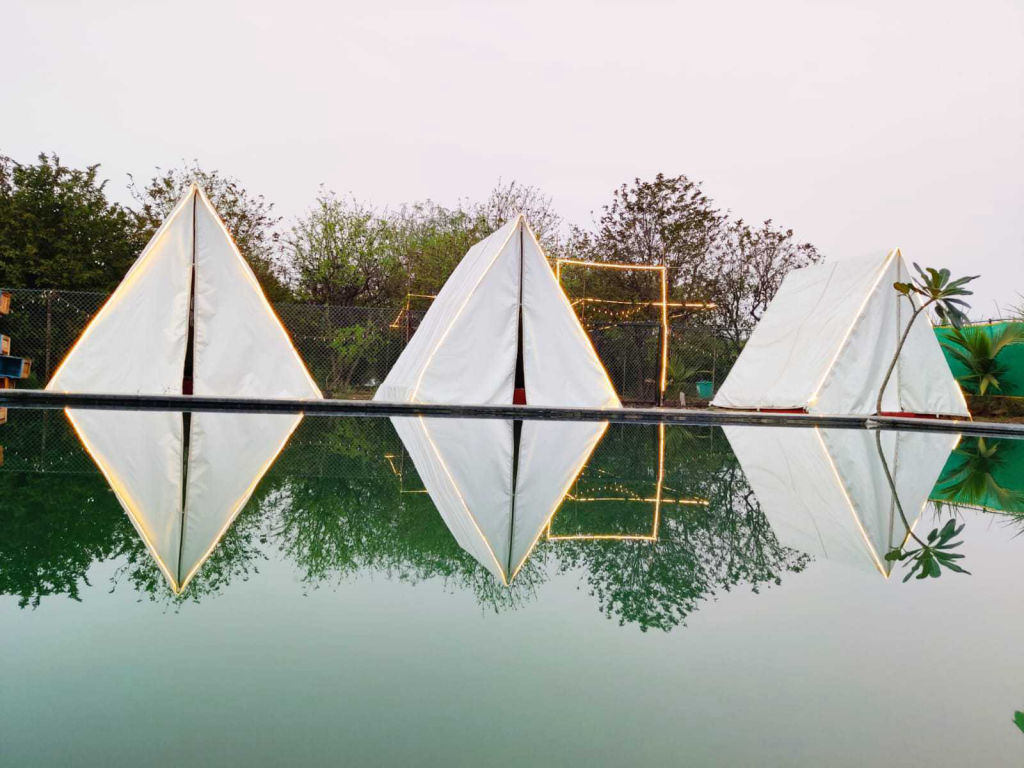
Travellers wishing to spend more time exploring the countryside around Daund and the outskirts of Pune can find welcoming accommodations in the region. The surrounding rural areas feature an assortment of tranquil farm stays, eco-camps, and nature retreats that allow you to unwind close to the landscape.
For a comfortable getaway that blends open-air living with scenic tranquility, you can browse and book nearby camps, homestays, and outdoor stays on HireACamp. Staying locally provides the advantage of experiencing misty mornings on the Deccan plateau and catching sunrise visits to the temple before daytime visitors arrive.
Frequently asked questions
Where is Bhuleshwar Temple located?
Bhuleshwar Temple is located on a hilltop near Yewat in the Daund sub-district of Maharashtra, off the Pune-Solapur National Highway.
What architectural style is seen at Bhuleshwar Temple?
The temple is built in the classic Hemadpanthi architectural style of the Yadava era, featuring intricate basalt stone carvings and fortified outer stone walls.
Can you drive all the way to Bhuleshwar Temple?
Yes, a paved motorable road leads up the hill from Yewat, ending close to the temple entrance with space available for parking.
What is unique about the sculptures at Bhuleshwar Temple?
One of the temple's most notable artistic features is a rare sculpture of Ganesha depicted as a female deity, known as Ganeshyani or Vinayaki, alongside extensive relief carvings of scenes from Hindu epics.
What is the best time of day to visit Bhuleshwar Temple?
Early mornings and late afternoons are the best times to visit, providing cooler stone surfaces underfoot, softer photography light, and panoramic views across the plains.
Where you'll be
Yewat, Daund Sub-District, MH · 1 stay nearby shown with prices
Stays near Bhuleshwar Temple
Book a place to stay close by
More places near Bhuleshwar Temple
Within 20 km


Built from 0 Instagram posts by 0 creators. Every tip links back to the post it came from, and where creators disagree we show both sides.


