
Jaydeb Padmabati Temple
Temple near Jaydeb Kenduli
500 m from Jaydeb Kenduli
The nearest town, for stays, food and fuel.
Jaydeb Padmabati Temple is a historic terracotta shrine situated in Joydev Kenduli near Illambazar in West Bengal. Believed to mark the birthplace and home of the renowned 12th-century Sanskrit poet Jayadeva, the author of the Gita Govinda, the temple stands on the banks of the Ajay River. Travellers and pilgrims visit to admire its intricate terracotta relief carvings, experience its deep association with Vaishnavite literature, and immerse themselves in the surrounding Baul musical heritage.
Getting there
By road
- From Jaydeb KenduliNearest town2 min · 600 m
- From Kolkata4 hr 15 min · 186 km
- From Ranchi6 hr 20 min · 284 km
Typical drive times without traffic. Stations and airports from OLA Maps; distances and typical drive times from OpenStreetMap (© OpenStreetMap contributors); notes from creators' Reels.
About Jaydeb Padmabati Temple
Written with AI from map data and general knowledge. Check prices and timings locally before you go.
History and significance of Jaydeb Padmabati Temple
Joydev Kenduli holds an enduring place in the literary and spiritual landscape of Bengal. According to regional tradition and historical lore, this quiet village on the north bank of the Ajay River was the home of Jayadeva, the court poet of King Lakshmana Sena of the Sena dynasty. Jayadeva composed the immortal lyrical epic Gita Govinda here, chronicling the divine love of Radha and Krishna. The temple honors the memory of Jayadeva and his consort Padmavati, serving as a focal point for Vaishnava devotion across eastern India.
While the original settlement dates back centuries, the brick structure standing today, often referred to locally as the Radha Binod or Radharaman temple, was constructed around the late seventeenth century under the patronage of the royal house of Bardhaman (Burdwan). It preserves the connection to the poet through traditional worship practices and remains an active place of pilgrimage, drawing scholars, musicians, and pilgrims who wish to walk the grounds where medieval Indian literature was shaped.
Architecture and terracotta details
The temple exemplifies the distinct terracotta temple architecture that flourished in Bengal between the sixteenth and nineteenth centuries. Constructed from burnt clay bricks, the structure features a curvilinear roofline characteristic of the regional style, topped by decorative pinnacles that mirror the traditional rural thatched huts of Bengal.
The facade of Jaydeb Padmabati Temple is embellished with detailed terracotta plaques that have survived centuries of weathering. These reliefs narrate stories from the Ramayana, the Mahabharata, and various Krishna Leela episodes, framed by intricate floral motifs and geometric friezes. Observing these panels closely reveals scenes of everyday life in historic Bengal, including soldiers, musicians, and village folk carved alongside divine figures, offering visitors a vivid window into the artistic genius of medieval Bengali artisans.
Read more
The cultural spirit of Joydev Kenduli
Beyond its stone and terracotta heritage, Jaydeb Padmabati Temple is deeply intertwined with the folk traditions of rural Bengal, particularly the Baul philosophy. Bauls—the wandering mystic minstrels of Bengal whose music and way of life are recognized as intangible cultural heritage—regard Joydev Kenduli as a sacred gathering ground.
Every year during mid-January, coinciding with the auspicious day of Makar Sankranti, the village transforms into the venue for the celebrated Joydev Kenduli Mela. Scores of Baul and Fakir musicians congregate along the sandy banks of the Ajay River, pitching temporary shelters (akharas) and singing through the night with their ektaras and dubkis. Even outside the fair season, the air around the temple retains a lyrical calm, where the strum of an ektara or a traditional devotional song can often be heard in the quiet afternoons.
Best time to visit
The ideal time to visit Jaydeb Padmabati Temple is during the winter months, from late October through February. The weather during this period is pleasant, with clear skies and cool breezes sweeping across the Ajay riverbed, making outdoor exploration and photography enjoyable. Visiting in mid-January during Makar Sankranti offers an extraordinary opportunity to witness the vibrant Baul gathering, though travellers should anticipate large crowds and vibrant festivities.
Summers, from April to June, can be extremely hot and humid in the Birbhum plains, with temperatures frequently climbing well past thirty-five degrees Celsius. The monsoon season from July to September brings refreshing rain that turns the surrounding landscape lush and causes the Ajay River to swell, but heavy showers can occasionally make walking along rural village paths difficult.
How to reach Jaydeb Padmabati Temple
Jaydeb Padmabati Temple is located in Joydev Kenduli within the Illambazar community block of Birbhum district. It sits close to the border between Birbhum and Paschim Bardhaman districts, making it easily accessible from multiple nearby transit hubs.
The nearest major railway junction is Durgapur, located roughly twenty to twenty-five kilometres to the south. Durgapur is exceptionally well connected to Kolkata, Asansol, and major Indian cities by frequent express trains. From Durgapur, you can hire a private taxi, take an auto-rickshaw, or board local buses that run via Muchipara towards Illambazar and drop passengers close to the Ajay River bridge near Kenduli. Another convenient railhead is Bolpur Santiniketan, situated around thirty kilometres to the east, from where shared and private road transport is readily available via Illambazar.
Tips for your visit
When planning your trip to Jaydeb Padmabati Temple, modest attire is recommended as it is an active religious and cultural shrine. Footwear must be removed before stepping onto the temple plinth, so carrying socks can be helpful during warmer afternoons when the stone courtyard heats up.
Take your time walking around the temple perimeter to examine the terracotta relief panels; morning light and late afternoon golden hour provide the best conditions for admiring the carvings and capturing photographs. Carry cash for small offerings, local tea stalls, and rural transport, as digital payments are not always reliable in smaller villages. The riverbank adjacent to the temple offers a quiet space for a contemplative walk, especially during sunset.
Places to visit nearby
A visit to Jaydeb Padmabati Temple can comfortably be paired with exploring other cultural and natural attractions in the Birbhum and Durgapur region. Just eleven kilometres away lies the Amkhoi Wood Fossil Park, where fossilized tree stems dating back millions of years are preserved in an open geological reserve.
Around seventeen kilometres away, Nachan Dam provides a scenic, serene water reservoir popular for birdwatching and peaceful lakeside walks. Heading east towards Bolpur brings you within reach of Amar Kutir, a well-known rural crafts cooperative dedicated to leathercraft, batik, and traditional handicrafts, along with the cultural institutions of Santiniketan. Towards the south in Durgapur, you can visit Kumar Mangalam Park, Santiban Park, or spend time along the banks of the Damodar River.
Where to stay
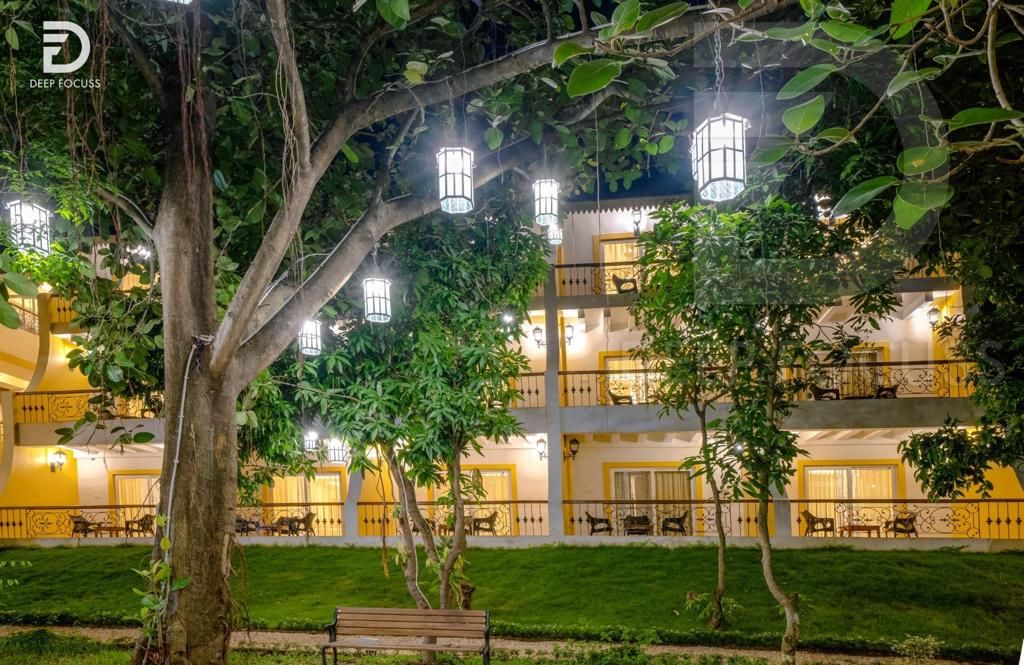
Joydev Kenduli itself remains a peaceful rural village with basic local pilgrim accommodations. Many visitors choose to stay in nearby towns such as Bolpur, Santiniketan, or Durgapur, which offer a broader selection of hospitality options and convenient access to local dining and transport.
For travellers seeking a quiet experience close to nature, homestays, rural retreats, and eco-camps can be booked on HireACamp. Staying nearby allows you to explore the temple at your own pace and enjoy the serene rhythms of village life along the Ajay River.
Frequently asked questions
What is the historical significance of Jaydeb Padmabati Temple?
The temple is associated with the 12th-century Sanskrit poet Jayadeva, who wrote the celebrated Gita Govinda here. The present brick temple, embellished with detailed terracotta art, was built in the late seventeenth century to commemorate the poet and his wife Padmavati.
Where is the temple located?
The temple is located in the village of Joydev Kenduli, near Illambazar in the Birbhum district of West Bengal, situated along the banks of the Ajay River.
When is the Joydev Kenduli Mela held?
The famous Joydev Kenduli Mela takes place annually around mid-January on the occasion of Makar Sankranti, bringing together Baul singers and folk musicians from across Bengal.
What is the nearest railway station to Jaydeb Padmabati Temple?
Durgapur Railway Station is the nearest major railhead, located roughly twenty to twenty-five kilometres away, while Bolpur Santiniketan Station is approximately thirty kilometres to the east.
Is photography allowed at the temple?
Photography of the exterior terracotta facades and surrounding grounds is generally permitted, though visitors should remain respectful and avoid disturbing ongoing religious rituals inside the inner sanctum.
Where you'll be
Joydev Kenduli, Illambazar, WB · 1 stay nearby shown with prices
Stays near Jaydeb Padmabati Temple
Book a place to stay close by
More places near Jaydeb Padmabati Temple
Within 20 km
Built from 0 Instagram posts by 0 creators. Every tip links back to the post it came from, and where creators disagree we show both sides.






