
Amkhoi Wood Fossil Park
Park near Ilam Bazar
400 m from Ilam Bazar
The nearest town, for stays, food and fuel.
Amkhoi Wood Fossil Park, situated near Illambazar in West Bengal, preserves rare petrified wood fossils that date back millions of years. It offers visitors a tangible glimpse into prehistoric flora and the geological evolution of the Bengal basin. Travellers, students, and nature enthusiasts visit to explore the outdoor exhibits set amidst the serene dry deciduous woodland of the Rarh region.
Getting there
By road
- From Ilam BazarNearest town1 min · 400 m
- From Kolkata3 hr 55 min · 171 km
- From Ranchi6 hr 30 min · 299 km
Typical drive times without traffic. Stations and airports from OLA Maps; distances and typical drive times from OpenStreetMap (© OpenStreetMap contributors); notes from creators' Reels.
About Amkhoi Wood Fossil Park
Written with AI from map data and general knowledge. Check prices and timings locally before you go.
About Amkhoi Wood Fossil Park
Amkhoi Wood Fossil Park is a unique geological site located in the Illambazar forest range of the Birbhum district in West Bengal. Spread over a landscaped compound managed by the state forest department, the park was established to preserve specimens of petrified wood uncovered in the surrounding villages. During earth excavation work, local workers and researchers found massive fossilized tree trunks, which led to the creation of this protected park to safe-keep these irreplaceable natural treasures for scientific study and public education.
Walking through the open-air displays, visitors encounter petrified tree trunks of varying sizes that have literally turned to stone over geological epochs. The specimens primarily belong to angiosperm trees from the Mio-Pliocene epoch, dating back between 15 to 20 million years. The park is carefully arranged with paved pathways, informative signboards, and open sheds that protect the most delicate fossils from direct rain and erosion, making it an engaging stop for both casual travellers and science enthusiasts.
The Science of Petrified Wood
The fossils preserved at Amkhoi tell a fascinating story of prehistoric ecology. Millions of years ago, vast upland forests flourished across what is now the Chota Nagpur plateau and the adjoining Rarh plains. Over time, catastrophic floods or geological shifts uprooted these dense ancient forests and transported the fallen logs into riverbeds and sedimentary basins, quickly burying them beneath layers of fine sand and volcanic silt before oxygen could cause organic decay.
Over countless millennia, mineral-rich groundwater seeped through the porous plant tissue. As the organic material decayed microscopically, minerals like silica slowly precipitated and crystallized within the plant cells. This process, known as permineralization or petrifaction, preserved the fine details of the original tree bark, growth rings, and cellular structure in solid quartz and chalcedony. Touching with the eyes and respecting the protective barriers, one can clearly observe the cellular architecture of trees that lived long before modern human civilization arose.
Read more
Best Time to Visit Amkhoi Wood Fossil Park
The climate in Birbhum is typical of the dry deciduous Rarh region, characterized by distinct seasonal variations. The winter season, extending from late October through February, offers the most pleasant conditions for visiting Amkhoi Wood Fossil Park. Daytime temperatures during these months remain mild and comfortable, allowing visitors to walk leisurely through the open grounds and study the exhibits without the burden of harsh heat.
Summers in this part of West Bengal, from March to June, can be intensely hot and dry, with afternoon temperatures frequently climbing above forty degrees Celsius. If you are travelling during this period, early morning visits are strongly recommended to avoid the midday sun. The monsoon arrives in late June and lasts until September, transforming the surrounding forest landscape into vibrant shades of green. While rains can sometimes limit walking around open outdoor displays, the freshly washed laterite earth and lush canopy provide a scenic backdrop.
How to Reach Amkhoi Wood Fossil Park
Amkhoi Wood Fossil Park is easily accessible by road from major nearby towns such as Bolpur, Panagarh, and Durgapur. The park sits a short distance off the main highway passing through the Illambazar forest area. For travellers arriving by personal vehicle or hired taxi, the drive traverses rural Bengal landscapes lined with sal and eucalyptus trees, offering smooth connectivity along regional highways.
The nearest major railheads are Bolpur Santiniketan, Panagarh, and Durgapur, all of which are well connected to Kolkata and other prominent cities by frequent express trains. From these railway stations, local buses, auto-rickshaws, and private cabs are readily available to ferry travellers towards Illambazar. Visitors should check local public transport timings before setting out, especially for their return journey later in the afternoon.
Tips for Your Visit to the Park
Because Amkhoi Wood Fossil Park is primarily an open-air facility with exposed walking pathways, practical preparation is essential for a comfortable visit. Wear comfortable walking shoes suited for crushed-gravel and stone paths. A wide-brimmed hat, sunglasses, and adequate sun protection are advisable throughout the year, especially during sunny afternoons.
Carry a refillable water bottle, as walking under the open sky can be dehydrating. Remember that these fossil specimens are delicate and of immense scientific value. Visitors should refrain from touching, climbing upon, or attempting to chip pieces from the fossils. Keeping the park grounds clean by avoiding single-use plastics and taking all personal waste with you helps maintain this delicate ecological and geological heritage intact for future visitors.
Places to Explore Around Amkhoi
A visit to Amkhoi Wood Fossil Park can seamlessly be paired with several cultural and natural attractions scattered across Birbhum and neighboring Paschim Bardhaman. The artisan settlement of Dwariapur, known for its traditional lost-wax brass casting or Dokra craft, is located nearby and offers a rare opportunity to observe indigenous metallurgy in practice. The historic town of Nanoor, celebrated as the birthplace of the medieval Bengali poet Chandidas, is another rewarding detour for history buffs.
Nature lovers can spend a tranquil afternoon near the Damodar River or visit the Randiha Barrage, a scenic water control structure surrounded by peaceful waters and open riverbanks. The cultural hub of Bolpur and Santiniketan, famous for the legacy of Rabindranath Tagore, traditional Baul music, and vibrant local handicrafts, is also well within easy day-trip distance, making the entire circuit a rich blend of geological wonder and rural Bengali heritage.
Where to Stay near Amkhoi Wood Fossil Park
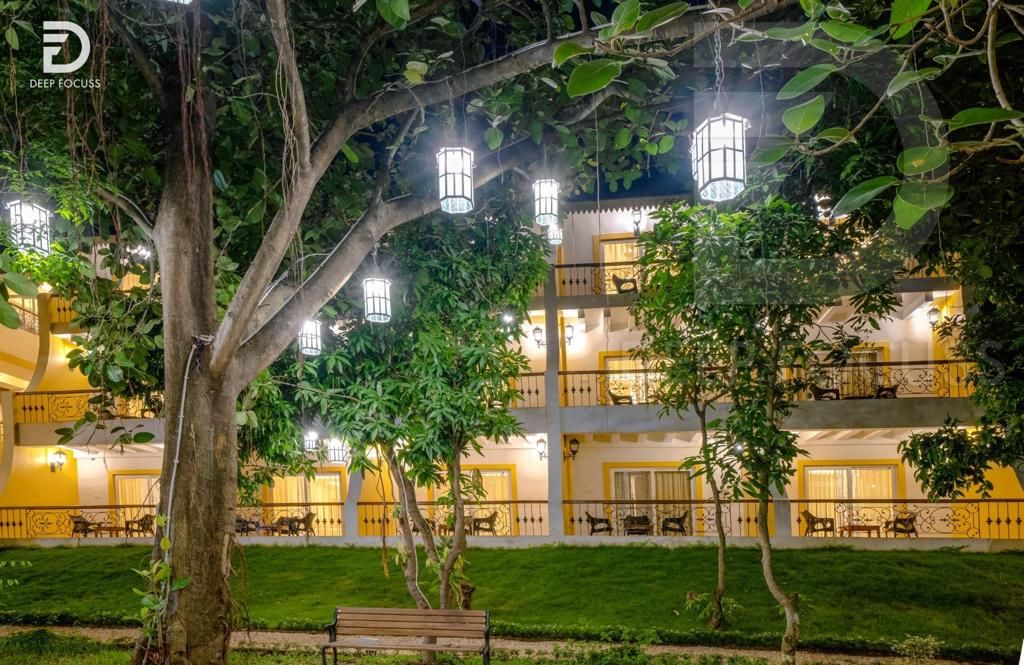
Given the rural forest setting of the park, most visitors choose to establish their accommodation base in Bolpur, Santiniketan, or the nearby industrial-urban hubs of Panagarh and Durgapur. These towns offer a broad spectrum of lodging options suited to different travel styles, ranging from peaceful nature retreats and heritage properties to comfortable town guesthouses.
If you are planning an immersive trip that connects you with nature and local culture, you can find camps, homestays, and other stays nearby on HireACamp. Booking in advance is recommended during festive periods like Poush Mela and Basanta Utsav, when travellers from all across India flock to this storied region of West Bengal.
Frequently asked questions
What is Amkhoi Wood Fossil Park famous for?
Amkhoi Wood Fossil Park is famous for being the first and only wood fossil park in West Bengal. It preserves rare, large petrified tree trunks dating back to the Mio-Pliocene era, roughly 15 to 20 million years ago.
Where is Amkhoi Wood Fossil Park located?
The park is located near the town of Illambazar in the Birbhum district of West Bengal, India, set within the scenic regional forest area.
How much time is needed to explore the park?
Most visitors spend about one to two hours exploring the open-air fossil displays, reading the informational signboards, and walking through the park grounds.
Is Amkhoi Wood Fossil Park suitable for children and students?
Yes, the park serves as an excellent educational destination for students and children interested in paleontology, geology, and ancient natural history.
What should visitors carry when visiting the park?
Visitors should carry drinking water, wear comfortable walking shoes, and bring sun protection like hats and sunglasses, as the fossil exhibits are located outdoors.
Where you'll be
Amkhoi Wood Fossil Park, Illambazar, WB · 1 stay nearby shown with prices
Stays near Amkhoi Wood Fossil Park
Book a place to stay close by
More places near Amkhoi Wood Fossil Park
Within 20 km
Built from 0 Instagram posts by 0 creators. Every tip links back to the post it came from, and where creators disagree we show both sides.






