
Jejuri
Destination in Maharashtra
Jejuri is a celebrated heritage and pilgrimage town located in the Pune district of Maharashtra, perched against the rolling plains of the western Deccan. The town is famous for the revered hilltop temple of Lord Khandoba, a folk deity worshiped with deep devotion throughout the region. Travellers and pilgrims arrive throughout the year to experience its historic fort-like architecture, expansive views, and the unique tradition of offering vibrant turmeric powder that blankets the temple complex in gold.
Getting there
By road
- From Pune1 hr 15 min · 50 km
- From Mumbai 3 hr 50 min · 199 km
- From Nashik5 hr 35 min · 271 km
Typical drive times without traffic. Stations and airports from OLA Maps; distances and typical drive times from OpenStreetMap (© OpenStreetMap contributors); notes from creators' Reels.
About Jejuri
Written with AI from map data and general knowledge. Check prices and timings locally before you go.
The golden hill town of Khandoba
Jejuri occupies a distinctive place in the cultural geography of Maharashtra. Set amidst the scrub hills and agricultural fields south-east of Pune, the town centers entirely around Jejuri Gad, the hill on which the main Khandoba shrine stands. Lord Khandoba, regarded as an incarnation of Lord Shiva, is revered across farmer, pastoral, and warrior communities alike. The temple compound is frequently referred to as Sonyachi Jejuri, meaning Golden Jejuri, owing to the ritual offering of dry turmeric powder, known locally as bhandara.
During religious gatherings, particularly on auspicious occasions such as Somvati Amavasya, thousands of devotees ascend the stone hill. Turmeric is tossed skyward by worshippers accompanied by spirited chants of 'Yelkot Yelkot Jai Malhar'. The yellow powder settles over the steps, the stone courtyards, the towering lamp pillars, and the crowds themselves, creating a visual spectacle unlike any other in western India.
Exploring the architecture of Jejuri Gad
Reaching the summit of Jejuri Gad involves climbing an expansive flight of roughly two hundred stone steps. The ascent is flanked by grand stone portals, arched gateways, and several massive stone lamp towers, known as deepmalas or deepstambhas. These towering pillars were designed to hold hundreds of oil lamps during major nighttime celebrations and stand as prime examples of late Maratha-era temple masonry.
The layout of the temple reflects a hill-fort design rather than a conventional shrine. Broad stone ramparts and watchtower bastions encircle the complex, offering wide panoramas of the surrounding plains and the distant Purandar hills. Within the central enclosure, stone pavilions house intricately carved images, historical inscriptions, and a massive ceremonial sword weighing over forty kilograms, which devotees occasionally attempt to lift during traditional festivals to test their strength and resolve.
Read more
Things to do in and around Jejuri
A visit to Jejuri is best experienced on foot, beginning with an early morning walk up the stone stairs before the sun warms the stone pavers. Along the climb, small open-air shrines and platforms invite quiet pauses while local musicians often perform traditional folk devotional songs using the tuntuna and daf.
Beyond the primary temple atop the hill, travellers can visit the historic Kadepathar temple complex situated on an even higher ridge nearby. Reaching Kadepathar requires a longer, slightly steeper trek along a stone-lined trail, but rewards visitors with a peaceful atmosphere, sweeping hillside views, and an older shrine complex associated with the deity's earliest legends. Exploring the old town lanes at the base of the hill provides insight into rural Maharashtrian market life, where stalls overflow with hand-ground turmeric, brass idols, and traditional sweets.
Scenic getaways near Jejuri
The road linking Pune to Jejuri passes through picturesque countryside that makes for memorable day trips and scenic stops. Located about twenty-four kilometres away, Dive Ghat is a renowned mountain pass that winds through the Sahyadri foothills. The ghat offers dramatic panoramic viewpoints looking out across the Saswad valley and is famous as a prime vantage point during the annual Pandharpur Wari pilgrimage, when vast processions of pilgrims traverse its serpentine turns.
Close to the foot of the ghat lies Mastani Lake, situated roughly twenty-three kilometres from Jejuri. This tranquil water body carries rich historical associations with the Maratha Peshwa era and provides a peaceful lakeside setting for an afternoon break. Further towards the outskirts of Pune, approximately thirty-nine kilometres away, stands the intricately carved BAPS Shri Swaminarayan Temple, celebrated for its detailed stone craftsmanship, serene courtyard gardens, and classical temple design.
Best time to visit Jejuri
The winter months from October to February are the most comfortable time to visit Jejuri. During this period, the daytime weather remains mild and pleasant, making the stone stair climb to Jejuri Gad and Kadepathar effortless. Clear skies also ensure broad, unobstructed views across the Deccan plateau.
The monsoon season, extending from July to September, transforms the surrounding dry countryside into lush green plains. Waterfalls and mist frequently gather along the adjacent hills and passes such as Dive Ghat, making the drive particularly scenic. Summer, spanning from March to June, brings intense heat and dry conditions across the region; if visiting during these months, planning your climb for the cool hours of early morning or late afternoon is strongly recommended.
How to reach Jejuri
Jejuri is well connected by road and rail to major urban centers in Maharashtra. The nearest metropolitan hub is Pune, situated roughly fifty kilometres to the north-west. The drive from Pune typically passes through Hadapsar and Saswad via Dive Ghat, offering an attractive countryside journey. Regular Maharashtra State Road Transport Corporation buses connect Jejuri with Pune's central bus stations, as well as with nearby towns like Saswad and Baramati.
Jejuri has its own railway station on the Pune-Miraj railway line, with passenger and express trains operating daily between Pune, Kolhapur, and other regional stations. For travellers arriving from farther away, Pune International Airport is the closest air hub, from where private taxis and regional buses are easily hired to complete the journey to the town.
Tips for your visit and where to stay
Because the ritual use of turmeric powder is central to the temple experience, wearing clothes you do not mind staining is sensible, as the yellow bhandara powder easily clings to fabric and skin. The climb involves bare-stone corridors near the sanctum, so carrying easily removable footwear is ideal. Staying well-hydrated is essential, particularly on sunny days when climbing both Jejuri Gad and Kadepathar.
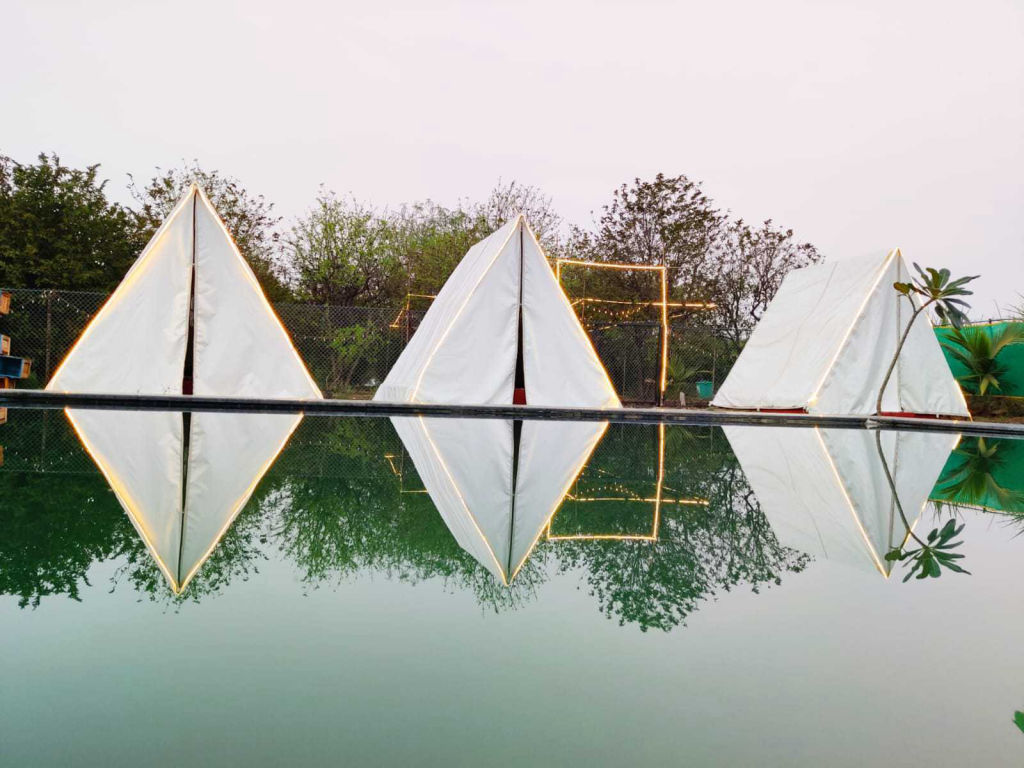
While Jejuri itself provides basic pilgrim lodges and local guesthouses, travellers looking for relaxed nature getaways, rural farm homestays, or scenic camping experiences will find attractive options scattered across the surrounding Saswad and Purandar countryside. You can browse and book unique local homestays and outdoor camps across this region on HireACamp.
Frequently asked questions
Why is turmeric thrown at Jejuri?
Turmeric, known locally as bhandara, is the sacred offering dedicated to Lord Khandoba. Devotees shower it into the air as a symbol of divine energy, prosperity, and gratitude, turning the temple premises completely golden.
How long does it take to climb the Jejuri temple hill?
The walk up the approximately two hundred stone steps to Jejuri Gad typically takes fifteen to twenty-five minutes at an easy pace. Climbing the higher Kadepathar trail takes longer, often requiring forty to sixty minutes.
Is Jejuri suitable for a day trip from Pune?
Yes, Jejuri is an easy day excursion from Pune, located around fifty kilometres away. Many travellers combine their visit with scenic stops at Dive Ghat and Mastani Lake along the route.
What is the best season to explore Jejuri?
The winter months from October to February offer the most pleasant weather for climbing the stone stairways. The monsoon months between July and September are also popular for the scenic green landscapes around the hills.
Where you'll be
2 stays nearby shown with prices
Stays near Jejuri
Book a place to stay close by
Things to do in Jejuri
48 places creators recommend within 30 km


Lists for this area
Ranked by how many creators recommend each place


Built from 0 Instagram posts by 0 creators. Every tip links back to the post it came from, and where creators disagree we show both sides.






