
Jejuri Temple
Temple near Jejuri, Maharashtra
200 m from Jejuri
The nearest town, for stays, food and fuel.
Jejuri Temple, situated atop a hillock in the Purandar region of Maharashtra, is a celebrated Hindu pilgrimage site dedicated to Lord Khandoba. The shrine is famous across western India for its unique custom of hurling vibrant yellow turmeric powder during rituals, earning it the moniker of Golden Jejuri. Visitors travel here to experience its rich folk traditions, historic Maratha-era architecture, and expansive views across the Deccan plains.
Getting there
By road
- From Pune1 hr 15 min · 50 km
- From Mumbai 3 hr 50 min · 200 km
- From Nashik5 hr 35 min · 271 km
Typical drive times without traffic. Stations and airports from OLA Maps; distances and typical drive times from OpenStreetMap (© OpenStreetMap contributors); notes from creators' Reels.
About Jejuri Temple
Written with AI from map data and general knowledge. Check prices and timings locally before you go.
The Legend and Significance of Jejuri Temple
Jejuri Temple stands as the primary seat of worship for Lord Khandoba, an incarnation of Lord Shiva who holds deep spiritual significance across Maharashtra and northern Karnataka. Worshipped variously as Martanda Bhairava or Malhari, Khandoba is revered as a guardian deity by farming communities, pastoral tribes, and warriors. For centuries, households across the region have looked upon him as their family protector, making the temple a cornerstone of regional folk traditions.
According to regional legends, Khandoba fought and defeated the demon brothers Mani and Malla on this terrain, bringing tranquility back to the surrounding plains. The hilltop where the sanctuary rests is closely tied to these foundational tales. Pilgrims arrive throughout the year to celebrate milestones, seek blessings for successful harvests, and offer prayers following marriages and the birth of children.
The Tradition of Bhandara at Jejuri
The defining visual characteristic of Jejuri Temple is the liberal showering of Bhandara, which is finely ground turmeric powder. During celebrations and daily visits, devotees shout slogans praising the deity and fling handfuls of yellow powder high into the air. This practice blankets the wide stone staircases, bastions, ramparts, and crowds in a brilliant shade of gold, which is why the town is affectionately termed Sonyachi Jejuri.
Turmeric carries deep cultural meaning in Khandoba worship, symbolising spiritual purity, divine presence, and good fortune. Watching dense clouds of golden dust billow above the stone arches against the blue sky is an unforgettable sight. Whether visiting during an energetic regional festival or on a quieter afternoon, walking through the turmeric-covered courtyards is central to the Jejuri pilgrimage.
Read more
Architecture and the Climb to the Shrine
Reaching the sanctuary of Jejuri Temple requires ascending a broad stone stairway that leads straight up the hillside. Along the path, travellers pass dozens of striking Deepstambhas, or stone lamp pillars, erected over centuries by prominent patrons and noble families of the Maratha era. In centuries past, these towering carved columns held burning oil lamps during festive nights, creating a visible beacon across the countryside.
The complex at the summit is built like a fortified citadel, featuring heavy stone ramparts, rounded bastions, and imposing arched gateways capable of withstanding siege. Within the main courtyard stands the stone temple housing the sacred lingams and images of Khandoba and his consort Mhalsa. From the edges of the fortified courtyard, visitors can take in panoramic vistas of rural Purandar, taking in distant hill chains, cultivated fields, and traditional water tanks.
Best Time to Visit Jejuri Temple
The cooler months from October to February are generally considered the best time to visit Jejuri Temple. The daytime weather is moderate during this window, making the outdoor walk up the stone stairs much more comfortable. Crisp morning air and clearer skies also enhance the sweeping views of the surrounding Purandar countryside from the temple ramparts.
The monsoon period between July and September brings welcome showers, coating the otherwise dry scrubland of the Deccan plateau in rich greenery. While rainfall can make the turmeric-slicked stone walkways somewhat slippery, the refreshing weather appeals to many travellers. In contrast, the summer months from March to May bring intense heat that warms the exposed stone steps, so anyone visiting during this season should plan their climb for the early morning or late afternoon.
How to Reach Jejuri Temple
Jejuri is located in the Purandar taluka of Pune district and is well connected by road and rail to key regional transport hubs. Travellers departing from Pune typically take the route via Saswad, navigating past scenic stretches like Dive Ghat before descending into the Jejuri plains. Regular public transport buses run between Pune and Jejuri, and the town also has a railway station that connects to local trains running on the Pune-Miraj line.
Those travelling from Mumbai can take the Mumbai-Pune Expressway before turning onto regional arterial roads towards Saswad and Jejuri. Private vehicles and taxis offer great convenience for day trips or weekend excursions, allowing visitors the flexibility to pause along scenic spots in the hills. Because major festival dates see heavy surges in pilgrim numbers, it is wise to check local travel conditions before departing.
Tips for Travellers Visiting Jejuri
Climbing to Jejuri Temple involves a sustained walk up several stone steps, so travellers should wear practical footwear that is easy to slip on and off before entering inner prayer halls. Because turmeric powder is tossed freely throughout the complex, it is best to wear simple, washable cotton clothing that you do not mind getting stained yellow.
Carrying drinking water and sun protection such as hats or sunglasses is helpful, especially if you happen to climb during the warmer middle hours of the day. To avoid the heaviest crowds and long wait times, try to plan your visit on a weekday morning. Be mindful of local customs, take care of your personal belongings in busy areas, and observe any signs regarding photography restrictions in the main sanctum.
Places to Explore Around Jejuri
A visit to Jejuri Temple can easily be extended into a broader tour of the Purandar area. Right within the vicinity of the hill base lie historical water bodies such as Holkar Talav, Bajirao Peshwa Lake, and Malhar Sagar, each reflecting the traditional water management heritage of the region and providing peaceful spots to pause after your climb.
A short drive westward brings you to the foot of Purandar Fort, an iconic stronghold of Maratha history known for its trekking routes, stone fortifications, and panoramic mountain views. Travellers heading back towards Pune will also pass Dive Ghat, a celebrated viewpoint that looks out over sweeping valleys, as well as Mastani Lake, adding a rich mix of history and scenery to your journey.
Where to Stay near Jejuri
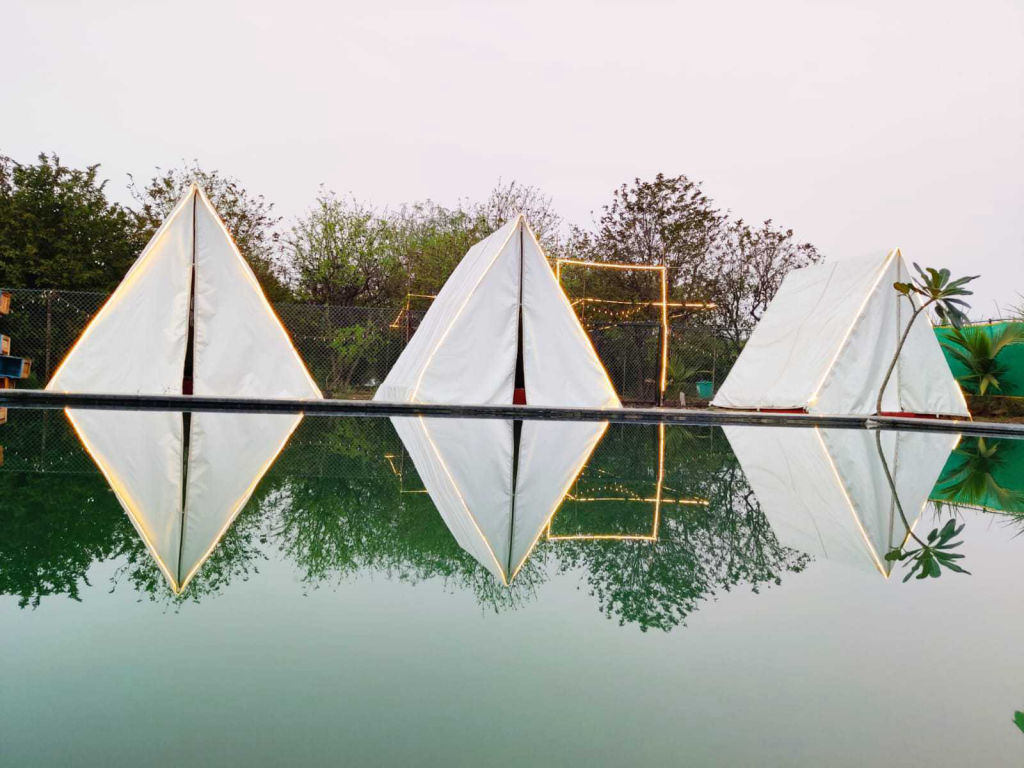
Travellers planning an overnight stay near Jejuri will find diverse choices in the nearby countryside, ranging from tranquil farm cottages to scenic open-air campsites and local homestays scattered across the Purandar valley.
You can discover and book verified homestays, nature stays, and tented camping options in the area through HireACamp, allowing you to relax in rural surroundings while remaining within easy reach of the temple.
Frequently asked questions
Why is turmeric thrown at Jejuri Temple?
Turmeric, locally called Bhandara, is considered sacred to Lord Khandoba and represents purity, prosperity, and divine power. Devotees shower it into the air as an offering, giving the entire temple complex its famous golden hue.
How many steps lead up to Jejuri Temple?
Devotees typically climb around two hundred stone steps to reach the main hilltop temple. The incline is gradual and lined with stone arches and Deepstambhas where travellers can pause along the way.
Can elderly travellers visit Jejuri Temple?
Elderly travellers can visit, but the stone staircase requires a moderate level of physical stamina. Local palanquin arrangements are often available at the base for those who cannot manage the ascent on foot, though availability should be verified on site.
What kind of clothes should I wear to Jejuri Temple?
Modest and comfortable traditional or casual clothing is recommended for visiting the temple. Because turmeric powder is commonly thrown and lingers on stone surfaces, wear clothes that can be easily washed.
How far is Jejuri Temple from Pune?
Jejuri Temple is located roughly fifty kilometres southeast of Pune. By road via Saswad and Dive Ghat, the journey typically takes around one and a half to two hours depending on local traffic.
Where you'll be
Purandhar, MH · 2 stays nearby shown with prices
Stays near Jejuri Temple
Book a place to stay close by
More places near Jejuri Temple
Within 20 km


Lists for this area
Ranked by how many creators recommend each place


Built from 0 Instagram posts by 0 creators. Every tip links back to the post it came from, and where creators disagree we show both sides.


