
Palani Murugan Temple
Temple near Palani, Tamil Nadu
1.3 km from Palani
The nearest town, for stays, food and fuel.
Palani Murugan Temple, officially known as Arulmigu Dhandayuthapani Swamy Thirukoil, is one of the six revered abodes of Lord Murugan, set atop the Sivagiri hill in the town of Palani, Tamil Nadu. It attracts millions of devotees and travellers each year, drawn by its deep spiritual heritage, ancient Dravidian architecture, and scenic views across the plains at the foot of the Western Ghats. The shrine honours Lord Murugan in his form as an ascetic monk, carrying a staff and stripped of worldly adornments.
Getting there
By road
- From PalaniNearest town2 min · 1.5 km
- From Coimbatore2 hr 15 min · 104 km
- From Madurai2 hr 40 min · 116 km
- From Kochi6 hr · 263 km
Typical drive times without traffic. Stations and airports from OLA Maps; distances and typical drive times from OpenStreetMap (© OpenStreetMap contributors); notes from creators' Reels.
About Palani Murugan Temple
Written with AI from map data and general knowledge. Check prices and timings locally before you go.
Significance and history of Palani Murugan Temple
The Palani Murugan Temple occupies a preeminent place in Tamil culture and Hindu devotional traditions. It is celebrated as the third of the Arupadaiveedu, the six sacred encampments dedicated to Lord Murugan. According to Hindu mythology, the divine sage Narada once presented a fruit of divine knowledge to Lord Shiva and Goddess Parvati. To resolve a gentle rivalry between their sons over who should receive it, a contest was held: whoever circled the universe first would be awarded the fruit. While Lord Murugan set off on his peacock to traverse the cosmos, his brother Ganesha simply walked around his parents, reasoning that they encompassed the entire universe, and claimed the prize. Upon his return, Murugan felt wronged and renounced all worldly possessions, retreating south to the hill of Sivagiri to live as a hermit ascetic.
The idol installed in the sanctum sanctorum has a distinct history. Tradition attributes its creation to the ancient Tamil siddhar Bogar, one of the foremost masters of alchemy and traditional medicine. Bogar is said to have crafted the deity using Navapashanam, a unique amalgam of nine distinct natural mineral compounds and herbal extracts. Over centuries, rulers of the Chera and Pandyan dynasties patronised the temple, adding spacious courtyards, mandapams, and perimeter walls that still frame the hill summit today.
Reaching the hilltop temple
Perched roughly one hundred and fifty metres above the town, the hilltop complex can be reached through several pathways. The traditional method is by climbing the stone steps that wind up the southern and eastern flanks of the hill. The main stairway consists of hundreds of well-paved, shaded steps that provide pilgrims with a meditative ascent, interspersed with resting points and small shrines dedicated to various guardian deities.
For senior citizens, young children, or those seeking an easier way up, mechanical transit options operate on the hillside. A funicular haulage winch runs on a dedicated track, slowly carrying passenger cars up the rocky incline while offering wide panoramas of the surrounding agricultural land and distant peaks. A ropeway cable car system also operates between the base and the summit, completing the ascent in just a few minutes. Because maintenance schedules and weather conditions can cause temporary stoppages of the ropeway and winch, travellers should check operational status locally on the day of their visit.
Read more
Rituals, traditions, and Panchamirtham
The rituals at Palani are deeply rooted in ascetic practices and acts of penance. Devotees routinely shave their heads at the foot of the hill as a gesture of humility and surrender of ego before climbing to the temple. Carrying the Kavadi—a decorated wooden or bamboo frame balanced across the shoulders—is another major practice, often performed by pilgrims who walk long distances on foot from distant towns across southern India.
Palani is also universally recognised for its unique culinary offering, the Palani Panchamirtham, which holds a protected Geographical Indication tag. This sacred sweet preparation is made without adding water, blending five primary natural ingredients: mountain bananas, country jaggery, pure ghee, honey, and cardamom, often mixed with dates or small chunks of sugar candy. The mixture is offered during the daily abhishekam rituals and distributed to devotees. Its natural preservation method allows it to stay fresh for weeks, making it the most sought-after prasadam for travellers returning home.
Best time to visit Palani
Palani experiences a semi-arid, tropical climate typical of interior southern Tamil Nadu, making the winter months from October to March the most comfortable time for a trip. During this period, daytime temperatures remain pleasant and the evenings bring cool breezes flowing down from the nearby Palani and Kodaikanal hills. Climbing the open steps is far less physically demanding during these cooler months.
The summer months, spanning March to June, bring intense heat, with midday temperatures frequently crossing thirty-eight degrees Celsius. If you visit in the summer, it is best to undertake the climb in the early morning before sunrise or after late afternoon when the stone steps have cooled down. The region receives modest rainfall during the Southwest Monsoon between July and September, followed by heavier showers during the Northeast Monsoon in October and November, which wash the rocky slopes and turn the surrounding scrub forests vivid green.
Major festivals at Palani Murugan Temple
While Palani sees steady streams of devotees throughout the year, the atmosphere becomes intensely vibrant during its major seasonal festivals. The most famous of these is Thaipusam, celebrated between January and February. During Thaipusam, the highways and rural roads leading toward Palani fill with tens of thousands of pilgrims walking barefoot, chanting hymns, and carrying decorated kavadis or pots of sanctified milk.
Panguni Uthiram, celebrated in March or April, is another major observance that marks the conclusion of the seasonal harvest cycle, during which devotees bring holy water from the Kaveri River at Kodumudi to bathe the deity. Other prominent occasions include Vaikasi Visakam, celebrating the birth of Lord Murugan, and Skanda Sashti, held in late autumn to commemorate the triumph of good over evil. Travellers seeking quiet contemplation may prefer to avoid festival dates, as the hill town experiences massive crowds during these weeks.
How to reach Palani
Palani is well connected by rail and road to major regional transport hubs in Tamil Nadu and neighbouring Kerala. The Palani railway station lies on the broad-gauge route between Coimbatore, Dindigul, and Madurai, with regular passenger and express trains stopping daily. Travellers arriving by train can easily hire local auto-rickshaws or public buses from the station to reach the base of the hill.
For air travellers, the closest airport is in Coimbatore, approximately one hundred kilometres to the northwest, while Madurai Airport is situated around one hundred and twenty kilometres to the southeast. Both airports offer frequent domestic connections to key Indian metros. Extensive government and private bus networks link the Palani central bus stand with Dindigul, Tiruppur, Pollachi, Kodaikanal, and Erode. Driving to Palani by road is straightforward, with well-maintained state highways cutting through rural agricultural flatlands.
Places to visit around Palani
A visit to the temple can be seamlessly combined with exploring the natural and cultural sites clustered around the Palani hills and the Western Ghats foothills. Towards the west, Thirumoorthy Dam and the adjacent temple near Udumalpet offer peaceful water views and quiet outdoor spaces tucked against the Anamalai range.
Driving south leads directly toward the upper slopes of the Kodaikanal range. Travellers can explore Silver Cascade waterfall, Bryant Park, and the ancient forests of Tiger Shola and Adukkam as the terrain rises steeply from the plains. Water bodies such as Manjalar Dam and Kumbakkarai Falls, both situated within an easy driving radius along the lower slopes, offer scenic stopovers for picnics and short nature walks along rocky stream beds.
Where to stay near Palani
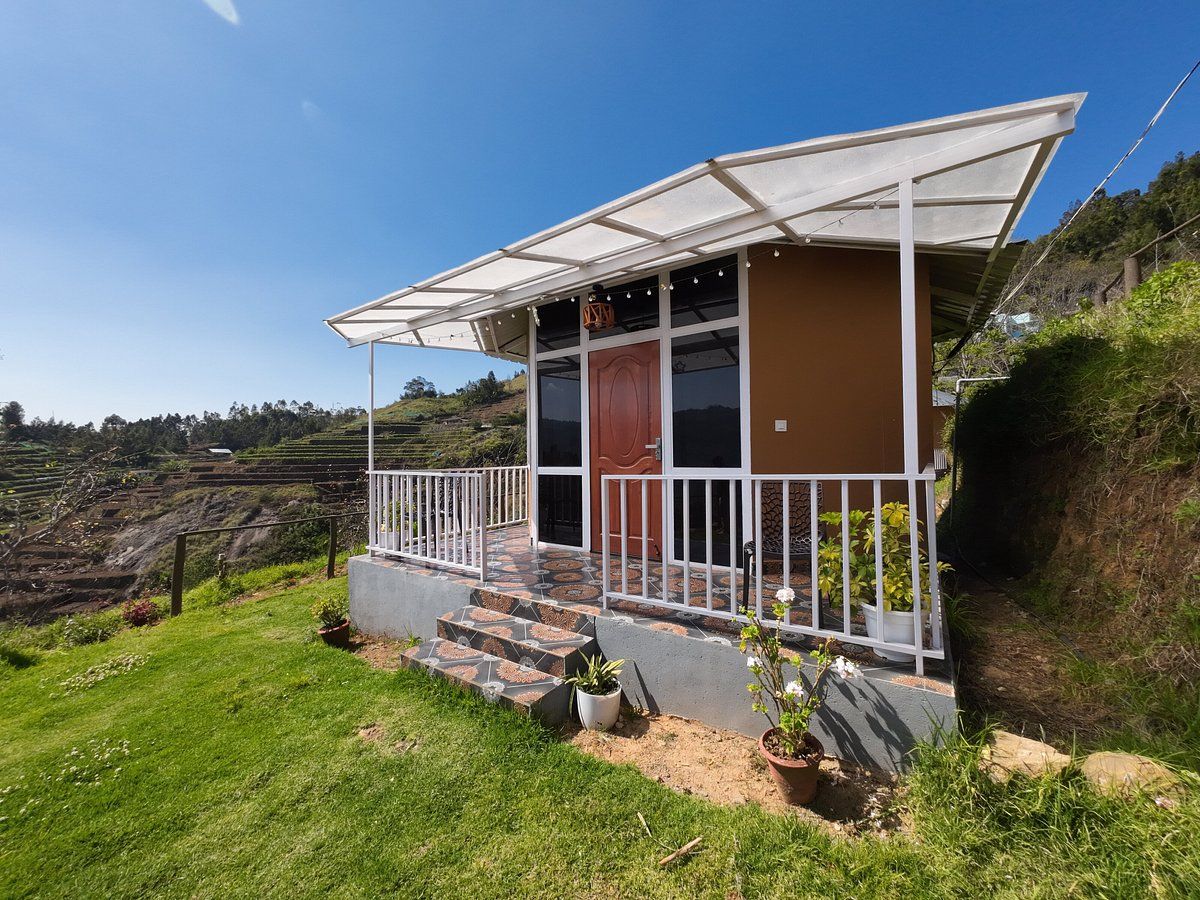
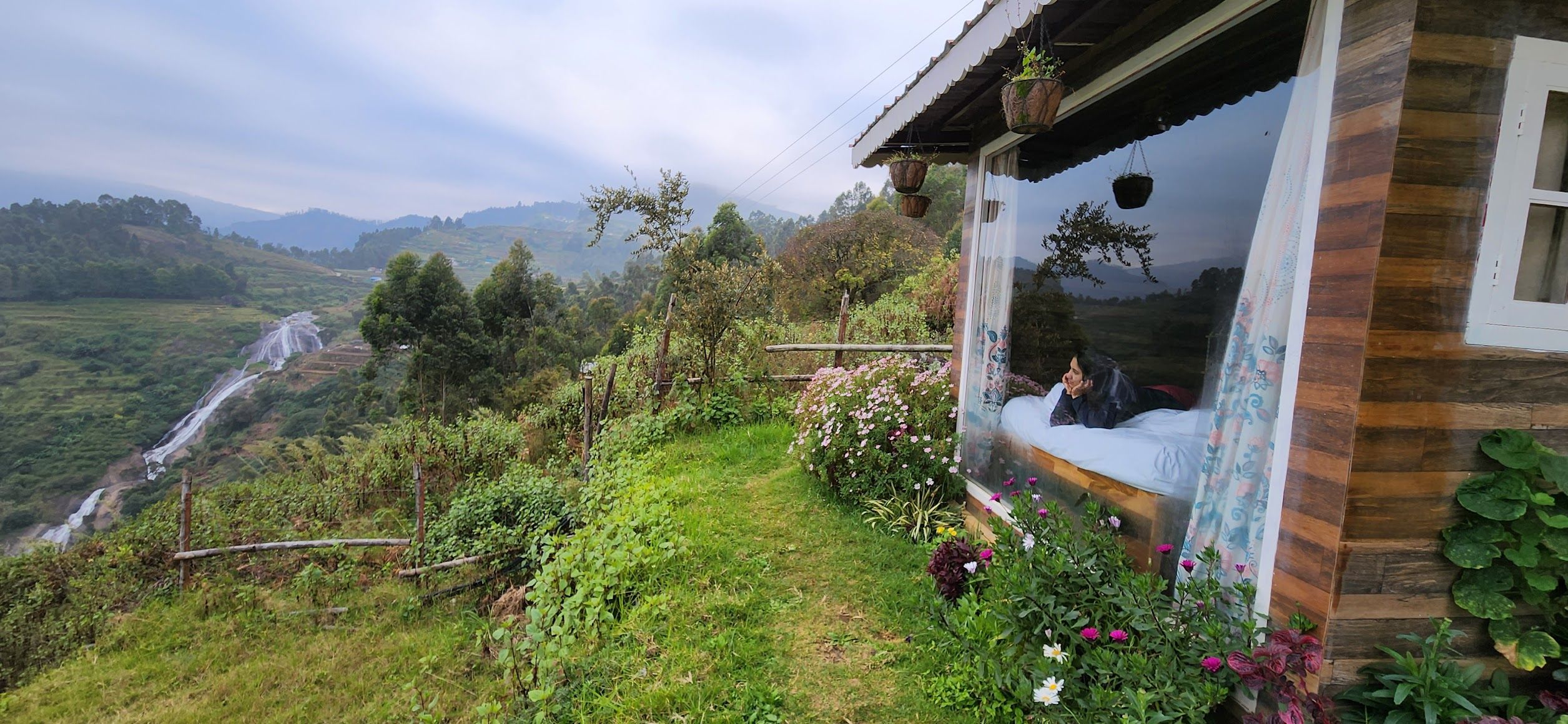
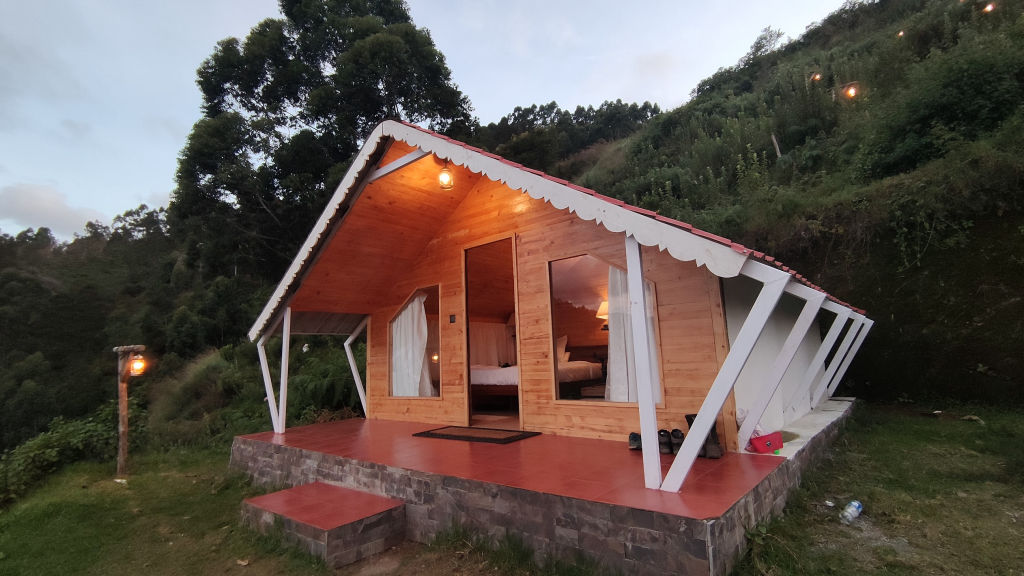
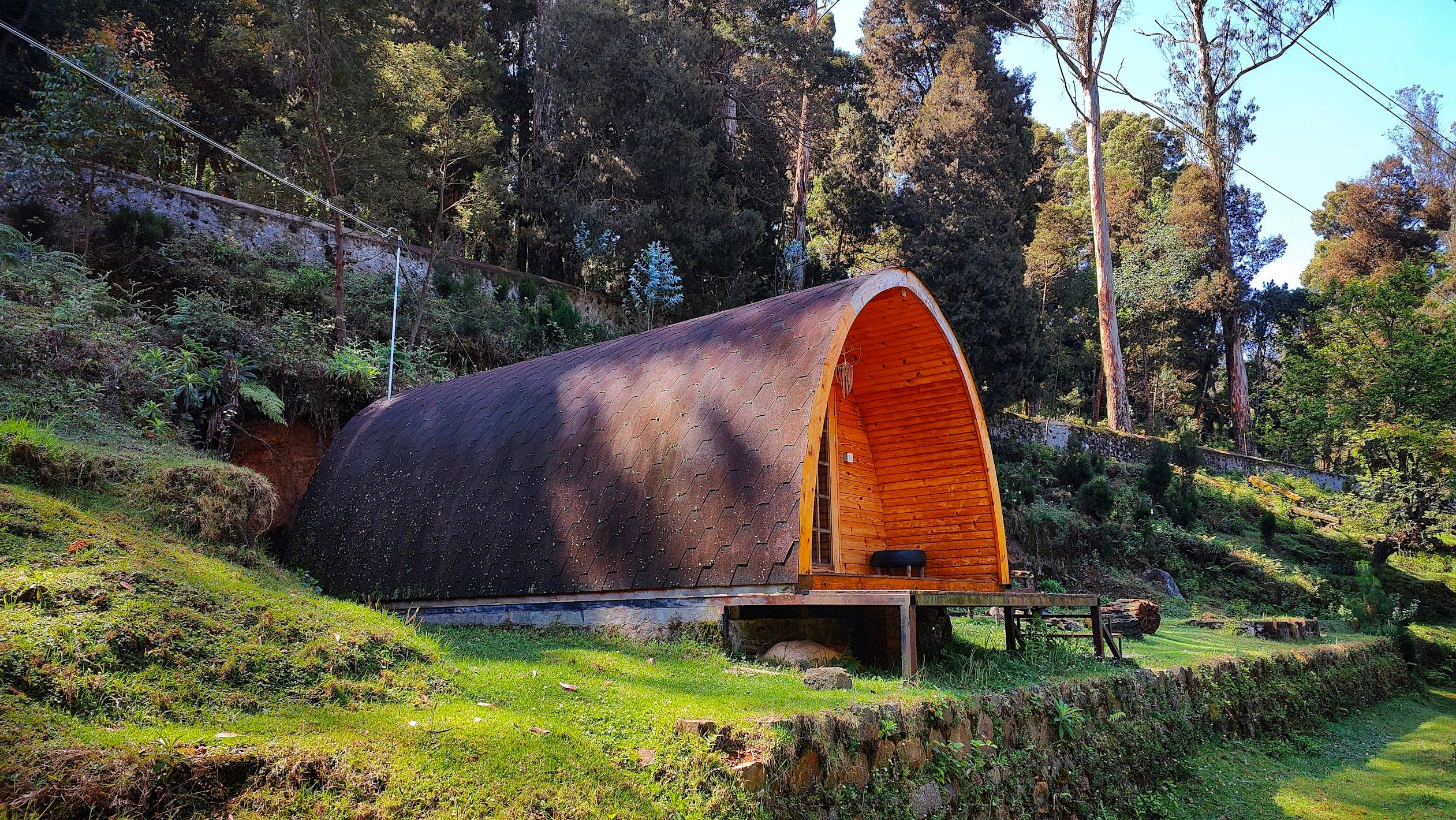
Palani offers a wide range of stay options around the base of the hill, primarily catering to short-stay pilgrims and families looking for clean, straightforward lodgings within walking distance of the temple steps. For those who prefer a tranquil getaway away from the busy town centre, rural homestays, nature retreats, and eco-camps are scattered through the surrounding countryside and along the ascending roads heading into the Kodaikanal hills.
You can explore and book handpicked campsites, peaceful farm stays, and traditional homestays in and around Palani directly on HireACamp, ensuring a quiet retreat after your temple visit.
Frequently asked questions
What is the dress code for visiting Palani Murugan Temple?
Devotees are expected to dress modestly in traditional Indian clothing, such as dhotis, kurtas, or formal shirts for men, and sarees or salwar kameez for women. Western casuals such as shorts, bermudas, and sleeveless tops are not permitted inside the sanctum.
Are there mechanical transport facilities to reach the top of Palani hill?
Yes, both a haulage winch and a passenger ropeway operate from the foothill to the summit, providing quick access for visitors who cannot climb the stairs. Operating hours and operational availability should be checked at the ticketing counters upon arrival.
What is unique about the Palani Murugan idol?
The main idol was created by the sage Bogar using Navapashanam, a legendary blend of nine minerals and medicinal compounds that according to tradition possesses rejuvenating and therapeutic properties.
What is the specialty prasadam of Palani?
The temple is renowned for Palani Panchamirtham, a traditional preparation made from hill bananas, country sugar, ghee, honey, and cardamom, celebrated for its rich flavour and long shelf life without chemical preservatives.
How long does it take to climb the steps of Palani hill?
Climbing the roughly six hundred steps typically takes between twenty to forty-five minutes, depending on your physical fitness and the pace at which you navigate the crowd.
Where you'll be
Arulmigu Dhandayuthapani Swamy Thirukoil,, Palani · 7 stays nearby shown with prices
Stays near Palani Murugan Temple
Book a place to stay close by


More places near Palani Murugan Temple
Within 20 km


Built from 0 Instagram posts by 0 creators. Every tip links back to the post it came from, and where creators disagree we show both sides.






