
Pale Buddhist Caves
Cave near Nadgaon Tarf Birwadi, Maharashtra
1.8 km from Nadgaon Tarf Birwadi
The nearest town, for stays, food and fuel.
The Pale Buddhist Caves are an ancient complex of rock-cut caverns carved into the rugged basalt hills near Nadgaon Tarf Birwadi in Maharashtra. Dating back to early historical periods, these monastic shelters served as tranquil sanctuaries and resting points for Buddhist monks traversing the trade passes of the Western Ghats. Today, travellers and history enthusiasts visit the site to admire its timeless stone architecture and take in sweeping views of the surrounding Sahyadri countryside.
Getting there
By road
- From Nadgaon Tarf BirwadiNearest town7 min · 3.4 km
- From Pune2 hr 35 min · 121 km
- From Mumbai 3 hr 10 min · 165 km
- From Nashik6 hr 25 min · 363 km
Typical drive times without traffic. Stations and airports from OLA Maps; distances and typical drive times from OpenStreetMap (© OpenStreetMap contributors); notes from creators' Reels.
About Pale Buddhist Caves
Written with AI from map data and general knowledge. Check prices and timings locally before you go.
History and significance of Pale Buddhist Caves
The Pale Buddhist Caves belong to a prominent tradition of rock-cut architecture that flourished throughout western India between the second century BCE and the sixth century CE. As commerce grew between coastal Konkan ports and the inland markets of the Deccan plateau, major travel routes developed across the precipitous ghat passes. Buddhist monasteries were deliberately established along these arterial trade corridors to offer spiritual solace to merchants, travellers, and wandering ascetics.
Carved directly into the volcanic basalt cliffside, the complex at Pale represents a quiet, contemplative chapter in regional monastic life. While less crowded than major cave systems nearby, the site holds notable historical value. The monks engineered these living spaces to be entirely self-sufficient, chiselling out dwelling chambers, meditation halls, and rainwater storage systems. Walking through the cave openings provides a rare, tangible link to the communities that lived and prayed among these secluded hills centuries ago.
Rock-cut architecture and cave features
The architectural layout of the Pale Buddhist Caves demonstrates the practical ingenuity of early stone masons. The complex is composed of simple viharas, or residential halls, alongside individual cells where monks spent periods in solitary study and contemplation. Unlike the elaborately decorated facades seen at later Mahayana sites, the craftsmanship here leans towards clean lines, functional alcoves, and unadorned stone pillars that reflect the early Theravada tradition.
One of the most remarkable aspects of the site is its indigenous water management system. Deep rock-cut cisterns, known locally as podhis, are carved beneath cliff overhangs to harvest runoff during the torrential monsoon season. These reservoirs kept clean drinking water available year-round, insulated from the hot sun. As you wander along the cliff-face pathways between the openings, you will notice chisel marks that remain clearly visible on the basalt ceilings and walls, showing the patient handiwork that shaped these subterranean rooms.
Read more
Best time to visit Pale Buddhist Caves
The regional climate of the northern Western Ghats creates distinct seasonal experiences. The post-monsoon and winter months, spanning from October through February, provide the most comfortable weather for exploring the caves. During this window, temperatures are moderate, daytime skies are largely clear, and the surrounding Sahyadri foothills remain lush and green from the seasonal rains.
The monsoon period between June and September brings relentless downpours that completely transform the surrounding valleys into verdant landscapes lined with mist and seasonal streams. While the landscape is visually dramatic, visiting during peak monsoon requires extra care, as rock cut steps and dirt approach paths can turn extremely slick and muddy. The summer months from March to May bring intense heat and dry conditions, making midday ascents up the hillside physically demanding.
How to reach Pale Buddhist Caves
The Pale Buddhist Caves are situated close to Nadgaon Tarf Birwadi in the Raigad district of Maharashtra. The area is accessible by road from major transit hubs in western Maharashtra, including Pune and Mumbai. Travellers driving from Pune typically route through the ghat sections toward the Konkan lowlands, while visitors coming from Mumbai generally travel south along the Mumbai-Goa highway corridor before diverting onto rural interior roads toward Birwadi.
Public state transport buses connect regional hubs like Mahad and Birwadi with nearby villages. From the road access points near Nadgaon Tarf Birwadi, visitors usually need to cover the final stretch on foot along a gentle hillside trail that climbs toward the cliff base. Because public transit schedules in interior rural areas can vary, hiring a private vehicle or driving your own car allows greater flexibility when planning your day.
Tips for your visit
Exploring rock-cut heritage sites in the Sahyadris requires basic preparation. Wear sturdy walking shoes with good traction, as the stone pathways, natural rock steps, and access trails can be uneven and dusty. There are no commercial stalls or water facilities once you begin the ascent to the caves, so be sure to bring an adequate supply of drinking water and light refreshments.
Keep sun protection in mind, including a wide-brimmed hat and sunscreen, especially if you visit outside the monsoon season. Carry a small flashlight or headlamp to illuminate darker interior chambers and examine rock-cut inscriptions or cistern depths safely. Above all, treat the ancient monument with respect: do not touch delicate rock surfaces, avoid writing graffiti on cave walls, and pack out all your trash to keep the archaeological site pristine.
Places to explore nearby
The geography surrounding Pale is steeped in regional history and dramatic topography, making it easy to combine your cave excursion with other regional destinations. To the west lies the historic citadel of Raigad Fort, the celebrated capital of the Maratha Empire, perched atop a massive plateau with imposing ramparts and historical structures. Hikers and nature lovers can also journey toward scenic mountain viewpoints such as Madhe Ghat, renowned for its dramatic drop-offs into the Konkan valley.
For those interested in hill fort trekking, the area offers access to storied peaks like Torna Fort, Mangad Fort, and the high battlements of Rajgad. If your route continues toward the higher plateaus of the Sahyadris, the serene waters of Dhom Lake and the breezy tablelands around Raireshwar offer tranquil spots for outdoor exploration and relaxing drives through the hills.
Where to stay near Pale Buddhist Caves
The rural countryside around Nadgaon Tarf Birwadi and the broader Raigad foothills offer a peaceful break from busy urban life. Staying close to the area allows you to visit the caves in the cool morning air and enjoy leisurely evenings under expansive country skies.
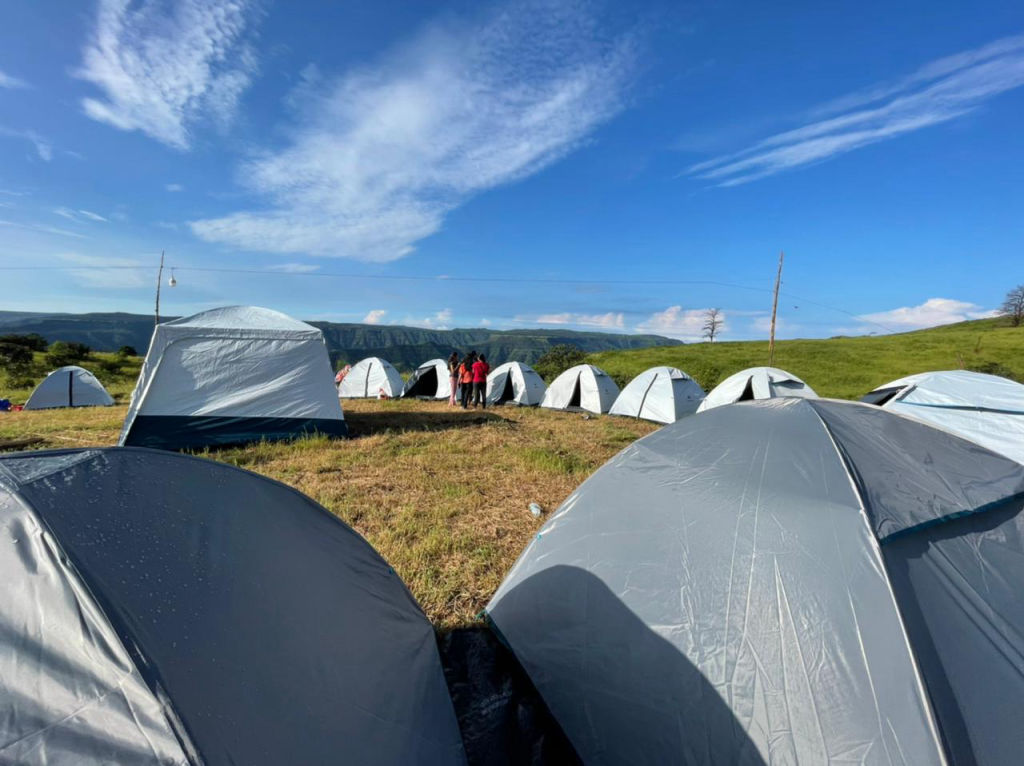
A variety of local accommodations, including riverside campsites, rustic nature stays, and family-run homestays, are available throughout the surrounding valley and near regional access points. You can discover and book verified stays in the region on HireACamp, giving you a comfortable base for your heritage walks and outdoor adventures.
Frequently asked questions
What are the Pale Buddhist Caves?
The Pale Buddhist Caves are an ancient cluster of rock-cut monastic chambers, viharas, and water cisterns carved by Buddhist monks into the basalt hills of Maharashtra's Raigad district.
Is there a trek required to reach the caves?
Yes, reaching the caves involves a short uphill walk along a hillside trail from the base road near Nadgaon Tarf Birwadi. The walk requires basic physical fitness and sturdy footwear.
When is the best time of year to visit Pale Buddhist Caves?
The ideal time to visit is between October and February, when the weather is pleasantly cool and the countryside remains green following the southwest monsoon.
Are there food and water stalls at the caves?
No, the site is an undeveloped archaeological location with no shops or running water. Visitors should carry sufficient drinking water and snacks from nearby towns like Birwadi.
Can I visit other attractions near Pale Buddhist Caves?
Yes, the caves are located within driving range of several prominent Sahyadri attractions, including the historic Raigad Fort, Madhe Ghat, Mangad Fort, and Torna Fort.
Where you'll be
Maharashtra · 1 stay nearby shown with prices
Stays near Pale Buddhist Caves
Book a place to stay close by
More places near Pale Buddhist Caves
Within 20 km


Lists for this area
Ranked by how many creators recommend each place


Built from 0 Instagram posts by 0 creators. Every tip links back to the post it came from, and where creators disagree we show both sides.


