
Baijnath Temple
Temple near Baijnath, Himachal Pradesh
400 m from Baijnath
The nearest town, for stays, food and fuel.
Baijnath Temple is an ancient thirteenth-century stone shrine dedicated to Lord Shiva, situated in the town of Baijnath in Himachal Pradesh. Perched along the Binwa River with views of the Dhauladhar mountain range, the temple draws pilgrims, historians, and casual travellers exploring the Kangra Valley. Visitors come to admire its classical Nagara architecture, intricate stone carvings, and tranquil atmosphere.
Getting there
By road
- From Ludhiana4 hr 50 min · 228 km
- From Amritsar5 hr · 243 km
- From Chandigarh5 hr 5 min · 241 km
- From Dehradun8 hr 25 min · 422 km
Typical drive times without traffic. Stations and airports from OLA Maps; distances and typical drive times from OpenStreetMap (© OpenStreetMap contributors); notes from creators' Reels.
About Baijnath Temple
Written with AI from map data and general knowledge. Check prices and timings locally before you go.
History and significance of Baijnath Temple
Baijnath Temple stands as one of the most prominent monuments of early medieval architecture in the Kangra district. Dating back to the early thirteenth century, inscriptions inside the shrine record that it was built in 1204 CE by two local merchant brothers, Manyuka and Ahuka. The temple is dedicated to Lord Shiva in his manifestation as Vaidyanath, meaning the Lord of Physicians or Healer. Over the centuries, it has served as a continuous seat of worship, surviving regional earthquakes and political upheavals largely intact.
Local lore associates the temple grounds with legends from the epic Ramayana, connecting it to the devotion of King Ravana towards Lord Shiva. The site holds immense spiritual value across Himachal Pradesh and northern India. Beyond its religious importance, the temple is recognized by the Archaeological Survey of India as a protected monument of national importance, valued for its historical inscriptions and preserved stonework.
Architecture of Baijnath Temple
The temple is constructed in the classical North Indian Nagara style, built using grey sandstone that has weathered beautifully over centuries. It features a sanctum sanctorum or garbhagriha crowned by a curvilinear spire known as the shikhara, preceded by a pillared congregation hall called the mandapa. In front of the entrance hall sits a stone pavilion sheltering a carved statue of Nandi, the sacred bull facing the inner sanctum. The sanctum encloses a natural stone Shiva lingam, which remains the central focus of worship.
The exterior and interior walls of Baijnath Temple are adorned with detailed carvings depicting Hindu deities, celestial nymphs, musicians, and floral motifs. Niches around the exterior walls display finely sculpted images of Ganesha, Surya, Kartikeya, and various forms of Chamunda and Parvati. The complex is set within a tidy walled courtyard paved with stone, bordering the river ravine and surrounded by manicured lawns where visitors can rest and observe the craft of medieval stone carvers.
Read more
Best time to visit Baijnath Temple
Baijnath experiences pleasant weather through much of the year, making it accessible across all seasons. The months from March to June offer clear skies, mild temperatures, and open mountain views, which makes daytime sightseeing comfortable. During the spring, the surrounding valleys turn green and the air is crisp, providing optimal conditions for photography and walking around the temple grounds.
Monsoon season runs from July through September, bringing heavy rainfall across the Kangra Valley. While the valley turns lush and misty, downpours can occasionally cause road disruptions along hilly highways. Autumn, from October to November, brings settled weather and crisp mountain air, followed by winter from December to February. Winter days are cool and sunny, while early mornings and nights turn chilly, with snowy peaks visible in the distance. The festival of Maha Shivratri, celebrated in late winter, transforms the town into an active hub of festivities and attracts large numbers of pilgrims.
How to reach Baijnath Temple
Baijnath Temple is easily accessible as it lies directly along the Pathankot-Chakki-Manali National Highway (NH 20). The temple sits right on the edge of Baijnath town, with direct vehicle access to the entrance gate. Regular state-run and private buses connect Baijnath with major regional hubs such as Palampur, Dharamshala, Mandi, and Pathankot.
For travellers arriving by air, the nearest airport is Kangra Airport at Gaggal, located around 50 kilometres away. Taxis and buses are readily available from the airport to Baijnath. The broad-gauge railway terminus closest to Baijnath is Pathankot, roughly 120 kilometres away, which connects to major cities across India. Alternatively, travellers can experience the historic Kangra Valley narrow-gauge toy train, which runs between Pathankot and Baijnath Paprola railway station, located just a short distance from the temple.
Places to visit around Baijnath
A visit to Baijnath can easily be paired with several notable attractions across the Kangra region. Just six to seven kilometres to the north lies Bir, world-renowned for paragliding takeoffs at Billing and known for its Tibetan monasteries, village walks, and relaxed cafe culture. Spending an afternoon exploring the settlements and craft workshops in Bir provides an appealing contrast to the ancient stone temple.
Nature lovers can head towards Lapas Waterfalls, located approximately twenty kilometres into the forested hills, offering a quiet natural stop off the main roads. Further west along the valley lie the tea gardens of Palampur, the historic ramparts of Kangra Fort about thirty-seven kilometres away, and the hill station of McLeod Ganj, celebrated for its Tibetan heritage, cedar forests, and Himalayan hiking trails.
Practical tips for visitors
Visitors must remove their footwear before stepping onto the raised sanctum platform and courtyard; a shoe-keeping counter is available near the entrance. As Baijnath Temple is an active place of daily worship, dressing modestly with covered shoulders and knees is expected out of respect for local customs. Photography is generally permitted in the outdoor courtyards and around the carved exterior walls, but visitors should avoid photographing devotees inside the inner sanctum.
Visiting during the early morning or around late afternoon allows you to avoid midday heat and experience the temple at its most peaceful. Morning prayers and evening aarti are moving times to visit when temple bells echo against the stone walls. Because the stone flooring can become quite hot under summer sun and cold in winter, wearing thick socks can make walking around the complex more comfortable.
Where to stay near Baijnath
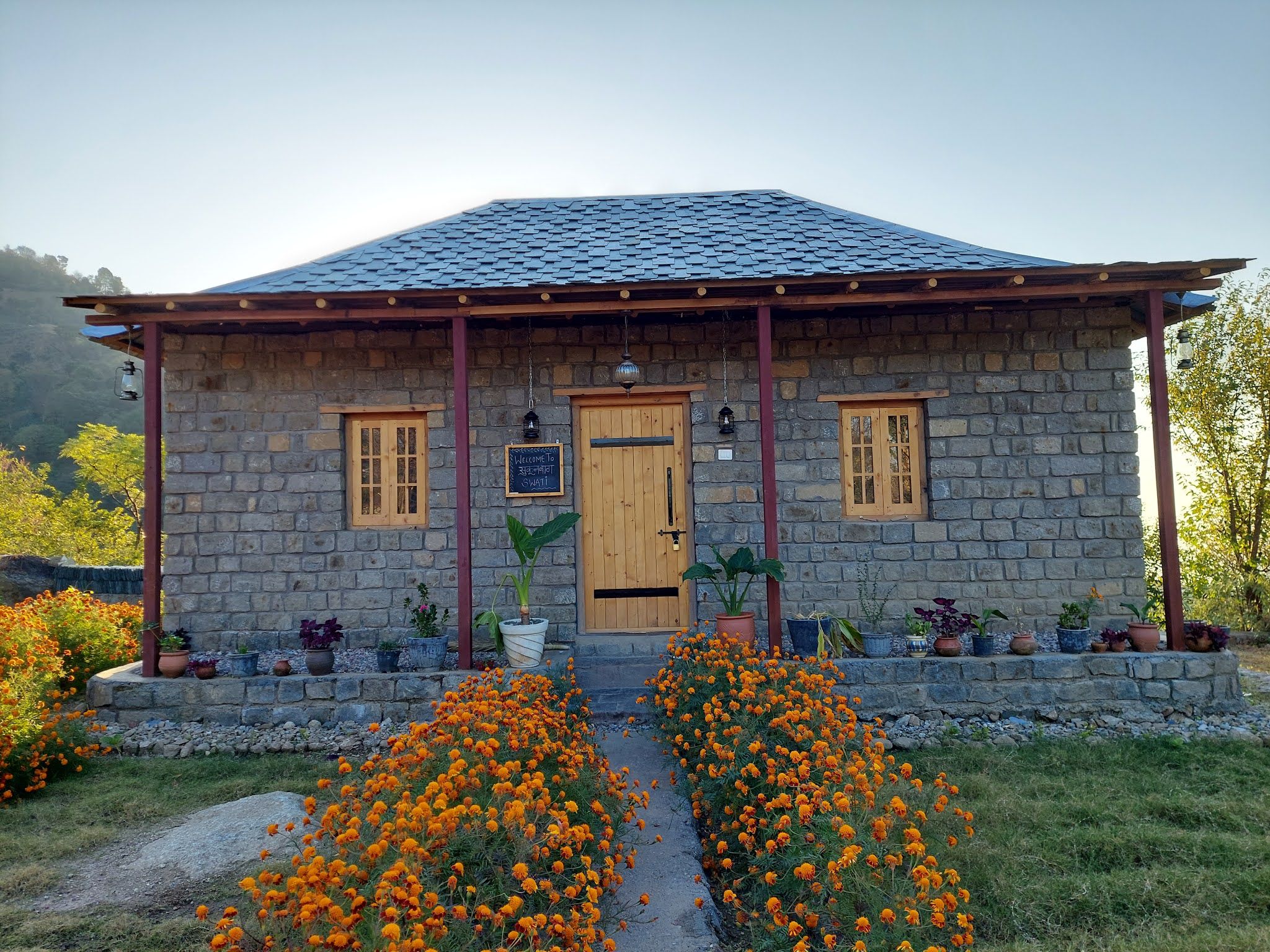
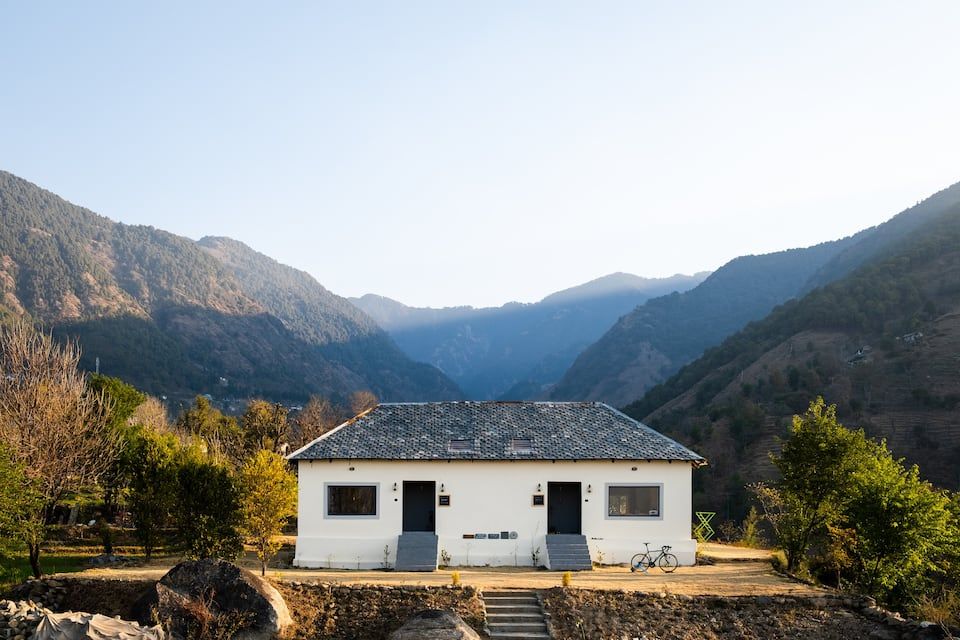
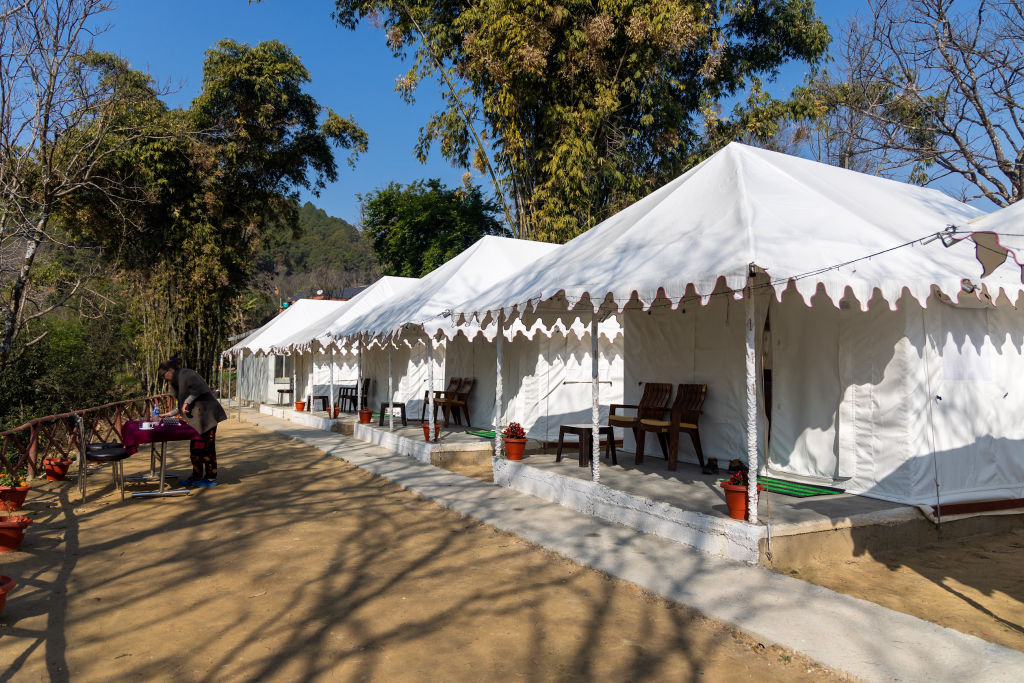
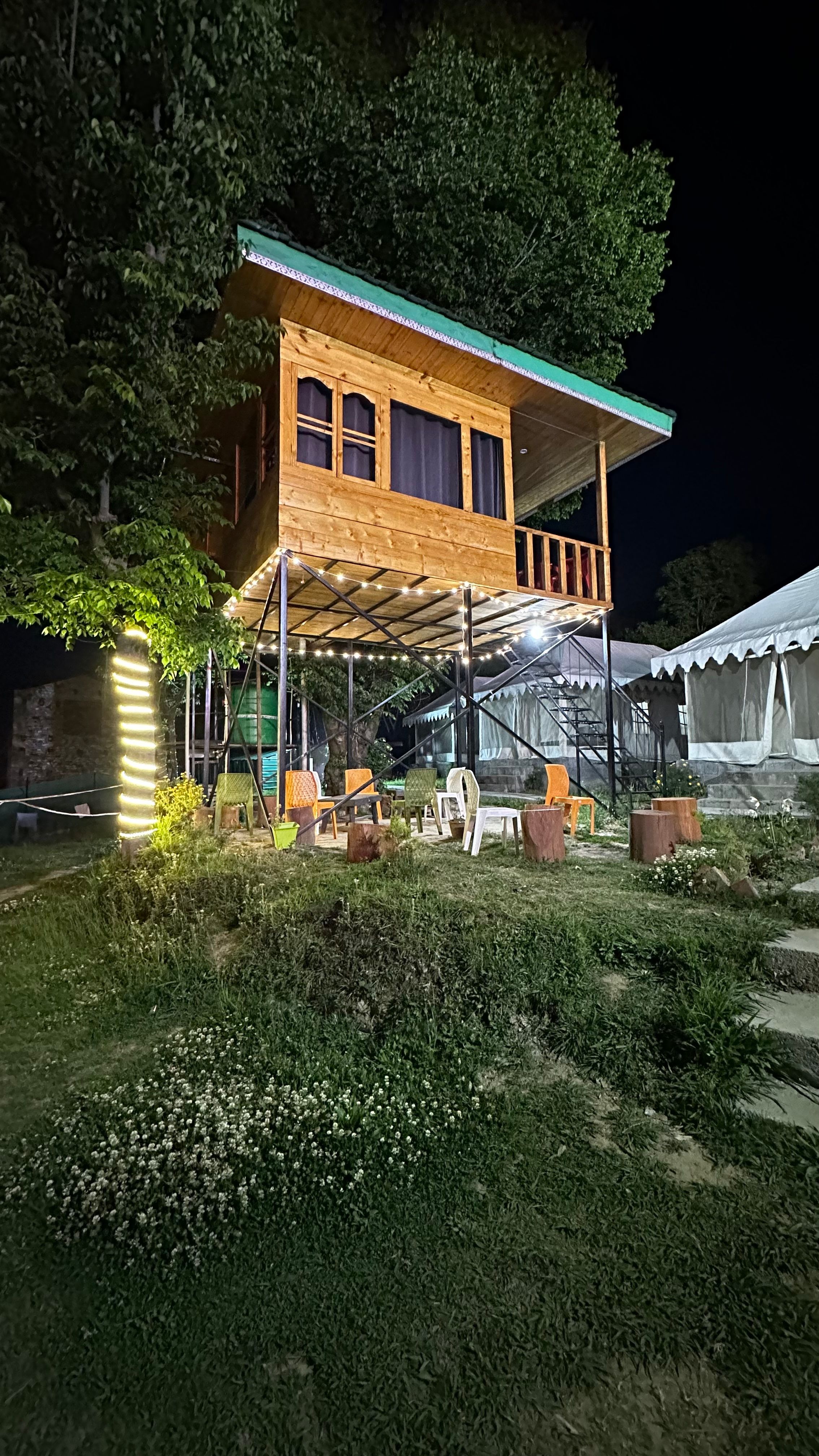
Travellers have a variety of stay options around Baijnath and the neighbouring valley settlements. You can choose from peaceful riverside homestays, traditional Himachali cottages, boutique hillside retreats, and scenic outdoor campsites scattered across the nearby hills of Bir and Palampur. Staying in the surrounding villages allows you to enjoy quiet nights under starlit skies and wake up to mountain views. You can explore and book verified stays, rural homestays, and camp options in the Baijnath area through HireACamp.
Frequently asked questions
Which deity is worshipped at Baijnath Temple?
Baijnath Temple is dedicated to Lord Shiva, worshipped here as Vaidyanath, meaning the Lord of Physicians.
How old is Baijnath Temple in Himachal Pradesh?
Stone inscriptions found on the premises date the construction of the present temple structure to 1204 CE, making it over eight centuries old.
How far is Baijnath Temple from Bir Billing?
Baijnath Temple is located roughly six to seven kilometres from the Bir village area, making it a quick drive of about fifteen minutes.
Is photography permitted at Baijnath Temple?
Photography is usually allowed within the temple courtyard and around the carved stone exterior, but taking photos inside the sanctum sanctorum during worship is discouraged.
What is the best way to reach Baijnath Temple by public transport?
Regular state and private buses travel to Baijnath along National Highway 20 from Palampur, Dharamshala, and Pathankot, with the bus stop located within walking distance of the temple.
Where you'll be
Pathankot-Chakki-Manali National Highway No. 20, Baijnath · 4 stays nearby shown with prices
Stays near Baijnath Temple
Book a place to stay close by
More places near Baijnath Temple
Within 20 km


Built from 0 Instagram posts by 0 creators. Every tip links back to the post it came from, and where creators disagree we show both sides.






