
Daranghati Wildlife Sanctuary
Wildlife sanctuary near Daran Ghati, Himachal Pradesh
900 m from Daran Ghati
The nearest town, for stays, food and fuel.
Daranghati Wildlife Sanctuary is an unspoiled high-altitude protected reserve situated in the upper reaches of Shimla district near Rampur Bushahr in Himachal Pradesh. Set amidst deep conifer forests, roaring mountain streams, and rugged ridgelines, it serves as a secluded sanctuary for rare Himalayan wildlife and bird species. Outdoor lovers and trekkers travel here to experience peaceful mountain trails, dense woodland cover, and views of the surrounding western Himalayan ranges.
Getting there
By road
- From Daran GhatiNearest town11 min · 3.5 km
- From Chandigarh5 hr 55 min · 267 km
- From Dehradun7 hr 25 min · 309 km
- From Ludhiana7 hr 55 min · 368 km
Typical drive times without traffic. Stations and airports from OLA Maps; distances and typical drive times from OpenStreetMap (© OpenStreetMap contributors); notes from creators' Reels.
About Daranghati Wildlife Sanctuary
Written with AI from map data and general knowledge. Check prices and timings locally before you go.
About Daranghati Wildlife Sanctuary
Perched on the northern and southern slopes of the Dhauladhar and Pir Panjal spurs above the Satluj river basin, Daranghati Wildlife Sanctuary encompasses a wide range of undisturbed mountain ecosystems. Historically, these lush forested slopes served as royal hunting grounds for the erstwhile rulers of the Bushahr kingdom before being formally notified as a protected sanctuary in 1962.
The sanctuary rises from mid-altitude mixed forests to high alpine meadows and craggy ridges. Because it remains tucked away from major commercial tourist circuits, Daranghati offers a rare glimpse into the pristine wilderness that once blanketed Himachal Pradesh. Dense stands of deodar, blue pine, silver fir, spruce, and moru oak give way to subalpine shrublands and sweeping pastures as elevation increases, creating a quiet retreat for wilderness travellers.
Wildlife and Birdlife at Daranghati
Daranghati Wildlife Sanctuary provides critical sanctuary for several elusive and threatened Himalayan animal species. Mammals inhabiting the dense cover include the Himalayan black bear, brown bear, leopard, musk deer, barking deer, goral, and serow. In the quieter undergrowth and high canopy, watchful visitors may also detect traces of yellow-throated martens, red foxes, and Himalayan flying squirrels.
For birdwatchers, the sanctuary holds exceptional importance as a premier habitat for native pheasants. It is one of the few strongholds of the vulnerable Western tragopan, alongside the vibrant iridescent Himalayan monal, which is the state bird of Himachal Pradesh. Birding along the forest edges also reveals koklass pheasants, kalij pheasants, treecreepers, raptors, and an array of high-altitude warblers that arrive during the warm summer breeding season.
Read more
Trekking and Outdoor Activities
Trekking is the primary way to explore Daranghati Wildlife Sanctuary. A network of age-old bridle paths, shepherd tracks, and forest trails criss-crosses the sanctuary, some historically linking the Satluj valley with the remote reaches of the Pabbar valley. Walking these trails leads hikers through shaded cedar forests, past bubbling snowmelt streams, and up onto exposed crests that present sweeping views of snow-dusted Himalayan peaks.
Day walks starting from perimeter mountain villages allow for scenic exploration without requiring extensive wilderness setups. For more experienced trekkers, cross-country routes provide backcountry hiking across high ridges and deep gorges. Due to the dense forest cover and rugged topography, relying on local route knowledge is recommended when navigating deeper into the sanctuary terrain.
Best Time to Visit Daranghati
The most favourable seasons to visit Daranghati Wildlife Sanctuary are spring to early summer, spanning from April to June, and the post-monsoon autumn months of September to November. During spring, temperatures are comfortable for hiking, forest flora begins to blossom, and wildlife is active across the mid-elevation valleys.
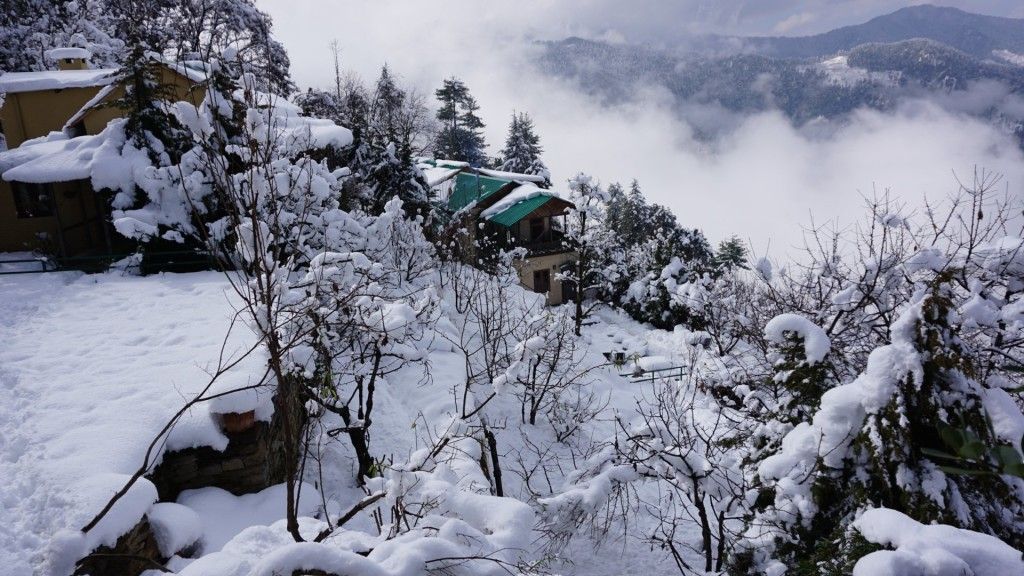
Monsoon season typically peaks between July and August, bringing heavy rainfall to the lower approaches and increasing the potential for landslides along access roads. Autumn follows with crystalline blue skies, crisp air, and exceptional visibility across the distant snowy peaks. Winter, lasting from December to March, brings deep snow to the higher elevations and cold conditions throughout the region, making it suitable only for cold-weather enthusiasts prepared for winter conditions.
How to Reach Daranghati Wildlife Sanctuary
Daranghati Wildlife Sanctuary is accessed primarily through Rampur Bushahr, a significant town on National Highway 5 in Shimla district. From Shimla, which serves as the nearest major transit hub connected by road, narrow-gauge train, and regional air links, travellers drive along the Hindustan-Tibet road past Narkanda before descending towards the Satluj valley to reach Rampur.
From Rampur, secondary mountain roads climb into the sanctuary buffer zone toward rural settlements such as Mashnoo and Sarahan. These approach roads are steep, winding, and narrow, making sturdy vehicles with good ground clearance advisable. Regular public buses connect Shimla with Rampur, after which travellers can hire local taxis or private transport to reach the roadheads bordering the sanctuary.
Places to Visit Around Daranghati
A trip to Daranghati can easily be combined with exploring nearby cultural and natural landmarks in the upper Shimla and Kinnaur regions. Down in the valley, Rampur Bushahr preserves fine regional craftsmanship and wooden architecture, highlighted by the historic Padam Palace. Nearby in Sarahan stands the famous multi-tiered Bhimakali Temple, an architectural blend of Hindu and Buddhist traditions with impressive Himalayan views.
Further east and south, adventurous travellers can explore the Pabbar valley, venture up to Chanshal Peak and Chanshal Pass, or trek towards high-altitude waters like Chandernahan Lake. To the northwest, crossing over towards Jalori Pass offers access to the Tirthan Valley, providing endless possibilities for scenic road trips and extended outdoor exploration.
Tips for Visiting and Where to Stay
Because Daranghati is an eco-sensitive protected reserve with minimal commercial development, visitors should come prepared with self-sufficient gear. Wear sturdy hiking boots, pack layered clothing suited for rapid weather changes, and carry your own water filtration tools and snacks. Practice strict leave-no-trace principles by packing out all non-biodegradable waste, keeping noise to a minimum, and respecting the wild residents and local pastoralists.
There are no commercial hotels inside the core wildlife sanctuary. Basic forest department rest houses in the surrounding area may offer lodging subject to local permissions. Travellers looking for comfortable accommodations can stay in nearby villages, apple orchards, and towns around Rampur. A selection of rural homestays, nature retreats, and camping spots near the sanctuary can be booked on HireACamp.
Frequently asked questions
Where is Daranghati Wildlife Sanctuary located?
Daranghati Wildlife Sanctuary is located in the high-elevation ranges of Shimla district, near the town of Rampur Bushahr in Himachal Pradesh, India.
What wildlife can you see in Daranghati Wildlife Sanctuary?
The sanctuary is home to Himalayan black bears, brown bears, leopards, musk deer, serow, and flying squirrels, as well as pheasants including the Himalayan monal and Western tragopan.
Can visitors trek inside the sanctuary?
Yes, visitors can explore the sanctuary on foot via old trade routes, shepherd trails, and forest paths, though hiring a knowledgeable local guide is recommended for remote routes.
When is the best time of year to visit Daranghati?
The best time to visit is from April to June for pleasant weather and blooming greenery, or from September to November for clear skies and crisp mountain vistas.
Where can travellers stay when visiting Daranghati?
Accommodation is available in towns and villages outside the sanctuary like Rampur and Sarahan, where travellers can find homestays, camps, and nature stays on HireACamp.
Where you'll be
Near Rampur Bushahr, Shimla District, Rampur · 1 stay nearby shown with prices
Stays near Daranghati Wildlife Sanctuary
Book a place to stay close by
More places near Daranghati Wildlife Sanctuary
Within 20 km
Built from 0 Instagram posts by 0 creators. Every tip links back to the post it came from, and where creators disagree we show both sides.






