
Jantar Mantar
Monument near Connaught Place, Delhi
2 posts · 2.5M views · 3 sourced tips
Guide from 2 posts by 2 creators
@whatshappening365, @random_delhifinds
800 m from Connaught Place
The nearest town, for stays, food and fuel.
Loved by 2 creators
2 posts with 2.5M views on Instagram.
Visiting Jantar Mantar in Delhi
Jantar Mantar is an astronomical observatory in central Delhi accessible on foot from the metro, with minimal entry fees reported by visitors.
What to expect
Entry fee
1 creator reported this
Good to know
Tips from creators' posts. Each one links to its source.
Getting There
The site is roughly a 10-minute walk from Rajiv Chowk Metro Station Gate 4.
Reported by @random_delhifindsSource
Costs & Fees
Entry ticket prices vary across reports: ₹20 per adult was cited in July 2025, while ₹25 per person was reported in December 2025.
Reported by @whatshappening365Source
Getting there
By road
- From Connaught PlaceNearest town7 min · 1.7 km
- From New Delhi8 min · 3 km
- From New Delhi8 min · 3 km
- From Dehradun3 hr 25 min · 225 km
By train, bus or air
- New DelhiNearest railway station12 min · 3.2 km
- KaushambiNearest bus stand33 min · 18 km
- Indira Gandhi International AirportNearest airport33 min · 18 km
The last stretch
- Jantar Mantar is a 10-minute walk from Rajiv Chowk Metro Station Gate 4.
Typical drive times without traffic. Stations and airports from OLA Maps; distances and typical drive times from OLA Maps and OpenStreetMap (© OpenStreetMap contributors); notes from creators' Reels.
About Jantar Mantar
Written with AI from creators' posts and map data. Check prices and timings locally before you go.
About Jantar Mantar
Jantar Mantar in New Delhi is an open-air astronomical observatory commissioned in the early eighteenth century by Maharaja Jai Singh II of Jaipur. Jai Singh was tasked by Mughal Emperor Muhammad Shah with refining the existing astronomical tables and predicting the positions of the sun, moon, and planets with greater precision. Rather than relying on small brass instruments, which he believed were prone to measurement errors due to wear and limited size, Jai Singh opted to construct monumental stone and masonry structures that could withstand shifting weather conditions and provide larger measurement scales.
The complex stands prominently on Sansad Marg near Connaught Place. With its striking reddish finish and geometrically bold structures, the site blends traditional Indian astronomical science with Rajput and Mughal architectural aesthetics. Walking through the manicured grounds of Jantar Mantar offers visitors a rare window into how pre-modern astronomers calculated time, mapped planetary paths, and tracked celestial events using shadows and geometry.
The Astronomical Instruments at Jantar Mantar
The primary draw of Jantar Mantar is its collection of monumental geometric instruments, known collectively as yantras. Each structure in the observatory was constructed to serve an exact observational function. The largest and most prominent among them is the Samrat Yantra, an equinoctial sundial that features a massive triangular gnomon oriented toward the celestial pole. The curved quadrant scales flanking the gnomon cast shadows that allow observers to measure local solar time down to fine increments.
Other key instruments include the Jai Prakash Yantra, which consists of complementary bowl-shaped marble hemispheres sunk into the ground to map sky coordinates and identify the positions of stars. The Ram Yantra, built as a pair of cylindrical structures open to the sky, was designed to measure celestial altitudes and azimuth angles. Another distinct structure is the Misra Yantra, an arrangement of five separate instruments capable of indicating midday across various international observatories. Together, these architectural forms turn complex mathematical principles into tangible physical spaces.
Read more
Best Time to Visit Jantar Mantar
The optimal season to visit Jantar Mantar runs from October through March. During these autumn, winter, and early spring months, Delhi experiences pleasant daytime temperatures and cooler evenings, creating comfortable conditions for exploring an outdoor heritage site that offers limited overhead shade. Winter mornings can occasionally be misty, but the sun typically emerges by midday to illuminate the structures.
In contrast, the summer months from April to June bring intense heat and dry conditions across the capital, with afternoon temperatures routinely climbing above forty degrees Celsius. If visiting during the warmer months, it is advisable to arrive early in the day or later in the afternoon to avoid the strongest sun. The monsoon period between July and September brings intermittent rain and elevated humidity; while the surrounding lawns turn lush, cloud cover can sometimes obscure the shadows needed to see the sundials in action.
How to Reach Jantar Mantar
Jantar Mantar is centrally located on Sansad Marg in the Janpath area, making it straightforward to reach via public transit or road. Travellers taking the Delhi Metro can alight at Rajiv Chowk Metro Station, an interchange on both the Blue and Yellow lines. From Gate 4 of Rajiv Chowk, the observatory is a straightforward walk of approximately ten minutes down Sansad Marg. Janpath and Patel Chowk metro stations are also within convenient walking distance.
For those travelling by road from within New Delhi, the site is only about three kilometres from the main city centre, taking roughly eight minutes under normal conditions. Travellers arriving from other northern cities will find highway connectivity to the capital. Dehradun lies approximately 225 kilometres away, taking about three and a half hours under standard driving conditions. From Chandigarh, the journey covers roughly 256 kilometres and takes around four hours and forty minutes. Jaipur is roughly 302 kilometres to the southwest, also requiring approximately four hours and forty minutes of road travel. Local taxis and auto-rickshaws are widely available throughout the area.
Tips for Visiting Jantar Mantar
An adult entry ticket to Jantar Mantar costs twenty rupees per person. Because ticketing systems and entry procedures can change, it is always a good practice to verify details locally upon arrival. Visitors should also carry a government-issued photo identification card, as identity checks are occasionally conducted at ticket counters across monuments in the city.
Since Jantar Mantar is an open-air monument, practical preparation makes for a much smoother visit. Wearing a wide-brimmed hat, sunglasses, and comfortable walking shoes is recommended, as the paths and lawns involve walking on stone surfaces. Carrying drinking water is helpful, especially on sunny afternoons. Visitors should also take care not to climb on the fragile historical masonry or scale the sundial steps, as preservation guidelines are monitored by site staff.
Places to Visit Near Jantar Mantar
Due to its central position in New Delhi, a visit to Jantar Mantar can easily be paired with several surrounding cultural and historical attractions. Just a short walk away lies Connaught Place, a major commercial district known for its colonnaded avenues and Central Park, which is situated about one kilometre from the monument. Agrasen ki Baoli, a historic stepwell famous for its arched stone walls, is also roughly one kilometre to the east.
Art and history enthusiasts can head two kilometres south toward the National Museum on Janpath, or travel about three kilometres to the National Gallery of Modern Art near India Gate. Other renowned historical sites, including Red Fort, Lodhi Garden, and Humayun’s Tomb, are located within four to five kilometres of the observatory. Those exploring farther south can reach Hauz Khas Fort, the Bahai Lotus Temple, Qutab Minar, and Mehrauli Archaeological Park within a nine to twelve kilometre drive.
Where to Stay Near Jantar Mantar
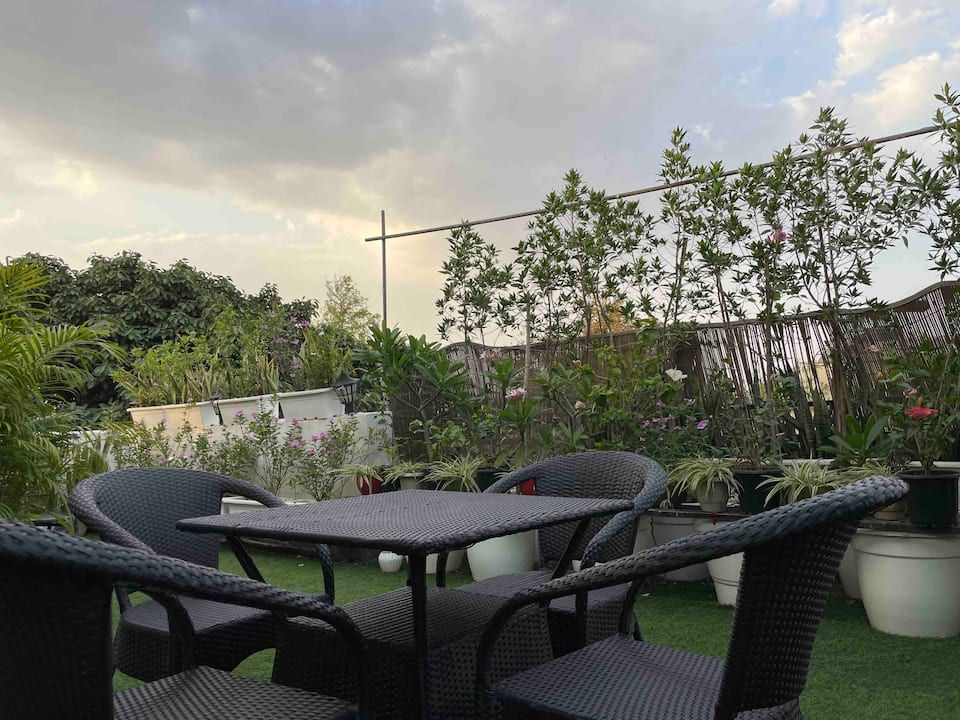
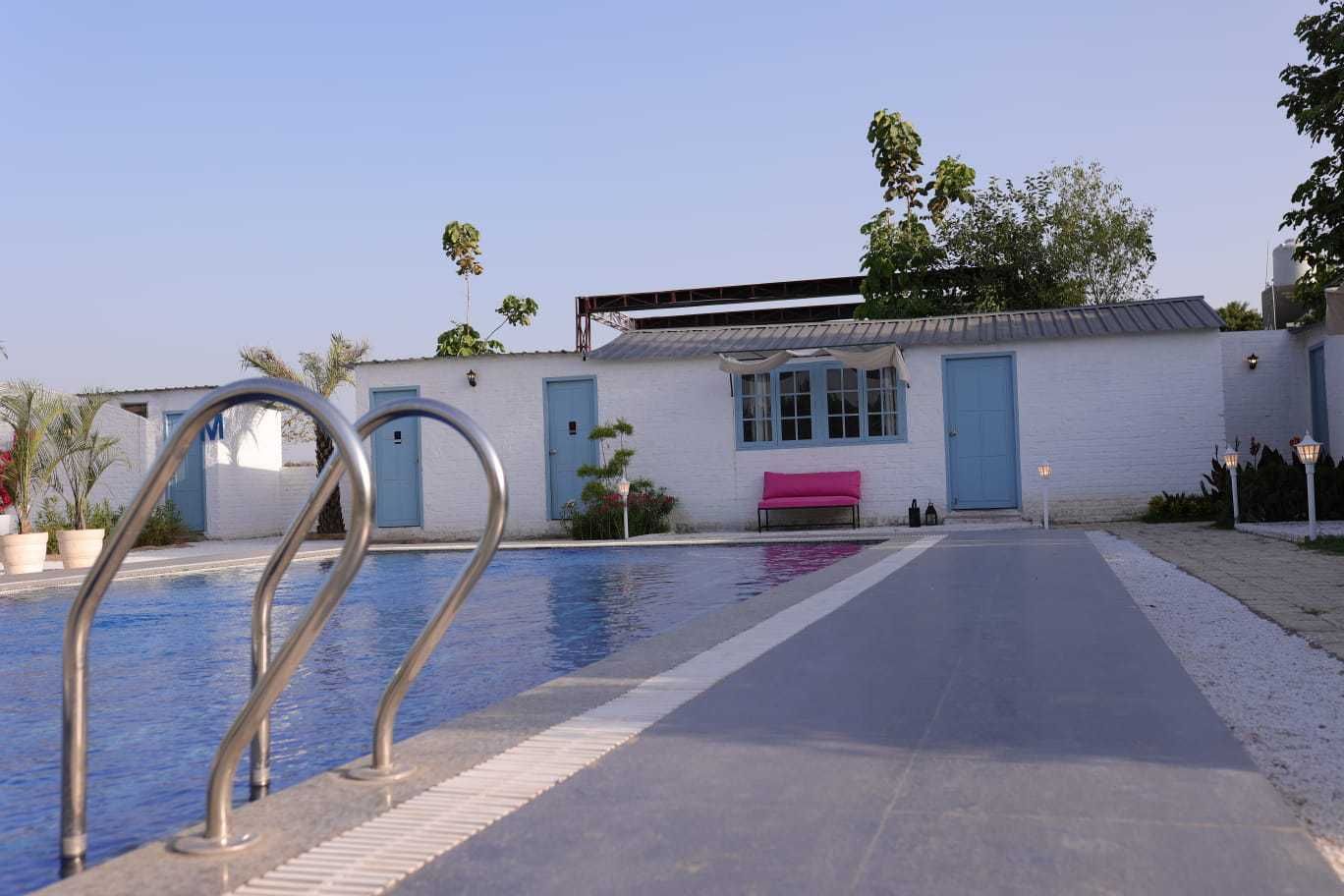
Planning a trip to Delhi offers opportunities to explore both the bustling heritage core and tranquil outdoor areas outside the capital. Travellers seeking quiet surroundings after days spent sightseeing can find homestays, nature retreats, and outdoor getaways on HireACamp. These stays provide a relaxing base in scenic spots around the region while keeping you connected to the city.
Frequently asked questions
Where is Jantar Mantar located?
Jantar Mantar is located on Sansad Marg in the Janpath area near Connaught Place in central New Delhi.
How much is the entry fee for Jantar Mantar?
An adult entry ticket to Jantar Mantar costs twenty rupees per person.
How do I reach Jantar Mantar by metro?
The observatory is approximately a ten-minute walk from Gate 4 of the Rajiv Chowk Metro Station.
What is the best time of year to visit Jantar Mantar?
The best time to visit is during the cooler months between October and March, when daytime temperatures are pleasant for walking outdoors.
Who built Jantar Mantar in New Delhi?
Jantar Mantar was commissioned in the early eighteenth century by Maharaja Jai Singh II of Jaipur to measure time and observe celestial bodies.
Where you'll be
Sansad Marg, Janpath, Connaught Place, New Delhi, Delhi 110001 · 2 stays nearby shown with prices
As seen on Instagram
The posts this guide is built from
Stays near Jantar Mantar
Book a place to stay close by
Often visited together
Creators who went here also showed these


More places near Jantar Mantar
Within 20 km


Lists for this area
Ranked by how many creators recommend each place


Built from 2 Instagram posts by 2 creators. Every tip links back to the post it came from, and where creators disagree we show both sides. Guide updated 5 Nov 2026.


