
Kharapathar
Viewpoint near Jubbal, Himachal Pradesh
2.7 km from Jubbal
The nearest town, for stays, food and fuel.
Kharapathar is a tranquil mountain village and viewpoint located in the Shimla district of Himachal Pradesh, not far from the historic town of Jubbal. Set amidst terraced apple orchards and thick deodar forests, it offers sweeping views over the surrounding Himalayan ranges and the Pabbar valley. Travellers visit for its crisp mountain climate, scenic hiking paths, and close proximity to historic shrine sites.
Getting there
By road
- From JubbalNearest town17 min · 10 km
- From Chandigarh3 hr 55 min · 187 km
- From Dehradun4 hr 45 min · 236 km
- From Ludhiana5 hr 55 min · 288 km
Typical drive times without traffic. Stations and airports from OLA Maps; distances and typical drive times from OpenStreetMap (© OpenStreetMap contributors); notes from creators' Reels.
About Kharapathar
Written with AI from map data and general knowledge. Check prices and timings locally before you go.
About Kharapathar
Perched on a mountain ridge in Himachal Pradesh, Kharapathar sits between Shimla and the apple heartland of Rohru and Jubbal. The name Kharapathar translates literally to rough or standing stone, named after an iconic boulder perched prominently along the ridge. The settlement serves as both an elevated viewpoint and a restful mountain pause for travellers driving through upper Shimla district.
The topography here is marked by rolling forested heights, deep valleys, and extensive terraces cultivated with apple trees. Vast stands of cedar, blue pine, and rhododendron cover the upper slopes, creating sheltered walking paths and sweeping openings that reveal layers of Himalayan ridges stretching into the distance. Because of its elevation and position above the main river valleys, Kharapathar frequently catches cool mountain drafts, offering a serene atmosphere away from busier hill stations.
Best time to visit Kharapathar
Kharapathar has distinct seasonal shifts, and the best time to plan a visit depends largely on the kind of experience you are looking for.
Spring and summer, running from April through June, bring pleasant temperatures, sunny mornings, and clear mountain views. During these months, the daytime weather remains cool and comfortable, making it the ideal period for leisurely forest hikes, nature photography, and exploring nearby temples without the risk of freezing conditions.
The monsoon arrives by July and lasts into early September, turning the slopes bright green and misting the forests in low clouds. While road conditions during the monsoon require extra attention due to rain and potential landslides, late summer marks the beginning of the apple harvesting season. By late August and September, the trees across Jubbal and Kharapathar are heavy with red fruit, and the entire region bustles with agrarian activity.
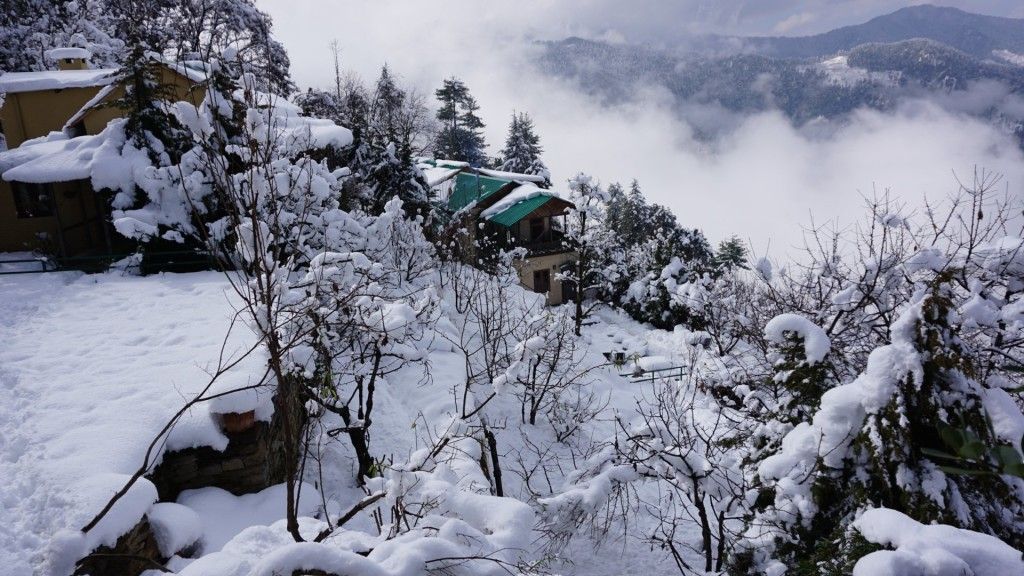
Winter arrives in November and extends through February. During mid-winter, Kharapathar often receives substantial snowfall, transforming the ridge into a quiet, white landscape. If you enjoy crisp mountain air, cold nights, and the chance to see snow-covered forests, winter is a rewarding time to travel, provided you are well prepared for chilly conditions.
Read more
Things to do around Kharapathar
The primary appeal of Kharapathar is its quiet natural setting, which lends itself naturally to outdoor exploration and slow travel. Hiking is one of the most rewarding pursuits here. A well-known trail leads upward from the settlement toward Giri Ganga, a sacred spot nestled deeper in the cedar forest about four kilometres away. The path winds gradually through tall woodlands and meadows, offering frequent clearings where you can admire valley vistas.
Strolling through the apple orchards is another highlight, particularly between July and October. The terrain around Kharapathar and neighbouring Jubbal is dotted with family-owned orchards where terraced slopes drop dramatically toward river tributaries. Walking these village paths gives travellers an intimate look at mountain horticulture and traditional Himachali stone-and-timber architecture.
For landscape photographers and birdwatchers, the high ridges around Kharapathar offer wide panoramic horizons at sunrise and sunset. In the quieter forest patches, you can often spot regional Himalayan birds such as monals, laughingthrushes, flycatchers, and minivets flitting between pine branches.
Places to visit nearby
A short journey of four kilometres from Kharapathar brings you to Giri Ganga Temple, an ancient stone shrine dedicated to the goddess Ganga, considered the mythical source of the Giri River. Surrounded by thick pine woods, the temple complex features stone craftsmanship, natural springs, and a peaceful forest ambiance that attracts both pilgrims and trekkers.
The royal town of Jubbal lies just down the valley and is celebrated for its historic wooden architecture, particularly the historic Jubbal Palace with its striking blend of indigenous and European design elements. Further down the valley, shrines such as the Shikru Devta Mandir and Shirgul Devta Temple highlight the rich cultural and spiritual traditions of the region.
Travellers interested in wider regional excursions can venture north toward Narkanda to visit Hatu Temple and Hatu Peak, known for expansive views of the snow-clad Greater Himalayas. To the southwest lies Churdhar Sanctuary, a rugged highland sanctuary dominated by the sacred Churdhar Peak. Other scenic diversions in the wider area include serene spots like Tani Jubbar Lake, encircled by cedar groves.
How to reach Kharapathar
Kharapathar is situated along the state highway connecting Theog, Kotkhai, and Rohru in Himachal Pradesh. The most common overland approach begins from Shimla, which is connected to northern Indian transit hubs by road and narrow-gauge rail. From Shimla, the road winds eastward through Fagu, Theog, and Kotkhai before climbing up to the ridge at Kharapathar.
Regular state transport buses and private vehicles operate along the Shimla-Rohru route, making it relatively straightforward to catch public transit to Kharapathar. For those travelling by personal car or private taxi, the route offers scenic mountain driving, though drivers should be accustomed to narrow hillside turns and periodic weather-related surface changes.
The nearest broad-gauge railway junction and major airport are located in Chandigarh, from where travellers can hire cabs or take regional buses up into the hills. It is always wise to check local road conditions and weather forecasts before departing, particularly during the peak winter snows and the monsoon season.
Where to stay in Kharapathar
Accommodation options around Kharapathar focus on authentic mountain hospitality. Rather than bustling commercial resorts, the region is known for village homestays, traditional orchard cottages, and peaceful nature stays tucked along the hillside.
Staying in a local homestay gives visitors the opportunity to experience Himachali customs, sample home-cooked mountain meals, and learn directly from hosts about the local apple-growing calendar. For those who want to sleep closer to nature under open skies, outdoor camps and glamping setups can occasionally be found in nearby clearings and valleys.
You can discover and book verified homestays, village stays, and scenic camps in and around Kharapathar on HireACamp.
Tips for your visit
Even in the warmest summer months, temperatures at Kharapathar can drop sharply once the sun sets behind the ridges. Carry at least a light fleece or windbreaker for summer travel, and pack heavy woollens, thermal innerwear, and insulated jackets if visiting between late autumn and early spring.
If you plan to hike up to Giri Ganga or walk across orchard paths, sturdy walking shoes with good tread are essential, as forest paths can be damp and rocky. Mobile network connectivity is generally reliable in the main village area but can weaken along isolated forest stretches.
ATMs and fuel stations are sparse along this stretch of highway compared to larger towns, so it is advisable to withdraw cash and refuel in larger transit hubs like Theog or Jubbal before heading into smaller hamlets. Finally, remember to practice responsible travel by packing out all non-biodegradable waste and respecting the quiet rhythm of local villages and sacred groves.
Frequently asked questions
What is Kharapathar known for?
Kharapathar is known for its sweeping mountain viewpoint, dense cedar forests, extensive apple orchards, and its position as the starting point for visits to the Giri Ganga Temple.
Does it snow in Kharapathar?
Yes, Kharapathar usually receives substantial snowfall during the peak winter months of December, January, and February, turning the high ridge into a snowy retreat.
How far is Giri Ganga from Kharapathar?
Giri Ganga Temple is located approximately four kilometres from Kharapathar, reachable via an unpaved forest track that can be trekked on foot or navigated by high-clearance vehicles.
When is the best time to see apples in Kharapathar?
The apple season peaks between late July and September, when local orchard trees throughout Kharapathar and Jubbal are loaded with fruit and harvesting takes place.
What kind of clothing should I pack for Kharapathar?
Pack light layers and a jacket for summer evenings, while winter trips require heavy woollens, thermal base layers, and windproof outer gear due to freezing temperatures.
Where you'll be
Himachal Pradesh · 1 stay nearby shown with prices
Stays near Kharapathar
Book a place to stay close by
More places near Kharapathar
Within 20 km


Built from 0 Instagram posts by 0 creators. Every tip links back to the post it came from, and where creators disagree we show both sides.






