
Jubbal
Destination in Himachal Pradesh
Jubbal is a historic town set amid the deodar-covered slopes of the Shimla district in Himachal Pradesh. Renowned for its indigenous wood-and-stone architecture and lush fruit belts, the town serves as an important cultural hub in the Pabbar valley region. Travellers come to explore its rich heritage, walk through extensive apple orchards, and use it as a base for day journeys into the surrounding mountains.
Getting there
By road
- From Chandigarh4 hr 10 min · 197 km
- From Dehradun4 hr 40 min · 230 km
- From Ludhiana6 hr 10 min · 298 km
- From New Delhi7 hr 45 min · 436 km
Typical drive times without traffic. Stations and airports from OLA Maps; distances and typical drive times from OpenStreetMap (© OpenStreetMap contributors); notes from creators' Reels.
About Jubbal
Written with AI from map data and general knowledge. Check prices and timings locally before you go.
Understanding Jubbal and Its Heritage
Jubbal stands at an elevation of roughly two thousand metres in the lower Himalayas, surrounded by thick stands of deodar, pine, and oak. Once the capital of the princely state of Jubbal, the town preserves a distinct sense of mountain history. The local landscape is defined by traditional hill architecture, where heavy timber beams alternate with local slate and stone in the indigenous Kath-Kuni building technique.
The most prominent landmark in the area is the Jubbal Palace, an imposing complex that reflects a blend of local Pahari woodwork and early twentieth-century classical design. Throughout the town and nearby settlements, intricately carved wooden gables, verandas, and overhanging balconies recall the skilled craftsmanship of native artisans who worked with native timber for centuries.
Things to Do in and Around Jubbal
A trip to Jubbal moves at a relaxed pace, oriented around walking trails, rural life, and regional heritage. Travellers can spend mornings walking along orchard trails that wind down the hillside or wandering through the town bazaar where local farmers and traders gather. The pace of life here is deeply tied to the land, offering visitors an authentic look into high-altitude agrarian routines.
Outdoor enthusiasts can venture towards the nearby river valleys. Both the Giri River and the Pabbar River flow within driving distance of Jubbal, offering scenic banks for quiet day picnics, contemplative walks, and photography. The surrounding hillsides feature short walking paths through deodar forests that lead to vantage points overlooking terraced valley slopes and distant ridges.
Read more
The Apple Belt of Jubbal
Jubbal lies in one of the most productive fruit-growing belts of Himachal Pradesh. For decades, the local economy and culture have revolved around the cultivation of apples, pears, and stone fruits. Terraced hillsides are covered with orchards that transform the character of the town across the changing seasons.
In the spring months, the slopes around Jubbal turn white and pink as the fruit trees burst into flower. By late summer, the trees are heavy with ripening fruit, bringing the entire valley into an energetic harvesting cycle. Walking among the family-owned orchards offers travellers insight into modern Himalayan agriculture and the careful water-management practices that sustain these mountain farms.
Places to Visit Nearby
Jubbal is ideally placed for exploring regional temples, peaks, and rural hamlets scattered across eastern Shimla district and the neighbouring border valleys of Uttarakhand. A short drive away lies the sacred Mahasu Devta Temple at Hanol, known for its ancient timber architecture and religious importance across the Jaunsar-Bawar and Pabbar belts. Other revered shrines in the surrounding ridges include the Shirgul Devta Maharaj Temple in Ghoond, the Mananeshwar Mahadev Temple, and the Pawasi Devta Temple near Thadiyar.
For panoramic views, visitors can travel towards Hatu Peak near Narkanda, which rises well above three thousand metres and offers wide views of the Central Himalayan ranges. Those looking for higher meadow treks and karst topography can arrange day excursions towards Moila Top and the limestone formations at Budher Caves, both located within driving reach across the regional ridgelines.
Best Time to Visit Jubbal
Jubbal experiences four well-defined seasons, each offering a distinct experience of the hills. The period from April to June is generally considered the most comfortable time for sightseeing and light hiking. Daytime temperatures during these months remain pleasant, and clear skies allow for unobstructed views across the valleys while the summer heat grips the plains below.
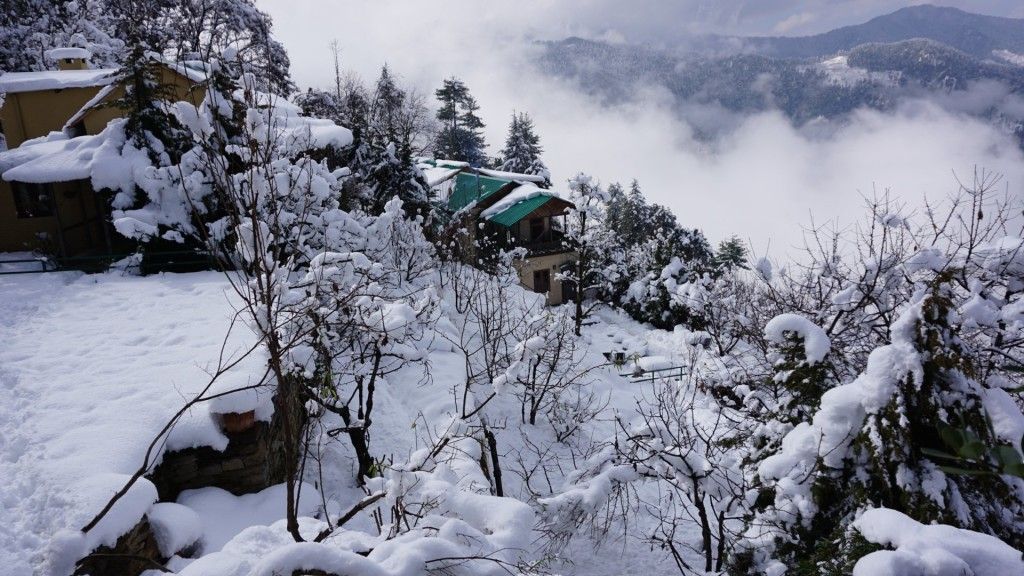
The monsoon season, lasting from July into September, brings heavy rainfall that turns the slopes vivid green. This period coincides with the apple harvesting season, though travellers should anticipate occasional road closures and slick mountain tracks. Autumn, stretching from October to November, brings crisp air, cool nights, and golden light, making it a favoured window for landscape photography. Winter arrives by December, bringing cold temperatures and occasional snowfall to higher elevations around town, lasting through February.
How to Reach Jubbal
Jubbal is accessible primarily by road from Shimla, situated roughly ninety kilometres to the west. The typical driving route climbs through Theog and Kotkhai before descending towards Jubbal. Road conditions can vary by season, particularly during the rainy months and mid-winter, so checking regional traffic advisories before departure is sensible.
The nearest broad-gauge railway station and major airport are located in Chandigarh, from where travellers can hire private taxis or board state transport buses bound for Rohru via Jubbal. The narrow-gauge toy train runs from Kalka to Shimla, offering a slower, heritage route into the hills. Regular bus connections link Jubbal to major transport depots across the Shimla district.
Where to Stay in Jubbal
Accommodation options in Jubbal focus on authentic local stays rather than large commercial developments. Travellers can choose from family-run homestays, simple mountain lodges, and orchard retreats set on the outskirts of town. Staying on an orchard property allows visitors to experience traditional Pahari hospitality and enjoy meals prepared with fresh, locally grown produce.
Camps, homestays, and outdoor-oriented stays in and around Jubbal can be discovered and reserved through HireACamp. Booking in advance is recommended during the peak apple harvest in late summer and the clear holiday weeks of autumn.
Frequently asked questions
What is Jubbal famous for?
Jubbal is best known for the heritage Jubbal Palace, its rich tradition of wood-and-stone Kath-Kuni architecture, and its extensive apple orchards across the surrounding valley.
When is the apple harvesting season around Jubbal?
The apple harvest in the Jubbal belt typically begins in late July and continues through September, bringing lively agricultural activity to the orchards.
Does Jubbal receive snowfall in winter?
Yes, Jubbal and the higher surrounding ridges receive intermittent snowfall during the peak winter months of December, January, and early February.
How far is Jubbal from Shimla?
Jubbal is located roughly ninety kilometres east of Shimla, and the road journey via Theog and Kotkhai generally takes between three to four hours depending on traffic and weather conditions.
What are some prominent attractions to visit near Jubbal?
Notable nearby spots include the Mahasu Devta Temple at Hanol, the banks of the Pabbar and Giri rivers, Hatu Peak, and the meadow expanses near Moila Top.
Where you'll be
1 stay nearby shown with prices
Stays near Jubbal
Book a place to stay close by
Things to do in Jubbal
37 places creators recommend within 30 km


Built from 0 Instagram posts by 0 creators. Every tip links back to the post it came from, and where creators disagree we show both sides.






