
Khardung La
Peak near Leh, Ladakh
1.3 km from Leh
The nearest town, for stays, food and fuel.
Khardung La is a world-renowned mountain pass situated in the Ladakh range, lying just north of the town of Leh. Serving as the primary vehicular gateway to the Shyok and Nubra valleys, it attracts road-trippers, motorcyclists, and mountain lovers from across the globe. Travellers visit Khardung La to witness panoramic vistas of rugged trans-Himalayan summits, experience an iconic high-altitude mountain crossing, and observe colourful prayer flags fluttering against year-round snow.
Getting there
By road
- From LehNearest town2 min · 1.4 km
- From Leh Ladakh2 min · 1.4 km
Typical drive times without traffic. Stations and airports from OLA Maps; distances and typical drive times from OpenStreetMap (© OpenStreetMap contributors); notes from creators' Reels.
About Khardung La
Written with AI from map data and general knowledge. Check prices and timings locally before you go.
The high-altitude landscape of Khardung La
Perched at a dramatic elevation exceeding 5,300 metres above sea level, Khardung La cuts through the rugged spine of the Ladakh Range. The pass serves as a strategic and geographic divide between the upper Indus river basin to the south and the winding Shyok and Nubra valleys to the north. On clear days, the pass commands sweeping vistas of the snow-mantled peaks of the Karakoram range stretching across the northern horizon, while the barren, sun-drenched hills around Leh lie visible to the south.
The topography here is quintessential trans-Himalayan cold desert: sheer granite walls, scree-laden slopes, and expansive patches of ice and hard-packed snow that linger well into summer. Countless strands of Buddhist prayer flags are strung between cairns and rocky outcrops at the summit, their primary colours stark against the white snow and deep indigo sky. The atmosphere is thin, crisp, and constantly moved by brisk mountain winds that define the harsh yet magnetic charm of this high-altitude route.
Understanding altitude and acclimatisation
Because of its extreme elevation, Khardung La presents a significant physiological challenge for anyone ascending from lower altitudes. The air pressure is substantially lower than at sea level, resulting in diminished oxygen availability. Travellers should spend at least two to three full days resting and acclimatising in Leh or the surrounding Indus Valley before attempting to cross or visit the pass. Rushing directly up to the pass without sufficient acclimatisation sharply increases the risk of Acute Mountain Sickness (AMS), which can cause headaches, dizziness, nausea, and shortness of breath.
Medical experts and local authorities strongly advise against spending more than twenty to thirty minutes at the pass crest. The brief stop offers ample time to take in the views, take photographs, and appreciate the immense scale of the surroundings without placing undue strain on the respiratory and circulatory systems. Staying well hydrated, avoiding alcohol and smoking, and descending promptly if symptoms of altitude sickness arise are fundamental safety practices for every visitor.
Read more
Best time to visit Khardung La
The primary travel season for Khardung La runs from late May through October, aligning with the broader tourism window across Ladakh. During the midsummer months of July and August, daytime temperatures are relatively mild, snow on the lower approach roads melts away, and passes connecting Ladakh to the rest of India remain fully open. However, even in the middle of summer, temperatures at the crest of the pass hover near freezing point, and sudden flurries of sleet or snow can occur without warning.
Late spring and early autumn bring their own distinct appeal. May and June present dramatic, snow-banked corridors where heavy winter accumulation has only recently been cleared by road maintenance crews. September and October offer exceptionally clear skies and stable weather, though the chill sets in rapidly as autumn progresses. Winter journeys across the pass are fraught with sub-zero temperatures, icy road surfaces, and frequent temporary closures due to heavy snowfall and blizzards.
The journey from Leh to the pass
The route to Khardung La begins directly from the outskirts of Leh town, winding steadily upward along a series of dramatic hairpin bends. As the road gains altitude, the green oasis of Leh, dominated by the Leh Palace and Shanti Stupa, shrinks into a distant patch in the valley floor below. The terrain quickly transforms from semi-arid desert slopes into windswept scree and rocky escarpments.
The drive passes through South Pullu, an administrative and army checkpoint where vehicle registrations and travel papers are checked before traffic is cleared for the final, steeper ascent. The upper section of the road is exposed to rockfall, meltwater channels, and patches of ice depending on the season. While standard commercial taxis and four-wheel-drive vehicles make the journey regularly, many adventure seekers choose to ascend by motorcycle or join guided cycling descents, where riders are driven to the top and coast down the paved sections back into the valley.
Places to explore around Khardung La
A trip to Khardung La is rarely taken in isolation; it is deeply woven into the wider exploration of central Ladakh and the valleys beyond. South of the pass, within the broader Leh district, travellers can visit historic monasteries such as Phyang Gompa, set dramatically against the hillside, and Basgo Monastery, renowned for its ancient mud-brick ruins and towering Buddha statues. Further west along the Indus highway lies the revered Gurudwara Patthar Sahib and the famous confluence where the green waters of the Indus River meet the silt-laden Zanskar River.
To the south-west, Stok Kangri stands as an imposing landmark overlooking the Leh valley, flanked by the sprawling expanse of Hemis National Park, celebrated for its rugged wilderness and elusive trans-Himalayan wildlife. Crossing over Khardung La to the north leads directly into the Nubra Valley, famous for its cold-desert sand dunes at Hunder, double-humped Bactrian camels, and the historic Diskit Monastery overlooking the wide floodplains of the Shyok.
Essential tips for a safe visit
Preparation is critical when travelling through extreme Himalayan elevations. Dressing in adaptable layers is essential; thermal innerwear, a fleece mid-layer, and a windproof, waterproof down jacket allow you to handle sudden temperature drops and sharp summit winds. High-UV sunglasses and broad-spectrum sunscreen are mandatory, as solar radiation at this altitude is intense and reflection from surrounding snowfields can cause rapid sunburn or eye strain.
Carry sufficient drinking water, an insulated thermos with warm fluids, and simple high-energy snacks like nuts or dried fruit. Avoid strenuous physical movements, such as running or climbing rocks, once you reach the summit. Always verify the current road and weather conditions with local drivers or authorities in Leh before setting off, and ensure you have secured the appropriate inner-line travel permits required for movement through sensitive border regions.
Where to stay near Khardung La
Due to the extreme elevation and lack of civilian infrastructure, there are no accommodation options at the summit of Khardung La itself. Most travellers base themselves in Leh, which offers a wide array of homestays, traditional guesthouses, and scenic mountain lodges suitable for rest and acclimatisation.
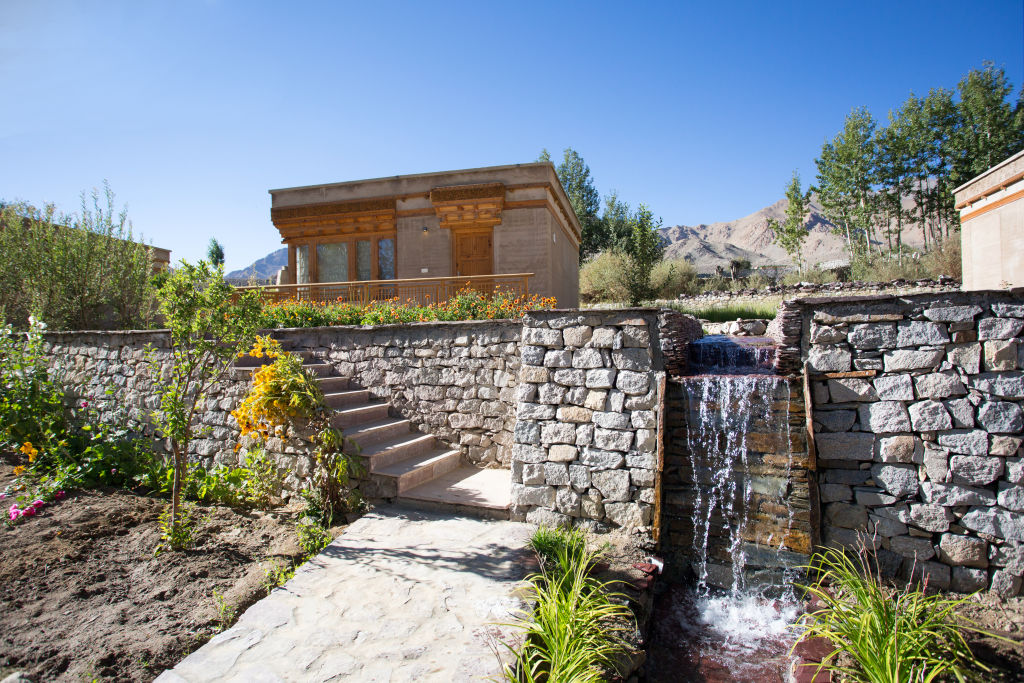
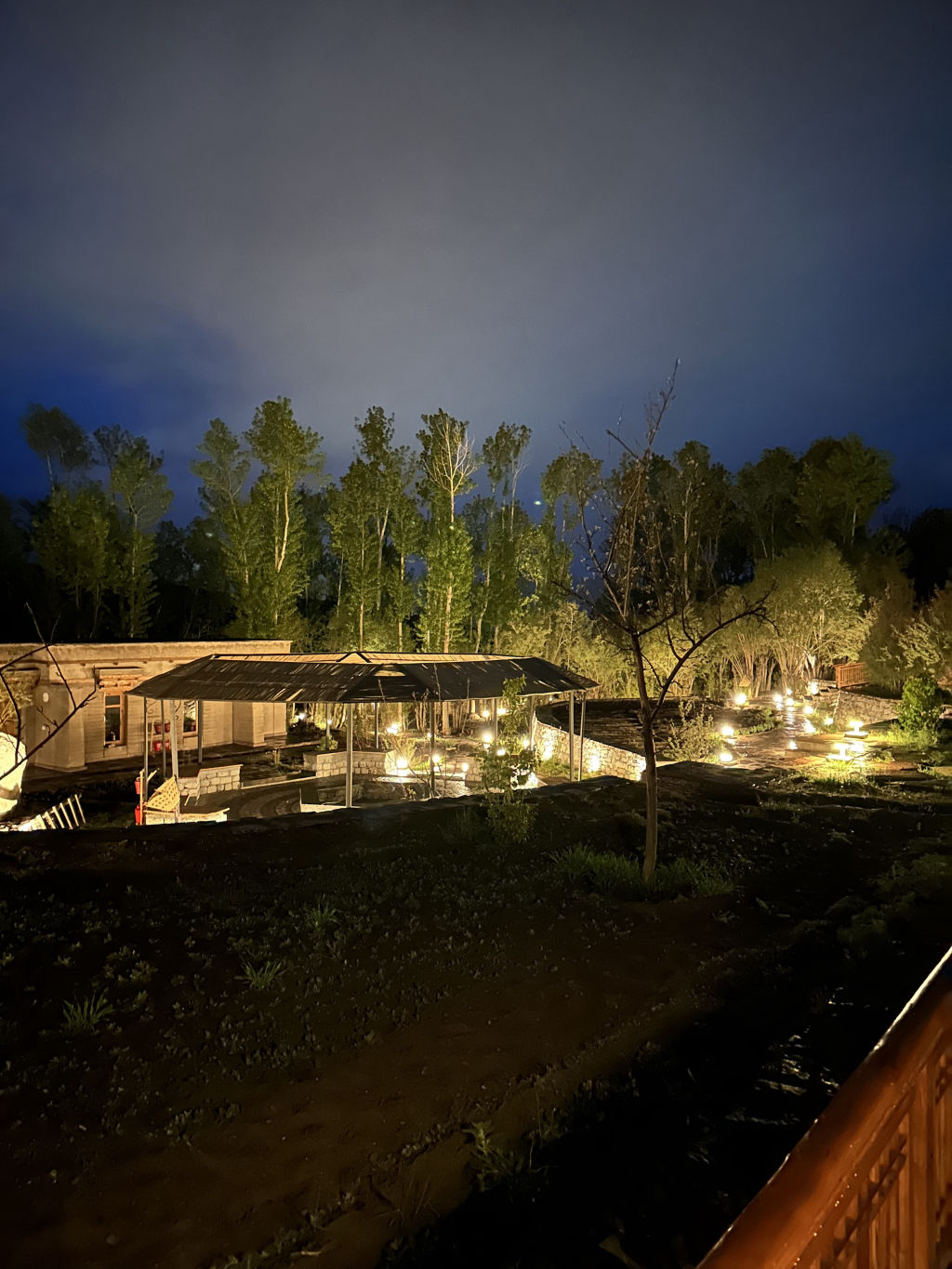
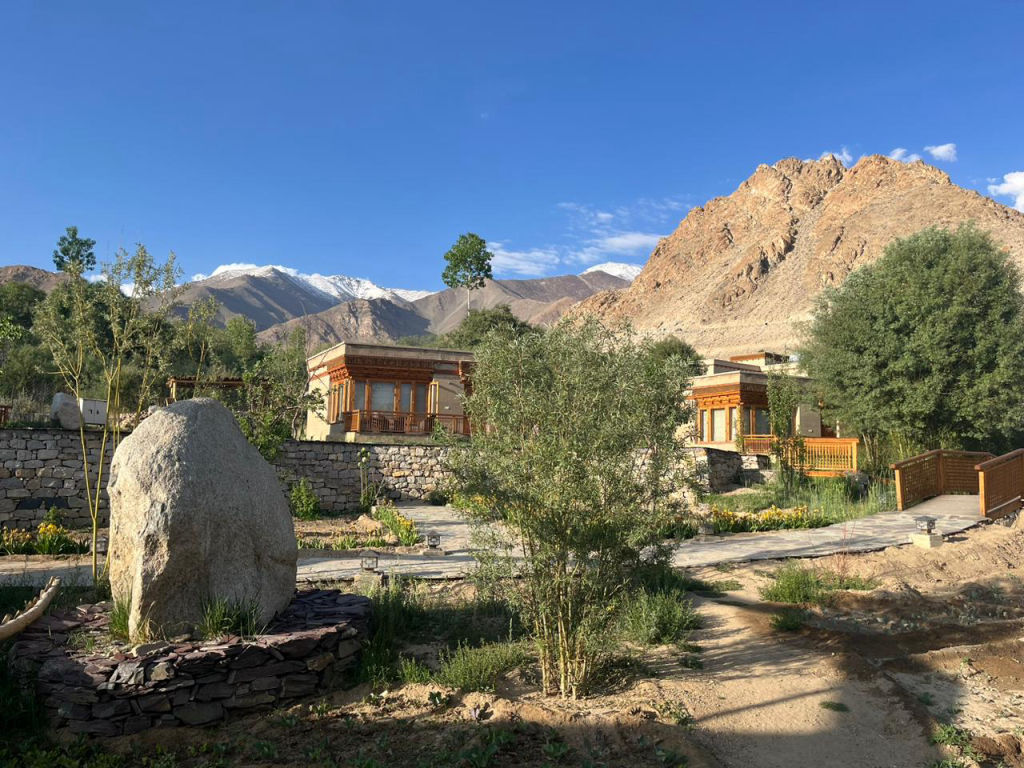
If you are crossing the pass toward Nubra, village settlements such as Diskit, Hunder, and Sumur offer peaceful riverside stays, seasonal glamping setups, and traditional Ladakhi homestays nestled among poplar groves. A selection of experiential campsites, authentic homestays, and boutique rural retreats across Leh and the surrounding valleys can be easily found and reserved on HireACamp.
Frequently asked questions
What is the elevation of Khardung La?
Khardung La sits at an elevation of approximately 5,359 metres (17,582 feet) above sea level in the Ladakh Range, north of Leh.
How much time should you spend at Khardung La pass?
Due to the very thin air and risk of acute mountain sickness, visitors are advised to spend no more than twenty to thirty minutes at the summit.
Do I need a permit to visit Khardung La?
Yes, travellers generally require an Inner Line Permit or Protected Area Permit to travel through Khardung La toward the Nubra Valley; requirements should be verified locally in Leh.
Is Khardung La open during the winter months?
The pass is maintained year-round by the Border Roads Organisation for strategic connectivity, but civilian traffic is often disrupted by severe winter blizzards, heavy snowfall, and black ice.
Can beginners ride a motorcycle across Khardung La?
Riding across the pass requires good balance, experience handling steep hairpin bends, and comfort with loose gravel and ice; beginners should exercise extreme caution or hire a local vehicle instead.
Where you'll be
Leh · 3 stays nearby shown with prices
Stays near Khardung La
Book a place to stay close by
More places near Khardung La
Within 20 km
Built from 0 Instagram posts by 0 creators. Every tip links back to the post it came from, and where creators disagree we show both sides.






