
Monsoon Palace
Palace near Chhota Hawala, Rajasthan
1 post
Guide from 1 post by 1 creator
@outofofficediaries.in
2.2 km from Chhota Hawala
The nearest town, for stays, food and fuel.
The Monsoon Palace, also known as Sajjangarh, is a nineteenth-century hilltop palace perched atop the Aravalli Hills overlooking Udaipur in Rajasthan. Built by the royal house of Mewar as a retreat to watch passing monsoon clouds, the palace attracts visitors seeking wide panoramic views across the city, its lakes, and the surrounding countryside. Its elevated ramparts make it one of the most prominent vantage points in southern Rajasthan.
Getting there
By road
- From Chhota HawalaNearest town16 min · 6.3 km
- From Chikalwas47 min · 18 km
- From Ahmedabad4 hr 40 min · 264 km
- From Jodhpur5 hr 15 min · 272 km
By train, bus or air
- Chetak Bus StandNearest bus stand20 min · 9.1 km
- Air IndiaNearest airport21 min · 9.4 km
Typical drive times without traffic. Stations and airports from OLA Maps; distances and typical drive times from OLA Maps and OpenStreetMap (© OpenStreetMap contributors); notes from creators' Reels.
About Monsoon Palace
Written with AI from creators' posts and map data. Check prices and timings locally before you go.
About the Monsoon Palace
The Monsoon Palace, originally called Sajjangarh Palace, sits atop the Bansdara peak on the western edge of Udaipur. Commissioned in the late nineteenth century by Maharana Sajjan Singh of the Mewar dynasty, the structure was originally intended to function as an astronomical observatory and a seasonal hilltop retreat to track the arrival of rain clouds over the surrounding valleys. Following the Maharana's untimely passing, the construction was completed by his successor, leaving behind an imposing landmark that has defined the skyline of Udaipur for generations.
The palace stands within the boundaries of the Sajjangarh Wildlife Sanctuary, surrounded by dry deciduous forest and scrubland typical of the Aravalli range. Today, the complex attracts travellers who come to explore its open courtyards, pillared verandas, and historic stonework while enjoying uninterrupted views of the plains and hills below.
Architecture and Scenic Views
Constructed primarily from white marble and local stone, the Monsoon Palace reflects traditional Rajput architectural features. The palace rises multiple storeys and features high turrets, arched windows, and open balconies designed to make the most of the cool mountain winds. An ingenious historic rainwater harvesting system was built into the palace, collecting rainwater from the terraces into deep underground storage tanks to sustain the fortress across dry periods.
The primary highlight for travellers is the view from the outer terraces. From the ramparts, you can look out across Udaipur and spot the shimmering waters of Lake Pichola, the urban core, and the distant peaks of the Aravalli range. In the late afternoon, visitors gather on the western terraces to watch the sun set over the rolling hills, making it one of the most popular sunset viewpoints in the region.
Read more
Best Time to Visit the Monsoon Palace
The palace is accessible throughout the year, but the experience changes substantially across different seasons. The winter months from October to March offer the most pleasant weather for exploring. During this period, daytime temperatures in southern Rajasthan are mild and comfortable, and clear skies allow for excellent visibility across the city and the valleys.
The monsoon season from July to September brings a distinct charm that aligns with the palace's original purpose. Rain turns the scrub-covered Aravalli Hills into lush greenery, and low-hanging clouds often envelop the peak. Visiting on an overcast or damp day during the monsoon provides a moody, atmospheric perspective of the palace and the green hillsides.
Summers from April to June are hot, with midday temperatures frequently climbing quite high in and around Udaipur. While the palace remains open, exploring during the heat of the day can be uncomfortable. If you visit in the summer months, it is best to plan your trip for the late afternoon when temperatures begin to dip and the hilltop catches a cooler breeze.
How to Reach the Monsoon Palace
The Monsoon Palace is situated in the Gourela area near Udaipur and is connected to the city via a winding asphalt hill road that passes through the wildlife sanctuary checkpost. Visitors typically travel to the base and up to the summit using local taxis, auto-rickshaws, or private vehicles. The climb involves several sharp curves and hairpin bends, so drivers should navigate the road with care.
Udaipur is well connected by road to major cities in western and central India. From Ahmedabad, the road journey is about 264 kilometres and takes approximately 4 hours and 40 minutes under normal, traffic-free conditions. Travellers driving from Jodhpur face a journey of around 272 kilometres, which takes about 5 hours and 20 minutes.
From Vadodara, the distance is roughly 364 kilometres, requiring about 6 hours and 20 minutes of driving time. If you are travelling by road from Indore, the distance is around 406 kilometres and typically takes about 8 hours and 40 minutes. Udaipur is also served by a railway station and a domestic airport, making it easy to arrange local road transfers up to the palace after arriving in the city.
Tips for Your Visit
Because the sunset hours are the most popular time of day at the Monsoon Palace, vehicular traffic along the winding hill road can increase noticeably in the late afternoon. Arriving a bit earlier in the afternoon helps avoid delays at the forest entry gates and allows you to find a relaxed spot along the viewing ramparts before crowds gather.
Wear sturdy, flat walking shoes, as the palace complex involves stone walkways, inclines, and historic staircases that can be slippery, particularly during or after a rain shower. Hats, sunglasses, and water are recommended during sunny days, as the open terraces offer limited shade. If visiting during winter evenings, consider bringing a light layer or windcheater, as the hilltop becomes breezy and cool once the sun sets.
Keep in mind that the palace is surrounded by a protected forest sanctuary where monkeys are common. Avoid carrying open food items or bags that could attract wildlife. Entry rules, vehicle regulations, and camera permissions are managed locally at the entry gate, so check the current guidelines upon arrival.
Places to Visit Near the Monsoon Palace
A visit to the Monsoon Palace is easily combined with exploring other heritage sites around Udaipur, many of which lie within a short driving distance in the valley below.
Lake Pichola is situated approximately 5 kilometres from the palace and serves as the visual centrepiece of Udaipur. Along the eastern banks of the lake lies the massive City Palace complex, also about 5 kilometres away, renowned for its courtyards, detailed stone carving, and museum galleries. Situated in the waters of the lake is the historic Jagmandir Island Palace, which sits roughly 5 kilometres from the Monsoon Palace.
For close views of the lakeshore and the City Palace across the water, Ambrai Ghat is located about 4 kilometres away and is a favoured spot for evening walks. Another nearby destination is Saheliyon ki bari, roughly 5 kilometres away, a historic garden celebrated for its marble pavilions, fountains, and lotus ponds.
Where to Stay near Monsoon Palace
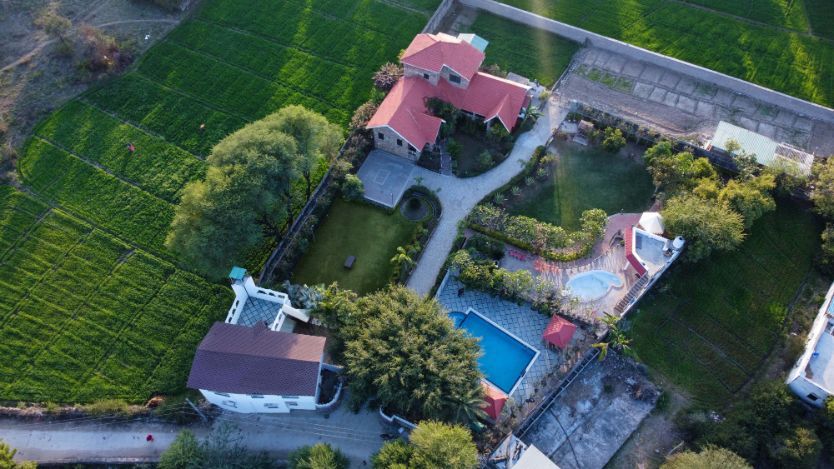
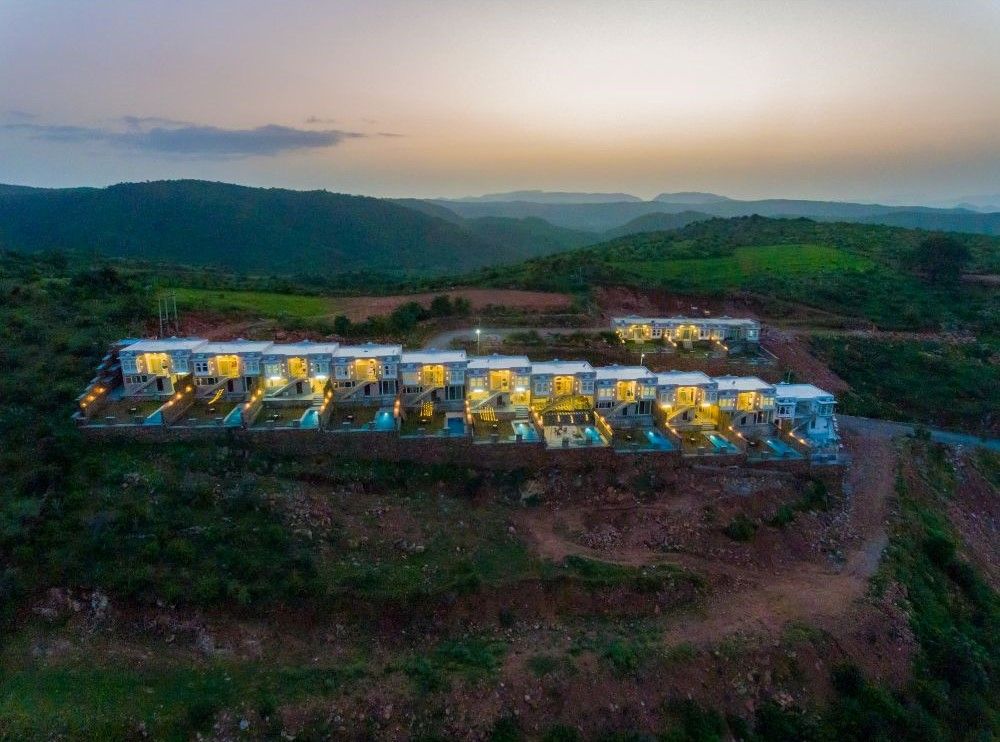
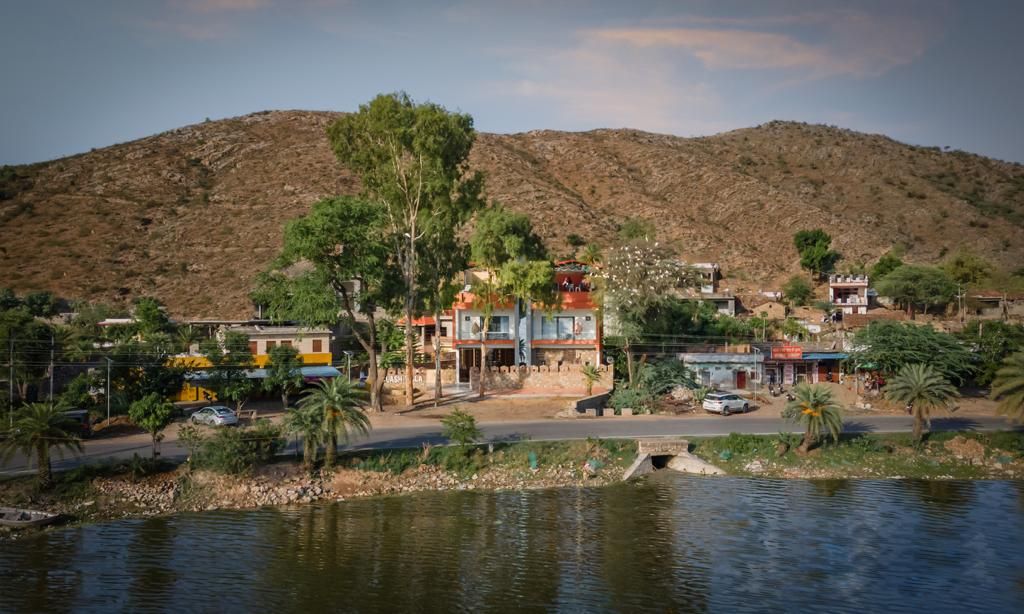
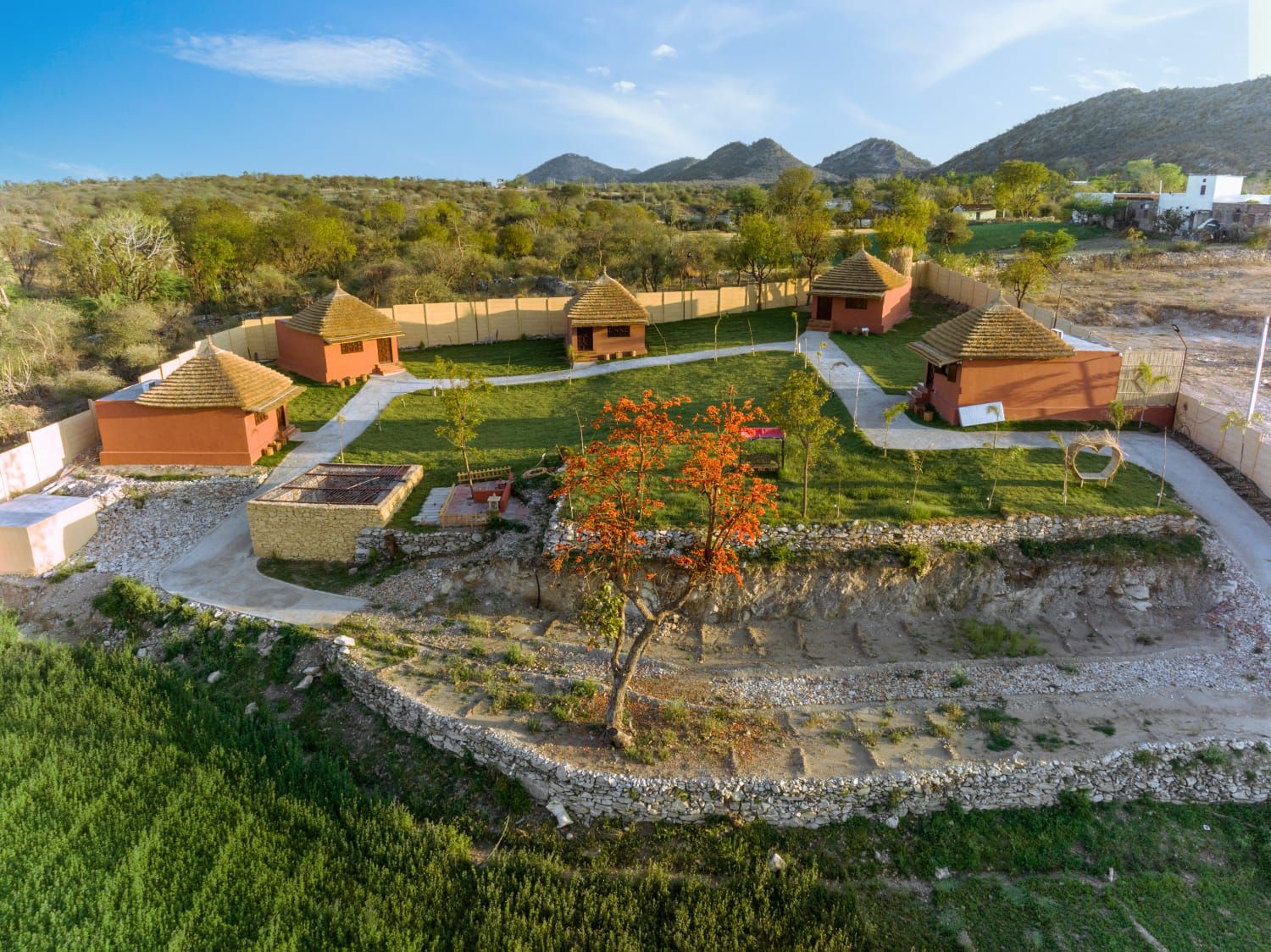
Visitors to Udaipur can choose from diverse lodging options ranging from central lakeside neighbourhoods to quieter rural pockets on the city's fringes. Staying near the base of the hills or along the valley edge provides quick access to the Monsoon Palace along with peaceful surroundings away from city traffic.
Whether you are searching for scenic nature camps near the Aravalli foothills, private cottages, or welcoming family-run homestays around Udaipur, you can find and book a range of verified stays on HireACamp to suit your travel itinerary.
Frequently asked questions
Why was the Monsoon Palace built?
The palace was commissioned in the late nineteenth century by Maharana Sajjan Singh to serve as an astronomical centre and an elevated retreat to observe the movement of monsoon clouds over Mewar.
Where is the Monsoon Palace located?
The Monsoon Palace is situated atop Bansdara Peak in the Gourela area on the western outskirts of Udaipur, Rajasthan.
Can you drive all the way up to the Monsoon Palace?
Yes, a paved road winds up through the surrounding sanctuary to the palace entrance, accessible by car, taxi, or local auto-rickshaw.
What is the best time of day to visit the Monsoon Palace?
Late afternoon leading into sunset is the most popular time to visit for panoramic views of the city and the setting sun, though morning visits offer cooler weather and fewer crowds.
What attractions are located close to the Monsoon Palace?
Nearby sights in Udaipur include Lake Pichola, City Palace, Jagmandir Island Palace, Ambrai Ghat, and Saheliyon ki bari, all located within four to five kilometres.
Where you'll be
Udaipur, Gourela, Rajasthan 313031 · 4 stays nearby shown with prices
As seen on Instagram
The posts this guide is built from
Stays near Monsoon Palace
Book a place to stay close by
Often visited together
Creators who went here also showed these


More places near Monsoon Palace
Within 20 km


Built from 1 Instagram post by 1 creator. Every tip links back to the post it came from, and where creators disagree we show both sides.






