
Sas Bahu Temples
Temple near Eklingji, Rajasthan
1.4 km from Eklingji
The nearest town, for stays, food and fuel.
The Sas Bahu Temples, located near Delwara in southern Rajasthan, are a pair of remarkably preserved 10th-century stone shrines situated in the historic Mewar region. Originally consecrated to Lord Vishnu in his thousand-armed Sahasrabahu form, the temple complex represents the height of medieval Maru-Gurjara stone architecture. Travellers and history lovers visit the site to admire its intricate relief carvings, ornamental archways, and peaceful rural setting against the Aravalli hills.
Getting there
By road
- From EklingjiNearest town5 min · 2.4 km
- From Jodhpur4 hr 50 min · 235 km
- From Ahmedabad5 hr 55 min · 286 km
- From Vadodara7 hr 25 min · 378 km
Typical drive times without traffic. Stations and airports from OLA Maps; distances and typical drive times from OpenStreetMap (© OpenStreetMap contributors); notes from creators' Reels.
About Sas Bahu Temples
Written with AI from map data and general knowledge. Check prices and timings locally before you go.
History and Architecture of Sas Bahu Temples
The Sas Bahu Temples date back to the late 10th century during the reign of the Mewar dynasty. Although local folklore colloquially translates the name to mother-in-law and daughter-in-law, historical evidence indicates that the complex was originally dedicated as the Sahasrabahu Temple, honoring Lord Vishnu in his thousand-armed form. Over generations, the linguistic pronunciation softened from Sahasrabahu to Sas Bahu, giving rise to local legends claiming that a royal queen built the larger temple for herself while her daughter-in-law commissioned the adjacent shrine.
Architecturally, the complex is an outstanding surviving specimen of western Indian stone masonry from the medieval era. Both structures stand side by side on an elevated stone plinth overlooking a serene water tank. The monuments feature intricately carved pillars, multi-tiered ceiling medallions, and exterior walls adorned with narrative panels from classical epics such as the Ramayana and Mahabharata. Even with centuries of natural weathering, the delicacy of the decorative lintels and pillar friezes showcases the master craftsmanship that flourished in the region.
What to See at the Temple Complex
The main attraction of the complex is the larger mother-in-law temple, which features a spacious sanctum, an enclosed hall, and pillared porches. Inside, the ceiling dome displays carved concentric stone rings that mimic wooden filigree, framed by decorative lotus motifs and dancing celestial figures. Sculpted columns throughout the hall carry detailed depictions of deities, musicians, and traditional royal motifs, giving visitors an intimate look into regional craftsmanship.
The adjoining daughter-in-law shrine, while slightly more compact in footprint, is equally refined in detail. Its exterior walls are wrapped with continuous friezes illustrating royal court scenes, battle processions with elephants, and mythological legends. At the entrance to the stone platform, visitors can see the surviving base and columns of an ornate torana, a traditional gateway arch that framed the grand entrance for ancient devotees. The open layout and tranquil surroundings make it a rewarding stop for photography and quiet contemplation.
Read more
Best Time to Visit Sas Bahu Temples
The cooler winter months from October to March offer the most comfortable conditions for exploring the open-air courtyards. During this period, daytime temperatures in southern Rajasthan remain mild, skies are consistently clear, and gentle breezes make strolling around the exposed stone plinths pleasant throughout the day.
Monsoon season, which spans from July to September, brings another atmospheric time to visit. Rainfall washes the stone architecture clean and revitalizes the nearby vegetation across the Aravalli landscape, turning the dry hillsides lush green. While showers can be intermittent, the cooler cloud cover provides relief from the heat. Summer months from April to June can become intensely hot and dry, with high midday temperatures, so those visiting during this season should plan their trip for the early morning or late afternoon hours.
How to Reach the Temples
The Sas Bahu Temples are located just outside Delwara and roughly twenty kilometers north of Udaipur city center. Travellers based in Udaipur can easily organize a half-day excursion by private taxi or auto-rickshaw along the highway leading toward Nathdwara. The drive takes around thirty to forty-five minutes under normal traffic conditions, winding through the northern foothills of the Aravalli range.
For those travelling from other states or distant cities, Maharana Pratap Airport in Udaipur provides scheduled flight connections to major Indian hubs. Udaipur City Railway Station is the nearest rail terminal, served by express trains from Delhi, Mumbai, and Jaipur. Delwara is also accessible via state-run and private buses operating along regional routes. From Delwara town, the temple complex is a short drive along local rural roads.
Tips for Your Visit
Because the temples feature stone steps, raised platforms, and unpaved pathways, comfortable walking shoes are advisable for navigating the site. During late spring and summer, the stone courtyard can become warm under direct sunlight; bringing a pair of socks allows you to walk comfortably across sun-warmed surfaces if entering footwear-restricted areas.
Carry sufficient drinking water and sun protection, including a wide-brimmed hat and sunglasses, as natural shade across the open courtyard is limited during the middle of the day. Photographers will find that early morning light and late afternoon golden hours best accentuate the deep relief carvings on the stone pillars and friezes. Visitors should check locally for current camera guidelines, entry formalities, and opening schedules before arriving.
Places to Visit Nearby
The area surrounding Delwara and northern Udaipur features several remarkable historical and cultural sites. Approximately five kilometers away lies the historic core of Delwara, known for the ancient Delwada Jain Mandir and the majestic hilltop Devigarh Fort, which watches over the surrounding valley.
A short drive south leads into the royal city of Udaipur, where travellers can visit the ornamental gardens of Saheliyon ki Bari, wander through the grand corridors of the City Palace, or enjoy tranquil views across Lake Pichola from Ambrai Ghat and Jagmandir Island Palace. High above the city on the western ridge stands the Monsoon Palace, offering sweeping views of the surrounding lakes and hills. For shopping and contemporary dining on the way back to town, commercial destinations like Nexus Celebration Mall and Urban Square Mall sit conveniently along the highway route.
Where to Stay
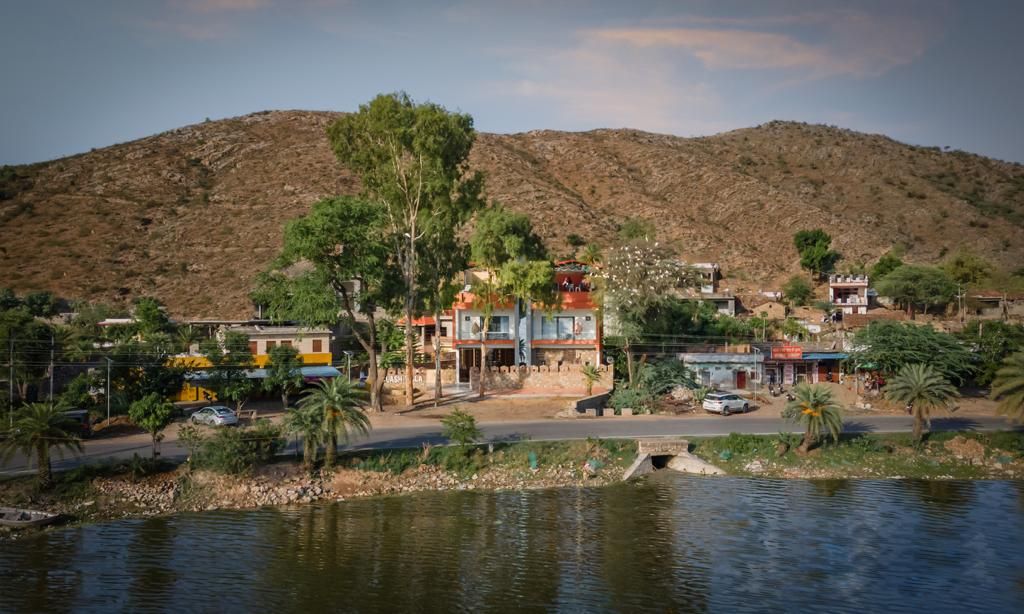
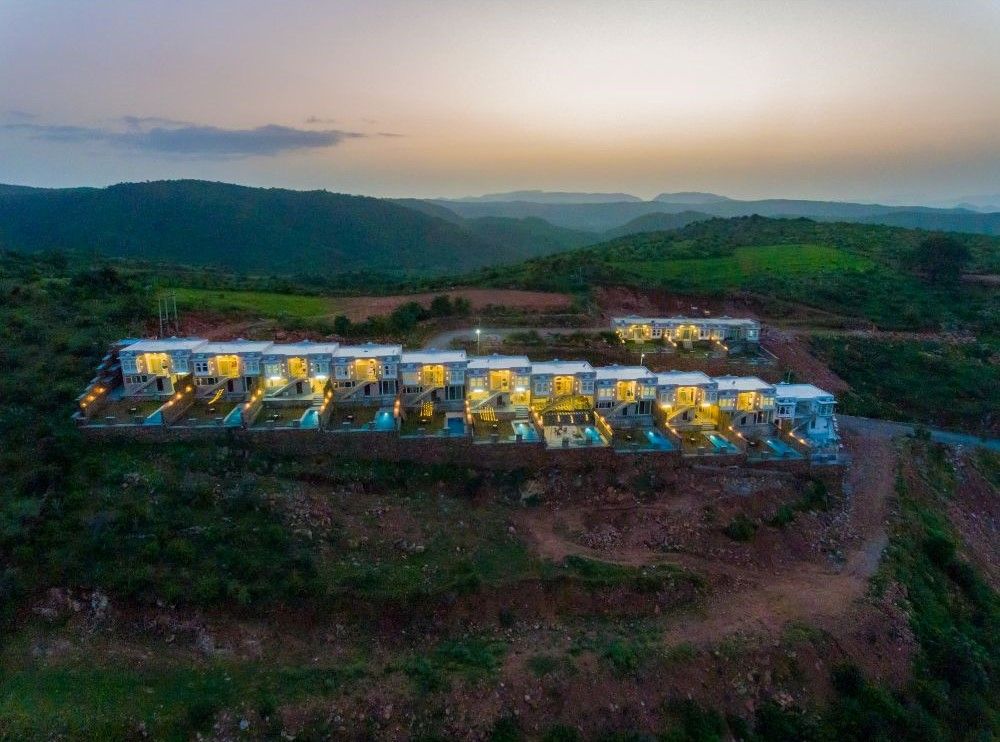
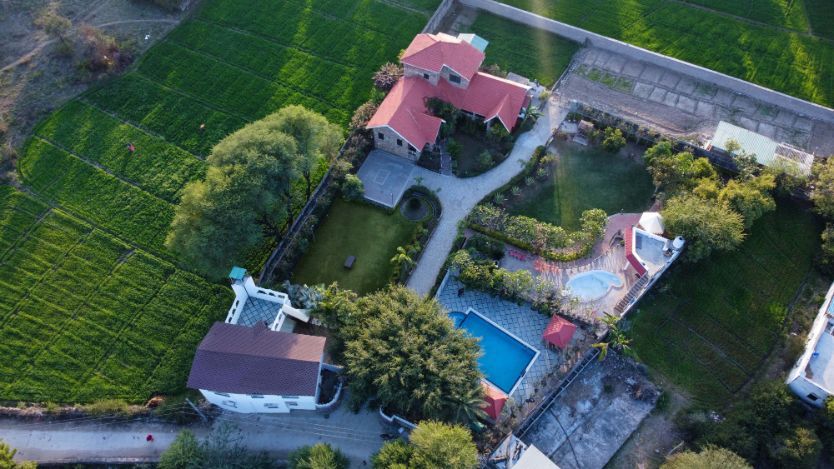
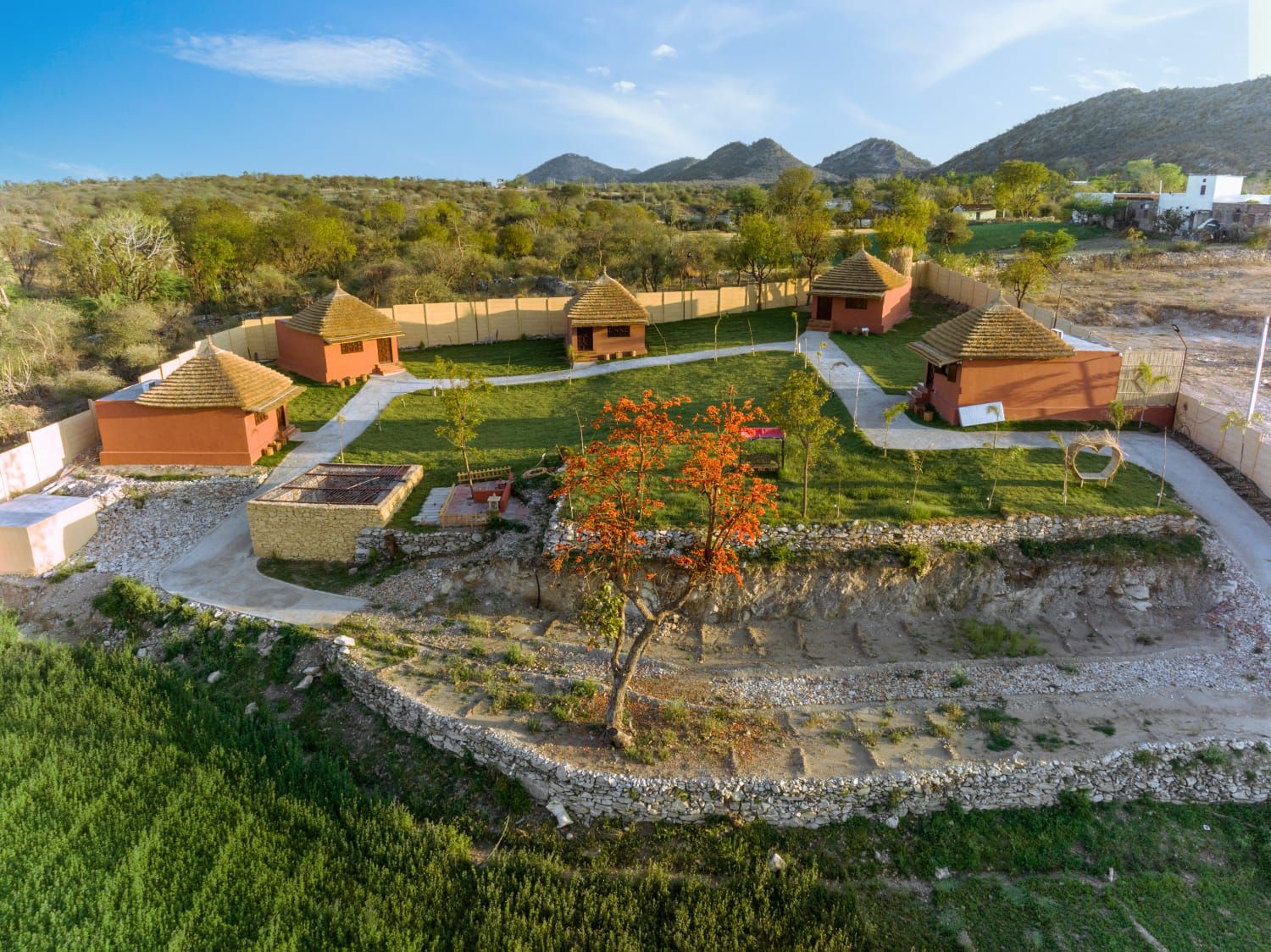
The countryside around Delwara and the Aravalli foothills offers a quiet alternative to the bustling streets of urban Udaipur. Staying in the rural surroundings gives you direct access to peaceful village walks, heritage trails, and clear night skies away from city light pollution.
Travellers can choose to stay in nearby village retreats, nature stays, or base themselves in Udaipur city to be close to the lakes and cultural markets. A wide variety of camps, homestays, and outdoor getaways in the Delwara and Udaipur area can be explored and booked on HireACamp.
Frequently asked questions
Why are the temples called Sas Bahu?
The colloquial name Sas Bahu translates to mother-in-law and daughter-in-law, derived from the temple's original Sanskrit dedication to Lord Vishnu as Sahasrabahu, meaning one with a thousand arms. Over centuries, local pronunciation gradually altered Sahasrabahu into Sas Bahu, accompanied by local legends of a queen and her daughter-in-law building the twin shrines.
Where are the Sas Bahu Temples located?
The temples are situated near the town of Delwara in southern Rajasthan, approximately twenty kilometers north of Udaipur city center along the highway corridor.
How much time is needed to visit the Sas Bahu Temples?
Most visitors spend between forty-five minutes and an hour and a half exploring the complex, admiring the pillar carvings, and taking photographs of the architecture and surroundings.
Can I visit Sas Bahu Temples on a day trip from Udaipur?
Yes, the temples are an easy half-day trip from Udaipur and can be comfortably paired with visits to nearby Delwara heritage sites, Saheliyon ki Bari, or the City Palace.
Is photography allowed at Sas Bahu Temples?
Photography is generally permitted throughout the open complex, though visitors should check locally at the entrance for any specific camera fees or site regulations.
Where you'll be
4 stays nearby shown with prices
Stays near Sas Bahu Temples
Book a place to stay close by
More places near Sas Bahu Temples
Within 20 km


Built from 0 Instagram posts by 0 creators. Every tip links back to the post it came from, and where creators disagree we show both sides.






