
Tonk
Destination in Rajasthan
Tonk is a historic town in eastern Rajasthan, situated along the right bank of the Banas River south of Jaipur. Distinct among the state's traditional Rajput kingdoms, it was Rajasthan's only Muslim princely state, shaped by Afghan Nawabi culture. Today, travellers visit Tonk for its ornate Indo-Islamic architecture, rare historical manuscripts, and quiet countryside escapes around the nearby Bisalpur reservoir.
Getting there
By road
- From Jaipur2 hr 25 min · 119 km
- From New Delhi5 hr 25 min · 351 km
Typical drive times without traffic. Stations and airports from OLA Maps; distances and typical drive times from OpenStreetMap (© OpenStreetMap contributors); notes from creators' Reels.
About Tonk
Written with AI from map data and general knowledge. Check prices and timings locally before you go.
The Nawabi heritage of Tonk
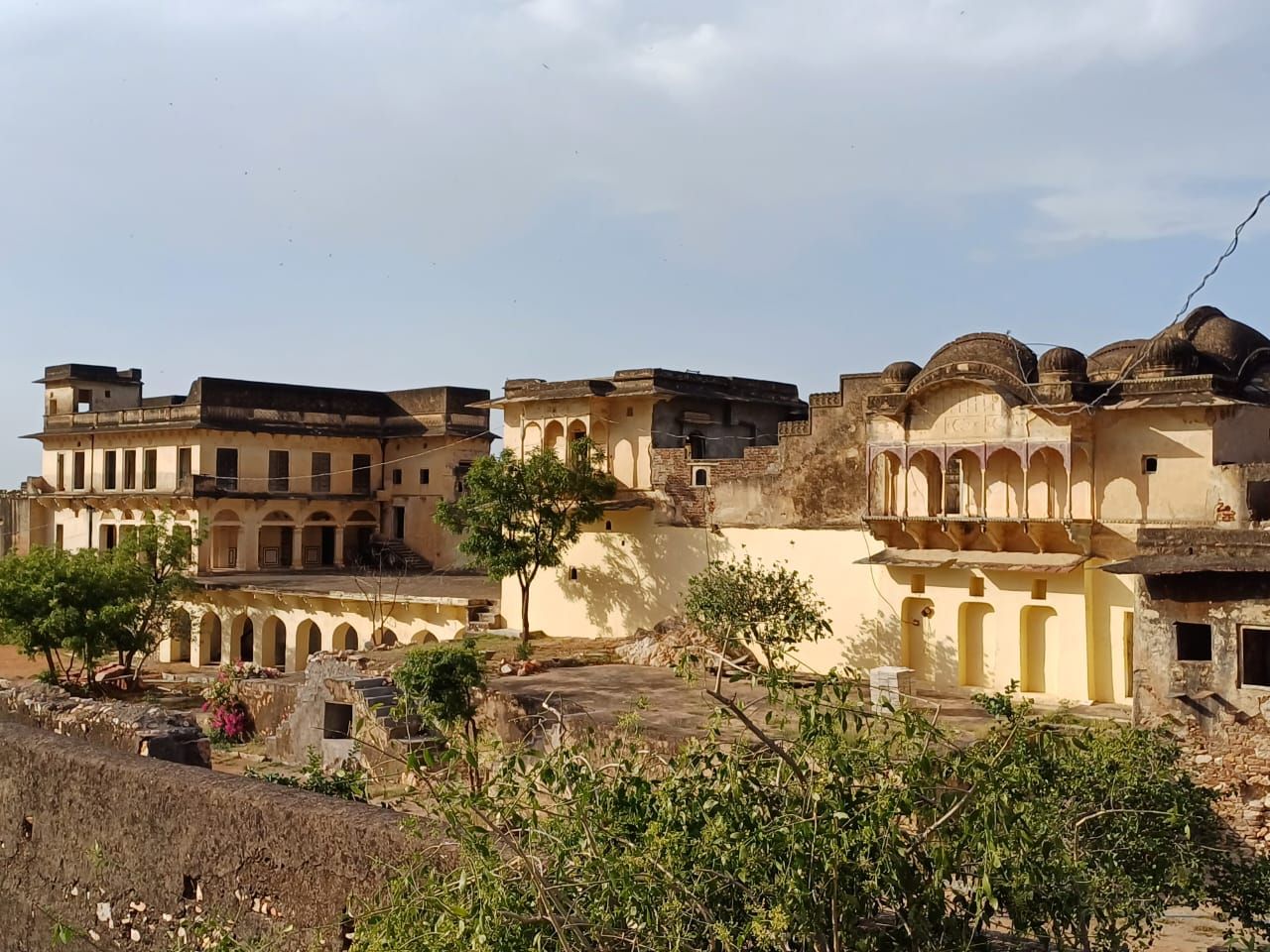
Tonk holds a unique place in the history of Rajasthan. While the surrounding regions were ruled by Rajput dynasties, Tonk was established as a princely state in the early nineteenth century by Muhammad Amir Khan, an Afghan military leader. This gave the town an architectural and cultural identity that stands apart from the desert forts and palaces seen in the rest of the state.
The town retains traces of this Afghan-Mughal heritage in its urban fabric, language, crafts, and cuisine. Unlike the heavily commercialised tourist centres of Rajasthan, Tonk moves at a slow and grounded pace, offering visitors a window into an era where courtly literature, Islamic calligraphy, and artisanal crafts flourished under royal patronage.
Architectural landmarks of Tonk
The town's most celebrated monument is the Sunehri Kothi, or the Golden Mansion. Located within the old town area, this pavilion was constructed by the Nawabs and features an interior embellished with polished gold leaf work, intricate mirror inlays, stained glass, and floral plaster designs. The hall reflects the late Mughal artistic traditions that were nurtured in royal courts across northern India.
Another significant monument is the Jama Masjid, considered one of the largest mosques in Rajasthan. Begun under the first Nawab and completed by his successors, the mosque features monumental minarets, a vast courtyard capable of holding thousands of worshippers, and delicate stone carvings.
Scholars and history lovers also seek out the Maulana Abul Kalam Azad Arabic and Persian Research Institute. The facility houses thousands of rare manuscripts, ancient royal decrees, and decorated calligraphic specimens from across South Asia and the Middle East, preserving an intellectual tradition that flourished in Tonk for generations.
Read more
Outdoor spots and getaways around Tonk
Beyond the historic centre, the landscape of Tonk district transitions into broad river plains, seasonal wetlands, and dry scrub country. A short journey southwest brings you to Bisalpur Dam, built across the Banas River. The reservoir is a major source of drinking water for central Rajasthan and acts as a regional hub for migratory birds during winter. Near the dam stands the ancient Bisaldeo Temple, dedicated to Lord Shiva, which partially submerges during high water levels and re-emerges as the river recedes.
Near Tonk on the road toward Sawai Madhopur lies Hathi Bhata, an enormous monument of an elephant carved directly from a single natural rock outcrop. Inscriptions on the stone trace it back to the seventeenth century, making it an interesting outdoor roadside stop.
Further south in the district lies Todaraisingh, an ancient settlement known for its collection of historic stepwells, medieval temples, and hillside ruins. Exploring Todaraisingh provides a strong architectural contrast to the Nawabi heritage of Tonk itself, showing centuries of earlier Rajput stepwell design.
Best time to visit Tonk
Like much of central Rajasthan, Tonk experiences a semi-arid climate with distinct seasonal variations. The winter season, extending from October to March, is the most comfortable time to travel. Daytime temperatures during these months remain mild and sunny, perfect for walking through historical quarters and exploring the riverbanks. Nights can be cool, especially in December and January, requiring a warm layer of clothing.
Summer begins in April and lasts through June, bringing intense heat and daytime temperatures that frequently cross forty degrees Celsius. Outdoor sightseeing is uncomfortable during this period. The monsoon arrives in July and lingers into September, turning the surrounding countryside green and filling the Banas River basin and Bisalpur Dam, though humidity remains high.
How to reach Tonk
Tonk is well connected by road and sits directly on National Highway 52, which links Jaipur to Kota. Jaipur is the nearest major transit hub, located roughly one hundred kilometres to the north. Driving or taking a regional bus from Jaipur takes approximately two hours depending on local traffic.
For air travellers, Jaipur International Airport is the most convenient gateway, offering regular domestic flights to major Indian cities as well as select international routes. Taxis and intercity buses are readily available from Jaipur to Tonk.
Tonk does not have a major passenger railway station inside the main town. Travellers arriving by train generally alight at Bansthali Niwai station, located about thirty-five kilometres away, or at the junction station in Sawai Madhopur, roughly seventy kilometres southeast. Both stations connect easily to Tonk via state transport buses or private taxis.
Where to stay around Tonk
Travellers planning to explore Tonk and the Banas River region will find that staying outside the urban bustle offers the most atmospheric experience. The countryside around Tonk, the banks of the Banas, and the rural outskirts toward Todaraisingh and Bisalpur feature wide open spaces, farmlands, and quiet village settlements.
Independent homestays, nature retreats, and outdoor camps can be discovered and booked on HireACamp. Staying at a local farm stay or countryside campsite allows you to experience rural Rajasthani hospitality, home-cooked regional meals, and stargazing away from city light pollution while remaining within easy driving distance of Tonk's heritage monuments.
Frequently asked questions
What is Tonk famous for?
Tonk is famous for being the only historical Muslim princely state in Rajasthan, known for its Nawabi architecture like the ornate Sunehri Kothi, the grand Jama Masjid, and a world-renowned repository of Arabic and Persian manuscripts.
How far is Tonk from Jaipur?
Tonk is situated roughly one hundred kilometres south of Jaipur along National Highway 52, which usually takes about two hours to cover by car or bus.
Which is the nearest railway station to Tonk?
The closest railhead is Bansthali Niwai, located approximately thirty-five kilometres north of Tonk, while Sawai Madhopur Junction provides wider long-distance rail connectivity about seventy kilometres away.
Can you visit Bisalpur Dam from Tonk?
Yes, Bisalpur Dam is located in Tonk district and is an easy day excursion from the town, popular for scenic lake views, birdwatching in winter, and the historic Bisaldeo Temple.
What should I wear when visiting monuments in Tonk?
Because many of Tonk's primary attractions are active places of worship or traditional community spaces, it is recommended to dress modestly with shoulders and knees covered, and to carry a scarf or head covering when visiting mosques.
Where you'll be
1 stay nearby shown with prices
Stays near Tonk
Book a place to stay close by
Things to do in Tonk
15 places creators recommend within 30 km


Built from 0 Instagram posts by 0 creators. Every tip links back to the post it came from, and where creators disagree we show both sides.






