
Bhuntar
Destination in Himachal Pradesh
Bhuntar is a bustling river town in the Kullu district of Himachal Pradesh, situated right at the scenic confluence of the Beas and Parvati rivers. Best known as the primary aviation and transit hub for Kullu, Manali, and the Parvati Valley, it is surrounded by terraced fields, fruit orchards, and pine-clad hillsides. Travellers visit Bhuntar to experience its peaceful riverside setting, visit ancient local temples, and branch out into the high alpine regions of the western Himalayas.
Getting there
By road
- From Chandigarh4 hr 35 min · 208 km
- From Ludhiana5 hr 10 min · 249 km
- From Amritsar7 hr 10 min · 360 km
- From Dehradun8 hr 5 min · 401 km
Typical drive times without traffic. Stations and airports from OLA Maps; distances and typical drive times from OpenStreetMap (© OpenStreetMap contributors); notes from creators' Reels.
Bhuntar and Surrounding Valleys Itinerary
Serving as a transit gateway in the Kullu region, Bhuntar provides access to the quiet meadows and mountain passes of the Sainj, Tirthan, and Seraj valleys.
Sainj to Jalori Pass Scenic Drive
Best for nature enthusiasts and mountain drivers
Day 1
Meadows, Valleys, and Mountain Passes
morning
Shangarh valleyAbout 2 hr
Explore Shangarh, an offbeat destination characterized by low visitor crowds.
midday
Tirthan Valley RoadAbout 1 hr 30 min · 14 km from the last stop
Drive along Tirthan Valley Road, which connects towards the higher passes and sits about 280 km from Chandigarh.
afternoon
Jalori PassAbout 1 hr 30 min · 12 km from the last stop
Reach the viewpoint at Jalori Pass, located approximately 295 km from Chandigarh.
- Shangarh is an offbeat village destination that sees relatively few visitors.
- If travelling from Chandigarh, expect road journeys of approximately 6 to 7 hours (280 km) to Tirthan Valley and 7 to 8 hours (295 km) to Jalori Pass.
- When visiting Wind Cafe By The Pine & Pour in Damsu Forest on the Manali–Naggar Road, anticipate a 30 to 40 minute wait as food is prepared fresh from scratch.
Visit lengths are suggestions; distances are straight-line between stops.
About Bhuntar
Written with AI from map data and general knowledge. Check prices and timings locally before you go.
About Bhuntar: Gateway to the Valleys
Bhuntar sits at an elevation of roughly 1,080 metres above sea level, occupying a vital geographic junction in the lower Himalayas of Himachal Pradesh. The town is marked by the sangam, or confluence, where the gushing, glacial waters of the Parvati River meet the broader, steady currents of the Beas River. Because of this natural fork, Bhuntar serves as the essential stepping stone for journeys continuing north toward Kullu and Manali or turning east into the narrow gorges of the Parvati Valley.
While many people pass through Bhuntar during long road trips or upon landing at the local airport, the town holds an easygoing charm of its own. It is surrounded by stepped agricultural fields, plum and apple orchards, and forested ridges that offer a quieter pace compared to the larger tourist hubs nearby. The town maintains an active market culture where locals from upper mountain hamlets bring their produce, woollens, and traditional handicrafts, giving travellers a grounded look into daily Himachali life.
Things to do in and around Bhuntar
A primary highlight of spending time in Bhuntar is visiting the confluence of the Beas and Parvati rivers. Walking along the riverbanks provides an immediate sense of the valley's natural forces, where the two rivers merge amidst rolling boulders and pine groves. It is a contemplative spot favoured by photographers and those looking for a quiet morning stroll before the town's markets open.
Temple architecture in and around the town offers an intriguing look into regional traditions. Bhuntar is home to the ancient Basheshwar Mahadev Temple, also known as the Visheshwar Mahadev Temple, located close to the town centre in Bajaura. Built in the classical stone shikhara style dating back centuries, the temple features intricate stone carvings of deities, floral motifs, and mythological scenes that reflect the deep cultural heritage of the Kullu Valley.
Exploring the countryside around Bhuntar is equally rewarding. Narrow trails wind up through terraced orchards where locals cultivate apples, plums, and apricots. A short walk into the surrounding villages reveals traditional kath-kuni wood-and-stone architecture, quiet forest edges, and panoramic vistas overlooking the wide valley floor below.
Read more
Getaways and valleys near Bhuntar
Bhuntar's location makes it one of the most practical starting points for exploring diverse valleys and wilderness areas in Himachal Pradesh. Heading east alongside the rushing Parvati River brings travellers to well-known mountain destinations like Kasol, the hot springs of Manikaran, and the quiet pastoral hamlets of Pulga and Tosh. Further up the trail, the scenic hike to Kheerganga takes trekkers through deep pine forests to high natural meadows.
To the south and southeast lies the Sainj Valley, where the quiet village of Shangarh sits nestled amid expansive cedar forests and a wide alpine meadow. Nearby, the Shangchul Mahadev Temple showcases magnificent timber architecture steeped in local mythology. Beyond Shangarh, the route leads towards the UNESCO-listed Great Himalayan National Park, a protected sanctuary home to rare Himalayan fauna, pristine glaciers, and dense subalpine woodlands.
Tirthan Valley and the remote highlands around Gadagushaini are also within comfortable reach for a day excursion or a multi-day detour. Following the river routes south from Bhuntar leads into sleepy riverside settlements, trout streams, and lesser-trodden trails where mountain life moves at an unhurried rhythm.
Best time to visit Bhuntar
Bhuntar can be visited throughout the year, with each season offering a different perspective of the surrounding mountains and rivers. Spring, spanning from March to May, brings pleasant daytime temperatures, blossoming fruit trees, and clear blue skies, making it an ideal period for sightseeing and outdoor excursions.
The summer months of May and June provide welcome respite from the heat of the plains. While daytime temperatures in Bhuntar can be warm due to its lower elevation compared to Manali, evenings remain refreshingly cool. The monsoon season from July through August brings heavy rainfall to the valley, which can trigger landslides and cause river levels to surge, so road travellers should exercise caution and check local updates before planning a trip.
Autumn, from September to November, is widely regarded as one of the best times to travel through Bhuntar. The rains subside, the air turns crisp and clear, and the hillsides take on warm golden hues. Winter arrives by December and lasts until February, bringing brisk conditions and cold nights. While Bhuntar itself receives snowfall only occasionally, the surrounding peaks are coated in white, creating striking backdrops across the valley.
How to reach Bhuntar
Bhuntar is exceptionally accessible compared to many other destinations in Himachal Pradesh. The town is home to the Kullu-Manali Airport, commonly known as Bhuntar Airport, which receives domestic flights from major cities like Delhi and Chandigarh. Landing on the runway situated between steep mountain slopes is often considered one of the most scenic flight approaches in northern India.
By road, Bhuntar is positioned directly along National Highway 3, which links Chandigarh to Manali. Regular state-run buses, private coaches, and taxis ply this route continuously. The drive from Chandigarh takes approximately seven to nine hours depending on traffic conditions and road work, passing through Bilaspur and Mandi.
For those travelling by train, the nearest broad-gauge railway stations are located at Chandigarh and Kalka. From these railheads, travellers can hire a private taxi or board an interstate bus to complete the scenic ascent into the Kullu Valley.
Where to stay around Bhuntar
Bhuntar offers a range of practical stays right in town, primarily suited for travellers catching early flights or making transit connections. However, for those seeking a more immersed mountain experience, the countryside surrounding the town and extending into nearby valleys provides characterful alternatives.
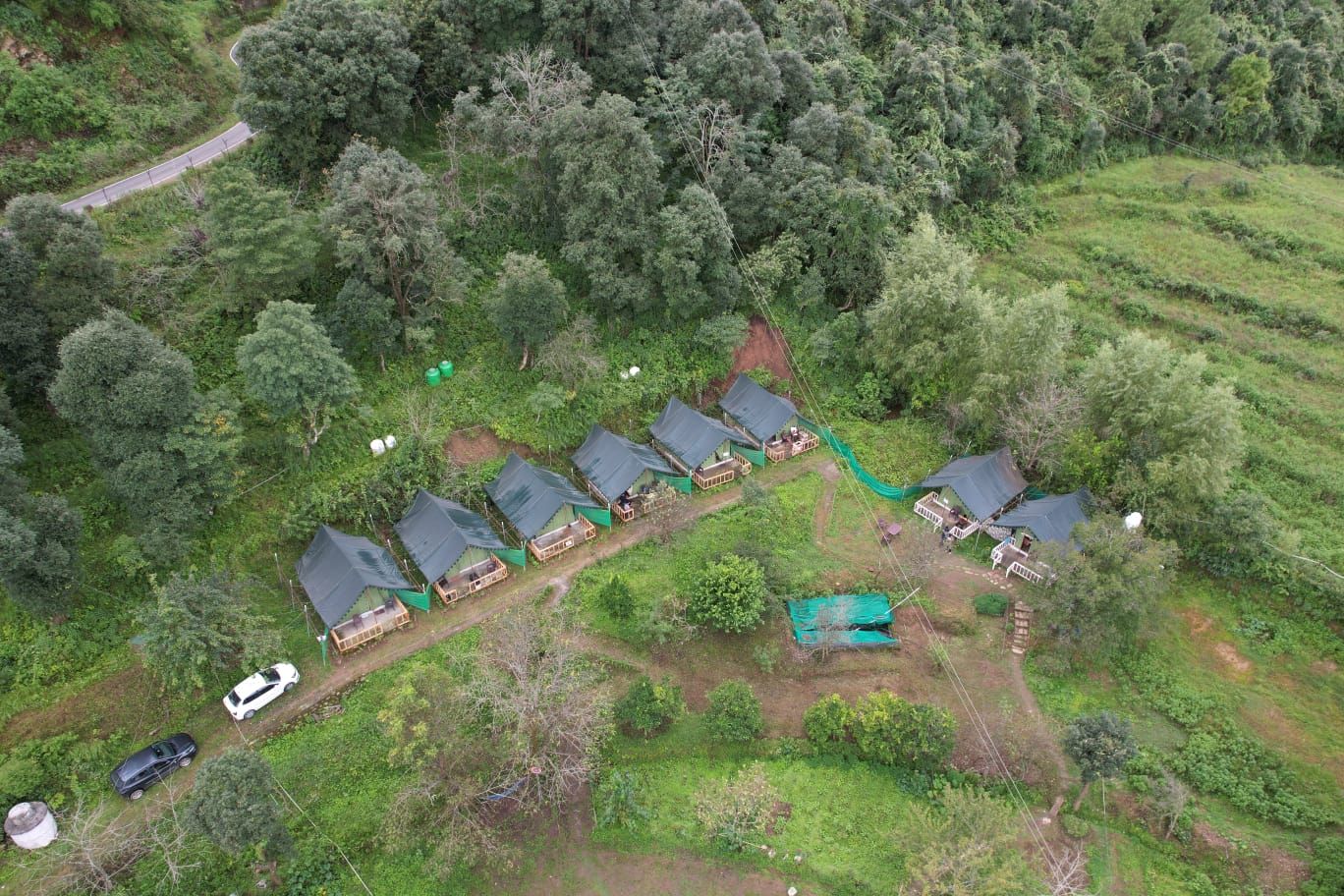
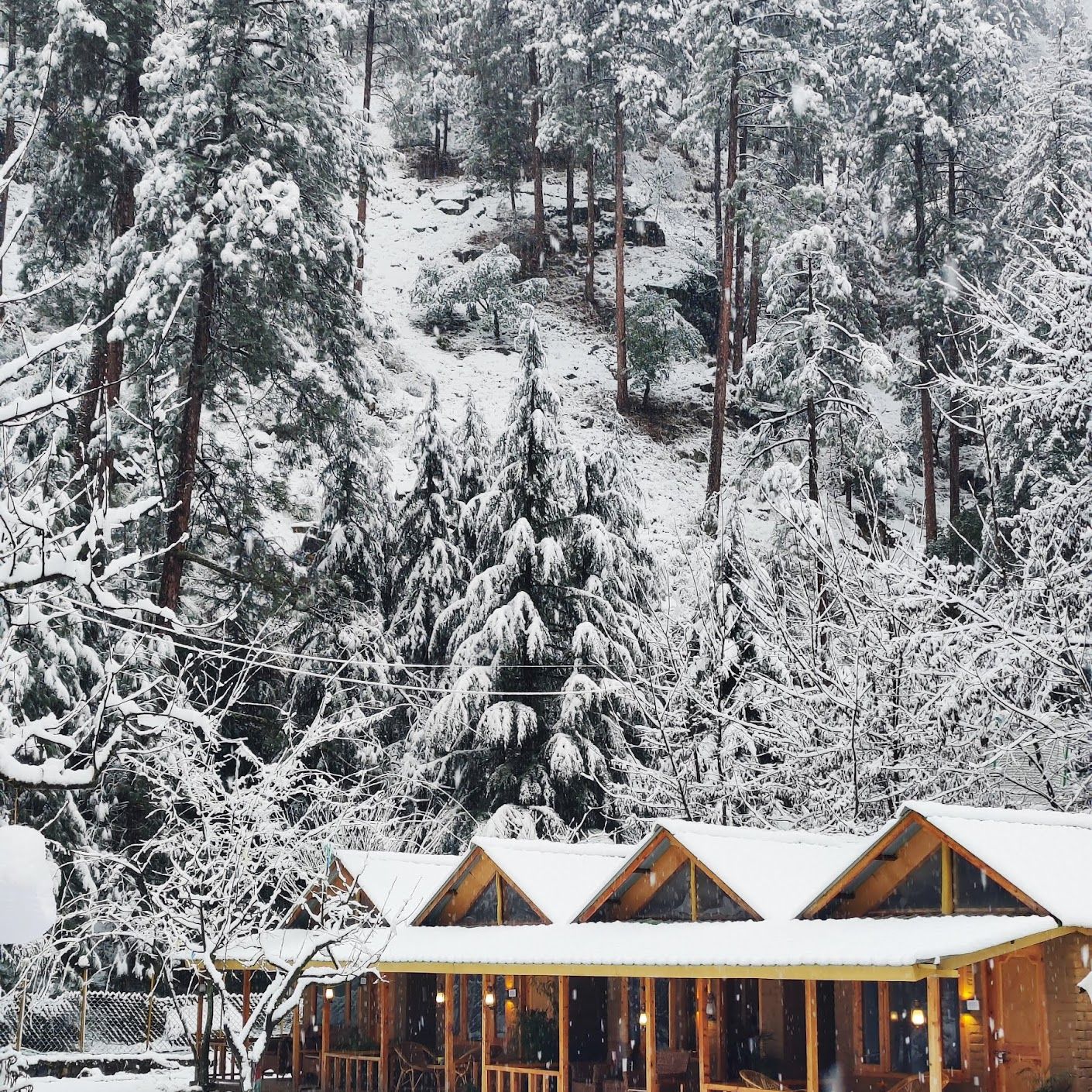
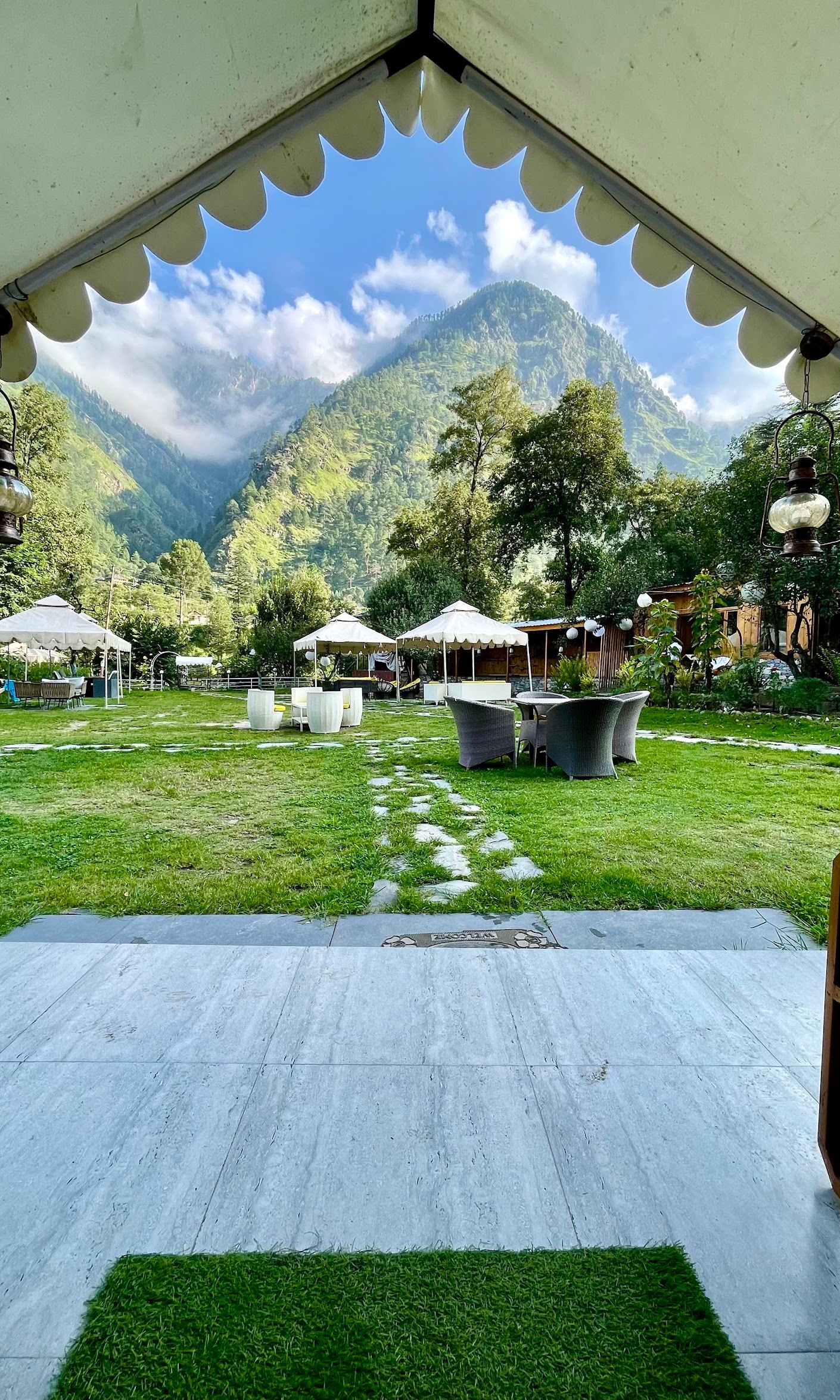
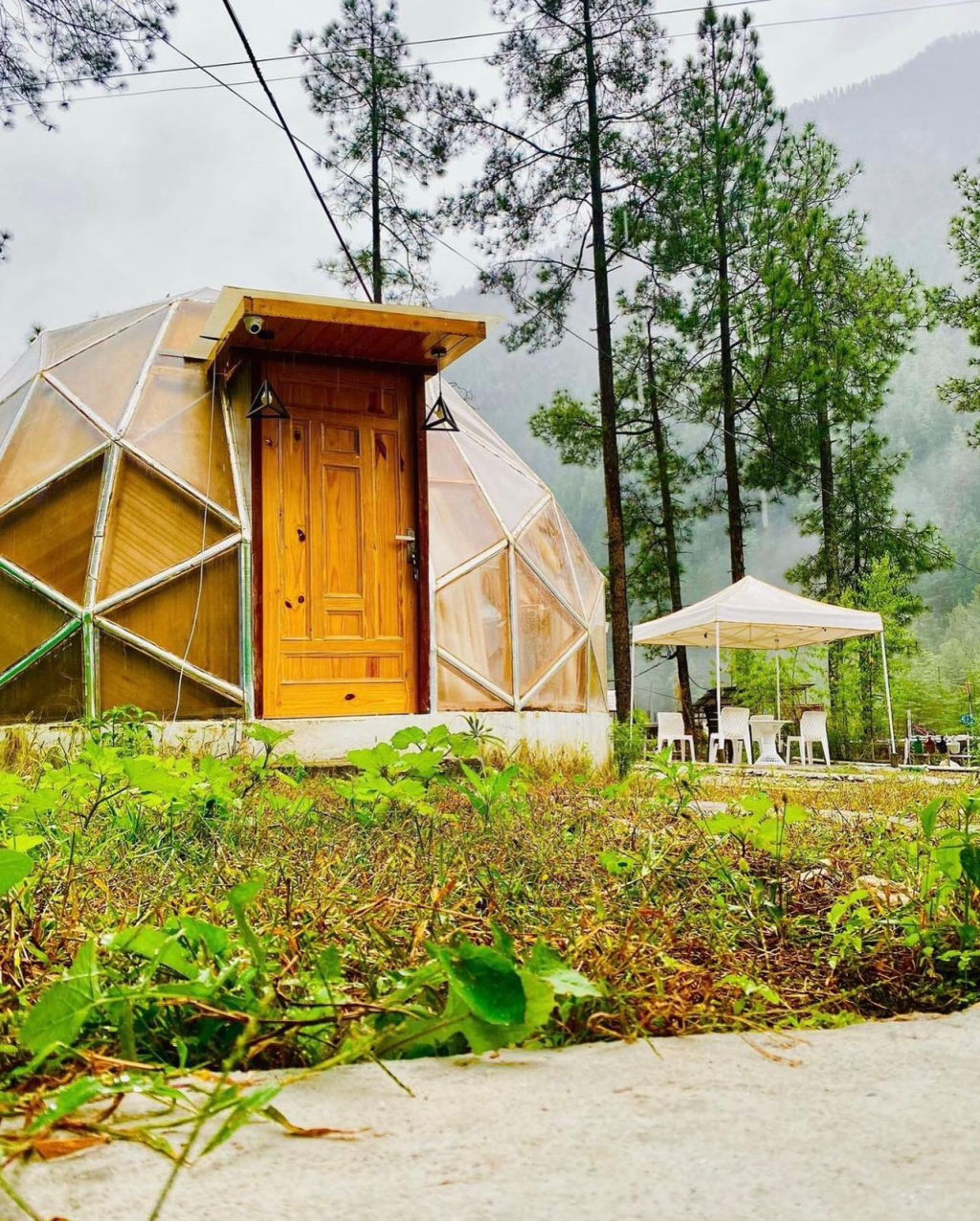
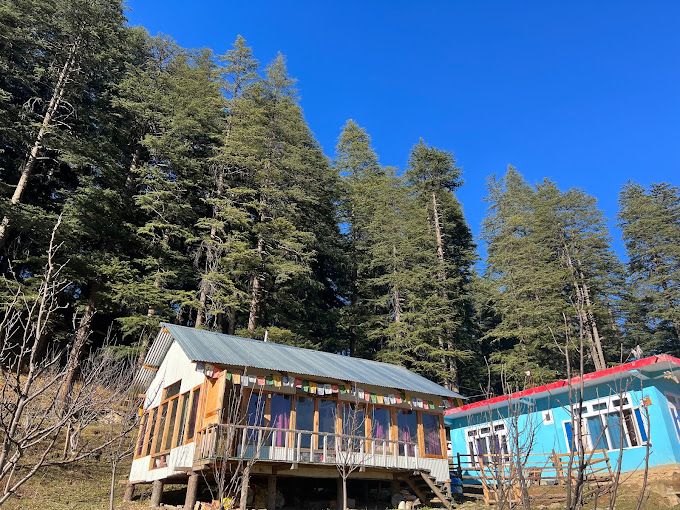
Riverside camps, traditional wooden homestays, and rustic cabins are located along the banks of the Beas, in the quieter hamlets of the Parvati Valley, and across the meadows of Sainj and Tirthan. Travellers can find and book experiential outdoor stays, nature retreats, and verified homestays throughout the Bhuntar region directly on HireACamp.
Tips for your visit to Bhuntar
Because Bhuntar serves as a key traffic bottleneck where routes to Manali and Parvati Valley diverge, town roads and bridges can experience congestion during peak holiday seasons. If you have a flight to catch from the airport or are boarding a bus, allow extra time for local travel through town.
Even in summer, mountain weather can change suddenly. Packing lightweight layers along with a warm fleece or jacket for the evenings will keep you comfortable. If you plan to visit historic temples such as Basheshwar Mahadev, dress modestly and respect local customs regarding footwear and photography within sacred premises.
Keep an eye on weather forecasts, particularly during the late monsoon and mid-winter periods. River currents in the Beas and Parvati are extremely strong, so always maintain a safe distance from slippery banks and never attempt to wade into the water.
Frequently asked questions
What is Bhuntar famous for?
Bhuntar is best known as the transit gateway to Kullu, Manali, and the Parvati Valley, as well as the site of the regional Kullu-Manali Airport. It is also celebrated for the confluence of the Beas and Parvati rivers and the historic Basheshwar Mahadev Temple.
Does Bhuntar have an airport?
Yes, Bhuntar hosts the Kullu-Manali Airport, which provides scheduled flight connections to major hubs such as Delhi and Chandigarh.
Does it snow in Bhuntar during winter?
Bhuntar sits at a lower altitude than towns like Manali, so snowfall within the town is infrequent, though surrounding peaks and upper ridges receive heavy snow during the colder months.
How far is Kasol from Bhuntar?
Kasol is located roughly thirty kilometres east of Bhuntar along the road winding up the Parvati Valley, making it easily reachable by local bus or private taxi.
Can I base myself in Bhuntar to explore nearby valleys?
Yes, Bhuntar's central junction makes it a convenient base for taking day trips into the Parvati Valley, Sainj Valley, and lower Kullu Valley.
Where you'll be
5 stays nearby shown with prices
Stays near Bhuntar
Book a place to stay close by
Things to do in Bhuntar
48 places creators recommend within 30 km


Built from 0 Instagram posts by 0 creators. Every tip links back to the post it came from, and where creators disagree we show both sides.






