
Nagar
Destination in Himachal Pradesh
Naggar is a historic settlement perched on the forested slopes of the Kullu Valley in Himachal Pradesh. Once the seat of the erstwhile Kullu kingdom, the town attracts travellers with its ancient wood-and-stone architecture, serene apple orchards, and sweeping views across the Beas River basin. It offers a peaceful mountain retreat with deep cultural roots, standing as a tranquil alternative to the bustling tourist towns nearby.
Getting there
By road
- From Chandigarh5 hr 30 min · 254 km
- From Ludhiana5 hr 55 min · 284 km
- From Amritsar7 hr 55 min · 395 km
- From Dehradun8 hr 50 min · 436 km
Typical drive times without traffic. Stations and airports from OLA Maps; distances and typical drive times from OpenStreetMap (© OpenStreetMap contributors); notes from creators' Reels.
About Nagar
Written with AI from map data and general knowledge. Check prices and timings locally before you go.
About Naggar and its heritage
Set midway between Kullu and Manali on the eastern banks of the Beas River, Naggar was the capital of the Kullu rajas for more than a thousand years before the administrative seat shifted down the valley. Because of this royal past, the town retains an old-world architectural footprint and a distinct sense of heritage rarely seen in fast-developing hill stations.
The town is renowned for its traditional Kath Kuni construction, an indigenous Himalayan building technique that interlocks dressed stone and thick deodar timber beams without using cement or mortar. This method gives structures both flexibility against seismic tremors and insulation against harsh mountain winters. Surrounding the village are terraced apple and plum orchards, dense deodar groves, and terraced paths that look out toward snow-dusted peaks on the opposite ridgeline.
Things to see and do in Naggar
Naggar is best explored at a slow pace on foot. The most prominent landmark is the historic castle complex, built with alternating layers of stone and wood and perched high over the valley. Inside, ancient courtyards, carved wooden balconies, and a sacred stone shrine offer sweeping vistas of the riverbed below and the snowline in the distance.
Art and culture enthusiasts often head up the slope to the estate where the Russian painter and philosopher Nicholas Roerich lived and worked during the early twentieth century. The preserved wooden house and adjacent gallery showcase his vivid paintings depicting the grandeur of the Himalayas and the spiritual lore of the valley. A short walk through the cedar forests nearby leads to Urusvati Himalayan Research Institute, established by the Roerich family to study folk art, botany, and regional history.
Within the town alleys stand ancient temples of deep spiritual significance. The pagoda-style Tripura Sundari temple, crafted entirely from wood and slate, showcases multi-tiered roofs and intricate carvings of deities and regional motifs. Downhill, the stone-carved Gauri Shankar temple features classical North Indian Shikhara architecture dating back to the eleventh century. Walking between these heritage spots allows you to observe everyday village life, chat with local weavers crafting woollen shawls, and sample regional Himachali delicacies like steamed siddu served with clarified butter.
Read more
Day trips and getaways near Naggar
Naggar makes an excellent base for exploring the broader Kullu Valley and neighbouring valleys without having to move your lodging every day. A short drive down to the river leads you to the bustling artisan centres of Kullu, or north toward the lively cafés and markets of Manali.
Outdoor enthusiasts can easily access trailheads leading into the surrounding wilderness. To the south, you can explore the quieter side of the river toward Mohal, where a riverfront nature park offers gentle walking trails amidst native pines and riparian vegetation. Further afield, the road branches into the Parvati Valley toward Kasol, Pulga, and the popular trekking routes leading up to the hot springs of Kheerganga. Those seeking water trails can venture toward mountain waterfalls such as Lapas, hidden in nearby side valleys that drain into the Beas.
Best time to visit Naggar
Naggar has distinct seasonal shifts, each offering a completely different mountain experience.
Spring and summer, from April to June, bring mild days, clear blue skies, and blooming orchards. Temperatures during this window are very comfortable, making it the ideal season for heritage walks, forest hikes, and open-air reading. Days are bright, and nights remain pleasantly cool.
Autumn arrives in September and lasts through November, bringing some of the clearest skies of the year. During these months, the apple harvest is in full swing, and the hillsides turn shades of amber, gold, and russet. It is one of the most rewarding times for photography and panoramic valley views.
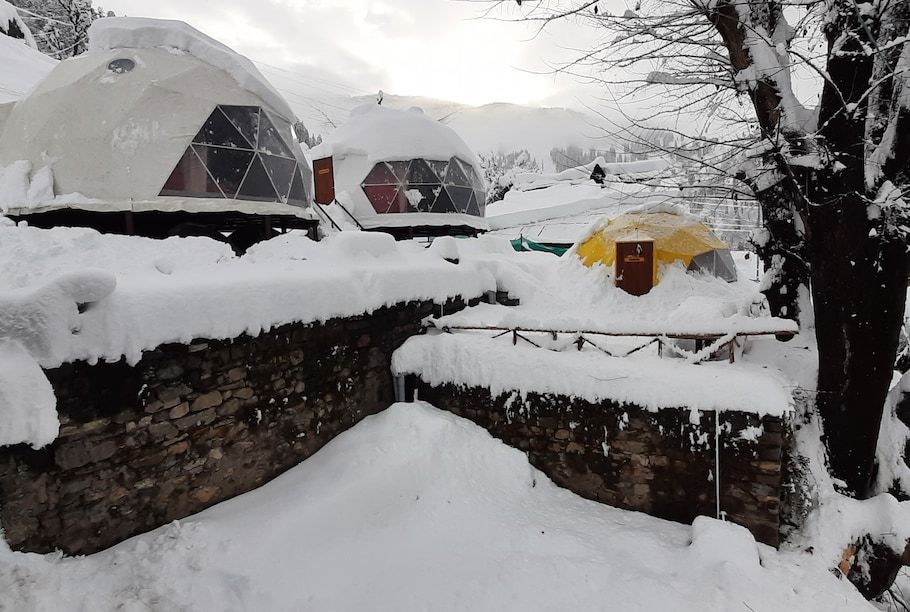
Winter, running from December through February, brings freezing temperatures and occasional snowfall that blankets the slate roofs and pine boughs in white. It is quiet and atmospheric, ideal for travellers seeking solitude by a wood stove, though mountain roads can become icy. The monsoon season in July and August sees heavy rainfall across the valley, which can trigger landslides and travel delays, requiring extra planning and flexibility.
How to reach Naggar
The nearest air link is the Kullu-Manali Airport at Bhuntar, situated roughly 30 to 35 kilometres south of Naggar. Bhuntar operates scheduled flights connecting to major transit hubs such as Delhi and Chandigarh, depending on seasonal schedules and weather conditions. From the airport, local taxis can drive you directly to the town.
For those travelling by road, Naggar sits just off the main highway between Kullu and Manali. Long-distance overnight buses run regularly from Delhi and Chandigarh to Manali. Travellers heading to Naggar typically disembark at Patlikuhal, a small transit settlement on the national highway, and cross the bridge over the Beas River via a short taxi or local bus ride up the hill to Naggar.
Self-driving or hiring a private vehicle from Chandigarh is also popular. The route follows the Himalayan foothills through Mandi and the Beas gorge, offering dramatic roadside river views before climbing into the upper valley.
Tips for your visit to Naggar
Because Naggar is built along a steep mountain ridge, exploring the town involves walking along steep stone steps, cobblestone lanes, and uneven village trails. Sturdy walking shoes with good traction are essential.
Respect local customs when entering village courtyards and temple premises. Many Himachali temples have strict rules prohibiting leather accessories or photography inside sanctum areas; look for posted instructions or ask a local elder before stepping inside. Dressing modestly is expected throughout the village.
Weather can change quickly at higher altitudes. Even during peak summer, carry a light jacket or fleece for cool evenings. If visiting in late autumn or winter, pack thermal underlayers, a windproof outer coat, woollen socks, and gloves. Keep some cash handy for small purchases, as smaller village stalls and local transport may have intermittent digital payment connectivity.
Where to stay in Naggar
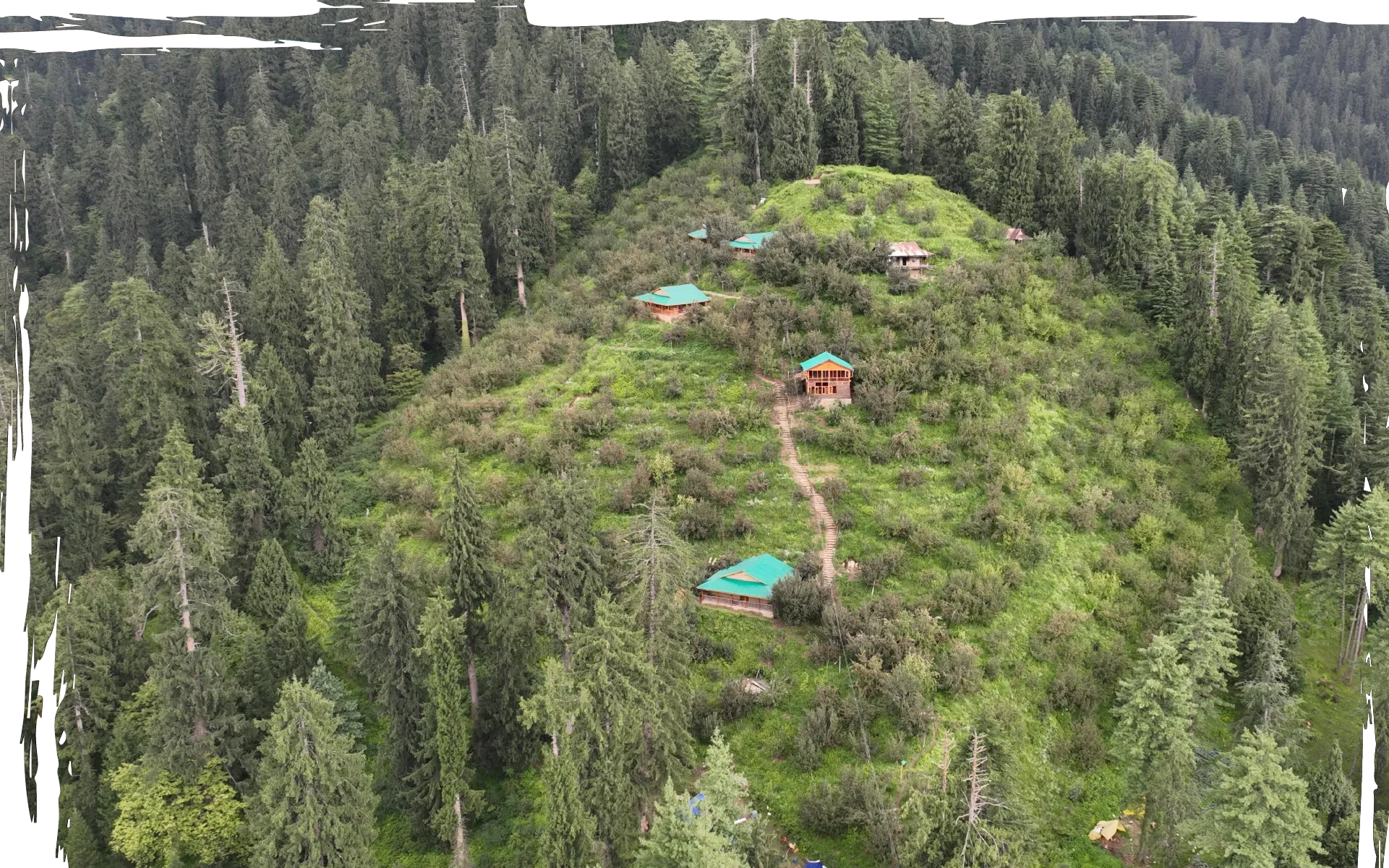
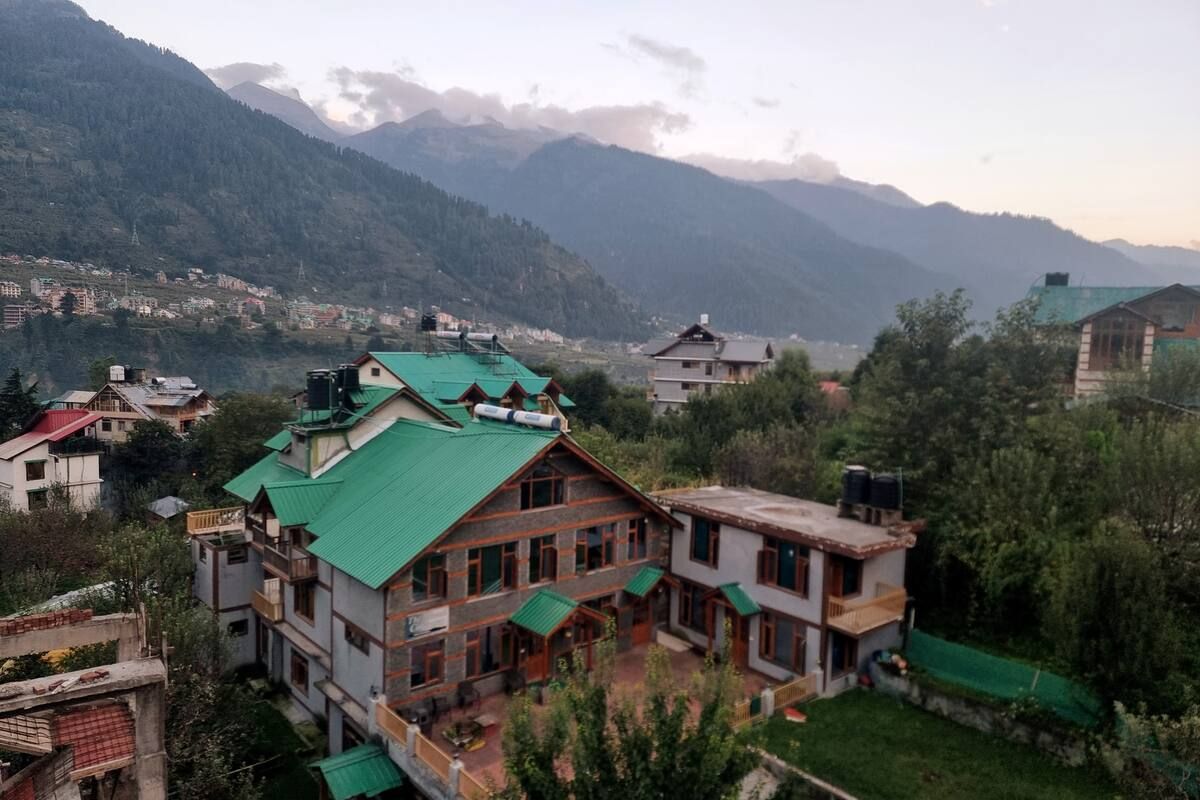
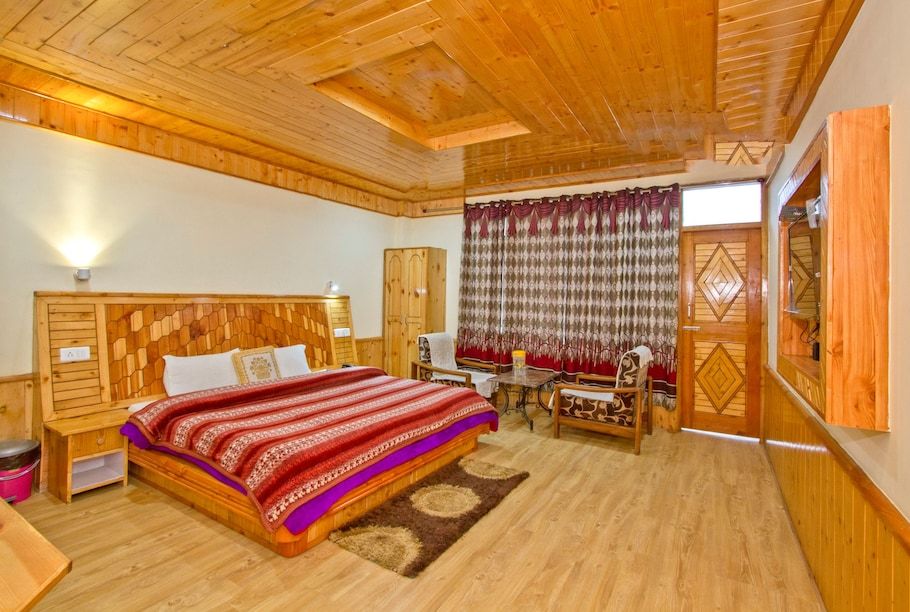
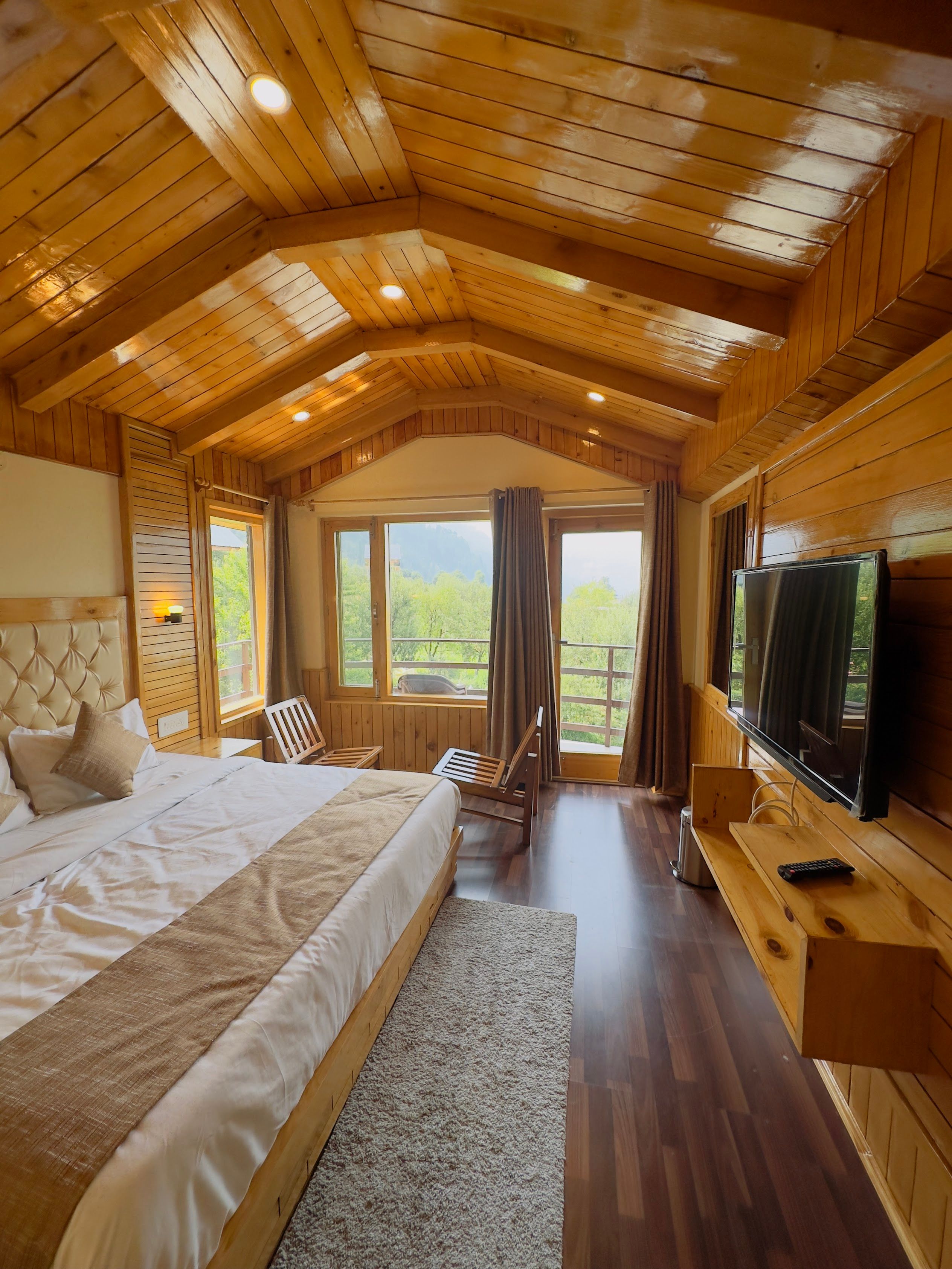
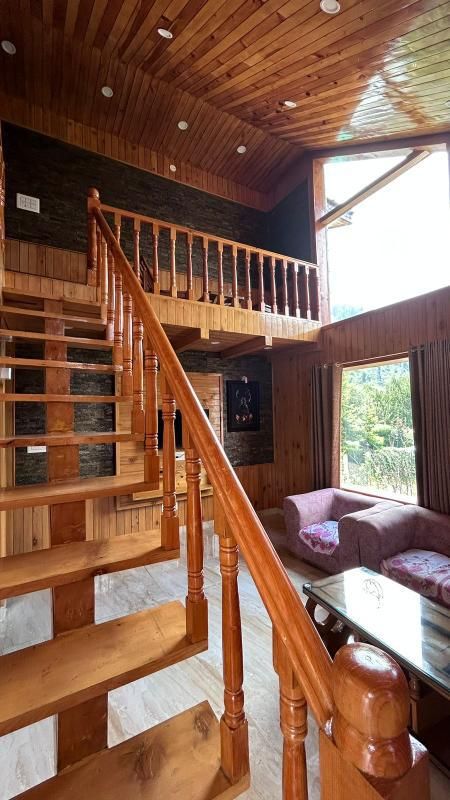
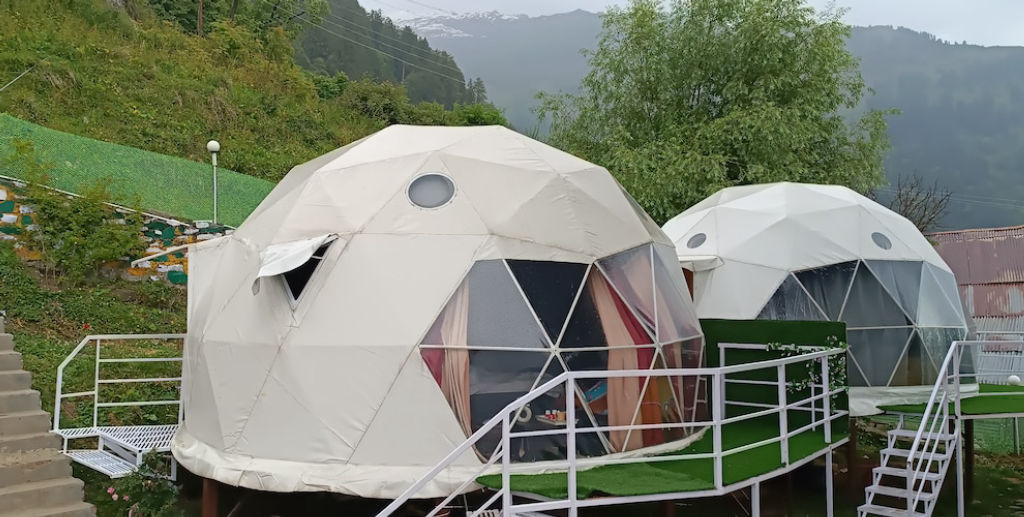
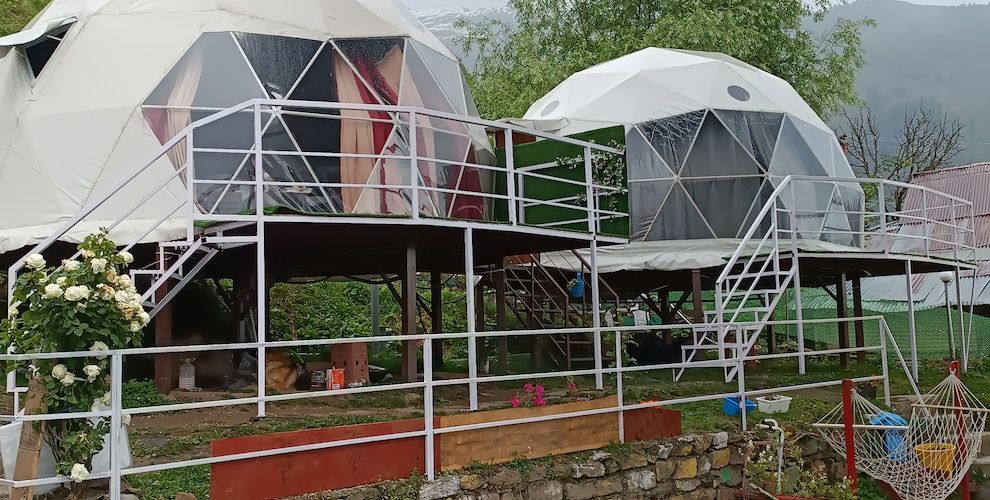
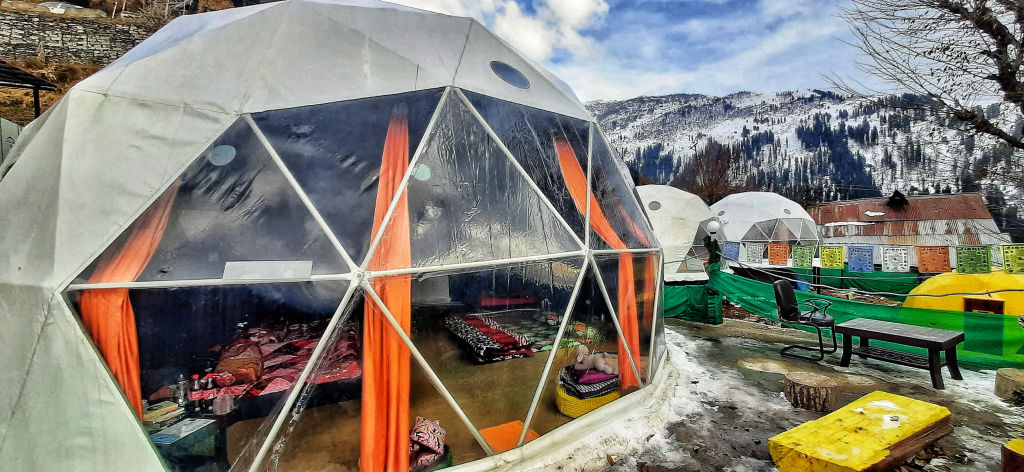
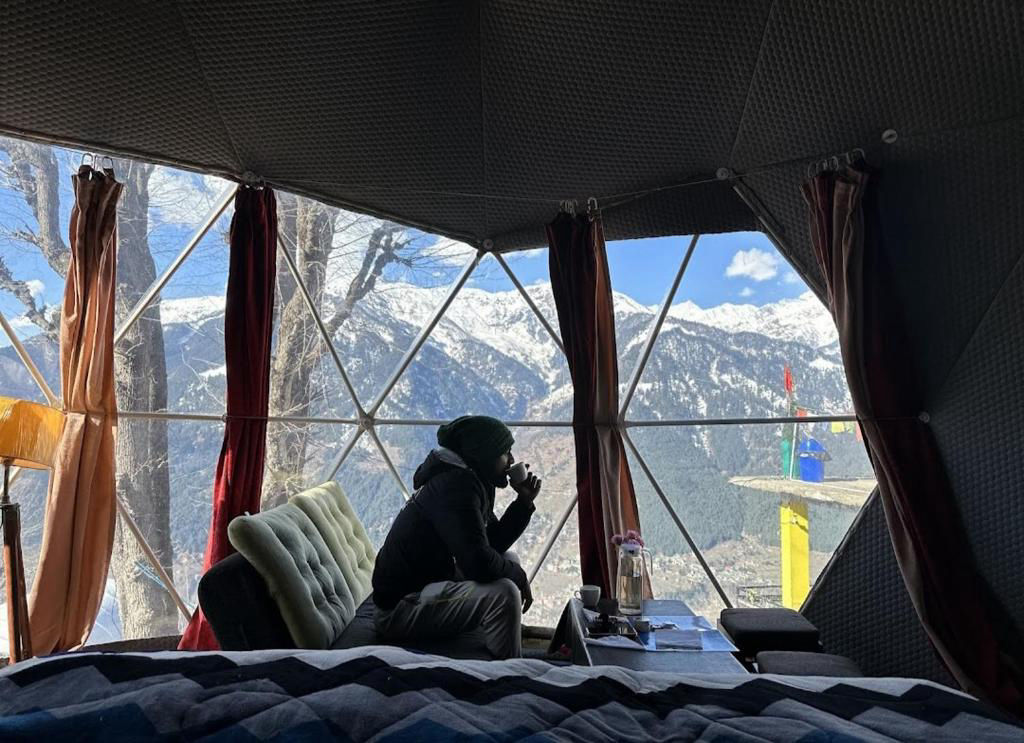
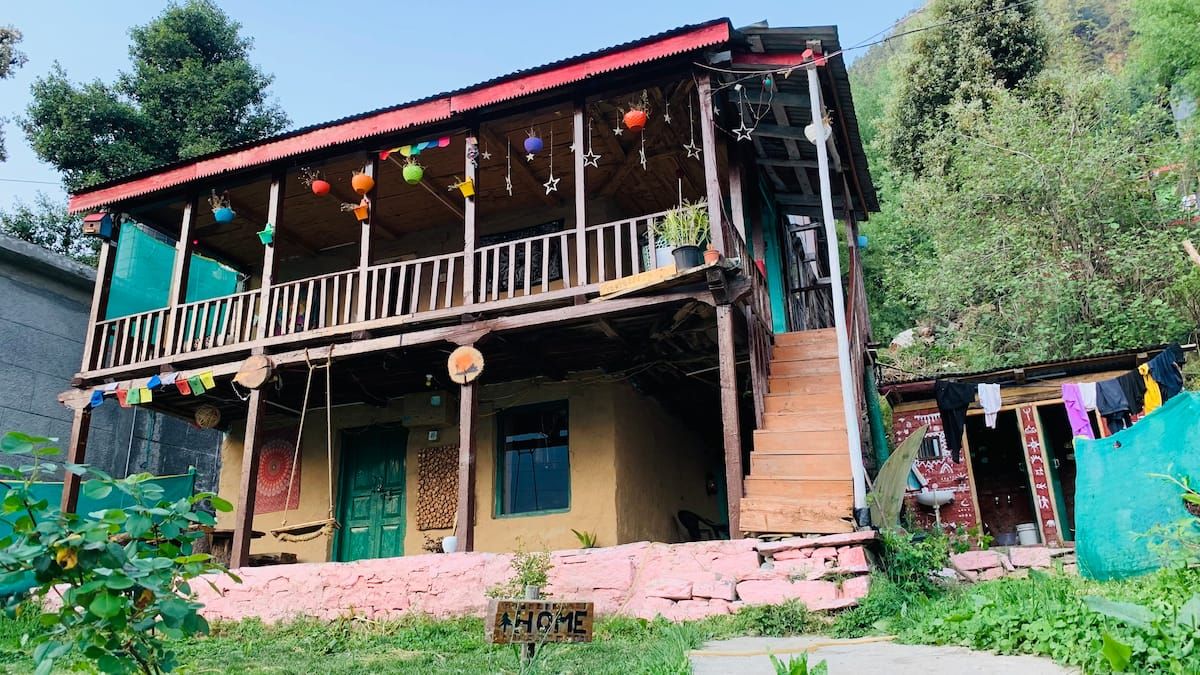
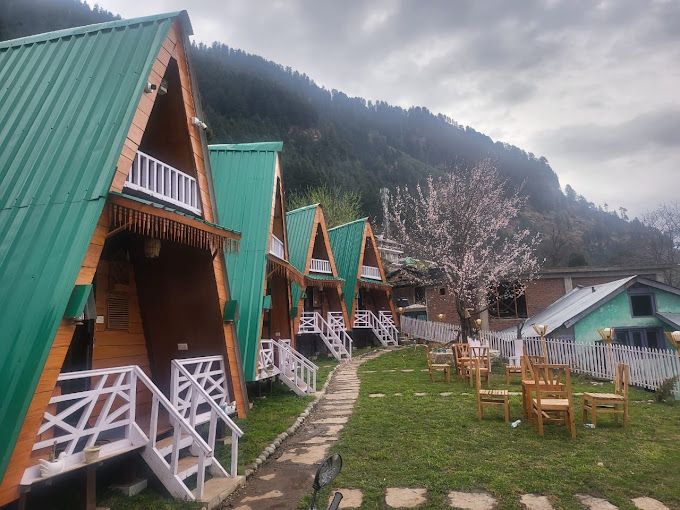
Naggar provides a welcome alternative to conventional hotel districts, with accommodations spread across traditional village clusters, orchard clearings, and pine forests. You will find restored wooden homestays, rustic guesthouses, and scenic hillside outdoor stays that allow you to wake up to valley birdsong and views of snowcapped crests.
Whether you are looking for an artistic mountain retreat, an orchard-surrounded homestay, or a base for outdoor day hikes, curated stays in and around Naggar can be booked on HireACamp.
Frequently asked questions
How far is Naggar from Manali?
Naggar is situated approximately 20 kilometres south of Manali along the eastern bank of the Beas River, taking around 45 minutes to an hour by car depending on traffic.
Does it snow in Naggar during the winter?
Yes, Naggar frequently receives snowfall during the peak winter months of late December, January, and early February, transforming the village and surrounding pine forests into a winter landscape.
What is Kath Kuni architecture?
Kath Kuni is an indigenous Himalayan building style seen in Naggar, characterized by interlocking layers of deodar wood beams and raw stone without the use of mortar, providing both thermal efficiency and earthquake resilience.
Is Naggar a good destination for a quiet getaway or remote work?
Yes, Naggar is notably calmer and less crowded than nearby Manali, offering peaceful surroundings, scenic views, and village hospitality suited for extended stays, creative retreats, or remote work.
How do I get to Naggar if arriving by bus from Delhi?
Take any overnight bus headed toward Manali and alight at Patlikuhal, from where you can take a local taxi or bus across the Beas River bridge to reach Naggar in about 15 minutes.
Where you'll be
12 stays nearby shown with prices
Stays near Nagar
Book a place to stay close by
Things to do in Nagar
48 places creators recommend within 30 km


Built from 0 Instagram posts by 0 creators. Every tip links back to the post it came from, and where creators disagree we show both sides.






