
Narkanda
Destination in Himachal Pradesh
Perched at an elevation of around 2,700 metres along the Hindustan-Tibet road, Narkanda is a tranquil hill town in Himachal Pradesh surrounded by dense deodar forests and terraced apple orchards. Known as the gateway to the Kinnaur Valley and a winter skiing destination, it draws travellers looking for panoramic Himalayan views, crisp mountain air, and quiet woodland trails away from busier hill stations. The town offers a relaxed base from which to explore scenic high-altitude viewpoints, traditional wooden temples, and peaceful apple-growing hamlets.
Getting there
By road
- From Chandigarh3 hr 40 min · 172 km
- From Ludhiana5 hr 35 min · 274 km
- From Dehradun5 hr 45 min · 289 km
- From Amritsar7 hr 30 min · 371 km
Typical drive times without traffic. Stations and airports from OLA Maps; distances and typical drive times from OpenStreetMap (© OpenStreetMap contributors); notes from creators' Reels.
Narkanda and Surrounding Passes Itinerary
A practical day plan covering high-altitude viewpoints and valleys accessible from Narkanda, focusing on the Jalori Pass and Tirthan Valley route.
Jalori Pass and Tirthan Valley Road Excursion
Best for mountain scenery and scenic road travel
Day 1
Mountain Pass and Valley Exploration
morning
Jalori PassAbout 1 hr 30 min
Reachable in roughly 7 to 8 hours (295 km) from Chandigarh.
afternoon
Tirthan Valley RoadAbout 2 hr · 12 km from the last stop
Located along the valley route approximately 280 km from Chandigarh.
- Travel to Jalori Pass covers around 295 km from Chandigarh and takes about 7 to 8 hours by road.
- Driving to Tirthan Valley takes approximately 6 to 7 hours across a distance of about 280 km from Chandigarh.
- Tariffs for River Valley View Home Stay start at ₹1,000 per night.
Visit lengths are suggestions; distances are straight-line between stops.
About Narkanda
Written with AI from map data and general knowledge. Check prices and timings locally before you go.
About Narkanda and its mountain setting
Narkanda sits on a high mountain ridge in the Shimla district of Himachal Pradesh, roughly sixty-five kilometres northeast of Shimla town. Long before it emerged as a peaceful leisure retreat, Narkanda served as a vital staging post along the historic Hindustan-Tibet highway, offering shelter and supplies to travellers heading into the inner valleys of Kinnaur and Spiti. The town is enveloped by dense forests of deodar, pine, spruce, and blue pine, with terraced slopes that give way to sprawling apple and cherry orchards.
The town's elevation gives it cool mountain weather throughout the year and panoramic views of the Greater Himalayan ranges on clear days. Unlike larger commercial hubs, Narkanda has retained a modest scale. Its central chowk is lined with small general stores, fruit sellers, and dhabas, while the surrounding hillsides remain largely peaceful, marked by wandering forest trails and scattered wooden homesteads.
Things to do in Narkanda
The most prominent attraction in Narkanda is the excursion to Hatu Peak, the highest summit in the immediate region. Rising above the town, the peak can be reached by a narrow, winding mountain road or via an uphill forest trek through thick spruce and oak groves. At the summit stands the Hatu Mata Temple, an intricately carved shrine dedicated to the goddess Mandodari, built in the traditional Himachali timber and stone Kath-Kuni architectural style. From the peak, visitors are treated to an unbroken view of snow-capped peaks across the Pir Panjal and Shrikhand ranges.
Another gentle outing from town is Tannu Jubbar Lake, a small, tree-lined oval pond encircled by deodars with a shrine dedicated to the local deity, Nag Devta, resting beside the water. The grassy banks provide a calm setting for morning walks and quiet picnics. For those interested in agriculture, the orchards surrounding Narkanda and neighbouring Kotgarh offer pleasant walks during spring and summer, when fruit trees are either in full bloom or laden with ripening apples. During peak winter months, slopes near the town receive substantial snow, turning Narkanda into a venue for beginner-friendly skiing and snowboarding courses.
Read more
Places to visit around Narkanda
Narkanda serves as an excellent jumping-off point to explore nearby valleys, mountain passes, and historic towns. Just downhill lies the Kotgarh belt, famous as the cradle of Himachal Pradesh's commercial apple cultivation, where travellers can explore quiet village lanes, historic stone churches, and hillside farms.
Travellers interested in highland journeys can drive north towards Jalori Pass, a scenic high-altitude mountain crossing that connects the Shimla district with the Tirthan and Kullu valleys. Jalori Pass serves as a base for day hikes to the ancient Raghupur Fort ruins and Sareolsar Lake. Further north into the serene interiors of Mandi district lies the village of Gadagushaini, nestled beside tumbling mountain streams and pine forests. For visitors interested in colonial heritage, the bustling city of Shimla is easily accessible to the south, where landmarks like Christ Church and The Ridge offer a stark contrast to Narkanda's quiet natural surroundings.
Best time to visit Narkanda
Narkanda experiences distinct seasonal transformations, each bringing a unique appeal depending on what you wish to experience. The spring and summer months, running from April through June, are ideal for escaping the plains' summer heat. Daytime temperatures remain pleasant, skies are generally clear, and the valleys are vibrant with fresh green foliage and blossoming fruit trees.
The monsoon season, typically from July to August, brings heavy rainfall, occasional landslides, and swirling mountain mists. While travel requires extra caution during these months, late August marks the beginning of the annual apple harvest, filling local markets with fresh fruit. Autumn, spanning September and October, brings crisp air, brilliant blue skies, and great visibility of the snowline. From late December through February, Narkanda is blanketed in snow, making it popular among winter travellers and snow-sports enthusiasts, though temperatures frequently drop below freezing.
How to reach Narkanda
Narkanda is well connected by road via National Highway 5, the primary corridor linking Shimla to the Kinnaur Valley. Travellers arriving by car or bus typically travel from major northern transit hubs such as Chandigarh or New Delhi. The highway passes through Shimla, Kufri, and Theog before climbing steadily up the ridge towards Narkanda. State transport buses and private shared cabs ply this route regularly throughout the day.
For rail travel, the nearest broad-gauge railway station is located at Kalka, which is connected to Delhi and other major cities. From Kalka, travellers can take the historic narrow-gauge toy train to Shimla and complete the remainder of the journey to Narkanda by road. Alternatively, taxis are available directly from Kalka. The closest airport is at Jubbarhatti near Shimla, with limited flights, while Chandigarh International Airport offers much broader, reliable domestic flight connections.
Tips for your visit
Because of its elevation, Narkanda stays noticeably colder than Shimla. Warm woollens or fleece jackets are recommended even during summer evenings, while heavy thermal layers, insulated jackets, gloves, and snow boots are essential if visiting in the winter months.
Drivers should be prepared for narrow, winding roads, particularly on the ascent to Hatu Peak, which features blind turns and single-lane stretches where reversing to a passing point is often necessary. During winter, snow chains and experienced mountain driving skills are advisable to handle patches of black ice. When walking through private orchards, always respect local property and avoid plucking fruit without permission from the farmers.
Where to stay in Narkanda
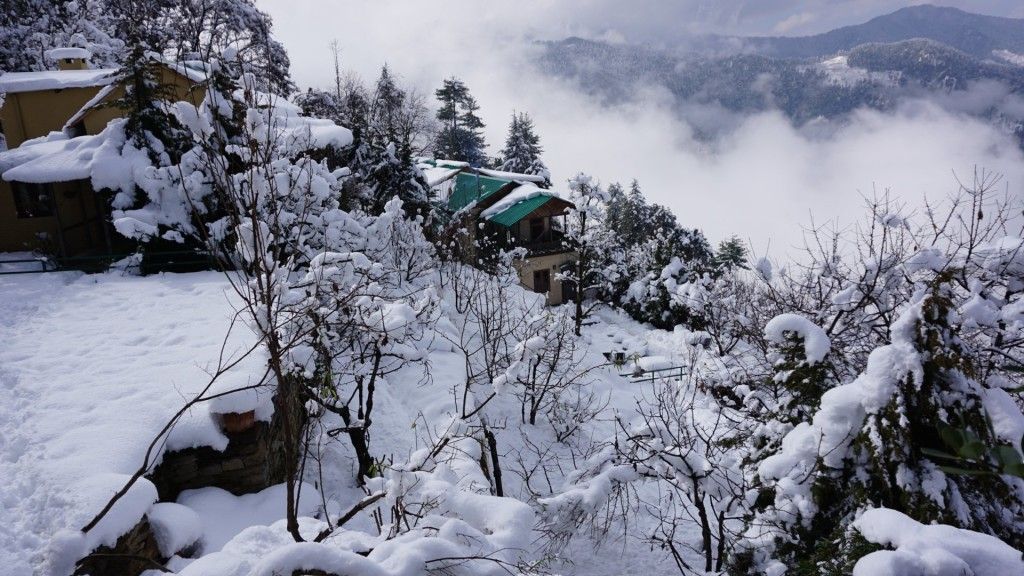
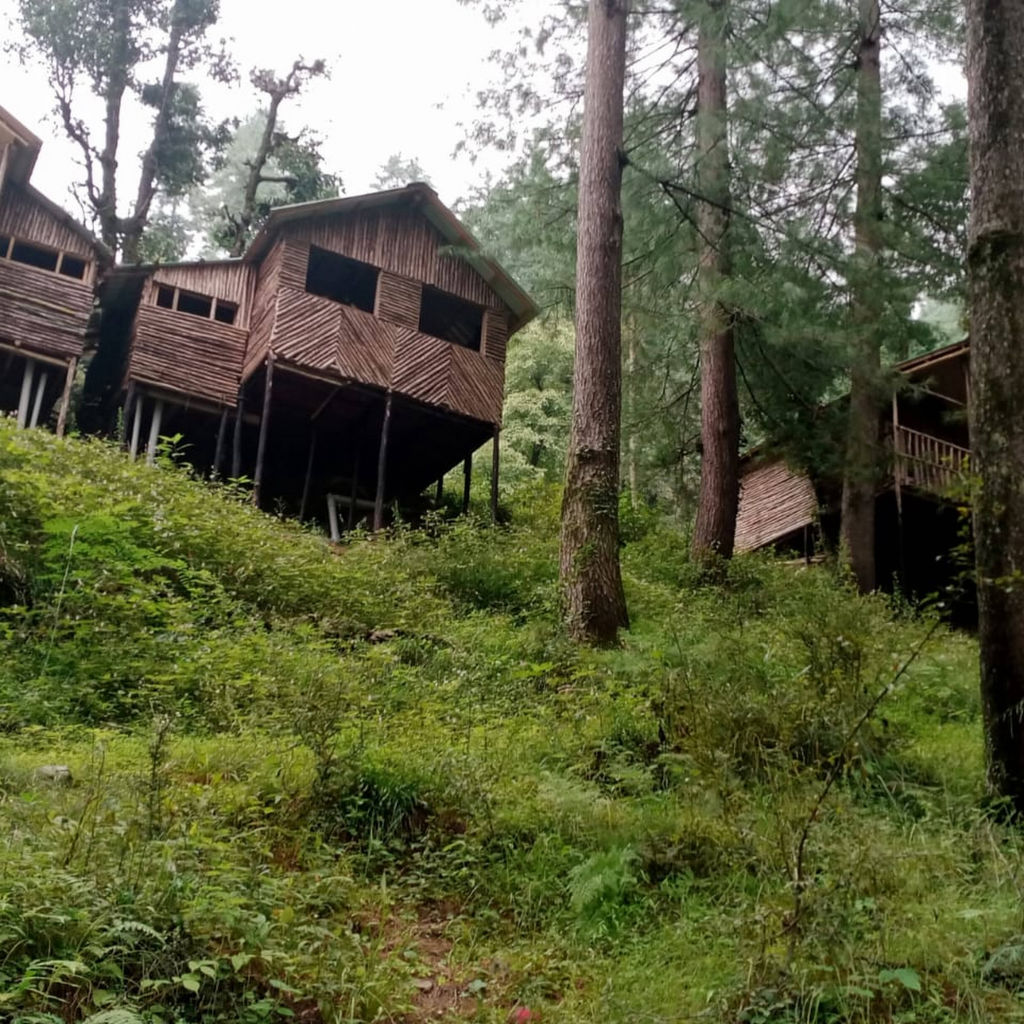
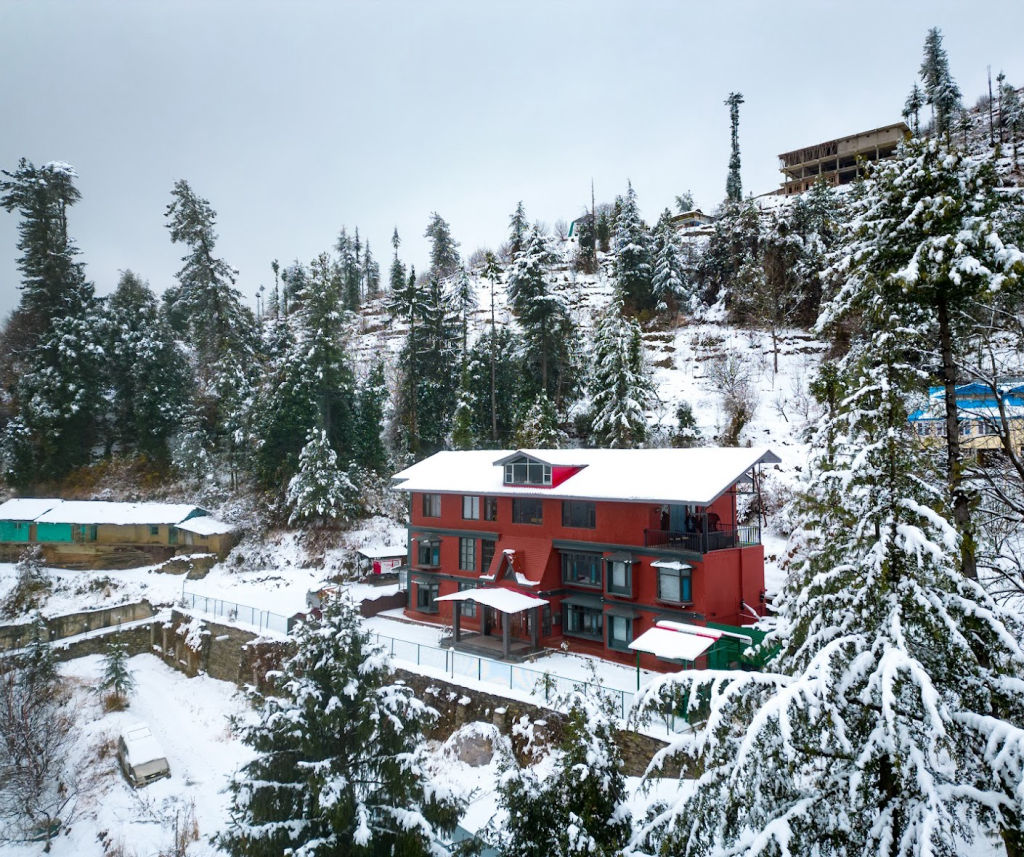
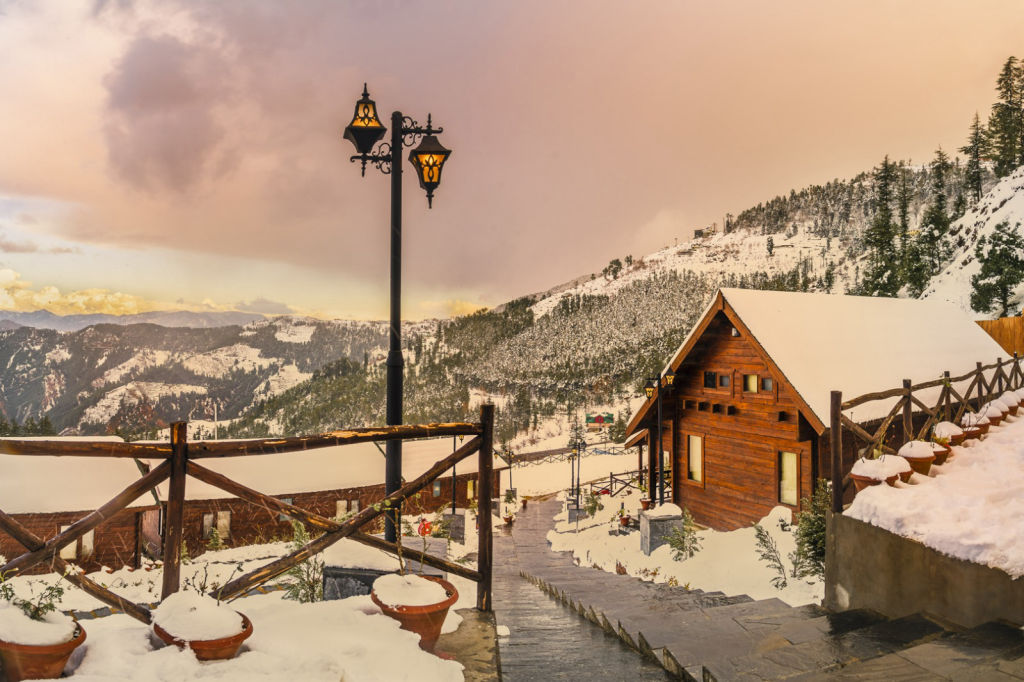
Accommodation around Narkanda ranges from traditional village homestays situated amidst apple orchards to quiet forest campsites and mountain cottages perched along scenic ridges. Staying slightly outside the main market chowk offers better peace and unobstructed views of the surrounding valleys.
You can find and book vetted homestays, nature retreats, and outdoor campsites in and around Narkanda on HireACamp. Booking in advance is recommended during the peak summer holiday season and following heavy winter snowfalls.
Frequently asked questions
What is Narkanda famous for?
Narkanda is renowned for its expansive apple orchards, the panoramic viewpoint and wooden temple atop Hatu Peak, and its winter snow slopes that offer beginner skiing.
Does it snow in Narkanda?
Yes, Narkanda receives regular snowfall between late December and February, often turning the town, surrounding pine forests, and orchards into a deep winter landscape.
Can you drive all the way to Hatu Peak?
A narrow, single-lane paved road leads from Narkanda up to the Hatu Mata Temple at the peak, though drivers must be cautious of steep inclines and oncoming traffic.
How far is Narkanda from Shimla?
Narkanda is situated approximately sixty-five kilometres northeast of Shimla along National Highway 5, a mountain drive that usually takes around two to three hours depending on traffic.
What is the best way to explore Kotgarh from Narkanda?
Kotgarh is located a short drive downhill from Narkanda and can easily be explored as a day trip by car or via leisurely village walks through the apple orchards.
Where you'll be
4 stays nearby shown with prices
Stays near Narkanda
Book a place to stay close by
Things to do in Narkanda
48 places creators recommend within 30 km


Built from 0 Instagram posts by 0 creators. Every tip links back to the post it came from, and where creators disagree we show both sides.






