
Rajsamand
Destination in Rajasthan
Rajsamand is a historic district town in southern Rajasthan, established around the seventeenth-century artificial lake commissioned by Maharana Raj Singh of Mewar. Known across India for its vast marble industry and royal Mewari heritage, the town sits against the undulating backdrop of the Aravalli range. Travellers visit to admire elaborate marble embankments, discover ancient temples, and use the town as a base to explore nearby fortresses and wildlife sanctuaries.
Getting there
By road
- From Jodhpur3 hr 55 min · 190 km
- From Ahmedabad6 hr 40 min · 327 km
- From Jaipur6 hr 45 min · 333 km
- From Vadodara8 hr 10 min · 419 km
Typical drive times without traffic. Stations and airports from OLA Maps; distances and typical drive times from OpenStreetMap (© OpenStreetMap contributors); notes from creators' Reels.
About Rajsamand
Written with AI from map data and general knowledge. Check prices and timings locally before you go.
Understanding Rajsamand and its Heritage
Rajsamand takes its name from the magnificent Rajsamand Lake, constructed in the 1670s as a famine relief project by Maharana Raj Singh. Today, the town serves as an administrative center positioned between Udaipur and Ajmer, playing a central role in southern Rajasthan's cultural landscape. Beyond its deep historical ties to the Mewar dynasty, the area is renowned nationwide as a premier center for marble mining, cutting, and stone crafting.
The topography around the town features the rugged, stony hills of the ancient Aravalli range, interspersed with seasonal river courses and scrub vegetation. Centuried stone embankments, step structures, and water retention systems across the district illustrate traditional water engineering developed to sustain desert and semi-arid communities. The resulting mix of industrial energy and timeless lakeside calm gives the town a distinctive regional character.
Top Things to Do in Rajsamand
The focal attraction within the town is Rajsamand Lake and its historic embankment, known as the Nauchowki Ghats. Walking along these wide marble terraces allows visitors to study the ornate pavilions, carved toranas, and stone pillars that line the water. Carved onto these stone surfaces is the Raj Prasasti, a series of marble slabs containing an extensive Sanskrit inscription detailing the genealogical and military history of Mewar.
Beyond the lakefront, exploring the town's stonecraft centers provides a fascinating look into local industry. Skilled artisans throughout the district carve fine jali lattices, statues, and decorative stone pillars from locally quarried white marble. Strolling through the central bazaars also offers travellers an authentic taste of local Mewari food, including fresh dal baati churma, spiced kachoris, and regional milk sweets.
Read more
Historic Forts and Temples Nearby
Rajsamand is surrounded by exceptional heritage sites that make for rewarding day excursions. Approximately thirty-one kilometers away rises the mighty perimeter of Kumbhalgarh Fort, celebrated for its expansive defensive walls and hilltop views. Within the citadel, visitors can explore the Badal Mahal palace complex perched high on the ridge, as well as the birthplace of Maharana Pratap and the intricately carved Nilkanth Mahadev Mandir.
Religious and architectural history continues at the Charbhuja Temple, an important pilgrimage site dedicated to Lord Vishnu that showcases traditional Mewari temple craft. Further into the rural valleys, the historic Roopnarayan Temple and the weathered ramparts of Roopnagar Fort offer quiet escapes where stone carvings and quiet village paths replace crowded tourist itineraries.
Lakes and Wildlife Excursions
Nature enthusiasts and birdwatchers will find plenty of peaceful open spaces around the district. Chikalwas Dam sits just outside the town and offers scenic water views that attract local and migratory water birds during cooler months. Smaller rural reservoirs such as Hammeripal Lake and Lakhela Talao provide quiet viewpoints to watch rural life unfold against the rocky Aravalli horizon.
To the west, the Kumbhalgarh Wildlife Sanctuary covers rugged ridgelines and dry deciduous forests. The reserve is home to leopards, wolves, four-horned antelopes, and a wide variety of bird species native to the scrublands of Rajasthan. During and immediately following the monsoon, natural gullies and spots like Suraj Kund briefly come alive with seasonal cascades and greenery, making the surrounding hills popular for daytime walks.
Best Time to Visit Rajsamand
The ideal period to visit Rajsamand is from October to March. During these autumn and winter months, the weather is consistently clear, dry, and mild, allowing comfortable exploration of open-air lakeside ghats, temples, and hillside fortifications. Winter evenings can turn cool, particularly near large bodies of water, so packing light woollens or a jacket is advisable.
The monsoon season from July to September brings refreshing showers that replenish local reservoirs and turn the parched Aravalli scrub a vibrant green. While daytime humidity can rise, this is an excellent time for scenic drives and countryside exploration. Summer lasts from April to June and brings extreme heat, with daytime temperatures routinely climbing past forty degrees Celsius, making extensive outdoor sightseeing difficult.
How to Reach Rajsamand and Where to Stay
Rajsamand is conveniently connected by road via National Highway 58, which links it with Udaipur, Ajmer, and Jaipur. The nearest major commercial airport is Maharana Pratap Airport in Udaipur, roughly sixty to seventy kilometers away, from which travellers can hire private taxis or board regular regional buses. Udaipur and Marwar Junction also serve as the primary rail links, connecting the region to major cities across India.
When planning overnight stops, the area surrounding the town and neighboring hill tracts offers diverse lodging choices suited for different travel styles. Camps, homestays, and other stays nearby can be found on HireACamp, giving visitors a peaceful base near village outskirts, scenic lakes, or the forested ridges of the Aravalli hills.
Frequently asked questions
What is Rajsamand known for?
Rajsamand is famous for its seventeenth-century artificial lake with carved marble ghats, its Mewar historical legacy, and its thriving marble extraction and carving industry.
How far is Kumbhalgarh Fort from Rajsamand?
Kumbhalgarh Fort is located approximately thirty-one kilometers west of Rajsamand, making it a convenient half-day or full-day excursion.
Which airport is closest to Rajsamand?
The closest airport is Maharana Pratap Airport in Udaipur, situated about sixty to seventy kilometers south of Rajsamand.
Can travellers visit Rajsamand Lake year-round?
Yes, Rajsamand Lake and its Nauchowki Ghats can be visited throughout the year, though visiting between October and March offers the most comfortable weather.
What should I pack for a trip to Rajsamand in winter?
Pack sturdy walking shoes for stone steps and ghats, sun protection for daytime sightseeing, and a sweater or fleece for chilly winter evenings.
Where you'll be
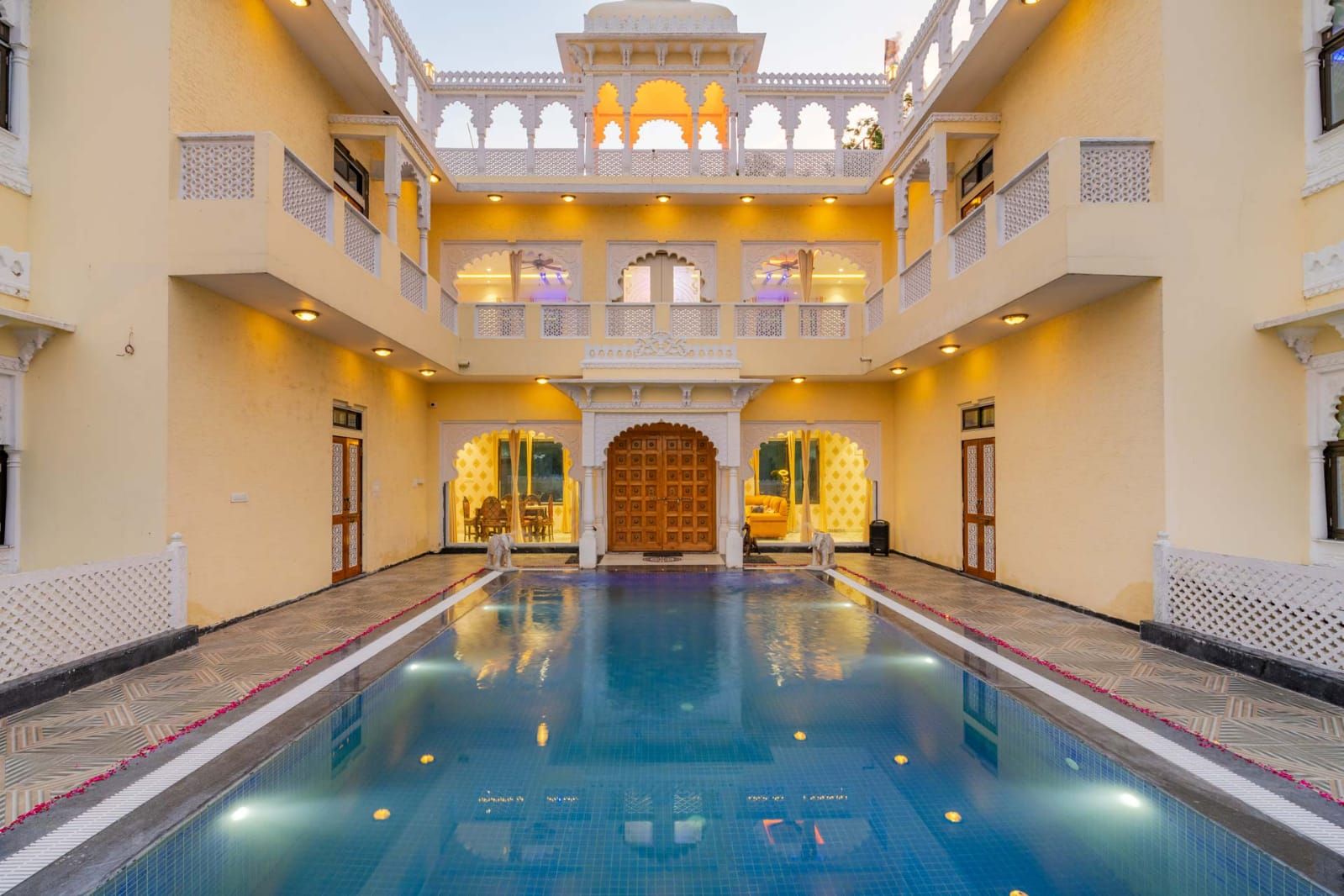
1 stay nearby shown with prices
Stays near Rajsamand
Book a place to stay close by
Things to do in Rajsamand
41 places creators recommend within 30 km
Built from 0 Instagram posts by 0 creators. Every tip links back to the post it came from, and where creators disagree we show both sides.






