
Charbhuja Temple
Temple near Kankroli, Rajasthan
1.4 km from Kankroli
The nearest town, for stays, food and fuel.
Charbhuja Temple is an ancient Hindu shrine dedicated to the four-armed form of Lord Vishnu, situated in the heritage-rich district of Rajsamand in Rajasthan. Set amidst the historic Mewar terrain, the temple serves as a cornerstone of local devotion, attracting pilgrims and heritage travellers alike. Its proximity to iconic water bodies like Rajsamand Lake and the rugged Aravalli hills makes it a meaningful stop on regional travel circuits.
Getting there
By road
- From KankroliNearest town2 min · 1.4 km
- From Jodhpur3 hr 55 min · 191 km
- From Ahmedabad6 hr 40 min · 326 km
- From Jaipur6 hr 45 min · 335 km
Typical drive times without traffic. Stations and airports from OLA Maps; distances and typical drive times from OpenStreetMap (© OpenStreetMap contributors); notes from creators' Reels.
About Charbhuja Temple
Written with AI from map data and general knowledge. Check prices and timings locally before you go.
About Charbhuja Temple in Rajsamand
Charbhuja Temple stands as a testament to the enduring Vaishnavite traditions of the Mewar region in Rajasthan. Dedicated to Charbhuja, a revered form of Lord Vishnu depicted with four arms bearing celestial attributes, the temple is an active spiritual centre for the local community and passing pilgrims. The architecture mirrors the classic stylistic nuances of Rajasthani temple artistry, featuring stone carvings, sculpted pillars, and open courtyards designed to accommodate prayer gatherings and devotional ceremonies.
The temple environment is permeated by the rhythmic chanting of prayers, daily aartis, and the soft toll of brass bells. Visitors stepping through its gates encounter an atmosphere rooted deeply in timeless faith, where locals come daily to pay respects, present floral offerings, and seek blessings for familial well-being and prosperity.
Cultural and spiritual significance
In the cultural tapestry of Rajasthan, particularly across the Mewar belt, devotion to Lord Vishnu has flourished alongside martial and architectural history for centuries. The title Charbhuja signifies the four arms of Vishnu, representing his cosmic oversight and benevolence toward earthly creation. Temples honoring this deity across Rajsamand district hold a cherished place during major Hindu festivals, drawing devotees from neighboring towns and villages who travel on foot or by regional transport to pay homage.
Festivals such as Janmashtami, Jal Jhulani Ekadashi, and Navratri transform the temple premises into vibrant hubs of celebration. During these auspicious periods, the sanctum sanctorum is adorned with traditional textiles, seasonal blossoms, and oil lamps. Devotional songs sung by community elders preserve centuries of regional poetry, creating an authentic cultural experience for travellers interested in exploring sacred Rajasthani traditions.
Read more
Best time to visit Charbhuja Temple
The optimal period to visit Charbhuja Temple and the wider Rajsamand area is between October and March. During these autumn and winter months, daytime temperatures in southern Rajasthan remain pleasant and mild, making outdoor exploration and temple walks comfortable. Clear skies and cool morning breezes enhance the experience of walking through the temple courtyards and exploring the adjoining lakesides.
Summer, spanning from April to June, brings intense heat and dry conditions across the region, with daytime temperatures climbing significantly. Travellers visiting in summer should plan early morning or late evening visits to avoid peak midday sun. The monsoon season from July to September brings welcome rainfall, rejuvenating the local lakes, dams, and rural countryside into lush green landscapes, offering scenic views despite intermittent showers.
How to reach Charbhuja Temple
Charbhuja Temple is situated in the Rajsamand district of Rajasthan, making it well integrated into the transport network of southern Rajasthan. Udaipur serves as the primary gateway for air and rail travellers visiting the district. Udaipur Airport connects to major Indian metropolises, while Udaipur City railway station provides regular train connectivity across north and west India. From Udaipur, taxis, private vehicles, and regional buses run northward toward Rajsamand.
Road connectivity throughout Rajsamand is well-maintained via state and national highways, linking the area efficiently with towns such as Nathdwara, Kumbhalgarh, and Bhilwara. Local transport options, including auto-rickshaws and shared vehicles, operate frequently within town limits, facilitating straightforward transit to the temple precinct. Visitors arriving by road will enjoy passing through scenic countryside vistas and small agrarian settlements.
Tips for your visit to the temple
When planning a visit to Charbhuja Temple, dressing modestly and respectfully in accordance with Hindu temple etiquette is essential. Clothing that covers shoulders and knees is customary and appreciated by the local community. Footwear must be removed at designated storage areas before stepping into the inner temple complex.
Photography regulations can vary within different areas of the complex; while outer courtyards may permit casual photography, capturing pictures inside the inner shrine is typically restricted to preserve sacred decorum. Visitors should check locally for specific photography guidelines and the exact schedules of morning and evening aartis. Carrying drinking water and sun protection is recommended if you intend to explore the surrounding town on foot. Be mindful during festive dates, as higher footfall may require extra patience while queuing for darshan.
Places to explore around Rajsamand
The surrounding landscape of Rajsamand is endowed with exceptional historical and natural destinations. Situated just a short distance away is Rajsamand Lake, an expansive artificial lake commissioned in the seventeenth century, celebrated for its historic marble embankments, pavilions, and carved pillars at Nau Chauki. Walking along the lake bund provides panoramic water views and glimpses of Mewar's historic engineering legacy.
A scenic drive toward the Aravalli hills leads to Kumbhalgarh, renowned for its formidable fortress and the sprawling Kumbhalgarh Wildlife Sanctuary, home to leopards, wolves, and rich avian life. Historical sites such as the birthplace of Maharana Pratap and the ancient Nilkanth Mahadev Mandir also lie within driving distance. Nature lovers can also plan excursions toward tranquil water bodies like Chikalwas Dam and Lakhela Talao, perfect for soaking in the tranquil ambiance of rural Rajasthan.
Where to stay near Charbhuja Temple
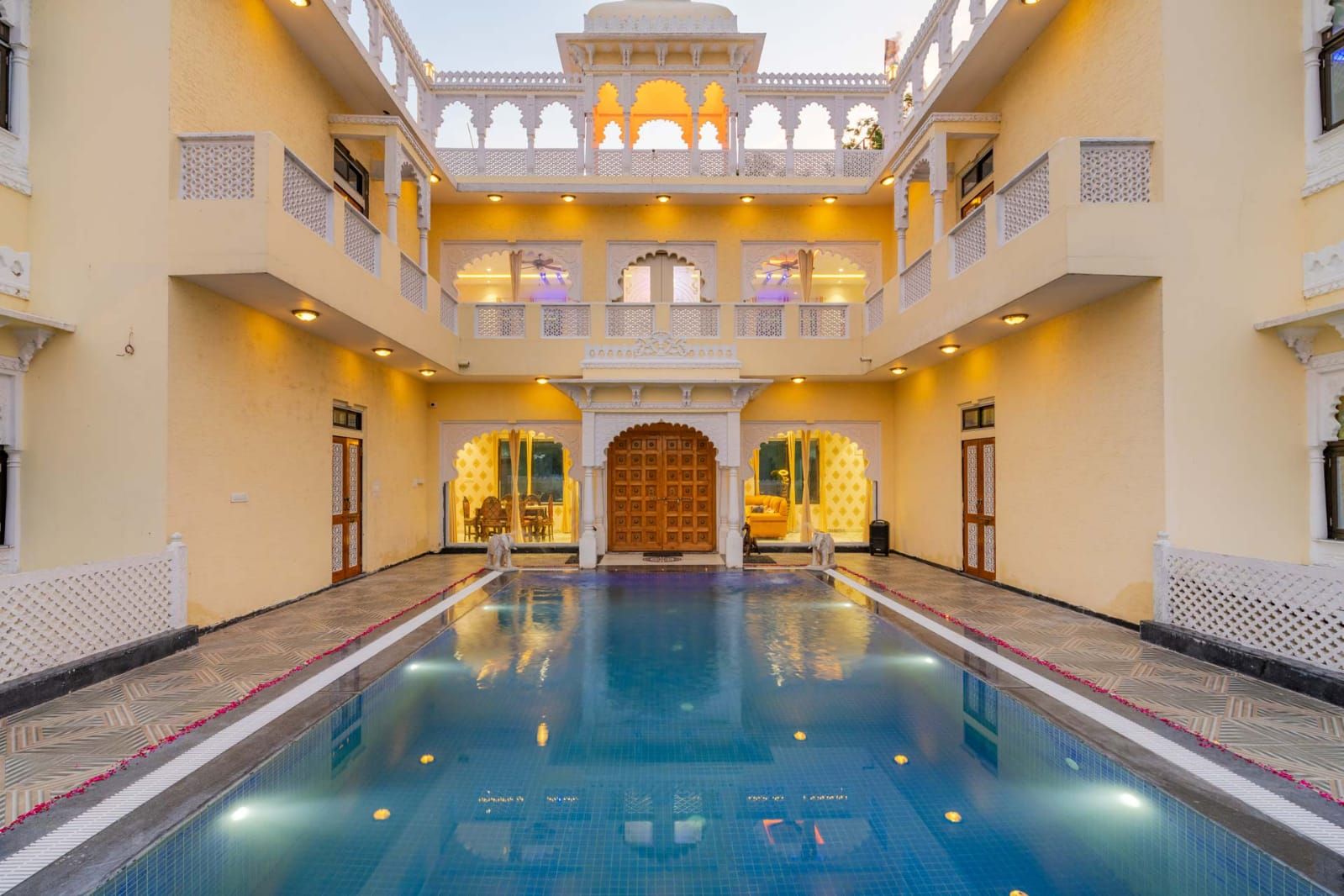
The area surrounding Rajsamand and the adjoining Aravalli foothills offers diverse accommodation styles suited to different types of journeys. Travellers can choose from atmospheric heritage homestays in nearby rural settlements, peaceful countryside cottages, and experiential outdoor setups tucked along the edges of the hills.
For those who appreciate spending time in natural environments, lakeside campsites and secluded farm stays offer refreshing breaks from urban routines. You can browse and book handpicked stays, nature retreats, and outdoor camps across the region on HireACamp, ensuring a comfortable base from which to experience both the spiritual charm of Charbhuja Temple and the scenic outdoor landscape of Rajsamand.
Frequently asked questions
Where is Charbhuja Temple located?
Charbhuja Temple is located in the Rajsamand district of southern Rajasthan, India, set close to the historic waters of Rajsamand Lake.
What is the spiritual significance of Charbhuja Temple?
The temple is dedicated to Charbhuja, the four-armed manifestation of Lord Vishnu, and serves as an important site of Vaishnavite pilgrimage in the Mewar region.
Which season is best for visiting the temple?
The cooler months from October to March offer the most pleasant weather for visiting the temple and exploring the surrounding town and natural landmarks.
Are there interesting attractions to visit nearby?
Yes, nearby attractions include Rajsamand Lake with its carved Nau Chauki pavilions, Kumbhalgarh Fort, Kumbhalgarh Wildlife Sanctuary, and surrounding heritage sites in the Aravalli hills.
What are the rules regarding dress code and photography?
Modest clothing covering shoulders and knees is expected, footwear must be removed before entering, and visitors should check locally for photography permissions within the sanctum.
Where you'll be
Rajsamand · 1 stay nearby shown with prices
Stays near Charbhuja Temple
Book a place to stay close by
More places near Charbhuja Temple
Within 20 km
Built from 0 Instagram posts by 0 creators. Every tip links back to the post it came from, and where creators disagree we show both sides.






