
Dwarkadhish Temple
Temple near Kankroli, Rajasthan
600 m from Kankroli
The nearest town, for stays, food and fuel.
Dwarkadhish Temple is a revered Hindu shrine dedicated to Lord Krishna, located in Kankroli village on the scenic banks of Rajsamand Lake in Rajasthan. As an important seat of the Pushtimarg tradition, the temple draws pilgrims and travellers who come to experience its authentic devotional atmosphere and architectural charm. Its lakeside setting next to the historic Nau Chauki embankment makes it one of the most serene cultural landmarks in the Mewar region.
Getting there
By road
- From KankroliNearest town2 min · 600 m
- From Jodhpur4 hr · 193 km
- From Ahmedabad6 hr 40 min · 327 km
- From Jaipur6 hr 45 min · 336 km
Typical drive times without traffic. Stations and airports from OLA Maps; distances and typical drive times from OpenStreetMap (© OpenStreetMap contributors); notes from creators' Reels.
About Dwarkadhish Temple
Written with AI from map data and general knowledge. Check prices and timings locally before you go.
About Dwarkadhish Temple
Dwarkadhish Temple, situated in the village of Kankroli in Rajsamand district, is among the most prominent religious sites in southern Rajasthan. The shrine holds deep spiritual value as the third major seat of the Pushtimarg Vaishnav tradition founded by the philosopher Vallabhacharya. Within its sanctum, the presiding deity is venerated as Dwarkadhish, representing Lord Krishna in his sovereign form as ruler of Dwarka. The temple stands immediately beside the historic Rajsamand Lake, granting the entire complex a peaceful ambience that distinguishes it from many crowded pilgrimage hubs.
Devotees travel from across Rajasthan and neighbouring states to attend the daily prayer sessions and immerse themselves in the quiet devotion of the shrine. Throughout the day, the air around the temple is filled with devotional songs, Vedic chants, and the aroma of temple offerings. A visit here offers travellers an intimate look into centuries-old traditions that continue to thrive in the heart of Mewar.
Architecture and Setting of the Temple
The design of Dwarkadhish Temple follows the distinctive haveli style that characterizes traditional Pushtimarg shrines across western India. Rather than featuring soaring stone spires, the complex was conceived as a fortified residential mansion. This architectural approach stems from the belief of treating the deity as an honoured member of a royal household, resulting in open courtyards, pillared verandahs, decorated balconies, and shaded corridors where worshippers assemble.
Adding to the temple's appeal is its direct link to the historic Nau Chauki dam on Rajsamand Lake. Built of pristine white marble, the adjoining embankment showcases carved arches, ornamental kiosks, and wide steps descending into the waters. Travellers often linger along these marble pavilions after visiting the temple, taking in the sweeping lake views and gentle afternoon breeze while watching the sun descend over the distant hills.
Read more
Best Time to Visit Dwarkadhish Temple
The most comfortable time to plan a trip to Dwarkadhish Temple is between October and March. During these autumn and winter months, the weather across the Rajsamand region remains mild and clear, with pleasant daytime temperatures suitable for walking along the lake embankment and exploring local shrines. Evenings can turn quite cool, making outdoor sightseeing comfortable and refreshing.
Monsoon season, extending from July through September, brings a different charm to the temple setting. Seasonal rains replenish Rajsamand Lake, filling the vast reservoir and reviving the surrounding vegetation across the Aravalli foothills. Visiting during prominent festival celebrations such as Janmashtami, Annakut, and Holi allows travellers to witness elaborate rituals and musical celebrations, though these special occasions also bring large crowds to the village.
How to Reach Dwarkadhish Temple
Dwarkadhish Temple is situated in Kankroli, which forms part of the twin settlement of Rajsamand and Kankroli in southern Rajasthan. The town is well connected by road to major regional centres. Udaipur serves as the most convenient primary gateway, situated approximately sixty to sixty-five kilometres to the south. Visitors can easily hire a private taxi or take a state transport bus from Udaipur, a road journey that typically takes around an hour and a half depending on traffic.
The nearest domestic airport is Maharana Pratap Airport in Udaipur, which offers regular connections to major Indian cities such as Delhi, Mumbai, and Jaipur. From the airport, pre-arranged cabs and rental cars provide straightforward access to Kankroli. For rail travellers, Udaipur City railway station and Mavli Junction offer convenient rail connections. Local auto-rickshaws and regional buses run regularly within Rajsamand town to ferry visitors directly to the temple gate.
Tips for Visiting Dwarkadhish Temple
Because Dwarkadhish Temple is an active place of worship with traditional customs, timing your visit carefully is helpful. Darshan takes place during dedicated intervals throughout the day in accordance with Pushtimarg rituals, so checking the prayer schedule locally upon arrival in Kankroli ensures you arrive when the inner shrine is open. Visitors should dress modestly, keeping shoulders and knees covered, and remove their footwear before entering the temple compound.
Photography and videography are strictly prohibited inside the main shrine to maintain the sanctity of the sanctum, so keep cameras and mobile devices safely tucked away. If you plan to attend early morning or late evening prayers during the cooler months, carry a light shawl or sweater, as breezes off Rajsamand Lake can feel chilly. Wearing easily removable footwear makes entering and exiting the marble courtyards convenient.
Places to Visit Near Dwarkadhish Temple
A trip to Dwarkadhish Temple pairs naturally with several significant cultural and natural landmarks in the surrounding region. Directly adjacent to the temple is the Nau Chauki embankment and Rajsamand Lake, celebrated for its historic marble pavilions and commemorative inscriptions. Nearby Nau Chauki Park provides a tranquil setting for walking and enjoying unobstructed views across the water.
About thirty kilometres to the west, the landscape rises into the rugged Aravalli mountains, leading to the world-renowned Kumbhalgarh Fort and the surrounding Kumbhalgarh Wildlife Sanctuary. Here, visitors can explore historic sites including the Nilkanth Mahadev Mandir, the birthplace of Maharana Pratap, and the hilltop Badal Mahal palace. Travellers interested in spiritual routes can also head northwest to visit Charbhuja Temple, another revered pilgrimage site, or take scenic drives around nearby rural reservoirs like Chikalwas Dam and Hammeripal Lake.
Where to Stay Near Dwarkadhish Temple
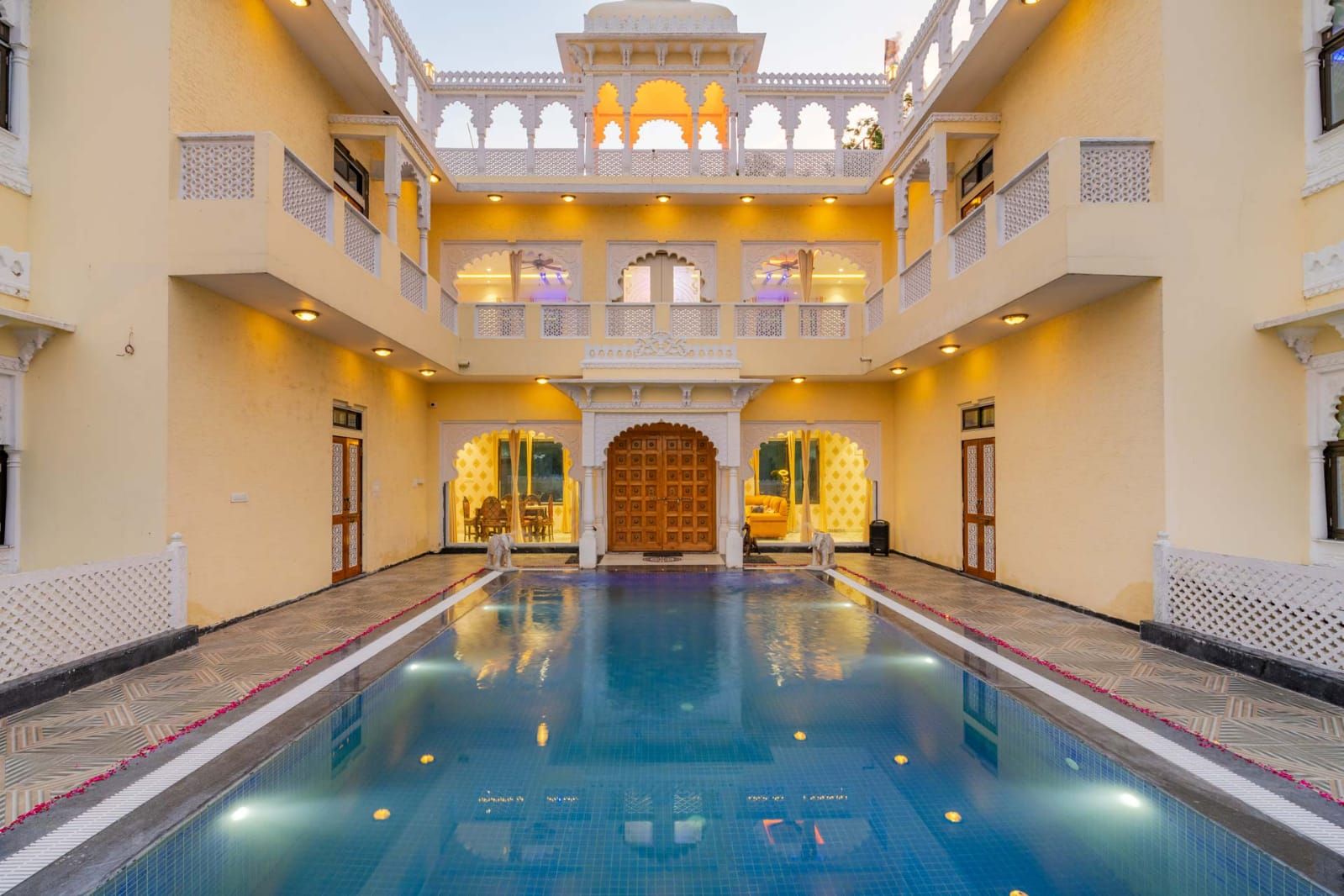
Travellers seeking accommodation while visiting Kankroli have access to a variety of lodging options across Rajsamand district and the adjoining countryside. Staying nearby gives you the chance to enjoy unhurried mornings by the lake and appreciate the scenic rural landscapes characteristic of the Mewar region.
Whether you are looking for rustic campsites tucked into the Aravalli hills, welcoming family-run homestays, or peaceful rural retreats, stays near Dwarkadhish Temple can be found on HireACamp. Booking through HireACamp allows you to base yourself in natural surroundings while maintaining easy access to Kankroli's historic temples and the scenic hill country beyond.
Frequently asked questions
Where is Dwarkadhish Temple located?
Dwarkadhish Temple is located in Kankroli village within the Rajsamand district of Rajasthan, situated right along the embankment of Rajsamand Lake.
Which deity is worshipped at Dwarkadhish Temple?
The temple is dedicated to Lord Krishna, worshipped in the form of Dwarkadhish as the king of Dwarka within the Pushtimarg Vaishnav tradition.
How far is Dwarkadhish Temple from Udaipur?
Dwarkadhish Temple is approximately sixty to sixty-five kilometres north of Udaipur, which usually takes around an hour and a half to drive.
What other attractions can I visit near Dwarkadhish Temple?
Nearby attractions include the historic Nau Chauki embankment on Rajsamand Lake, Nau Chauki Park, Kumbhalgarh Fort, Kumbhalgarh Wildlife Sanctuary, and Charbhuja Temple.
Is photography permitted inside Dwarkadhish Temple?
Photography and video recording are generally prohibited inside the main temple sanctum to maintain the sanctity and privacy of the daily rituals.
Where you'll be
Kankroli Village, Nearby Navchauki Dam, Rajsamand · 1 stay nearby shown with prices
Stays near Dwarkadhish Temple
Book a place to stay close by
More places near Dwarkadhish Temple
Within 20 km
Built from 0 Instagram posts by 0 creators. Every tip links back to the post it came from, and where creators disagree we show both sides.






