
Sawaimadhopur
Destination in Rajasthan
Sawaimadhopur is a historic town in eastern Rajasthan, renowned as the gateway to the world-famous Ranthambore National Park. Set against the rugged meeting point of the Aravalli and Vindhya hill ranges, the town attracts wildlife enthusiasts, heritage lovers, and pilgrims throughout the year. Its vibrant local markets, rich royal history, and immediate access to diverse wilderness areas make it one of Rajasthan's most compelling travel hubs.
Getting there
By road
- From Jaipur3 hr 10 min · 218 km
- From New Delhi4 hr 55 min · 350 km
- From Bhopal8 hr · 450 km
Typical drive times without traffic. Stations and airports from OLA Maps; distances and typical drive times from OpenStreetMap (© OpenStreetMap contributors); notes from creators' Reels.
About Sawaimadhopur
Written with AI from map data and general knowledge. Check prices and timings locally before you go.
About Sawaimadhopur
Sawaimadhopur owes its name and foundation to Maharaja Sawai Madho Singh I of Jaipur, who planned and fortified the settlement in the mid-eighteenth century. Located in southeastern Rajasthan, the town occupies an ecologically sensitive and scenic transition zone where the ancient Aravalli ridges meet the Vindhya plateau. Over the decades, it has evolved from a quiet administrative post into the primary base for exploring the dense dry deciduous forests that surround it.
Beyond its reputation as a transit hub for wildlife enthusiasts, Sawaimadhopur has a distinctive local culture. The town is known for its sprawling guava orchards, traditional bhandhani and block-printing crafts, and a railway station that doubles as an open-air art gallery, featuring life-sized murals of local wildlife painted by regional artists. It offers a grounded look at Rajasthani semi-arid life, balancing rustic market lanes with quiet agrarian hamlets on its outskirts.
Exploring Ranthambore National Park
Ranthambore National Park lies immediately adjacent to Sawaimadhopur, making the town practically inseparable from the reserve. Spread over an undulating terrain of steep crags, wide plateaus, and serene water bodies like Padam Talao and Rajbagh Talao, Ranthambore is celebrated globally for its healthy population of Royal Bengal tigers. Safaris into the park offer opportunities to observe these apex predators navigating an evocative landscape dotted with medieval ruins and ancient banyan trees.
In addition to tigers, the reserve shelters an impressive array of wildlife, including leopards, sloth bears, striped hyenas, caracals, sambar deer, chital, and marsh crocodiles. The park is equally rewarding for birdwatchers, serving as home or winter refuge to over three hundred avian species such as the crested serpent eagle, painted spurfowl, and various waterfowl. Jungle safaris are organized in open-top vehicles across designated zones, and booking well in advance is essential due to high demand and strict conservation regulations.
Read more
Things to do in Sawaimadhopur
While safaris form the core of most itineraries, Sawaimadhopur offers plenty to experience outside the forest boundaries. A visit to the historic Trinetra Ganesha Temple, located inside the Ranthambore Fort complex, is a major cultural highlight. Pilgrims and travellers make the uphill walk to the shrine, which is unique for housing an idol of Lord Ganesha depicted with three eyes. Daily mail arrives here from devotees across the country, which the temple priests read out in a rare daily ritual.
Exploring the town's agricultural and craft heritage is another rewarding activity. Sawaimadhopur is widely recognized for producing some of the sweetest guavas in India, and walking through the orchards during harvest season offers a pleasant glimpse of local farming. In town, local handicraft centres and women's cooperatives showcase traditional patchwork, wooden toys, hand-knotted rugs, and natural perfumes such as khas (vetiver) attar, distilled using age-old copper stills.
Getaways and places to visit nearby
Perched dramatically above the national park, the UNESCO World Heritage-listed Ranthambore Fort is an essential excursion. Dating back to the tenth century, the massive citadel spans extensive ramparts, ruined royal palaces, carved stepwells, and ancient cenotaphs that command panoramic views over the jungle canopy below.
A short drive southeast brings you to Khandar Fort, a lesser-frequented medieval stronghold set atop a sheer cliff. Khandar played a strategic role in territorial defense and still houses weathered gateways, stepwells, and ancient temples with far fewer visitors than Ranthambore. For birding during the cooler months, Surwal Lake and Mansarovar Lake provide quiet wetland settings where migratory bar-headed geese, flamingos, and pelicans congregate against agricultural backdrops.
Best time to visit Sawaimadhopur
The winter season, extending from October to March, is the most comfortable time to visit Sawaimadhopur. Daytime temperatures remain pleasant, ranging between comfortable warmth and cool sunshine, making long outdoor safaris and walking tours through forts enjoyable. Nights can turn sharply cold between December and January, requiring warm layers for early morning excursions.
Summer sets in from April to June, bringing intense dry heat with temperatures often crossing forty degrees Celsius. While the afternoon sun can be harsh, wildlife enthusiasts frequently travel during these months because forest vegetation thins out and animals gather reliably around remaining water holes. The monsoon arrives between July and September, revitalizing the landscape into lush green. Note that core zones of the adjacent national park are closed during the rainy season, though selected buffer routes often remain accessible depending on local guidelines.
How to reach Sawaimadhopur
Sawaimadhopur is one of the most accessible travel hubs in eastern Rajasthan thanks to its location on the main Delhi-to-Mumbai broad-gauge railway line. The Sawaimadhopur Junction railway station is directly served by numerous superfast, express, and premium trains arriving daily from New Delhi, Mumbai, Jaipur, Kota, and other major cities.
By road, the town connects smoothly with Jaipur via state highways and the Delhi-Mumbai Expressway network, with typical road journeys from Jaipur taking around three to four hours depending on traffic. State transport buses and private taxis operate regularly between Sawaimadhopur and nearby districts like Tonk, Kota, and Dausa. The nearest airport is Jaipur International Airport, located approximately one hundred and fifty kilometres away, from where taxis and trains are easily arranged.
Where to stay in Sawaimadhopur
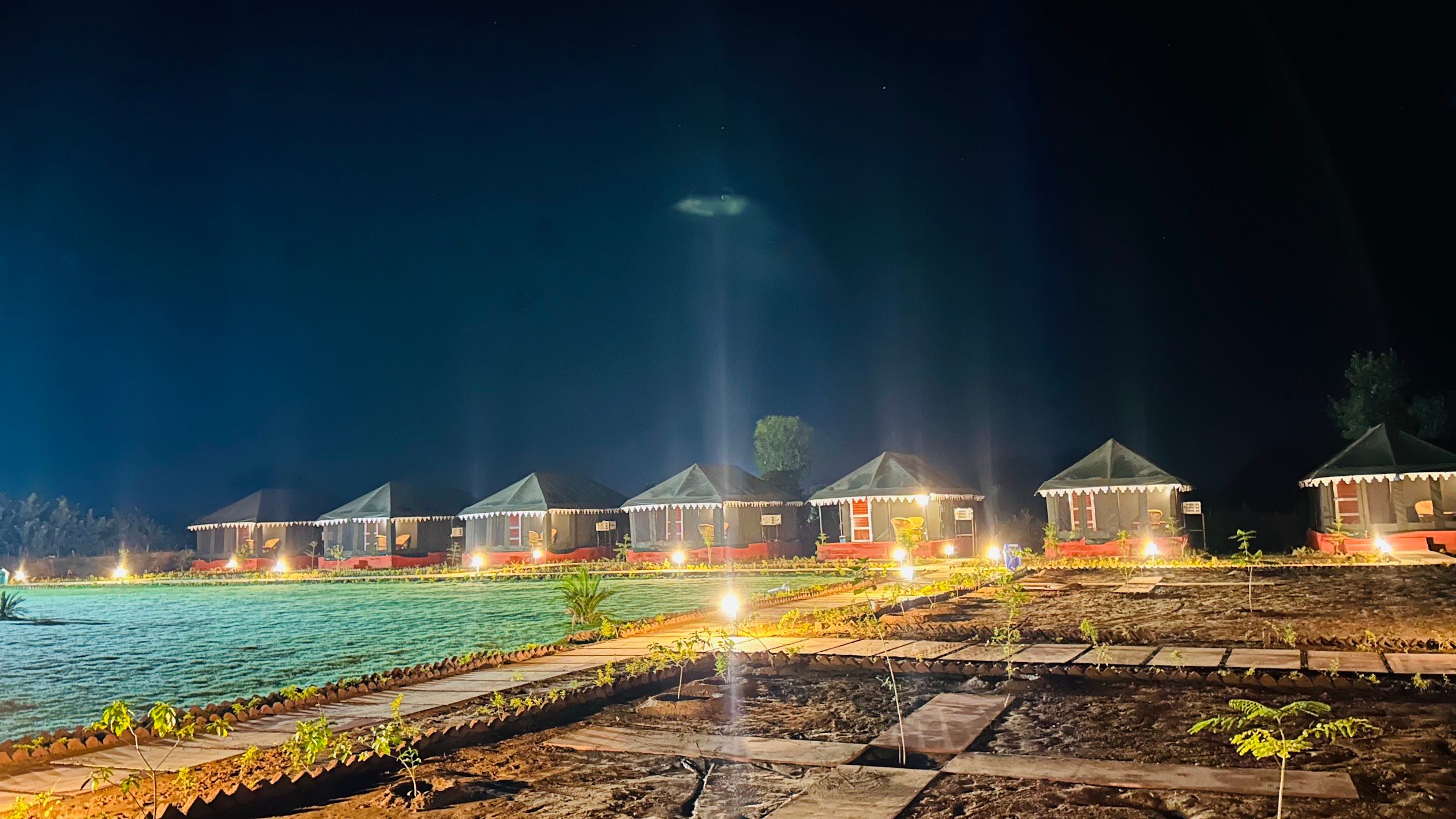
Accommodation options around Sawaimadhopur range from tranquil rural homestays and heritage-style lodgings to experiential wilderness camps set in the buffer regions near the reserve. Staying slightly away from the urban centre allows you to experience the stillness of the countryside, starry night skies, and traditional village hospitality.
Whether you are looking for an eco-friendly tented camp near the forest periphery or a cozy homestay run by a local family, you can explore and book verified stays around Sawaimadhopur on HireACamp. Booking your stay well ahead of time is strongly recommended if you are travelling during peak wildlife season between November and February.
Frequently asked questions
Why is Sawaimadhopur famous?
Sawaimadhopur is famous primarily as the entry point to Ranthambore National Park, renowned for its Royal Bengal tigers and rich wildlife. It is also celebrated for the ancient Ranthambore Fort, the Trinetra Ganesha Temple, and extensive guava orchards.
Which is the nearest airport to Sawaimadhopur?
The nearest commercial airport is Jaipur International Airport, situated about 150 kilometres away. From Jaipur, travellers can easily reach Sawaimadhopur by train, bus, or private taxi.
Is Ranthambore National Park open throughout the year?
The core zones of Ranthambore National Park remain closed during the monsoon months from July to September for rejuvenation and animal breeding. However, certain buffer zones may remain accessible, so it is best to verify current schedules locally before planning.
How many days are recommended for a trip to Sawaimadhopur?
A stay of two to three days is ideal for Sawaimadhopur, allowing sufficient time for multiple jungle safaris, a thorough exploration of Ranthambore Fort, and visits to local markets and nearby lakes.
What should I wear during a visit to Sawaimadhopur?
Pack earthy, neutral-toned clothing such as olive, khaki, or brown for forest safaris to blend into the wilderness. If visiting between November and February, carry heavy woollens for cold morning drives, while light cottons and sun protection are essential for summer travel.
Where you'll be
1 stay nearby shown with prices
Stays near Sawaimadhopur
Book a place to stay close by
Things to do in Sawaimadhopur
28 places creators recommend within 30 km

Built from 0 Instagram posts by 0 creators. Every tip links back to the post it came from, and where creators disagree we show both sides.






