
RANTHAMBORE NATIONAL PARK
National park near Sawaimadhopur, Rajasthan
2 posts · 2 sourced tips
Guide from 2 posts by 2 creators
@whatshot_jaipur, @ayushtravelogue
Hidden gem
Far fewer reviews than places like it nearby, yet creators keep finding it.
500 m from Sawaimadhopur
The nearest town, for stays, food and fuel.
Loved by 2 creators
2 posts on Instagram.
Visiting Ranthambore National Park from Jaipur
Travel distance estimates between Jaipur and Ranthambore National Park vary across creator reports.
Good to know
Tips from creators' posts. Each one links to its source.
Getting There
Estimates for the distance from Jaipur vary: one source reported approximately 160 km (around a 3.5-hour drive), while another reported approximately 180 km.
Reports differSource
Getting there
By road
- From SawaimadhopurNearest town2 min · 600 m
- From Jaipur3 hr 5 min · 166 km
- From New Delhi4 hr 55 min · 356 km
- From Bhopal8 hr 15 min · 449 km
By train, bus or air
- Sawai Madhopur JunctionNearest railway station2 min · 600 m
- Jaipur International AirportNearest airport2 hr 45 min · 156 km
Typical drive times without traffic. Stations and airports from OLA Maps; distances and typical drive times from OLA Maps and OpenStreetMap (© OpenStreetMap contributors); notes from creators' Reels.
About RANTHAMBORE NATIONAL PARK
Written with AI from creators' posts and map data. Check prices and timings locally before you go.
The Landscape and Wildlife of Ranthambore
Ranthambore National Park covers a sprawling expanse of dry deciduous forests, open grassy meadows, and craggy escarpments. The park is uniquely positioned at the intersection of two distinct geological formations: the Aravali hills and the Vindhya plateau. This geographical setting creates deep ravines, seasonal watercourses, and expansive natural lakes that sustain an extraordinary variety of life.
While the royal Bengal tiger is the park's primary draw, Ranthambore's ecosystem supports dozens of other mammalian species. Leopards, sloth bears, striped hyenas, caracals, and jackals share the territory with herbivores like sambar deer, spotted deer, blue bulls, and wild boars. Marsh crocodiles bask along the shores of Padam Talao, Rajbagh, and Malik Talao, while the lake perimeters attract hundreds of migratory and resident bird species, including crested serpent eagles, painted storks, and kingfishers.
Safaris and Wilderness Exploration
Safaris inside Ranthambore National Park are typically conducted across designated tourism zones that wind through rolling plateaus, thick dhok woodland, and lake beds. Visitors explore the wilderness in open-top safari vehicles, accompanied by registered nature guides and drivers who track pugmarks, alarm calls, and animal movements across the terrain.
Because sightings of elusive predators depend entirely on natural circumstances, safaris are best approached with curiosity for the broader forest environment rather than an exclusive focus on seeing a tiger. The dramatic vistas of medieval watchtowers reflected in the tranquil lakes, paired with encounters with grazing deer herds and langur troops, make every excursion through the park's varied terrain an engaging outdoor experience.
Read more
Heritage Landmarks of Ranthambore
What sets Ranthambore apart from most national parks in India is the sheer presence of architectural history blended directly into the forest canopy. Looming high over the forest floor stands the formidable Ranthambore Fort, a UNESCO World Heritage site dating back to the 10th century. Built on a steep cliff, the fortress commands sweeping panoramic views of the entire reserve and features ancient ramparts, reservoirs, cenotaphs, and gates.
Within the fort complex lies the famous Trinetra Ganesha Temple, one of the oldest and most revered pilgrimage sites in Rajasthan. Devotees and travellers climb the stone pathways through the fort to visit the temple throughout the year, often spotting langurs and birds nesting among the battlements. Down along the edges of the lakes, crumbling pavilions, archways, and moss-covered hunting lodges offer reminders of bygone royal hunts against a backdrop of wilderness.
Best Time to Visit Ranthambore
The climate in this part of southeastern Rajasthan transitions through intense seasons, each offering a distinct mood for wilderness travel. The winter period, from late October through March, brings pleasant daytime temperatures and chilly mornings, making long drives through the park comfortable. The forest canopy is green and vibrant in early winter, gradually thinning out as the months progress.
Summer sets in from April to June, bringing intense heat with temperatures regularly climbing past forty degrees Celsius. While hot and dry, this period is favoured by dedicated wildlife photographers because the deciduous trees shed their foliage and animals concentrate closely around the few remaining perennial waterholes. The core areas of the park close during the annual monsoon rains from July through September, though buffer zones may retain limited access depending on official forest directives.
How to Reach Ranthambore National Park
The primary gateway to the park is Sawaimadhopur, a well-connected town situated right outside the park boundaries. By rail, Sawaimadhopur Junction lies on the major Delhi-Mumbai rail corridor, making it easily accessible via express and superfast trains from Delhi, Jaipur, Kota, and other key Indian cities.
By road, Ranthambore is straightforward to reach from several regional hubs. From Jaipur, the drive covers between 160 and 180 kilometres depending on the specific route taken, typically requiring around 3 to 3.5 hours of driving in normal traffic conditions. Travellers driving down from New Delhi face a journey of approximately 356 kilometres, usually taking close to 5 hours. From Bhopal, the overland road trip spans around 449 kilometres and typically takes about 8 hours. The roads connecting Sawaimadhopur to state highways are well paved, allowing for convenient taxi transfers and self-driven road trips.
Tips for Your Visit to Ranthambore
A little preparation goes a long way toward an enjoyable and safe visit to the park. Safari permits are strictly regulated by forestry authorities, so booking your permits well in advance is essential, particularly for peak weekend trips between November and February. Always double-check current booking policies, identification requirements, and entry guidelines with official local authorities before your journey.
When packing, bring layers if visiting during the winter months, as open vehicles can feel very cold in the early morning breeze before the sun rises. Neutral, earthy tones such as khaki, beige, and olive green are recommended for the forest, while bright neon colours should be avoided. Carry a scarf or buff to protect your face from dust along dry forest tracks, and keep a reliable pair of binoculars handy to spot wildlife hidden deep in the thickets.
Where to Stay near Ranthambore
Accommodation around Ranthambore National Park is largely clustered along Ranthambore Road and the quiet rural fringes of Sawaimadhopur. Staying close to the park entrance gates makes reaching early morning safari boarding points simple and unhurried.
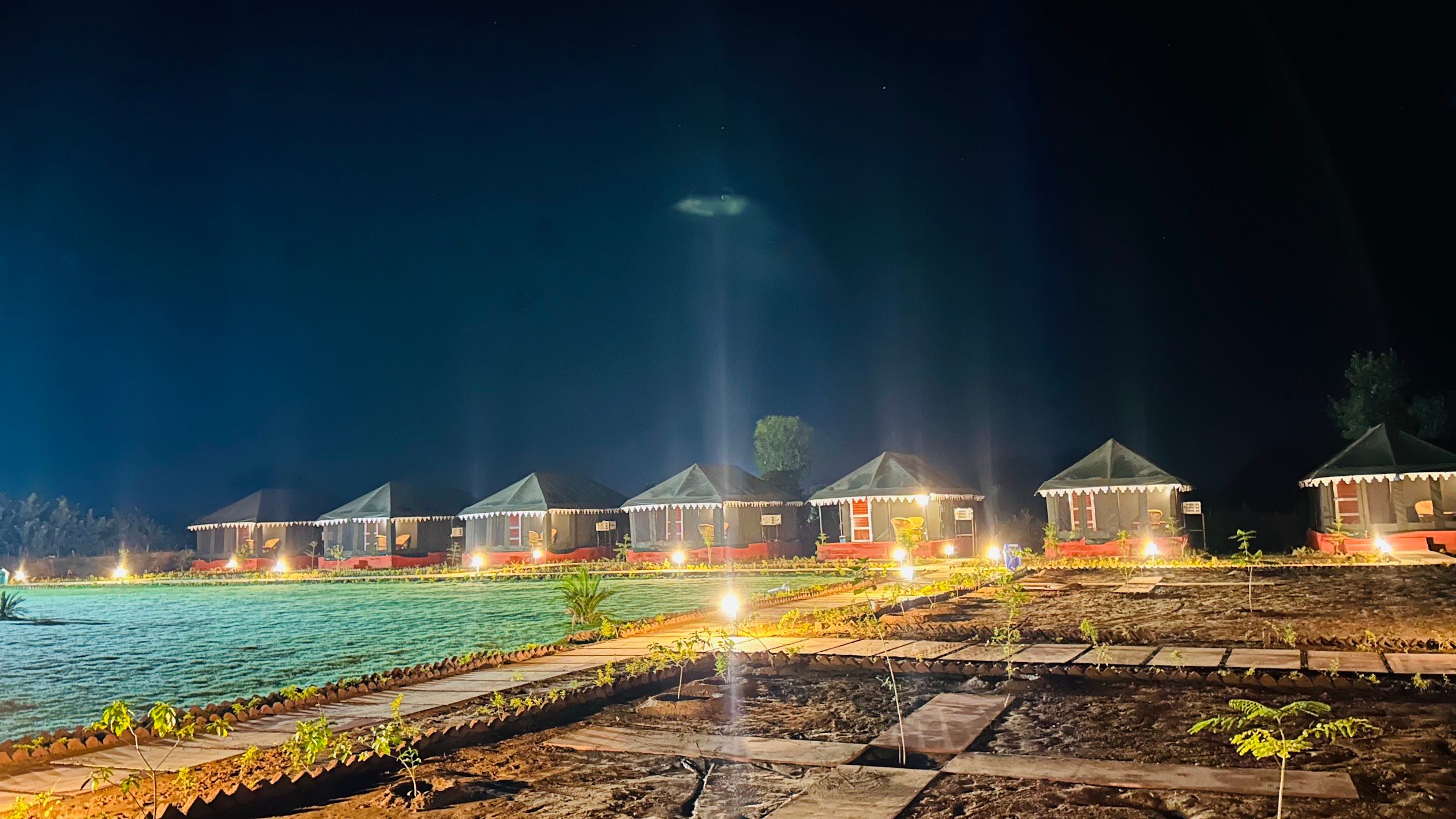
Whether you prefer eco-friendly wilderness camps, peaceful homestays, or rustic countryside retreats that capture rural Rajasthani hospitality, a diverse selection of accommodations near Ranthambore can be explored and booked on HireACamp. Staying near the park periphery allows you to wake up to birdsong and relax under starry desert skies after a day of forest exploration.
Frequently asked questions
What is the closest town to Ranthambore National Park?
Sawaimadhopur is the closest town to Ranthambore National Park, situated just a few kilometres from the park entrance and serving as the primary transport hub for trains and safari arrivals.
How long is the drive from Jaipur to Ranthambore?
The road distance from Jaipur to Ranthambore is between 160 and 180 kilometres, which typically takes around 3 to 3.5 hours under standard driving conditions.
Is Ranthambore National Park open all year?
The core zones of the park generally close during the monsoon season between July and September to allow the forest to regenerate, while buffer zones may remain accessible depending on local forest department notifications.
Can you visit Ranthambore Fort without going on a wildlife safari?
Yes, Ranthambore Fort and the Trinetra Ganesha Temple can be visited separately via the designated access road that leads through the outer forest area up to the fort gates.
What animals can you see besides tigers in Ranthambore?
Visitors to Ranthambore commonly see leopards, sloth bears, striped hyenas, sambar deer, chital, nilgai, marsh crocodiles, and a wide variety of resident and migratory bird species.
Where you'll be
near Dr pawan eye hospital, Railway Colony, Sawaimadhopur, Sawai Madhopur Muncipal Area, Rajasthan 322001 · 1 stay nearby shown with prices
As seen on Instagram
The posts this guide is built from
Stays near RANTHAMBORE NATIONAL PARK
Book a place to stay close by
More places near RANTHAMBORE NATIONAL PARK
Within 20 km
Built from 2 Instagram posts by 2 creators. Every tip links back to the post it came from, and where creators disagree we show both sides. Guide updated 23 Oct 2026.






