
Bagnath Temple
Temple near Bageshwar, Uttarakhand
4.9 km from Bageshwar
The nearest town, for stays, food and fuel.
Bagnath Temple is an ancient shrine dedicated to Lord Shiva, situated at the confluence of the Sarayu and Gomati rivers in the hill town of Bageshwar, Uttarakhand. Pilgrims and travellers visit to admire its traditional Nagara-style stone architecture, pay homage at the sacred riverside ghats, and experience the cultural heritage of the Kumaon Himalayas.
Getting there
By road
- From BageshwarNearest town15 min · 13 km
- From Dehradun6 hr 40 min · 329 km
- From New Delhi9 hr 20 min · 435 km
- From Chandigarh10 hr 20 min · 498 km
Typical drive times without traffic. Stations and airports from OLA Maps; distances and typical drive times from OpenStreetMap (© OpenStreetMap contributors); notes from creators' Reels.
About Bagnath Temple
Written with AI from map data and general knowledge. Check prices and timings locally before you go.
About Bagnath Temple and its history
Bagnath Temple stands in the town of Bageshwar, flanked by the riverbanks where the Gomati and Sarayu meet. Dedicated to Lord Shiva, the name Bagnath translates loosely to the Tiger Lord, rooted in local folklore that describes Shiva appearing in the guise of a tiger to grant boons to Sage Markandeya. For centuries, the spot has served as a central place of worship and spiritual assembly for communities residing throughout the surrounding valleys.
While worship at this river confluence dates back to classical antiquity, the present stone temple structure is largely attributed to the Chand dynasty rulers of Kumaon, who renovated and expanded the complex during the late medieval period. Within the temple compound, one can find a dense assortment of ancient stone sculptures, bas-reliefs, and inscribed slabs dating from the seventh to the sixteenth centuries. These historic relics offer a remarkable glimpse into the evolving craftsmanship, religious iconography, and royal patronage of the central Himalayan region.
Architectural features of Bagnath Temple
The temple is constructed in the North Indian Nagara architectural tradition, characterised by a prominent curvilinear stone tower, or shikhara, that rises above the central sanctum. Built primarily from chiselled mountain rock, the outer walls are lined with sculptural niches that display deities of the Hindu pantheon, including various forms of Shiva, Parvati, Ganesha, and Surya. Brass bells of various sizes, hung by generations of devotees whose wishes were fulfilled, frame the entranceways and inner corridors.
The layout opens directly towards the river ghats. Steps descend from the stone courtyards down to the clean waters of the Sarayu and Gomati, where pilgrims traditionally take a ritual dip before stepping into the inner sanctum. The surrounding courtyard contains several smaller sub-shrines dedicated to Bhairava, Ganga, and Hanuman, giving the entire complex an expansive yet intimate religious ambiance.
Read more
Festivals and spiritual significance
Bagnath Temple is central to the spiritual rhythm of Bageshwar and the wider Kumaon hills. Its most renowned annual event is the Uttarayani Mela, celebrated during Makar Sankranti in mid-January. Historically, this festival was both a sacred gathering and a major trading fair where trans-Himalayan merchants from Tibet, Nepal, and remote Kumaoni valleys exchanged wool, salt, borax, and handmade metalware. Today, thousands still congregate at the river confluence during the fair to take early morning holy baths, light lamps, and participate in folk festivities.
Mahashivratri is another vibrant time at Bagnath Temple, drawing worshippers from neighboring hill hamlets who fast and keep night-long vigils. The temple courtyard resonates with the chanting of traditional hymns, conch shells, and the steady chime of temple bells during morning and evening prayers.
Best time to visit Bagnath Temple
The temple can be visited throughout the year, but the most pleasant conditions occur between October and April. Autumn brings clear blue skies, crisp mountain air, and uninterrupted views of the river valleys. Winter days, while chilly in the mornings and evenings, are sunny and bright, making exploration on foot comfortable. If you wish to witness the valley's deepest cultural traditions, planning your visit around mid-January during the Uttarayani fair is ideal.
Spring, spanning March and April, sees the surrounding hills blooming with seasonal flowers, accompanied by mild temperatures. The summer months from May to June are warm in the river valley, but remain far cooler than the northern plains. The monsoon period from July through September brings heavy rainfall to Uttarakhand, causing the rivers to swell and occasionally leading to road delays caused by hill slides, so travellers during this period should stay informed on local weather updates.
Places to visit around Bagnath Temple
A trip to Bagnath Temple pairs naturally with visits to several nearby historical and natural sites across the Bageshwar district. Roughly twenty-one kilometres to the west lies the historic Baijnath Temple complex, set gracefully alongside Baijnath Lake. Baijnath was once the capital of the Katyuri kings and holds an extraordinary cluster of twelfth-century stone temples dedicated to Shiva, Parvati, and other deities.
Travelers interested in forested walks and peaceful hillside sanctuaries can head towards Gananath Temple and Garnaath Temple, nestled within pine-covered ridges around sixteen kilometres away. The Someshwar Valley, situated about twenty-two kilometres away, is dotted with fertile terraced fields and ancient shrines, making for a scenic rural excursion through traditional Kumaoni villages.
How to reach Bagnath Temple
Bagnath Temple is conveniently located in the center of Bageshwar town, making it easy to reach on foot from the local market and bus terminal. Bageshwar itself is well connected by motorable roads to major regional hubs such as Almora, Ranikhet, Kausani, and Nainital. State transport buses and shared hill taxis ply these routes on a regular daily schedule.
The nearest railway station is at Kathgodam, situated in the Himalayan foothills. From Kathgodam, one can hire a taxi or board a public bus for the mountain drive to Bageshwar, which winds past scenic valleys and river routes. The closest domestic airport is Pantnagar Airport, from where road transport is available. Driving on hill roads takes longer than on flat plains, so allow adequate daylight hours for your journey.
Tips for your visit and where to stay
When planning your visit to Bagnath Temple, remember that it is an active and revered place of worship. Dress modestly, covering shoulders and knees, and be prepared to leave your footwear at designated counters outside the inner enclosure. Photography rules inside the sanctum sanctorum may be restricted, so always ask local attendants before capturing images. Carrying a small cloth bag for your belongings and keeping cash for local donations or river offerings is practical.
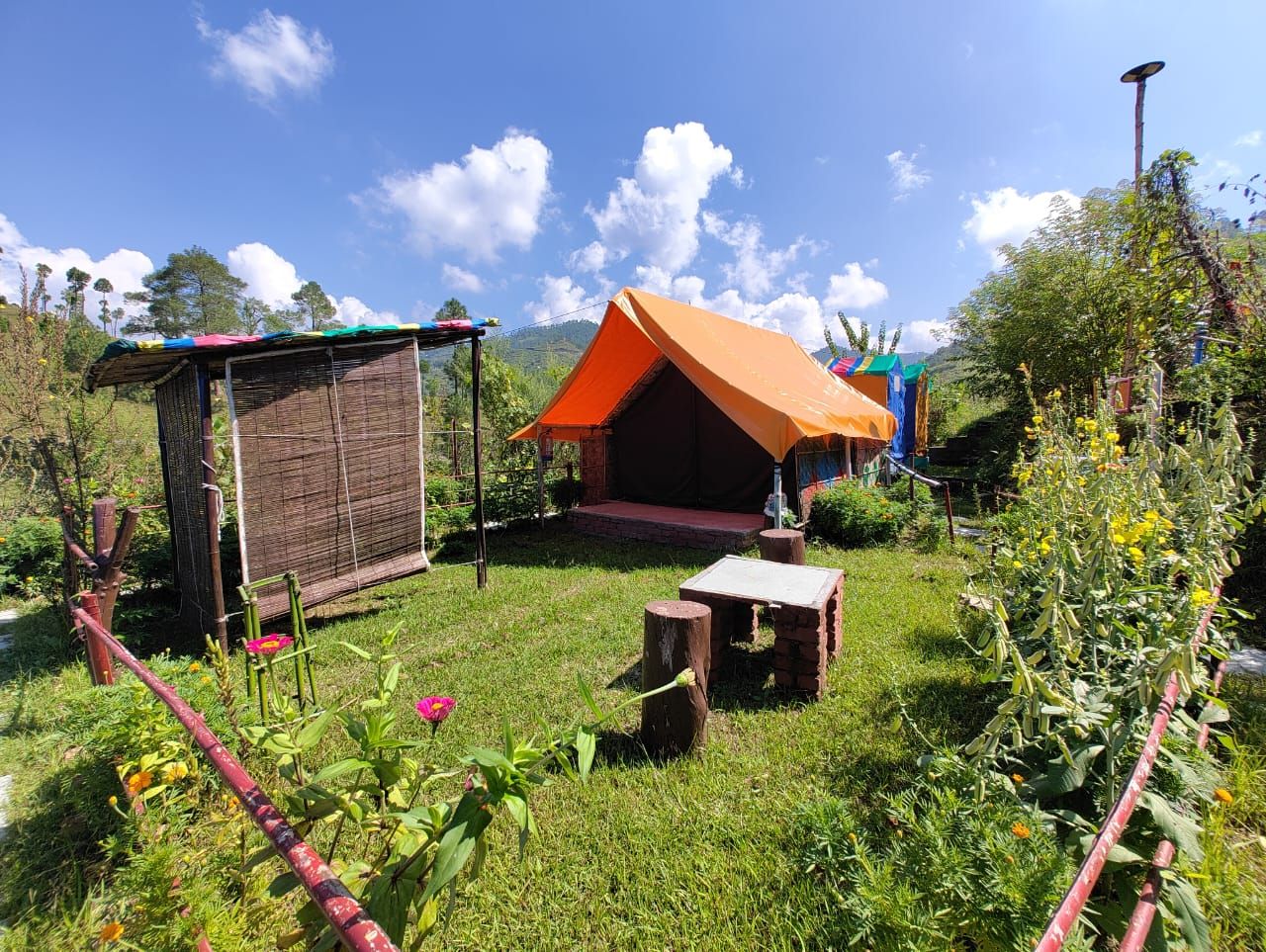
For accommodation, Bageshwar offers a selection of local guest lodges, while the wider surrounding region features traditional village homestays, nature retreats, and riverside campsites nestled in the nearby valleys. You can discover and book genuine homestays and outdoor getaways in the region through HireACamp to experience the authentic hospitality and scenery of Kumaon.
Frequently asked questions
Which deity is worshipped at Bagnath Temple?
Bagnath Temple is dedicated to Lord Shiva, worshipped here as Bagnath or the Tiger Lord, based on an ancient legend involving Sage Markandeya.
Where is Bagnath Temple located?
The temple is located in the town of Bageshwar in Uttarakhand, situated right at the sacred confluence of the Sarayu and Gomati rivers.
What is the best time of year to visit Bagnath Temple?
The most comfortable months to visit are between October and April, when the weather is clear and cool. January is especially popular due to the famous Uttarayani Mela.
Are there other historic temples to see nearby?
Yes, nearby highlights include the twelfth-century Baijnath Temple complex by Baijnath Lake, as well as hillside shrines like Gananath Temple and Someshwar Temple.
How do I reach Bageshwar by train or flight?
The nearest railway station is Kathgodam, and the nearest airport is Pantnagar. From either transit point, Bageshwar can be reached by road via buses or hill taxis.
Where you'll be
Bageshwar · 1 stay nearby shown with prices
Stays near Bagnath Temple
Book a place to stay close by
More places near Bagnath Temple
Within 20 km
Built from 0 Instagram posts by 0 creators. Every tip links back to the post it came from, and where creators disagree we show both sides.






