
Baijnath Temple
Temple near Baijnath, Uttarakhand
100 m from Baijnath
The nearest town, for stays, food and fuel.
Baijnath Temple is an ancient cluster of stone temples situated along the banks of the Gomati River in the Garur Valley of Uttarakhand. Established during the reign of the Katyuri dynasty, the complex is renowned for its early medieval stone architecture and its sanctum dedicated to Lord Shiva. Travellers and pilgrims visit to explore centuries of Himalayan history, admire fine stone carvings, and experience the quiet beauty of the riverside setting.
Getting there
By road
- From BaijnathNearest town1 min · 500 m
- From Dehradun6 hr · 296 km
- From New Delhi9 hr 15 min · 508 km
- From Chandigarh9 hr 40 min · 465 km
Typical drive times without traffic. Stations and airports from OLA Maps; distances and typical drive times from OpenStreetMap (© OpenStreetMap contributors); notes from creators' Reels.
About Baijnath Temple
Written with AI from map data and general knowledge. Check prices and timings locally before you go.
History and Architecture of Baijnath Temple
Baijnath Temple holds a central place in the cultural and architectural heritage of the Kumaon region. Built primarily between the eleventh and twelfth centuries by the rulers of the Katyuri dynasty, the temple marks a period when the kingdom chose the fertile Garur Valley, then known as Kartikeyapura, as its administrative and spiritual capital. The Katyuri rulers were prolific builders, and this complex stands as one of their most impressive surviving monuments.
The complex exemplifies classical north Indian Nagara architecture, characterized by tall curved spires, clustered stone pillars, and intricately sculpted doorways. Built from local grey stone, the shrines have weathered centuries of mountain weather while retaining much of their original detail. The principal sanctum houses a revered Shiva lingam, alongside an extraordinary, life-sized image of Goddess Parvati carved in dark chlorite schist. The fine reliefs, depicting mythological figures, floral motifs, and guardians, reflect the skill of Himalayan stonemasons working during the medieval era.
The Temple Complex and River Ghats
The temple grounds sit directly alongside the Gomati River, creating a calm atmosphere where water and stone architecture meet. A broad flight of stone steps leads down from the temple courtyards to the riverbank, functioning as traditional ghats where devotees take ritual dips and sit quietly by the water.
A distinctive feature of the river here is the school of sacred fish that swim near the ghats. Visitors traditionally gather on the steps to feed puffed rice and dough to the fish, an activity that has been sustained by local custom for generations. The peaceful river flow, paired with the silhouettes of ancient shrines against the backdrop of terraced farmland and distant pine hills, makes walking through the complex a reflective and unhurried experience.
Beyond the central shrine dedicated to Vaidyanath Shiva, the complex contains numerous smaller subsidiary temples. These smaller shrines are dedicated to various deities, including Ganesha, Chandika, Kuber, and Surya. Exploring these interconnected sanctums allows visitors to observe varying styles of stone roof construction and distinct sculptural reliefs.
Read more
Best Time to Visit Baijnath Temple
Baijnath Temple can be visited throughout the year, but the experience changes distinctly with the turning of the seasons. Spring and early summer, from March to June, offer pleasant weather with mild days and cool nights, making it a comfortable time for walking around the complex and exploring the surrounding valley.
The monsoon months from July to September bring abundant rain to the Kumaon hills. During this period, the Gomati River swells and the valley turns exceptionally green with lush paddy fields. While the landscape is at its most vibrant, heavy rain can occasionally lead to road blocks, so travelling during this time calls for a flexible schedule and local weather checks.
Autumn, running from October to November, is widely considered one of the most rewarding periods to visit. The skies are clear, the air is crisp, and distant views of the Himalayan peaks begin to sharpen. Winter, from December to February, brings cold mornings and evenings, though afternoons are usually bright, sunny, and pleasant for outdoor exploration.
How to Reach Baijnath Temple
Baijnath Temple is located along the Garur to Bageshwar road in the Bageshwar district of Uttarakhand. It is well connected to major transit hubs in the state via motorable hill roads that wind through terraced valleys and pine-covered ridges.
Travellers arriving by train generally alight at Kathgodam, which serves as the primary railhead for the Kumaon division. From Kathgodam, taxis and shared passenger vehicles are available to travel uphill toward Garur and Baijnath. For air travellers, the nearest domestic airport is at Pantnagar, from where road transport can be hired to reach the temple.
The temple is also easily accessible from nearby hill stations and regional towns such as Kausani, Almora, Ranikhet, and Bageshwar. Driving through this part of Uttarakhand offers scenic views of river valleys, small villages, and pine forests, making road journeys by bus, car, or motorbike enjoyable and picturesque.
Tips for Visiting Baijnath Temple
Visiting Baijnath Temple is straightforward, but keeping a few practical guidelines in mind ensures a smooth and respectful experience. As this is an active and sacred religious site, visitors are expected to dress modestly and remove their footwear before stepping onto the temple plinths and inner courtyards.
Morning and late afternoon are the best times to visit for peaceful exploration and photography, as the soft light highlights the details of the stone carvings and the temple grounds are relatively uncrowded. Entry requirements, photography rules for the inner sanctum, and daily ritual timings can vary, so it is wise to observe local notices and consult temple caretakers on arrival.
Carrying drinking water and a sun hat is helpful on warmer days, as the stone pathways can warm up under direct sunlight. Visitors who plan to feed the fish along the river steps should purchase grain or puffed rice from local vendors outside the temple rather than throwing packaged foods into the water, helping keep the river clean.
Places to Visit Nearby
The area around Baijnath offers several cultural, spiritual, and natural attractions worth combining into an itinerary. A short drive away lies Kausani, famed for its panoramic vantage points facing prominent Himalayan peaks, including Trishul and Nanda Devi, as well as its scenic tea gardens.
Heading east leads to the town of Bageshwar, located at the sacred confluence of the Gomati and Saryu rivers, home to the ancient Bagnath Temple. For those interested in extended temple circuits, the town of Dwarahat and the hilltop Dunagiri Temple showcase traditional architectural heritage and scenic mountain vistas. Hikers and nature lovers can also plan excursions toward viewpoints such as Badhangarhi or look into regional trails heading deeper into high-altitude meadows.
Where to Stay
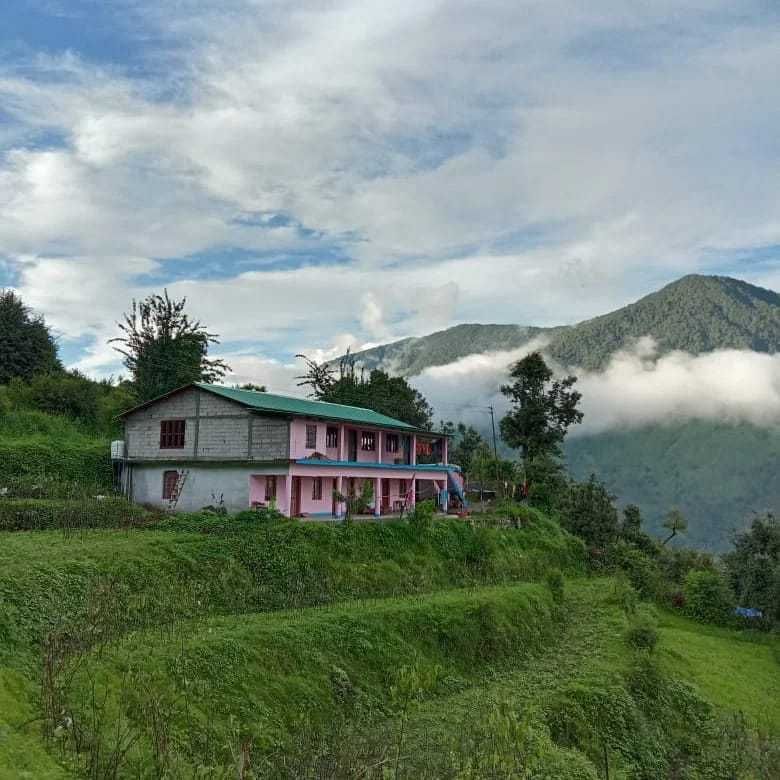
Visitors to Baijnath Temple have multiple stay options depending on their travel preferences. The nearby town of Garur offers straightforward local lodges and guesthouses, while the surrounding valley and nearby hill settlements provide a range of homestays, nature retreats, and riverside campsites.
Those looking to wake up to misty mountain views or stay closer to nature can browse camping sites, village homestays, and boutique rural stays listed on HireACamp. Staying in the surrounding countryside allows travellers to enjoy home-cooked Kumaoni meals, peaceful evenings, and easy daytime access to the temple.
Frequently asked questions
Where is Baijnath Temple located?
Baijnath Temple is located along the Garur to Bageshwar road on the banks of the Gomati River, in the Bageshwar district of Uttarakhand.
Who built the Baijnath Temple?
The temple complex was constructed between the eleventh and twelfth centuries by the rulers of the Katyuri dynasty, who had established their capital in the Garur Valley.
Can visitors feed the fish at the temple river ghats?
Yes, visitors traditionally gather at the riverside steps to feed the resident fish with puffed rice or dough, which can be purchased from small stalls near the temple entrance.
What is the best time of year to visit Baijnath Temple?
The best time to visit is from October to April, when the weather in the valley is comfortable, skies are clear, and surrounding mountain roads are easy to navigate.
Are there places to stay near Baijnath Temple?
Yes, travellers can find guesthouses, riverside camps, and local homestays in and around Garur, Bageshwar, and nearby Kausani through HireACamp.
Where you'll be
Garur - Bageshwar Rd, Garud · 2 stays nearby shown with prices
Stays near Baijnath Temple
Book a place to stay close by
More places near Baijnath Temple
Within 20 km
Built from 0 Instagram posts by 0 creators. Every tip links back to the post it came from, and where creators disagree we show both sides.






