
Ellora Caves
Cave near Ellora, Maharashtra
1.5 km from Ellora
The nearest town, for stays, food and fuel.
The Ellora Caves are a monumental complex of ancient rock-cut cave temples carved into the Charanandri hills near the town of Ellora in Maharashtra. Recognized as a UNESCO World Heritage Site, the complex features remarkable Hindu, Buddhist, and Jain sanctuaries dating from the sixth to tenth centuries. Travellers from across the world visit to marvel at its rock engineering, expressive sculpture, and the awe-inspiring monolithic Kailasa Temple.
Getting there
By road
- From ElloraNearest town7 min · 2.1 km
- From Nashik2 hr 50 min · 174 km
- From Mumbai 5 hr 5 min · 339 km
- From Pune5 hr 35 min · 311 km
Typical drive times without traffic. Stations and airports from OLA Maps; distances and typical drive times from OpenStreetMap (© OpenStreetMap contributors); notes from creators' Reels.
About Ellora Caves
Written with AI from map data and general knowledge. Check prices and timings locally before you go.
The architectural marvel of Ellora Caves
The Ellora Caves stand as one of India's most extraordinary achievements in ancient rock-cut architecture. Located along the volcanic Charanandri hills in Maharashtra, this historic complex consists of over one hundred caves excavated directly out of the basalt cliffs, with thirty-four primary caves accessible to visitors. The excavations span several centuries, primarily dating from the sixth to the tenth century, reflecting a harmonious era where Buddhist, Hindu, and Jain traditions flourished alongside each other in close proximity.
Carved from top to bottom through solid volcanic basalt, the scale and structural precision of these monuments continue to astonish modern architects and engineers. Unlike built architecture that relies on structural assembly, every pillar, gallery, relief, and sculptural panel at Ellora was revealed by meticulously chipping away millions of tons of parent rock. The site offers a profound visual record of regional trade, royal patronage, and religious art in ancient and medieval India.
Exploring the Buddhist, Hindu, and Jain sanctuaries
The complex is traditionally divided into three distinct groups based on religious affiliation. Caves 1 through 12, located at the southern end, form the Buddhist group. Excavated mainly between the sixth and eighth centuries, these include monastery residences known as viharas and prayer halls called chaityas. The most celebrated among them is Cave 10, often referred to as the Vishvakarma Cave or the Carpenter's Cave, renowned for its ribbed ceiling that mimics wooden rafters and a large seated Buddha figure framed against an elaborate stupa.
Caves 13 through 29 represent the Hindu group and date largely from the seventh to ninth centuries. Dominating this section is Cave 16, the monumental Kailasa Temple, which represents the absolute pinnacle of rock-cut excavation. Designed to evoke Mount Kailash, the abode of Shiva, this multi-storey temple was chiseled from a single block of basalt, complete with courtyards, free-standing victory pillars, life-sized carved elephants, and sprawling narrative panels depicting scenes from the Ramayana and Mahabharata.
Caves 30 through 34, situated at the northern end of the escarpment, belong to the Digambara Jain tradition and were carved during the ninth and tenth centuries. Although smaller in scale compared to the Kailasa Temple, the Jain caves, especially Cave 32 known as Indra Sabha, are famous for their dense, fine ornamentation, delicate ceiling lotus medallions, and serene statues of the Tirthankaras.
Read more
Best time to visit Ellora Caves
The most comfortable period to visit Ellora Caves is during the cooler months from October to March. During winter, daytime temperatures in central Maharashtra remain moderate, making the extensive outdoor walking and climbing between caves pleasant. The dry weather also ensures stable footing on the stone pathways and rock-hewn steps.
The monsoon season from July to September transforms the surrounding arid landscape into a vibrant green panorama. Seasonal waterfalls and natural cascades pour over the edges of the basalt cliffs, adding dramatic natural beauty to the ancient setting. However, rain can make stone steps and open-air slopes slippery, so travellers visiting during the rainy season should exercise caution and wear footwear with reliable grip.
Summer months from April to June are characterized by dry conditions and high daytime heat, which can make walking along the exposed hillside challenging. If travelling in summer, visitors are encouraged to start exploration early in the morning before midday temperatures peak.
How to reach Ellora Caves
Ellora is situated roughly thirty kilometres northwest of Chhatrapati Sambhaji Nagar, formerly known as Aurangabad, which serves as the primary gateway to the heritage site. The city is well-connected by road, rail, and air to major hubs across India, including Mumbai and Pune.
From Chhatrapati Sambhaji Nagar, travellers can easily access Ellora Caves by regular state transport buses, local taxis, or self-driven vehicles via state highways. The drive typically takes about forty-five minutes to an hour depending on traffic conditions. Local auto-rickshaws and shared transport options also ply the route between nearby transit stations and the cave complex. Visitors coming from further away can check local transit timetables upon arrival in the city.
Tips for your visit to Ellora Caves
Exploring the vast site requires significant physical stamina, as the caves are spread out across more than two kilometres of rocky hillside. Wear sturdy, comfortable walking shoes with good traction, as the terrain involves numerous uneven stairs, steep inclines, and stone thresholds. Because visitors often remove their shoes to enter specific active shrines or sanctums, slip-on shoes or socks can be helpful when navigating hot stone surfaces.
Carry a refillable water bottle, a broad-brimmed hat, and sunscreen to protect against sun exposure, particularly between the mid-morning and afternoon hours. Given the sheer scale and historical depth of the site, plan to spend at least five to six hours to see the major caves without rushing. To fully appreciate the iconography, architectural details, and local legends, consider engaging a certified local guide or using available audio tour services at the entrance.
Places to visit near Ellora Caves
Travellers exploring the Ellora region have access to several historic and natural destinations within short driving distances. Approximately thirty-eight kilometres to the northwest lie the Pitalkhora Buddhist Caves, perched dramatically in a deep ravine in the Chandora hills. Comprising fourteen rock-cut sanctuaries dating from the second century BCE, Pitalkhora features early Hinayana Buddhist rock art, ancient cisterns, and scenic gorge views.
Nearby in the same rugged belt is Kedarkund Falls, located roughly thirty-eight kilometres away. This seasonal waterfall is a favourite spot during the monsoon and early post-monsoon months, when rainwater gushes down the rocky escarpment, creating picturesque natural pools.
Around thirty-nine kilometres from Ellora is the historic Patna Devi Temple, tucked at the foot of the hills within the lush Gautala Autramghat sanctuary area. Dedicated to the goddess Chandi, the temple is surrounded by thick forest and holds historical associations with the medieval mathematician Bhaskaracharya, offering a tranquil blend of nature, archaeology, and spirituality.
Where to stay near Ellora Caves
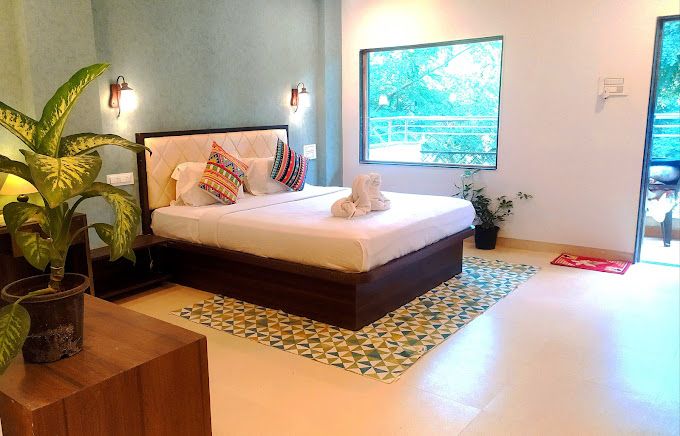
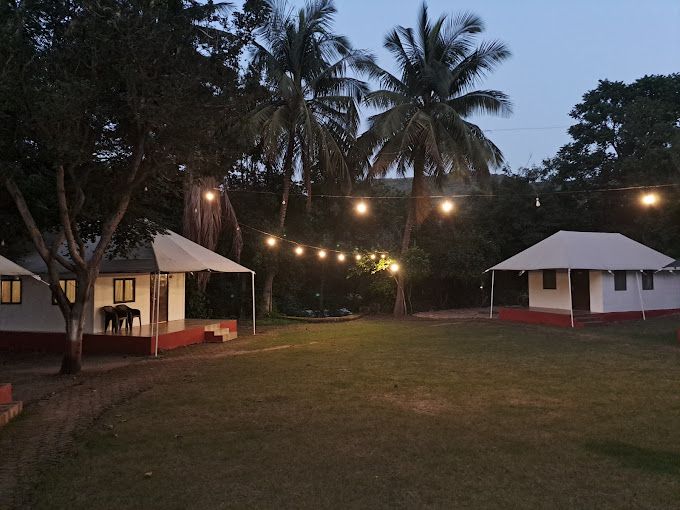
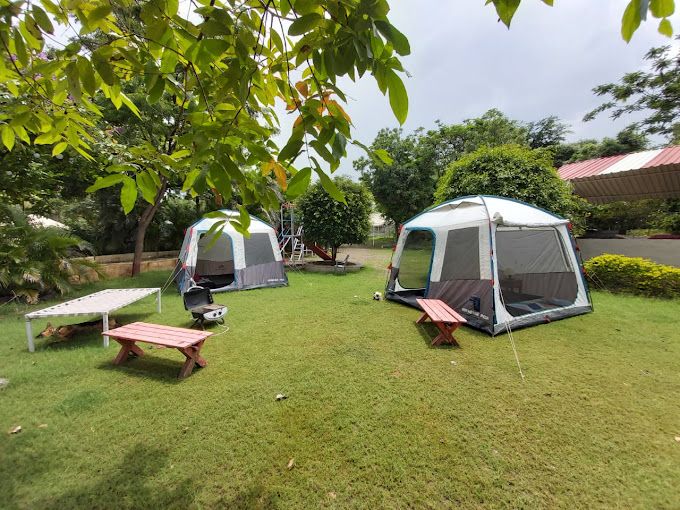
A variety of accommodation options are available for travellers visiting the Ellora Caves. Visitors can stay near the caves in the peaceful rural setting of Ellora village, or base themselves in the nearby city of Chhatrapati Sambhaji Nagar, which provides a broader range of amenities, dining options, and transport connections.
Those who prefer waking up close to nature will find rustic campsites, farmstays, and boutique homestays spread across the surrounding countryside and nearby hill tracts. Travellers looking to experience the region's warm hospitality and serene outdoor landscapes can discover unique camps and homestays nearby on HireACamp.
Frequently asked questions
How many caves are open to the public at Ellora Caves?
While there are over one hundred excavations in the Charanandri hills, thirty-four caves are numbered and open to the public, comprising Buddhist, Hindu, and Jain monuments.
What is the most famous cave at Ellora?
Cave 16, known as the Kailasa Temple, is the most famous cave at Ellora. It is celebrated worldwide as the largest monolithic rock-cut structure ever excavated from top to bottom.
How much time is required to explore Ellora Caves?
A thorough visit requires at least four to six hours to see the main Buddhist, Hindu, and Jain caves, though art and history enthusiasts often spend an entire day.
Can I visit both Ajanta Caves and Ellora Caves in a single day?
It is not recommended to visit both in one day because they are located about one hundred kilometres apart and each site requires several hours of walking to explore properly.
Are battery-operated vehicles available at Ellora Caves?
Eco-friendly shuttles and electric vehicles frequently operate inside the complex to help visitors travel between the southern, central, and northern cave groups.
Where you'll be
Maharashtra · 3 stays nearby shown with prices
Stays near Ellora Caves
Book a place to stay close by
More places near Ellora Caves
Within 20 km
Built from 0 Instagram posts by 0 creators. Every tip links back to the post it came from, and where creators disagree we show both sides.






