
Kangan
Destination in Jammu and Kashmir
Kangan is a scenic riverside town located in the Ganderbal district of Jammu and Kashmir, stretched along the rushing waters of the Sindh River. Positioned on the main highway leading toward Sonamarg and Ladakh, it acts as a cultural hub and practical base for mountain travellers. Visitors come to experience its walnut groves, pastoral countryside, and direct access to ancient valley ruins and alpine trailheads.
Getting there
About Kangan
Written with AI from map data and general knowledge. Check prices and timings locally before you go.
About Kangan and the Sindh Valley
Kangan is one of the principal towns of the upper Sindh Valley in Jammu and Kashmir. Flanked by steep forested hillsides and nourished by the perennial Sindh River, the town serves as a lively rural center where local shepherds, farmers, and mountain commuters meet. The landscape around the town features traditional timber-and-brick homes, terraced agricultural plots, and sprawling walnut orchards that define the lower slopes of the mountain ridges.
The town is situated along the historic arterial route connecting the Kashmir Valley with the high-altitude cold deserts of Ladakh. Despite its functional role as a transit center along the highway, the outlying hamlets surrounding Kangan retain a quiet rural rhythm. Glacial meltwater keeps the valley cool and green through much of the year, providing a refreshing climate that contrasts with the warmer plains during summer.
Things to do in Kangan
The Sindh River is the defining natural feature of Kangan, offering long stretches of gravelly banks where travellers can walk and observe the fast-moving mountain current. The river is renowned across the region for its trout waters, attracting seasonal anglers who appreciate its cold, oxygen-rich currents. Travellers interested in fishing should check locally with valley authorities regarding seasonal rules and required permits before casting a line.
Exploring the residential hamlets on the fringes of Kangan reveals the authentic rhythms of rural Kashmiri life. Strolls along the village roads take you past bustling woodcarving workshops, bakeries producing traditional breads like kandur tsochwor, and vast orchards of walnut, apple, and cherry. During harvest months, the process of drying walnuts and gathering fruit occupies entire families, offering visitors a clear window into traditional agricultural heritage.
Read more
Heritage and cultural sites nearby
A short journey from Kangan up the tributary valley leads toward the ancient Wangath Temple complex, situated near the village of Naranag. These stone ruins date back more than a millennium and stand surrounded by dense pine forests. Built out of grey granite blocks with classical Kashmiri stone architecture, the complex offers a fascinating glimpse into early temple-building traditions of the region and remains one of the area's most atmospheric historical sites.
Further down the valley toward Ganderbal lies the revered shrine of Mata Kheer Bhawani at Tullamulla, dedicated to the goddess Ragnya Devi. It is one of the most sacred pilgrimage sites for Kashmiri Pandits, centered on a natural spring that changes colour according to seasonal and ecological shifts. In the adjacent Srinagar basin, prominent landmarks such as Hazratbal Dargah, Shalamar Bagh, Nishat Bagh, and Harwan Garden are easily reachable for day trips.
Nature trails and outdoor getaways
The ridges towering behind Kangan form the northwestern approaches to the Zabarwan Range and the perimeter of the Dachhigam Forest. These rugged mountain slopes are home to mixed coniferous woodlands of deodar, pine, and fir. While the inner sanctum of Dachhigam requires formal permissions, the buffer hills around Kangan feature scenic shepherd pathways that climb through quiet meadows and birch copses.
For seasoned trekkers, Kangan serves as an important logistical staging post. The trailhead at nearby Wangath and Naranag marks the conventional end or starting point of the celebrated Kashmir Great Lakes alpine trek. Day hikers can also follow secondary streams into narrow side valleys that climb toward high-altitude grazing grounds and ridges offering panoramas of Mahadev Peak and the surrounding snow-dusted summits.
Best time to visit Kangan
Kangan experiences four distinct seasons, each bringing a pronounced change to the terrain. Spring arrives between April and May, bringing melting snows, rushing streams, and the blossoming of fruit orchards across the valley floor. The ambient temperatures are crisp and comfortable, making it a pleasant time for sightseeing and short day walks.
Summer runs from June through August, bringing the warmest weather of the year. While daytime temperatures are warm, evening breezes off the Sindh River keep nights cool and refreshing. Summer is the premier season for trekking, camping, and continuing onward to Sonamarg. Autumn, spanning September and October, brings clear blue skies, golden chinar leaves, and the walnut harvest. Winter arrives by late November, cloaking the surrounding ridges in snow and turning Kangan into a tranquil, cold winter landscape until the spring thaw.
How to reach Kangan
Kangan is located approximately thirty-five to forty kilometres northeast of Srinagar. The most convenient gateway for air travellers is Sheikh Ul-Alam International Airport in Srinagar, which receives daily domestic flights from major Indian metropolitan centers. From the airport or Srinagar city center, private taxis and local shared transport ply regularly along the Srinagar-Leh highway via Ganderbal directly to Kangan.
For those travelling by train, the nearest major railhead on the primary Indian railway network is Jammu Tawi or Udhampur, from where one can travel by road to the Kashmir Valley. Within the valley, local passenger trains connect Banihal with Srinagar and Baramulla. Travellers arriving at Srinagar railway station can easily hire local vehicles to complete the drive up the Sindh Valley.
Where to stay in Kangan
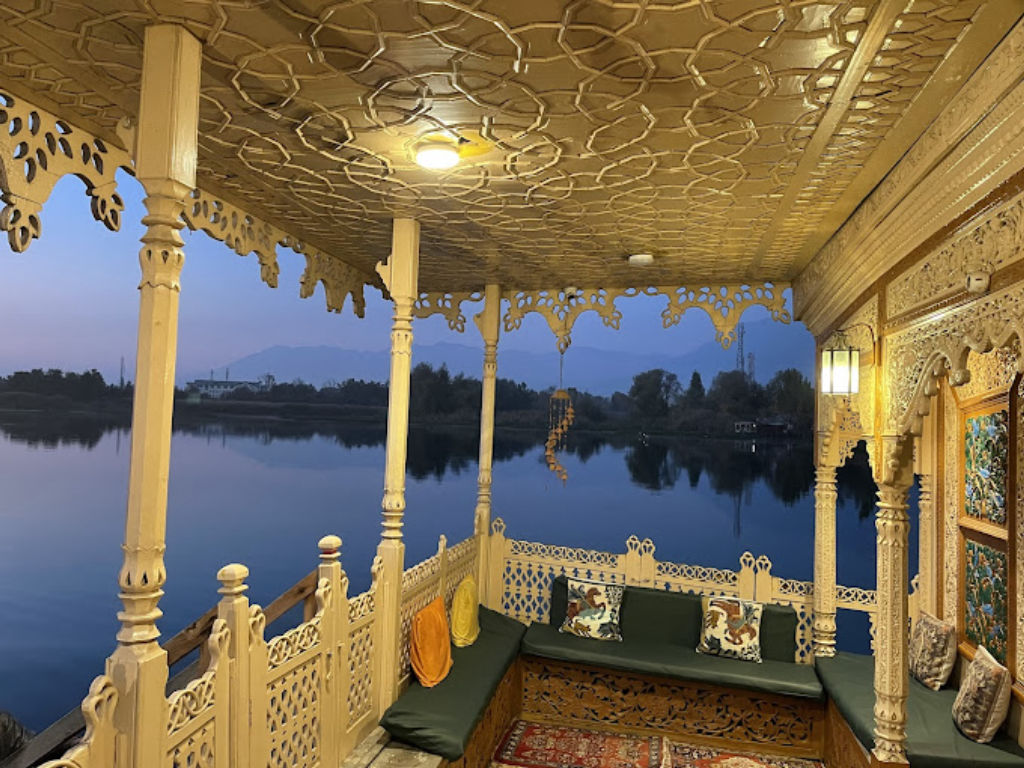
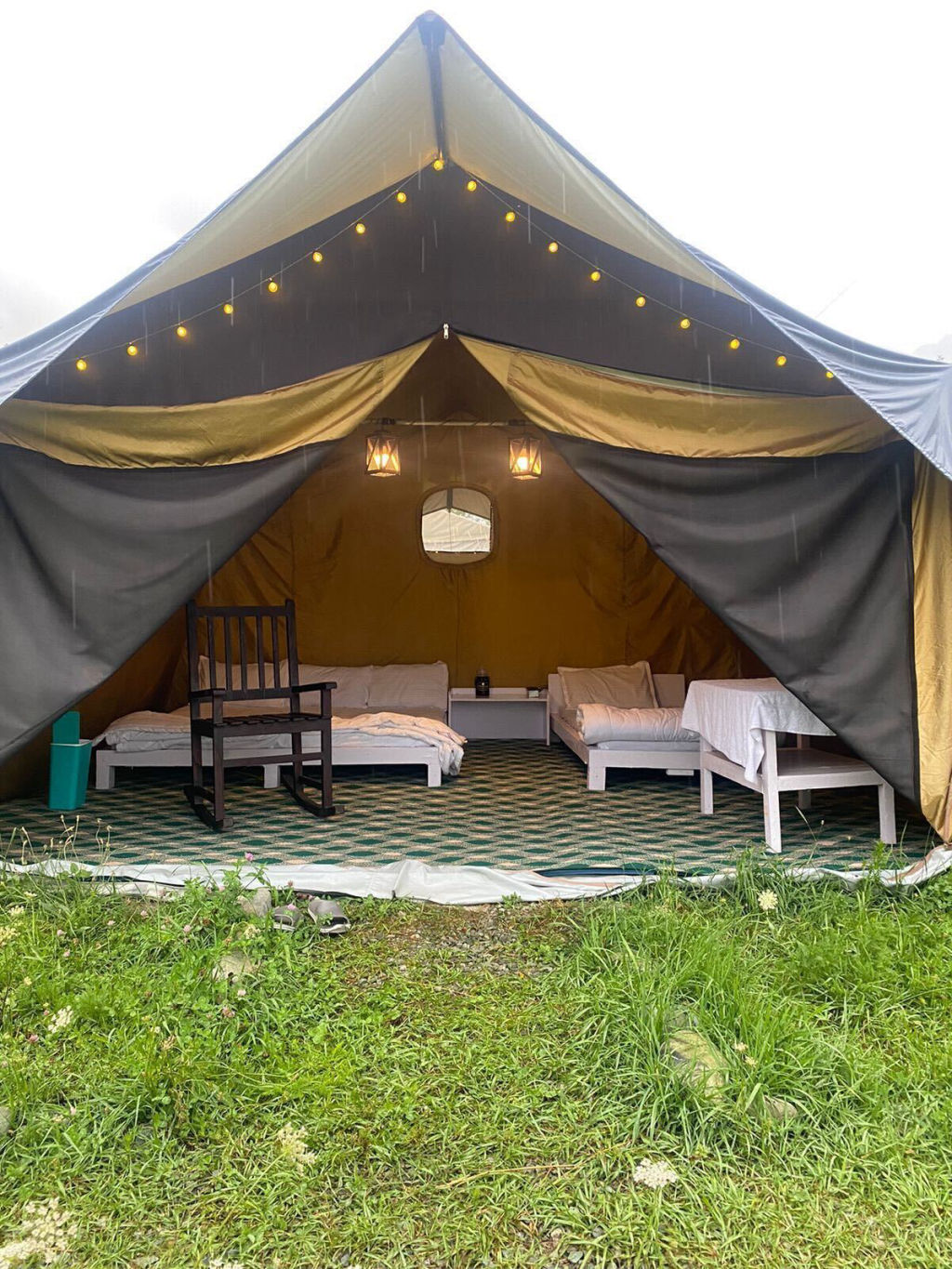
Accommodation options in and around Kangan primarily reflect the region's rural character and outdoor appeal. Rather than large commercial hotels, the valley offers authentic Kashmiri homestays, simple family-run guest accommodations, and riverside campgrounds set amidst orchard groves.
Staying in a homestay allows guests to experience local hospitality, enjoy home-cooked Kashmiri meals, and rest in peaceful settings away from the heavier tourist corridors. A variety of verified riverside camps, traditional cottages, and homestays in Kangan and the adjoining Sindh Valley can be discovered and reserved through HireACamp.
Frequently asked questions
Where is Kangan located?
Kangan is situated in the Ganderbal district of Jammu and Kashmir, positioned along the banks of the Sindh River on the highway leading from Srinagar to Sonamarg.
What is Kangan known for?
Kangan is known for its lush walnut and fruit orchards, scenic Sindh River frontage, trout waters, and proximity to historical sites like the ancient Wangath Temple ruins.
How do I travel to Kangan from Srinagar?
You can reach Kangan by road from Srinagar via Ganderbal using private cabs, taxis, or shared public transport running along the Srinagar-Leh highway.
Can I use Kangan as a base for trekking?
Yes, Kangan is an ideal base because it sits close to the Naranag and Wangath trailheads, which connect to the Kashmir Great Lakes trek and other scenic mountain paths.
What should I pack for a trip to Kangan?
Pack sturdy walking shoes, warm layers even during the summer months due to cool evenings by the river, and heavy woollens or thermals if visiting during late autumn or winter.
Where you'll be
2 stays nearby shown with prices
Stays near Kangan
Book a place to stay close by
Things to do in Kangan
48 places creators recommend within 30 km
Built from 0 Instagram posts by 0 creators. Every tip links back to the post it came from, and where creators disagree we show both sides.






