
Kausani
Destination in Uttar Pradesh
Kausani is a quiet hill town perched high on a ridge in the Kumaon Himalayas, famous for its sweeping panoramic views of snow-capped peaks like Trishul and Nanda Devi. Travellers come to explore its rolling tea gardens, wander through pine-scented forests, and enjoy a slow-paced mountain getaway away from crowded hill stations.
Getting there
By road
- From Dehradun6 hr 35 min · 317 km
- From New Delhi8 hr 55 min · 397 km
- From Chandigarh10 hr 15 min · 486 km
Typical drive times without traffic. Stations and airports from OLA Maps; distances and typical drive times from OpenStreetMap (© OpenStreetMap contributors); notes from creators' Reels.
About Kausani
Written with AI from map data and general knowledge. Check prices and timings locally before you go.
What Kausani is Known For
Kausani sits on a high mountain ridge surrounded by dense pine, oak, and deodar woodlands. It offers one of the widest, uninterrupted vantage points of the central Himalayan crest, stretching across major peaks such as Trishul, Nanda Devi, and the Panchachuli cluster. When the morning sun strikes the snow-covered summits, the peaks turn from cool grey to radiant gold and amber, creating a spectacle that draws nature lovers year after year.
Beyond its mountain vistas, Kausani is recognized for its sprawling tea estates, which are among the few found in this belt of the northern hills. The town also holds an enduring place in Indian history and literature. Mahatma Gandhi stayed here in the late 1920s at what is now the Anasakti Ashram, where he wrote his commentary on the Bhagavad Gita and noted the deep calm of the surrounding hills. The revered Hindi poet Sumitranandan Pant was born in Kausani, and a memorial gallery in town commemorates his life and work.
Things to Do in Kausani
Watching the sunrise and sunset over the high Himalayan range is one of the main highlights of staying in Kausani. Early mornings find visitors walking out to open ridge tops to witness the changing morning light on Trishul and Nanda Devi. Dusk brings a soft alpenglow across the peaks before twilight gives way to clear, dark skies ideal for stargazing.
A walk through the terraced tea gardens allows visitors to see mountain tea cultivation up close. Footpaths wind through manicured tea bushes and lead into quiet valleys, providing gentle walking routes for nature lovers. The pine woods around town are filled with birds such as Himalayan woodpeckers, flycatchers, babblers, and thrushes, making it a rewarding destination for casual birdwatchers.
Those interested in local heritage can spend unhurried hours at Anasakti Ashram, browsing its quiet prayer hall and historical photographs. Village trails branching out from the ridge take you past traditional stone-and-timber homesteads and terraced agricultural fields, offering an authentic glimpse of everyday mountain life.
Read more
Places to Visit Around Kausani
The valleys and neighbouring ridges host several historical and natural landmarks within an easy day trip. About fifteen kilometres away lies Dunagiri Temple, an ancient hilltop shrine dedicated to Goddess Durga, surrounded by thick pine and deodar forests. The drive there climbs along quiet mountain roads offering dramatic views of terraced valleys below.
In the nearby valley of Dwarahat, roughly eighteen kilometres away, travellers can explore remarkable clusters of ancient stone architecture, including the Badrinath Group of Temples, Kedarnath Mandir, Ratan Deo Temple, and Mrityunjay Mandir. Built centuries ago, these intricately carved stone temples reflect the rich architectural heritage of the Kumaon region. In the same area, the Yogoda Satsang Sakha Ashram provides a tranquil setting for meditation and spiritual study.
For outdoor adventurers, Badhangarhi peak and its mountain shrine offer a rewarding hiking excursion with expansive views over distant ranges and green valleys. The seasonal lake of Tarag Tal is another peaceful retreat nearby, nestled in a secluded natural depression. Further along the ridge stands the Manila Devi Temple, which commands impressive wide-angle views over the surrounding hill tracts.
Best Time to Visit Kausani
Kausani has distinct seasonal shifts, each bringing its own character to the landscape. The months from March to June mark the spring and summer season, characterized by pleasant weather and daytime temperatures that are ideal for outdoor walks and sightseeing. Wildflowers and rhododendrons bloom across the hillsides during spring, adding bright color to the green slopes.
The monsoon arrives between July and August, blanketing the mountains in rolling mist and dense green foliage. While rain can occasionally disrupt travel on mountain roads, the dramatic cloud formations and lush scenery appeal to travellers looking for absolute peace and quiet.
Autumn, from September to November, brings the clearest skies of the year. The post-monsoon atmosphere is crisp and free of haze, offering the most dependable panoramic views of the snowy Himalayan peaks. Winter runs from December through February, bringing cold temperatures, frosty mornings, and occasional light snowfall on higher ridges, making it a great time for travellers who enjoy winter chill and warming up around evening campfires.
How to Reach Kausani
Kausani is accessible by road from major transit hubs in the northern plains and foothills. The nearest broad-gauge railway station is Kathgodam, located approximately one hundred and thirty to one hundred and forty kilometres away. Trains from Delhi and other northern cities connect regularly to Kathgodam. From the station, shared taxis, private cabs, and state transport buses run up into the hills via Almora, Bhowali, or Ranikhet.
For travellers arriving by air, Pantnagar Airport is the closest airport, situated around one hundred and sixty to one hundred and seventy kilometres away. Taxis can be hired at the airport to complete the journey up to Kausani.
If you are driving from Delhi, the road journey covers approximately four hundred kilometres and typically takes nine to ten hours depending on road conditions and stops. Leaving early in the morning helps avoid industrial traffic in the plains and ensures you navigate the winding mountain passes in good daylight.
Where to Stay in Kausani
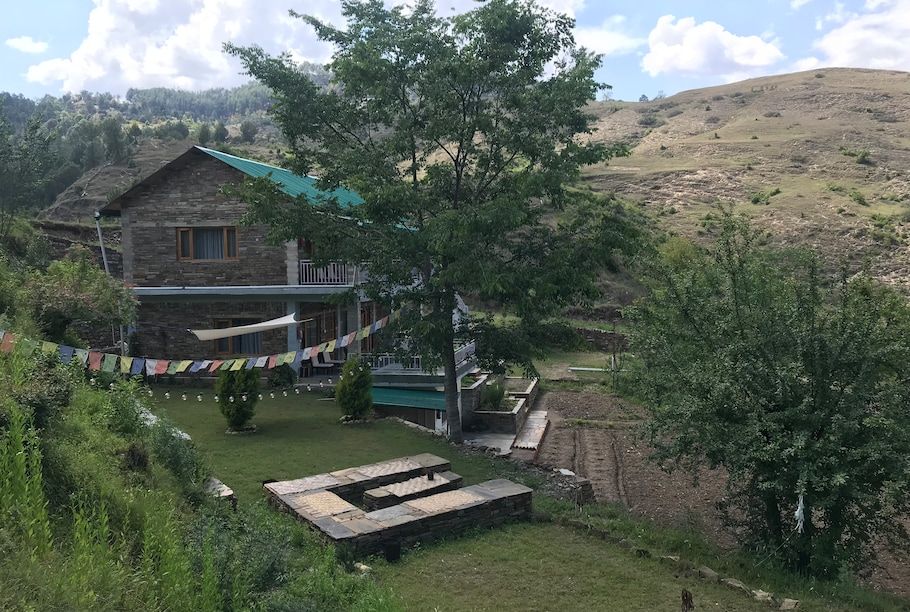
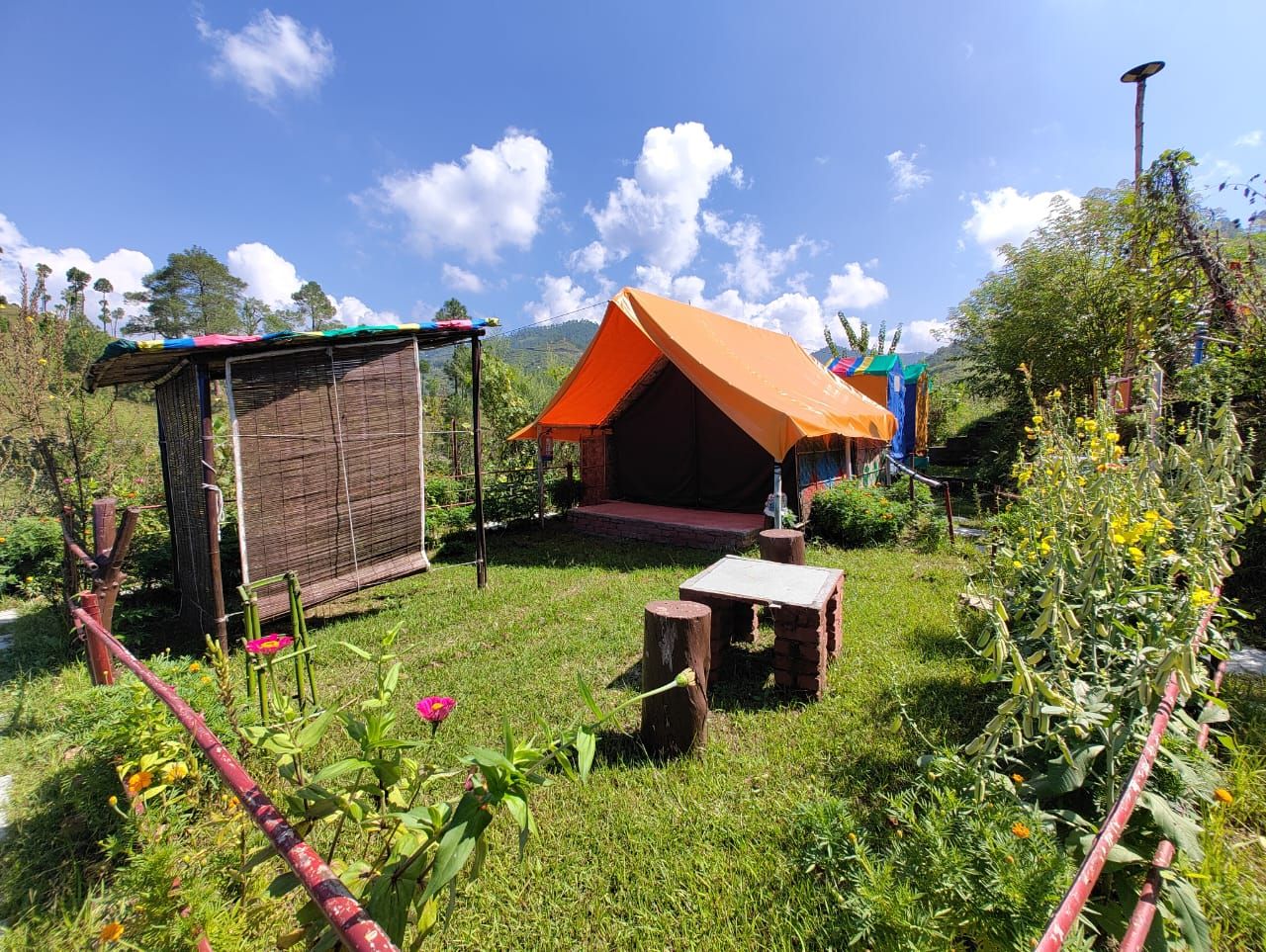
Accommodation in Kausani is centered around enjoying the outdoors and the vast mountain vistas. Because the town is built along an elevated ridge, many stays are set up so that guests can look out directly toward the Himalayan peaks from open balconies, verandas, or lawn areas.
Travellers can find secluded nature camps, rustic cottages, and family-run homestays listed on HireACamp. Opting for a homestay or camp allows you to enjoy freshly cooked regional meals, unwind in quiet gardens, and experience genuine local warmth in a peaceful setting far removed from highway traffic.
Frequently asked questions
What is Kausani best known for?
Kausani is best known for its unobstructed, panoramic views of major Himalayan peaks such as Trishul and Nanda Devi, as well as its historic tea gardens and connection to Mahatma Gandhi at Anasakti Ashram.
Can you see snow peaks from Kausani all year round?
The high peaks are visible on clear days, but the clearest and most reliable views occur from October through March when the air is crisp and devoid of haze.
How many days are enough to explore Kausani?
A stay of two to three days is ideal to relax, take nature walks through the tea estates and forests, and explore nearby temples such as Dunagiri and the Dwarahat group.
Does it snow in Kausani during winter?
Kausani occasionally receives light snowfall in late December and January during cold snaps, though snow does not usually remain on the ground for very long.
What should I pack for a visit to Kausani?
Pack light cottons with a light jacket for summer, rain gear for the monsoon months, and heavy woollens, thermal wear, and warm jackets if you visit between November and February.
Where you'll be
2 stays nearby shown with prices
Stays near Kausani
Book a place to stay close by
Things to do in Kausani
48 places creators recommend within 30 km
Built from 0 Instagram posts by 0 creators. Every tip links back to the post it came from, and where creators disagree we show both sides.






