
Vajreshwari
Destination in Maharashtra
Vajreshwari is a historic temple town located along the banks of the Tansa River in Maharashtra's Palghar district. Best known for its prominent shrine dedicated to Goddess Vajreshwari and its naturally occurring hot water sulfur springs, the town attracts pilgrims, wellness seekers, and weekend travellers. Its tranquil countryside setting at the foot of forested hills makes it an easy day trip or weekend escape from the Mumbai and Thane metropolitan regions.
Getting there
By road
- From Mumbai 1 hr 55 min · 79 km
- From Nashik2 hr 45 min · 135 km
- From Pune3 hr 30 min · 178 km
- From Surat5 hr 5 min · 246 km
Typical drive times without traffic. Stations and airports from OLA Maps; distances and typical drive times from OpenStreetMap (© OpenStreetMap contributors); notes from creators' Reels.
About Vajreshwari
Written with AI from map data and general knowledge. Check prices and timings locally before you go.
What Vajreshwari is known for
Vajreshwari is deeply revered for the Shree Vajreshwari Yogini Devi Temple, a fortress-like hilltop structure surrounded by stone ramparts. Originally built during the Peshwa era after the conquest of Vasai Fort, the shrine is dedicated to Goddess Vajreshwari, an incarnation of Parvati. Pilgrims ascend a grand flight of stone steps flanked by carved lampposts to reach the courtyard, which offers expansive views of the surrounding rural valley and distant Sahyadri ridges.
Beyond its spiritual importance, Vajreshwari is renowned for its geothermal activity. Along the Tansa riverbed and in adjoining settlements like Akloli and Ganeshpuri, natural hot sulfur springs bubble up from deep underground. These mineral-rich waters collect in stone tanks or natural pools and have been frequented for centuries by locals and travellers seeking relief from skin ailments and joint pain.
Things to do in and around Vajreshwari
A classic day in Vajreshwari begins with a visit to the main temple complex, taking in the historical Maratha architecture and soaking in the meditative atmosphere of the sanctum. The vantage point from the temple terrace provides panoramic views of the verdant lowlands, particularly during morning hours when mist settles over the river plain.
After exploring the temple grounds, head down towards the natural hot water pools. Taking a foot soak or a bath in these springs is an age-old tradition. You can also explore the tranquil banks of the Tansa River, which meanders peacefully past rural hamlets and mango groves. Strolling through the town's local bazaars gives you an opportunity to sample traditional Maharashtrian snacks, fresh farm produce, and local temple offerings.
Read more
Getaways and places to visit nearby
Vajreshwari serves as an ideal base for exploring north Konkan's natural and historical landmarks. Just upriver lies Tansa Lake, a serene freshwater reservoir cradled by thick forests that forms an important catchment area and birding haven. Nature lovers often combine a trip to Vajreshwari with a quiet drive toward the lake's surrounding woodlands.
Closer to the coast, the historic Vasai Fort offers an immersive walk through history, featuring sprawling ramparts, ancient stone archways, and overgrown ruins dating back to Portuguese colonial rule. For those who enjoy forest trails, the northern peripheries of Sanjay Gandhi National Park, Yeoor Waterfall, and the ancient rock-cut Kanheri Caves provide excellent trekking and outdoor recreation within driving distance.
Best time to visit Vajreshwari
The winter months, from November to February, are the most pleasant time to visit Vajreshwari. During this period, the days are bright and clear with comfortable temperatures, and the evenings are cool. The mild weather makes exploring temples on foot and soaking in the thermal springs especially enjoyable.
The monsoon season, extending from June to September, brings intense showers that transform the countryside into a rich, verdant landscape. While outdoor paths and riverbanks can be slippery, the surrounding hills and waterfalls come alive with rushing water, making it popular with scenic drivers and landscape photographers. Summers from March to May can be hot and humid, so trips during this period are best confined to early mornings or late afternoons.
How to reach Vajreshwari
Vajreshwari is easily accessible by road from major cities in western Maharashtra. From Mumbai or Thane, travellers can follow the Western Express Highway heading north toward Palghar, before turning east onto regional state roads leading into the Tansa valley. The drive typically winds through picturesque peri-urban countryside and small villages.
If travelling by rail, the nearest major suburban railway stations are Virar on the Western line and Vasai Road. From these stations, state transport buses, shared autos, and private taxis regularly ply the route to Vajreshwari. Regular local bus services also connect the town directly to Thane, Kalyan, and Bhiwandi.
Tips for your visit
When visiting the thermal springs, remember that sulfur water can react with metallic jewellery, particularly silver, so remove rings and necklaces before entering the pools. Footwear must often be removed in temple courtyards and bath complexes, so carry slip-on shoes that are convenient to take on and off.
Modest clothing is recommended when entering the temple precincts and public bath areas out of respect for local customs. During the winter and monsoon weekends, the town can see a high influx of devotees and day-trippers; arriving early in the morning guarantees a more peaceful and contemplative experience.
Where to stay around Vajreshwari
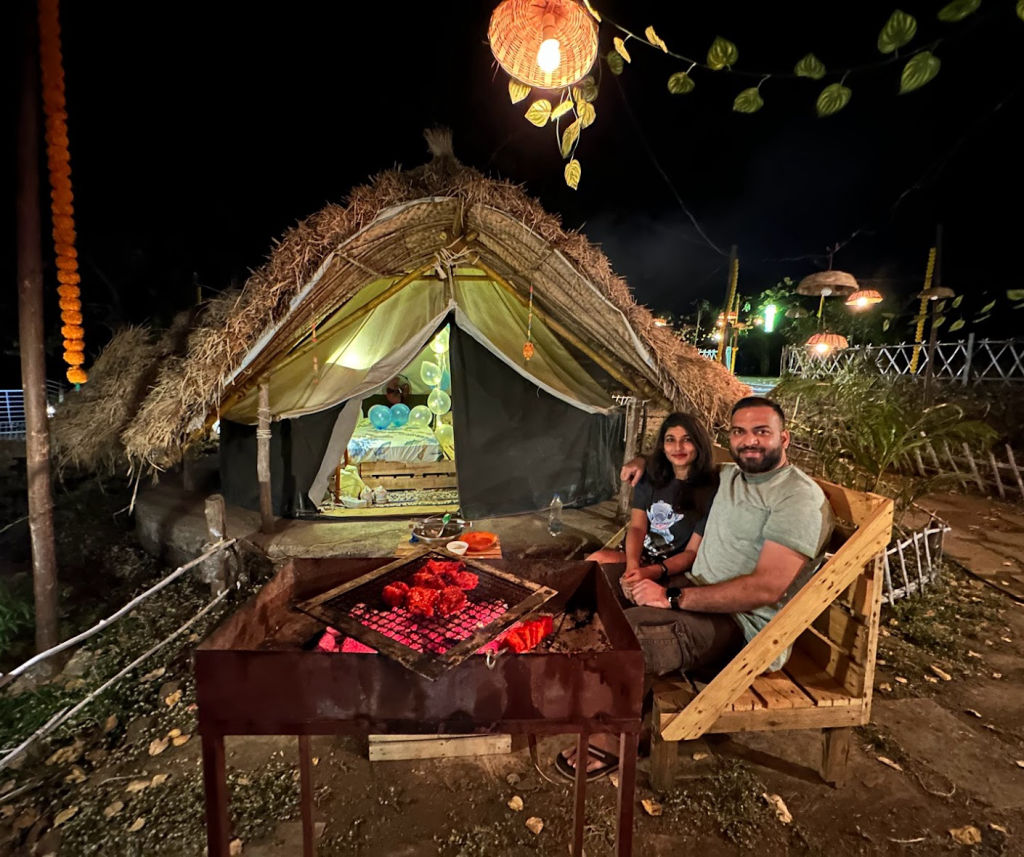
The areas surrounding Vajreshwari and the Tansa valley are home to a variety of accommodation options, ranging from quiet rural homestays to nature retreats and riverside campsites. Staying in the countryside allows visitors to wake up to birdsong and explore the local springs before day crowds arrive.
You can find and book comfortable campsites, authentic farm stays, and private nature homestays near Vajreshwari on HireACamp, ensuring a relaxing base for your getaway.
Frequently asked questions
What is Vajreshwari most famous for?
Vajreshwari is primarily known for its historic Shree Vajreshwari Yogini Devi Temple and its natural hot sulfur springs, which are believed to have therapeutic and skin-cleansing properties.
How far is Vajreshwari from Mumbai?
Vajreshwari is located roughly 75 to 80 kilometres north of central Mumbai, making it a popular choice for a day trip or an easy weekend road trip.
Are the hot springs in Vajreshwari safe for bathing?
Yes, the natural sulfur springs have designated stone tanks where visitors regularly bathe, though the water can be quite hot, so it is best to test the temperature before stepping in.
What is the best way to reach Vajreshwari by public transport?
You can take a local train to Virar or Vasai Road railway stations, from where frequent Maharashtra State Road Transport Corporation buses, shared autos, and taxis run directly to Vajreshwari.
What should I wear when visiting the temple and springs?
Modest clothing that covers shoulders and knees is recommended for visiting the temple complex, and quick-drying, modest attire is best if you plan to bathe in the public spring enclosures.
Where you'll be
1 stay nearby shown with prices
Stays near Vajreshwari
Book a place to stay close by
Things to do in Vajreshwari
48 places creators recommend within 30 km


Lists for this area
Ranked by how many creators recommend each place


Built from 0 Instagram posts by 0 creators. Every tip links back to the post it came from, and where creators disagree we show both sides.






