
Vajreshwari Temple
Temple near Vajreshwari, Maharashtra
2.2 km from Vajreshwari
The nearest town, for stays, food and fuel.
Vajreshwari Temple is a historic Hindu shrine dedicated to Goddess Vajreshwari, perched on a scenic hillock in the Palghar region of Maharashtra. Celebrated for its fort-like stone architecture and serene natural setting along the Tansa River valley, the temple attracts pilgrims, history enthusiasts, and weekend travelers seeking spiritual solace. Visitors also come to explore the surrounding geothermal sulfur springs, nearby ashrams, and quiet rural trails.
Getting there
By road
- From VajreshwariNearest town6 min · 3 km
- From Mumbai 2 hr · 82 km
- From Nashik2 hr 50 min · 138 km
- From Pune3 hr 35 min · 181 km
Typical drive times without traffic. Stations and airports from OLA Maps; distances and typical drive times from OpenStreetMap (© OpenStreetMap contributors); notes from creators' Reels.
About Vajreshwari Temple
Written with AI from map data and general knowledge. Check prices and timings locally before you go.
About Vajreshwari Temple
Vajreshwari Temple stands on the slopes of the Mandagiri hillock, overlooking the verdant countryside of northern Maharashtra. The temple is dedicated to Goddess Vajreshwari, also known as Vajrabai, an incarnation of Goddess Parvati revered as the deity of divine strength and protection. The shrine is deeply intertwined with local legends that trace its spiritual presence back centuries, drawing thousands of devotees who come to offer prayers and fulfill vows.
The current stone structure holds significant historical heritage closely linked to the Maratha Empire. According to regional records, Chimaji Appa, the military commander and younger brother of Peshwa Baji Rao I, prayed to Goddess Vajreshwari for victory before laying siege to the Portuguese-held fort of Vasai in the eighteenth century. After winning the campaign in 1739, he fulfilled his vow by reconstructing the temple as a grand stone fortification, giving the pilgrimage site its distinctive defensive appearance.
Architecture and temple layout
Unlike many conventional temple designs in the region, Vajreshwari Temple resembles a medieval hill fort. Approaching the shrine, visitors are met by a sweeping flight of broad stone steps flanked by tall stone lamp towers, known as deepstambhas, and fortified boundary walls built out of dark basalt stone. The main entrance features a substantial stone gate topped by a traditional nagarkhana, where temple drums and ceremonial instruments were historically played during rituals and festivals.
Once inside the fortified compound, visitors enter a spacious open courtyard surrounded by stone bastions and walkways. The central assembly hall leads to the inner sanctum, where the deity of Goddess Vajreshwari is enshrined alongside idols of Goddess Renuka and Goddess Kalika. Small niches and subsidiary shrines around the complex house representations of various deities, including Lord Ganesha and Lord Shiva, allowing pilgrims to complete a peaceful circumambulation within the cool, shaded corridors.
Read more
Natural hot springs of the valley
One of the most remarkable features associated with a trip to Vajreshwari Temple is the presence of natural geothermal springs located in the surrounding riverbed and adjacent villages. These mineral-rich hot springs emerge from underground fissures along the Tansa River basin. The water contains natural sulfur deposits and maintains a warm to hot temperature throughout the year, which has drawn visitors for generations.
Local tradition holds that bathing in these geothermal waters offers restorative and therapeutic benefits for skin ailments and joint pain. Enclosed bathing cisterns, locally known as kunds, have been built around the primary springs to allow visitors to experience the warm mineral water comfortably. Many pilgrims combine their morning worship at the temple with a quiet stop at these ancient springs.
Best time to visit Vajreshwari Temple
The ideal time to visit Vajreshwari Temple is during the post-monsoon and winter months, spanning from October through February. During this period, the days are pleasantly bright, humidity levels drop, and evening temperatures become cool and refreshing, making it comfortable to climb the stone stairs and explore the open courtyards.
The monsoon season from June to September transforms the surrounding hills and river valleys into a lush, vibrant green landscape. While heavy rains can make climbing the wet stone steps slick, the misty ambiance and overflowing seasonal streams lend a distinct charm to the region. The summer months between March and May are typically hot and dry, with midday temperatures rising considerably; visitors traveling during this period are encouraged to visit during the early morning or late afternoon to avoid the heat.
How to reach Vajreshwari Temple
Vajreshwari Temple is situated in the northern Konkan belt of Maharashtra and is conveniently connected by road to major urban centers including Mumbai, Thane, and Nashik. Travelers arriving by personal vehicle or hired taxi can take the Mumbai to Ahmedabad highway (NH 48), diverting inland toward the temple complex through arterial state highways that run past Vada and Bhiwandi.
For those relying on public transit, regular suburban trains run from central Mumbai to railway stations along the Western and Central lines. Major railway junctions like Vasai Road, Virar, and Thane serve as practical starting points. From these stations, state transport buses and shared auto-rickshaws operate frequent routes heading toward Vajreshwari and Ganeshpuri throughout the day.
Places to visit near Vajreshwari Temple
The area around Vajreshwari offers several cultural and outdoor destinations within an easy drive. Just a short distance down the road lies the serene town of Ganeshpuri, home to the revered Sadguru Nityanand Swami Temple and its tranquil ashram grounds, where seekers and pilgrims gather from around the world.
Outdoor enthusiasts can explore the rugged peaks and forested trails of the Sahyadri foothills. Tungareshwar Wildlife Sanctuary and its elevated peak provide dense deciduous forests, hiking paths, and seasonal waterfalls. Adventure travelers can also trek toward the ruins of Takmak Fort, an ancient hill bastion offering panoramic vistas of the surrounding river valleys, or plan an afternoon excursion toward the tranquil waters of Tansa Lake and the historic ramparts of Vasai Fort.
Tips for your visit
Reaching the main sanctum requires climbing several dozen stone steps, so wearing comfortable, slip-resistant walking shoes is recommended. Footwear must be deposited at designated stalls near the base of the staircase before entering the inner sanctum. Because temple regulations on photography and dress codes can vary depending on religious observances, it is best to dress modestly and check local signage or consult temple attendants before taking photographs inside the sanctum.
Carry adequate drinking water, particularly if you are visiting during the warm summer months or planning extended outdoor walks around the temple bastions. During major Hindu festivals such as Chaitra Navratri and Ashwin Navratri, the temple experiences large influxes of devotees from across Maharashtra, which may lead to longer waiting queues for darshan.
Where to stay near Vajreshwari Temple
Travelers who wish to spend a night or weekend away from the city will find comfortable basecamps scattered across the countryside of Palghar and Thane districts. Options in the surrounding rural belts range from traditional village homestays and eco-lodges near the forested slopes of Tungareshwar to quiet farm stays nestled along river channels.
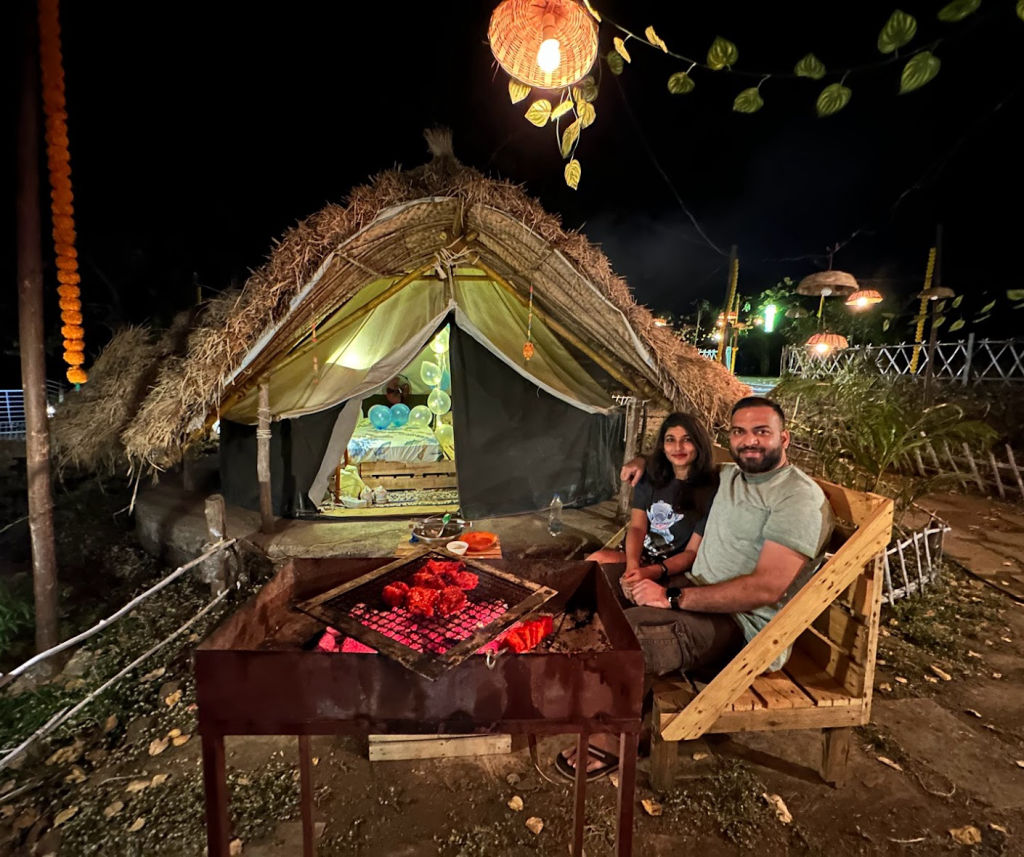
Outdoor lovers can also discover private campsites tucked beneath forest canopies or beside seasonal reservoirs in the wider region. You can find well-maintained camps, homestays, and unique rural retreats listed on HireACamp, giving you a relaxing space to unwind after visiting the temple and exploring the geothermal springs.
Frequently asked questions
Why is Vajreshwari Temple built like a fortress?
The temple was reconstructed by the Maratha general Chimaji Appa after his victory against the Portuguese in 1739. In accordance with his vow and regional military tradition, the complex was fortified with thick basalt stone ramparts, stone bastions, and a grand gateway.
Are there hot springs near Vajreshwari Temple?
Yes, natural geothermal sulfur springs are located in the nearby riverbeds and surrounding settlements such as Akloli and Ganeshpuri. Many visitors bathe in the warm mineral-rich waters before or after visiting the temple.
Which railway station is closest to Vajreshwari Temple?
Vasai Road and Virar on the Western line, as well as Thane and Kalyan on the Central line, are the most convenient railheads. State transport buses and local taxis run regularly from these stations to Vajreshwari.
Is there a steep climb to reach the temple sanctum?
The temple sits on a small hillock accessible via a wide flight of stone steps. While it requires a moderate walking effort, handrails and landings are present along the way, making it manageable for most visitors.
Where you'll be
Vada, MH · 1 stay nearby shown with prices
Stays near Vajreshwari Temple
Book a place to stay close by
More places near Vajreshwari Temple
Within 20 km


Lists for this area
Ranked by how many creators recommend each place


Built from 0 Instagram posts by 0 creators. Every tip links back to the post it came from, and where creators disagree we show both sides.






