
Vajreshwari Temple
Temple near Vajreshwari, Maharashtra
200 m from Vajreshwari
The nearest town, for stays, food and fuel.
Vajreshwari Temple is a revered Hindu pilgrimage site dedicated to Goddess Vajreshwari, located along the Tansa river valley near Vada in Maharashtra. The temple sits on a small volcanic hillock and is famed for its historic fortified architecture, spiritual atmosphere, and nearby natural hot springs. Travellers and devotees visit to seek blessings, explore its deep-rooted folklore, and experience the calming rural landscape of the northern Konkan belt.
Getting there
By road
- From Mumbai 1 hr 55 min · 79 km
- From Nashik2 hr 45 min · 135 km
- From Pune3 hr 30 min · 178 km
- From Surat5 hr 5 min · 246 km
Typical drive times without traffic. Stations and airports from OLA Maps; distances and typical drive times from OpenStreetMap (© OpenStreetMap contributors); notes from creators' Reels.
About Vajreshwari Temple
Written with AI from map data and general knowledge. Check prices and timings locally before you go.
History and mythology of Vajreshwari Temple
The origin of Vajreshwari Temple is tied closely to local puranic legends and regional Maratha history. According to regional mythology, the presiding deity, Goddess Vajreshwari, also known as Vajrabai, is an incarnation of Goddess Parvati. Local legends recount that the goddess defeated the demon Kalikut after Lord Indra prayed for divine intervention. Her weapon, the vajra (thunderbolt), gives the temple and village their name. Pilgrims believe that worshipping here brings inner strength, vitality, and freedom from obstacles.
The current stone structure traces its construction back to the 18th century. It is believed to have been renovated by Chimaji Appa, the military commander and younger brother of Peshwa Baji Rao I, after he took a vow before storming the Portuguese-held fort of Vasai. Following his victory in 1739, Chimaji Appa rebuilt the temple in a distinct fortress style, featuring stone parapets, watchtower-like bastions, and a wide flight of stone steps leading up the hill. Walking through the arched entrance feels as much like entering a Maratha citadel as it does entering a traditional shrine.
Architecture and temple layout
Perched atop a gentle hill known locally as Mandagiri, the temple complex offers commanding views of the forested countryside and the river valley below. Visitors ascend a grand stone stairway flanked by smaller shrines, vendors selling traditional offerings, and shaded resting spots. At the top of the stairs, an impressive stone gateway leads into a spacious stone-paved courtyard surrounded by fortified perimeter walls.
The main sanctum houses three primary idols carved in stone: Goddess Vajreshwari in the centre, accompanied by Renuka and Kalika. The sanctum reflects traditional Maratha temple design, with deep stone arches, oil-lamp niches, and brass embellishments. Surrounding the main shrine are smaller alcoves and sub-temples dedicated to Lord Shiva, Lord Ganesha, and Bhairava. The open corridors provide a quiet space to sit, absorb the rhythmic ringing of bells, and observe daily prayer rituals.
Read more
The natural hot springs of the area
Beyond its religious significance, the region around Vajreshwari is renowned for its cluster of natural thermal springs. Scattered along the bed of the Tansa river and in adjacent hamlets such as Ganeshpuri and Akloli, these geothermal pools bubble up with mineral-rich hot water. Geologists attribute the phenomenon to subterranean volcanic rock fractures, while tradition regards the warm waters as sacred gifts granted through divine intervention.
Travellers and pilgrims often bathe in these designated thermal tanks before heading to the temple. The waters contain high levels of sulphur and other minerals, which many believe offer soothing relief for skin ailments, muscle soreness, and joint aches. Visiting early in the morning allows you to witness mist rising off the warm water against the backdrop of quiet riverside greenery.
Best time to visit Vajreshwari Temple
The ideal time to visit Vajreshwari Temple is between October and February, when the post-monsoon chill brings pleasant daytime temperatures and cool breezes. Exploring the open stone courtyards and climbing the stairway is far more comfortable during these months than under the harsh afternoon sun of summer.
The monsoon season, from June to September, transforms the surrounding countryside into a lush, green corridor. Streams fill up and the hills around Vada turn bright emerald, making the drive especially scenic. However, sudden downpours can make stone stairs slippery, so caution is needed. The summer months from March to May can be hot and humid, typical of the coastal Konkan region; if travelling during this time, planning an early morning or late afternoon visit is strongly recommended.
How to reach Vajreshwari Temple
Vajreshwari Temple is well connected by road from major hubs across Maharashtra, particularly Mumbai, Thane, and Palghar. The temple lies on Vajreshwari Road near Vada. If you are driving from Mumbai or Thane, you can take the Western Express Highway towards Vasai and Virar before turning inland towards the temple, or travel via Bhiwandi along the Wada-Bhiwandi state highway. Depending on traffic conditions, driving takes around two to three hours from central Mumbai.
For those relying on public transport, the nearest major suburban railway stations are Virar on the Western Line and Kalyan or Thane on the Central Line. Frequent state transport buses and shared auto-rickshaws operate from these railway junctions towards Vajreshwari and Ganeshpuri. Hiring a local taxi or self-driving remains the most flexible way to explore both the temple and the nearby rural attractions.
Things to see and do nearby
A trip to Vajreshwari Temple can easily be expanded into a diverse day outing or weekend journey. Just a few kilometres down the road lies Ganeshpuri, home to the Samadhi shrine of the sage Bhagavan Nityananda, as well as several peaceful ashrams and riverbank walks. The surrounding countryside is dotted with natural landmarks, including Tansa Lake to the northeast, which serves as a major reservoir surrounded by dense forest and seasonal birdlife.
Outdoor enthusiasts can head towards the rolling trails around Tungareshwar Peak, Kamandurg, or Pelhar Lake for quiet nature walks. For those interested in regional history, Vasai Fort sits within driving distance towards the coast, showcasing sprawling ramparts, colonial church ruins, and sweeping vistas of the Arabian Sea.
Practical tips for your visit
Plan to arrive early in the morning to beat the midday heat and the rush of weekend pilgrims. Because you must remove your footwear before ascending the inner sanctum and courtyard, walking on bare stone can become uncomfortable once the sun heats up the stone slabs by midday. Carrying a pair of thick socks can make walking on warm paving stones easier.
Dress modestly in accordance with temple customs, covering your shoulders and knees. Keep some cash handy for purchasing flowers, coconuts, or local prasad from the small stalls leading up to the shrine. If you plan to bathe in the natural thermal springs nearby, bring a change of clothes, a towel, and a secure bag to keep your belongings dry.
Where to stay around Vajreshwari
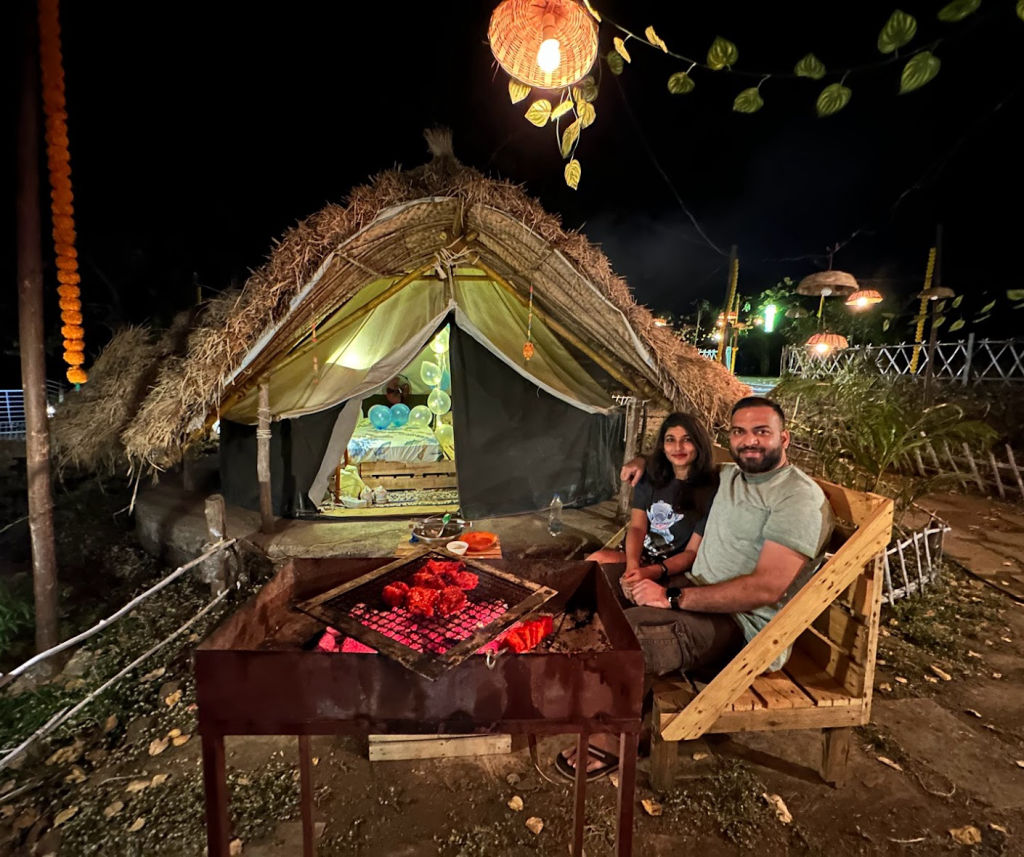
If you wish to make an unhurried visit, staying in the rural belt around Vada and the Tansa basin provides a peaceful retreat away from urban bustle. The region features open farmland, fruit orchards, and quiet riverbeds that make for an ideal weekend base.
You can discover riverside campsites, farm stays, and family-run homestays around the region on HireACamp. Staying locally allows you to attend early morning temple aarti, explore the hot springs at a leisurely pace, and enjoy calm starlit nights in the countryside.
Frequently asked questions
Where is Vajreshwari Temple located?
Vajreshwari Temple is situated on Vajreshwari Road near Vada in the Palghar and Thane district border region of Maharashtra, approximately 75 kilometres north of Mumbai.
Why is the temple built like a fort?
The temple was reconstructed in the 18th century by Maratha military commander Chimaji Appa following his victory over the Portuguese at Vasai Fort, resulting in a fortified structure complete with stone bastions and parapets.
Are there hot springs near Vajreshwari Temple?
Yes, natural sulphur hot water springs are located close to the temple along the Tansa riverbed and in the nearby village of Ganeshpuri.
What is the best way to reach Vajreshwari Temple by train?
The closest major suburban railway stations are Virar on the Western Line and Thane or Kalyan on the Central Line, from which state transport buses and taxis operate directly to Vajreshwari.
Is photography allowed inside the temple?
Photography is generally permitted in the outer courtyards and viewing terraces, but it is strictly prohibited inside the inner sanctum where the deities are placed.
Where you'll be
Vajreshwari Road, Vada, MH · 1 stay nearby shown with prices
Stays near Vajreshwari Temple
Book a place to stay close by
More places near Vajreshwari Temple
Within 20 km


Lists for this area
Ranked by how many creators recommend each place


Built from 0 Instagram posts by 0 creators. Every tip links back to the post it came from, and where creators disagree we show both sides.






