
Daulatabad
Destination in Maharashtra
Daulatabad is a historic fortified town located near Chhatrapati Sambhaji Nagar in Maharashtra. It is famed for its monumental medieval hill fortress, originally known as Devagiri, which served as a seat of power across multiple dynasties. Travellers and history enthusiasts visit Daulatabad to explore its ingenious military defenses, towering ramparts, and panoramic views of the Deccan plateau.
Getting there
By road
- From Nashik2 hr 45 min · 167 km
- From Mumbai 5 hr · 331 km
- From Pune5 hr 15 min · 245 km
- From Surat7 hr 20 min · 367 km
Typical drive times without traffic. Stations and airports from OLA Maps; distances and typical drive times from OpenStreetMap (© OpenStreetMap contributors); notes from creators' Reels.
About Daulatabad
Written with AI from map data and general knowledge. Check prices and timings locally before you go.
Understanding Daulatabad and its historic fort
Daulatabad, formerly known as Devagiri or the Hill of the Gods, stands as one of the most formidable medieval strongholds in peninsular India. Established in the late twelfth century by the Yadava dynasty under King Bhillama V, the citadel served as their capital before drawing the attention of northern rulers. In the early fourteenth century, Sultan Muhammad bin Tughluq of Delhi captured the fort, renamed it Daulatabad, meaning the City of Prosperity, and briefly transferred his imperial capital along with the entire population of Delhi here. While that capital transfer was eventually reversed, the fortress remained a coveted seat of power through the Bahmani Sultanate, the Nizam Shahis of Ahmednagar, and the Mughal Empire.
The town spreads around the base of a distinctive, solitary conical hill that rises abruptly from the surrounding plains to a height of roughly two hundred metres. Over centuries, various rulers added concentric rings of fortifications, royal quarters, reservoirs, and places of worship, creating a complex defensive enclave. Today, the town presents a quiet, rural contrast to its grand military heritage, drawing curious explorers who want to witness an exceptionally intact example of medieval Deccan defense engineering.
Exploring the fortress of Daulatabad
A visit to Daulatabad revolves around ascending the dramatic hill fort, which was designed to be virtually impregnable. The approach begins through three concentric defense walls, known as the Amberkot, Mahakot, and Kalakot, each pierced by iron-spiked gateways placed in staggered patterns to foil direct ramming by war elephants. Near the lower court stands the prominent Chand Minar, an elegant minaret built in the Persian architectural style, rising thirty metres with decorative tiles and tiered balconies.
As you ascend towards the upper fort, the defensive genius becomes evident. The natural rock face of the hill was scarped vertically for fifty metres, creating a smooth, sheer cliff that was impossible for besiegers to scale. Visitors cross the defensive moat via a bridge to enter the Andhari, or the Bhulbhulaiya. This dark, winding labyrinth of subterranean passages was carved directly into the rock to disorient intruders. In ancient times, soldiers lit fires in specific niches to suffocate enemy forces with smoke. Beyond the dark maze, the trail opens out near the Baradari, an open octagonal pavilion offering sweeping breezes and expansive vistas of the farmland and surrounding hills, before terminating at the summit where a massive iron cannon sits watch over the landscape.
Read more
Places to visit around Daulatabad
Daulatabad sits along a corridor rich in cultural and architectural heritage, making it an ideal base or stopover for a broader exploration of the region. A short journey to the north brings travellers to the historic town of Khuldabad, celebrated for its spiritual tranquility. Khuldabad contains the austere, open-air tomb of the Mughal Emperor Aurangzeb, surrounded by numerous Sufi shrines and the sacred Bhadra Maruti Temple, which houses a revered reclining idol of Lord Hanuman.
Continuing further past Khuldabad leads directly to the UNESCO World Heritage Site of the Ellora Caves. Carved between the sixth and tenth centuries, this monumental complex of rock-cut caves represents Buddhist, Hindu, and Jain traditions, crowned by the monolithic Kailasa Temple. To the south, the city of Chhatrapati Sambhaji Nagar offers visits to the Bibi Ka Maqbara, often called the Taj of the Deccan, the historic water mill of Panchakki, and the ancient Aurangabad Caves set into the hills above the city.
Best time to visit Daulatabad
The climate around Daulatabad shifts distinctly across the year, and picking the right season significantly shapes your visit. The winter months, spanning from October through February, are widely considered the most pleasant time to explore the fort. Daytime temperatures remain mild to warm, accompanied by cool breezes and clear skies, making the strenuous, uphill walk far more comfortable than in the height of summer.
The monsoon season, lasting from July to September, transforms the surrounding Deccan plains into a vivid green carpet. Light showers and mist frequently envelop the upper ramparts of the fort, filling ancient moats and stepwells with fresh rainwater. While the trails can occasionally become slick, the dramatic clouds and vibrant greenery make the monsoon an atmospheric time for photographers. In contrast, the summer months from March to May bring intense heat and dry winds, which can make climbing the exposed stone paths challenging without an early morning start.
How to reach Daulatabad
Daulatabad is conveniently situated along the route connecting Chhatrapati Sambhaji Nagar with the Ellora Caves, making it straightforward to reach by private vehicle, bus, or taxi. The nearest major transport hub is Chhatrapati Sambhaji Nagar, located roughly fifteen kilometres southeast of the fort. State transport buses run frequently along this corridor, dropping passengers near the entrance gate, while local taxis and auto-rickshaws provide private transit.
Travellers arriving by air will find the nearest domestic airport in Chhatrapati Sambhaji Nagar, with regular flights to and from major Indian metropolitan centers. For those coming by rail, the Chhatrapati Sambhaji Nagar railway station is well connected to major regional lines. Alternatively, Daulatabad itself has a modest railway station with occasional local passenger stops, though most visitors prefer using the main city station for greater convenience and better onward local transport.
Tips for your visit
Exploring the entire fortress of Daulatabad requires a fair amount of walking, uneven stair climbing, and navigating rock-cut passages. Sturdy, closed-toe walking shoes with dependable grip are essential, as the ancient stone steps can be worn smooth in places. Because the walk takes anywhere from two to three hours at a steady pace, carrying sufficient drinking water and sun protection such as a hat or sunscreen is strongly recommended.
A personal torch or a fully charged mobile phone light is indispensable when passing through the pitch-black tunnels of the subterranean maze. While the passage has modern guide ropes, the interior remains completely dark. Visiting early in the morning allows you to beat both the midday sun and the larger weekend crowds, ensuring a tranquil ascent to the top.
Where to stay around Daulatabad
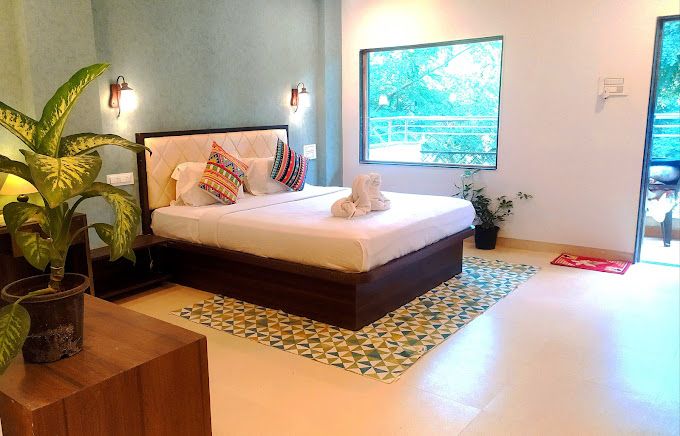
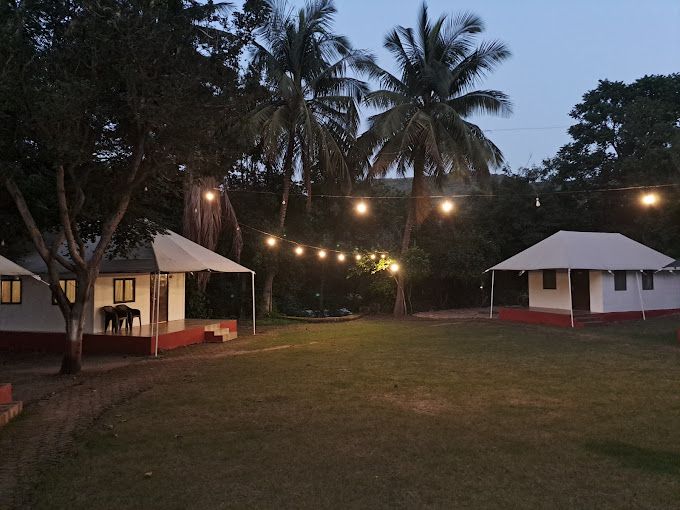
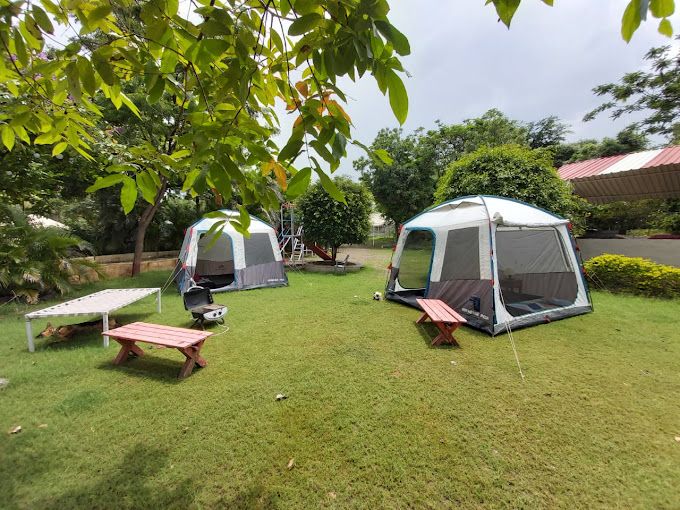
Travellers visiting Daulatabad have several comfortable accommodation choices spread between rural retreats and urban centers. The quiet countryside between Daulatabad and the Ellora hills offers an appealing setting for nature lovers who prefer rural stays, peaceful farmhouses, and scenic campsites. These locations let you wake up near the countryside away from traffic, providing a relaxing rural retreat after a day of climbing fort stairs.
For those who prefer city amenities, shopping, and varied dining choices, staying in Chhatrapati Sambhaji Nagar is a practical option just a short drive away. To discover unique rural stays, homestays, and outdoor getaways in the surrounding valleys and countryside, check the options listed on HireACamp to match your travel style.
Frequently asked questions
How long does it take to climb Daulatabad Fort?
A complete walk through the gates, the dark maze, and up to the summit pavilion generally takes two to three hours, depending on your physical fitness and the time spent exploring the ruins along the way.
Is Daulatabad Fort difficult to climb?
The climb involves several hundred stone steps and an uphill walk that requires moderate physical stamina. While manageable for most travellers, individuals with mobility issues or respiratory concerns may find parts of the steep ascent challenging.
What is the dark maze inside Daulatabad Fort?
The maze, known locally as the Andhari or Bhulbhulaiya, is an intricate subterranean tunnel carved through the solid rock face. It was designed as a military trap to confuse, disorient, and ambush invading forces attempting to reach the upper citadel.
Can I visit Daulatabad Fort and Ellora Caves on the same day?
Yes, both sites are located along the same highway and can easily be visited on the same day. Many travellers spend the morning climbing Daulatabad Fort and dedicate the afternoon to exploring the Ellora Caves.
Do I need a torch when visiting Daulatabad Fort?
Carrying a small torch or using a reliable mobile flashlight is recommended to navigate the completely dark, subterranean corridors of the fort safely.
Where you'll be
3 stays nearby shown with prices
Stays near Daulatabad
Book a place to stay close by
Things to do in Daulatabad
48 places creators recommend within 30 km
Built from 0 Instagram posts by 0 creators. Every tip links back to the post it came from, and where creators disagree we show both sides.






