
Daulatabad Fort
Fort near Daulatabad, Maharashtra
800 m from Daulatabad
The nearest town, for stays, food and fuel.
Daulatabad Fort, historically known as Devagiri, is a formidable hill fortress located near Chhatrapati Sambhaji Nagar in Maharashtra. Rising dramatically on a conical hill, it is renowned across the subcontinent for its intricate, multi-layered military defenses, sheer rock-cut moats, and ingenious subterranean passages. Travellers and history enthusiasts visit to explore one of medieval India's most impregnable strongholds and to take in expansive views of the Deccan plains from its summit.
Getting there
By road
- From DaulatabadNearest town2 min · 1 km
- From Nashik2 hr 40 min · 167 km
- From Mumbai 5 hr · 332 km
- From Pune5 hr 15 min · 245 km
Typical drive times without traffic. Stations and airports from OLA Maps; distances and typical drive times from OpenStreetMap (© OpenStreetMap contributors); notes from creators' Reels.
About Daulatabad Fort
Written with AI from map data and general knowledge. Check prices and timings locally before you go.
History and significance of Daulatabad Fort
Daulatabad Fort was founded around the late twelfth century by Bhillama V of the Yadava dynasty, who established the city of Devagiri as his capital. Over the centuries, its tactical brilliance attracted several powerful rulers across medieval India. In the early fourteenth century, Sultan Muhammad bin Tughlaq took control of the citadel and famously renamed it Daulatabad, the City of Prosperity. Tughlaq was so impressed by its defensibility that he briefly shifted the capital of the Delhi Sultanate here from Delhi, commanding his entire court and population to march hundreds of miles south before later abandoning the decision.
Subsequent centuries saw the fort pass through the hands of the Bahmani Sultanate, the Ahmednagar Sultanate, and eventually the Mughals under Akbar and Shah Jahan. Throughout every siege and succession, Daulatabad Fort remained virtually unbreachable by brute force alone. Its ownership changed almost entirely through political intrigue, treaties, and long sieges that starved out the garrisons within, rather than by direct military conquest.
Architectural marvels and defense mechanisms
The engineering behind Daulatabad Fort represents a peak of medieval military strategy. The lower perimeter is protected by multiple lines of concentric fortified walls called kots, pierced by spiked wooden gates designed to repel war elephants. Beyond these outer perimeters lies a towering hillside whose lower slopes were deliberately chiselled away into vertical, smooth rock faces, making scaling the rock face virtually impossible.
To reach the inner citadel, attackers had to cross a deep, water-filled moat cut directly into solid rock, which was once kept populated with crocodiles. The only way across was an easily removable drawbridge. Inside the core of the hill lies the famous Andhari, or dark labyrinth. This pitch-black, winding stone passage was filled with false turns, sudden drops, sliding stone traps, and smoke shafts designed to disorient, trap, and suffocate invading forces who managed to breach the perimeter.
Other notable structures within the complex include the Chand Minar, a tall victory tower erected in the fifteenth century by Alauddin Hasan Bahman Shah, adorned with glazed Persian tiles. As you hike toward the summit, you will also encounter historic cannons, including the massive bronze Mendha Tope, water reservoirs carved into the living rock, and the royal pavilion or Baradari resting at the highest point of the hill.
Read more
The hike to the summit
Exploring Daulatabad Fort is an active outdoor undertaking that requires climbing several hundred stone steps to reach the top. The trail begins at the massive outer gate and meanders past ancient courtyards, stone tanks, and ruined palaces before beginning a steep ascent. The path alternates between open ramparts, stone stairs exposed to the sun, and the enclosed, dimly lit corridors of the labyrinth.
Navigating the dark labyrinth is an unforgettable highlight of the climb. Travellers usually rely on torches or phone lights to make their way through the cool, cavernous stone corridors. After emerging from the labyrinth, the path continues upward past historic iron cannons to the Baradari pavilion. From this vantage point, visitors are rewarded with sweeping, panoramic views across the sprawling rural landscapes, rocky ridges, and distant horizons of the Deccan plateau. The entire circuit to the top and back generally takes a couple of hours of steady walking.
Best time to visit Daulatabad Fort
The best time to visit Daulatabad Fort is during the cooler months from October to March. During this period, the winter climate in the Marathwada region is pleasant and dry, making the lengthy, exposed climb up the hill comfortable. Daytime temperatures during mid-winter are mild, and clear skies provide excellent visibility across the surrounding countryside.
The monsoon months, from late June through September, are also a popular time to visit for those who enjoy dramatic landscapes. The rains transform the arid scrubland into vibrant shades of green, and low clouds often swirl around the summit of the hill. However, the stone stairways and rock-cut passages can become slippery in wet weather, requiring careful footing. Summers from April to June are intensely hot and dry, with midday temperatures frequently crossing comfortable limits, making climbing the fort exhausting without early morning starts.
How to reach Daulatabad Fort
Daulatabad Fort is located along the highway between Chhatrapati Sambhaji Nagar and the town of Khuldabad in central Maharashtra. The city of Chhatrapati Sambhaji Nagar serves as the primary travel hub for the fort, connected to major cities like Mumbai, Pune, and Hyderabad by road, rail, and air.
From the city centre or railway station, local buses and shared transport regularly run toward Daulatabad and onwards to Ellora. Hiring a private taxi or driving a personal vehicle is a convenient way to reach the entrance gates, where parking areas are available. Travellers coming by road from Pune or Mumbai can access the area via the state highway network or modern expressways that link the central region of Maharashtra.
Tips for your visit
Because visiting the fort involves a significant amount of walking, uphill climbing, and traversing uneven stone surfaces, wearing sturdy walking shoes with reliable grip is essential. The climb can be physically demanding, particularly as the day warms up, so carry an adequate supply of drinking water to stay hydrated throughout the walk.
A handheld flashlight or well-charged mobile torch is indispensable when passing through the subterranean labyrinth, as the interior is intentionally pitch-black in sections. Sun protection, including a hat, sunglasses, and sunscreen, is strongly advised, as large sections of the middle and upper fortifications have little natural shade. Travellers should also keep a watchful eye on loose belongings and snacks, as monkeys inhabit parts of the ramparts.
Places to visit nearby
The region surrounding Daulatabad is rich in natural beauty and historical heritage. A short drive away lies the famous rock-cut monument complex of the Ellora Caves, as well as the historic town of Khuldabad, known for its tranquil Sufi shrines and the tomb of the Mughal emperor Aurangzeb.
For those interested in exploring nature and cooler highland settings, the scenic hill station of Mhaismal sits on an elevated plateau nearby, offering cool breezes, temple viewpoints, and rolling green landscapes during the post-monsoon season. Travellers looking for outdoor and water-facing excursions can also head toward Shivana Dam or hike the scenic ridges of Surpalnath Hill to explore the rugged geography of the region.
Where to stay around Daulatabad Fort
Travellers visiting Daulatabad Fort have a range of choices for accommodation throughout the surrounding district. Many choose to base themselves in Chhatrapati Sambhaji Nagar, where a wide array of urban lodging options is available, while others prefer quieter rural settings closer to the historical trails and hills.
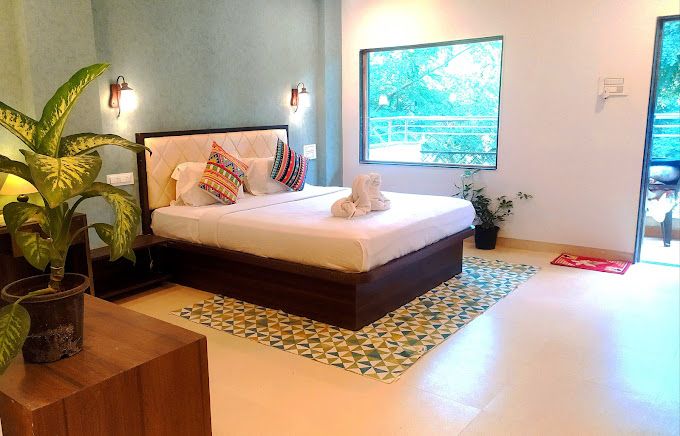
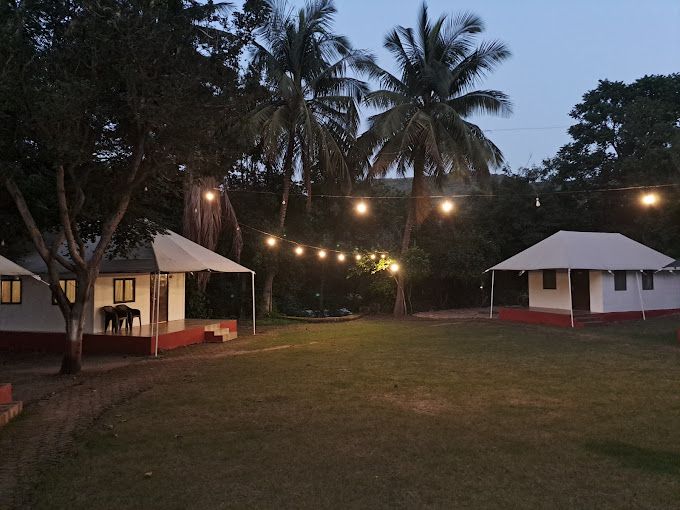
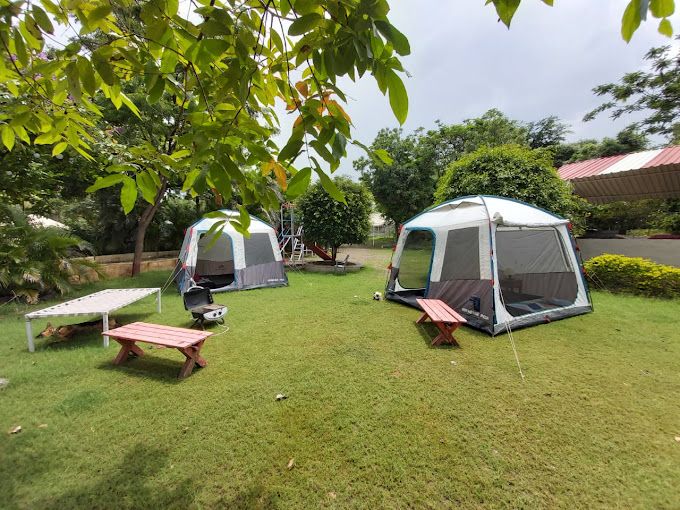
For those who prefer open-air experiences, scenic farm stays, eco-resorts, and camping options are nestled within the surrounding countryside and near the hills. You can browse and book unique local homestays, nature retreats, and outdoor camps in the Daulatabad area directly on HireACamp.
Frequently asked questions
How difficult is the climb at Daulatabad Fort?
The hike up Daulatabad Fort involves climbing several hundred stone steps and navigating steep ramps and dark passages. While moderately demanding, it can be completed by most individuals with average fitness by taking steady breaks along the way.
Is a guide necessary to explore the fort?
While you can explore the fort independently along the main marked trail, hiring an authorized local guide at the entrance can provide valuable historical context and help you navigate the unlit passages of the subterranean labyrinth.
What should I carry when visiting the fort?
You should carry plenty of drinking water, a reliable torch or flashlight for the dark maze, sun protection such as a hat and sunscreen, and wear comfortable walking shoes with good traction.
Can elderly people or young children visit Daulatabad Fort?
The lower courtyards and Chand Minar are relatively accessible for visitors of all ages, but the upper citadel, steep steps, and dark passages may be strenuous or unsuitable for visitors with mobility limitations.
Where you'll be
Chhatrapati Sambhaji Nagar Sub-Dist, MH · 3 stays nearby shown with prices
Stays near Daulatabad Fort
Book a place to stay close by
More places near Daulatabad Fort
Within 20 km
Built from 0 Instagram posts by 0 creators. Every tip links back to the post it came from, and where creators disagree we show both sides.






