
Jaundhar Bamak Glacier
Nature near Osla, Uttarakhand
19 km from Osla
The nearest town, for stays, food and fuel.
Jaundhar Bamak Glacier is a vast high-altitude hanging glacier nestled deep within the Garhwal Himalayas of Uttarakhand. Situated beyond the celebrated Har Ki Dun valley at the foot of the imposing Swargarohini massif, it feeds the headwaters of the Supin River. Trekker-explorers and mountaineers journey here for its raw alpine isolation, sprawling moraines, and monumental views of snowbound Himalayan peaks.
Getting there
By road
- From Chandigarh8 hr 15 min · 371 km
- From OslaNearest town10 hr · 404 km
- From Ludhiana10 hr 10 min · 472 km
- From Dehradun10 hr 20 min · 487 km
Typical drive times without traffic. Stations and airports from OLA Maps; distances and typical drive times from OpenStreetMap (© OpenStreetMap contributors); notes from creators' Reels.
About Jaundhar Bamak Glacier
Written with AI from map data and general knowledge. Check prices and timings locally before you go.
The landscape of Jaundhar Bamak Glacier
Jaundhar Bamak Glacier rests in an amphitheatre of sheer rock and ice near the northern rim of Uttarkashi district. Flanked by the soaring ridges of Swargarohini and bordering the rugged watershed between Uttarakhand and Himachal Pradesh, the glacier stretches across several kilometres of high alpine terrain.
The approach takes travellers from lush temperate forests of deodar, silver birch, and rhododendron into vast open meadows that eventually yield to rocky moraines and towering glacial walls. The glacier itself splits into two distinct arms, north and south, characterized by fields of crevasses, seracs, and massive lateral moraine ridges formed over millennia. Meltwater channels carving through black ice feed into the Supin River, which flows down through the valley to merge with the Rupin and create the Tons River.
Because this landscape lies deep inside the Govind Pashu Vihar National Park, it remains essentially wild. The contrast between the lower river meadows and the austere world of ice and stone makes standing near the snout of Jaundhar Bamak an unforgettable mountain experience.
Trekking to Jaundhar Bamak Glacier
Reaching Jaundhar Bamak Glacier involves a demanding multi-day trek that typically starts from the mountain settlement of Sankri or Taluka. From here, trails run parallel to the Supin River, passing through traditional wooden villages such as Osla and Seema before climbing gradually toward the Har Ki Dun valley basin.
From Har Ki Dun, the route pushes further east into higher, wilder territory. The path winds across glacial outwash plains, crossing high-altitude streams and navigating rough boulders. Because trails across glacial debris shift with changing seasons, rockfalls, and melting ice, movement requires careful footing and alpine stamina.
The final stretch toward the vantage point overlooking the glacier requires crossing scree fields and ascending terminal moraines. At these altitudes, the air is noticeably thin, and the weather can shift in minutes. Completing the trek rewards hikers with a 360-degree amphitheatre of ice, including rare close-up views of the sheer north face of the Swargarohini peaks.
Read more
Best time to visit Jaundhar Bamak Glacier
The trekking season for Jaundhar Bamak Glacier is divided into two distinct windows: late spring to early summer, and the post-monsoon autumn.
From May to June, the winter snows recede enough to open the higher trails, though large snow patches often linger across the upper moraines. During this time, the lower valleys are lush and green, alpine flowers bloom on the meadows, and daytime temperatures are relatively mild, although nights remain near freezing.
Mid-July through August brings intense monsoon showers across the lower Garhwal region. Trails become slippery, mountain roads to the base camps face frequent landslide risks, and cloud cover conceals the high peaks. Visiting during peak monsoon is generally discouraged.
September through late October offers the clearest skies and sharpest views of the glacier and surrounding ridges. As the monsoon withdraws, the air turns crisp and dry, foliage in the valley shifts to shades of gold and rust, and visibility is at its best. By November, temperatures plunge well below freezing, and early winter blizzards seal the passes and upper trails until the following spring.
Wildlife and ecology of Govind Pashu Vihar
The journey to Jaundhar Bamak Glacier winds directly through the protected expanse of Govind Pashu Vihar National Park and Sanctuary. This conservation zone protects an extraordinarily diverse mountain ecosystem ranging from subtropical foothill forests to subnival alpine deserts.
In the lower and middle valley belts, the forests provide habitat for endangered Himalayan wildlife, including the musk deer, Himalayan black bear, brown bear, and barking deer. Higher up near the tree line and along the open scree slopes, herds of bharal, or Himalayan blue sheep, are frequently spotted grazing on sparse alpine mosses and grasses. The region is also documented snow leopard habitat, though these solitary predators stay well clear of humans on inaccessible cliffs.
Birdlife is equally rich throughout the route. Forest sections echo with the calls of the colourful Himalayan monal, Uttarakhand's state bird, alongside koklass pheasants, western tragopans, and lammergeiers circling the thermal drafts over the deep gorges.
Tips for your visit
Trekking to Jaundhar Bamak Glacier requires thorough physical preparation and appropriate mountain logistics. Prior high-altitude trekking experience is strongly recommended, as you will be walking over rugged moraine terrain at elevations well above three thousand metres.
Acclimatization is essential. Plan your itinerary with built-in rest periods in lower valley camps before pushing towards the glacier snout. Stay hydrated, walk at an even pace, and be alert to the symptoms of acute mountain sickness. Carry warm layered clothing, including windproof shells, thermal base layers, and sturdy waterproof trekking boots with good ankle support.
Since this region lies inside a designated national park, conservation rules are strict. Carry out all non-biodegradable waste, do not disturb wildlife, and camp only in designated clearing zones. It is critical to trek with experienced mountain guides who are familiar with route navigation across shifting moraine paths and who carry proper emergency equipment, such as satellite communication or oxygen kits.
Places to explore nearby
The valleys surrounding Jaundhar Bamak Glacier offer several historic and scenic trekking circuits. Just downstream lies the renowned Har Ki Dun, an open cradle-shaped valley steeped in local legends linking it to the journey of the Pandavas toward the heavens.
A trail branching south leads toward Ruinsara Tal, a pristine alpine lake surrounded by birch forests and towering granite ridges, often used as an alternative acclimatization detour. Mountaineering expeditions also use these valleys to approach the famous Borasu Pass, which connects the Supin basin in Uttarakhand with the Baspa Valley in Kinnaur, Himachal Pradesh.
Down in the river valleys, ancient villages like Osla and Gangad feature multi-tiered wooden architecture, ornate temples carved with intricate woodwork, and centuries-old agrarian traditions. Further across the high ridges lie the sacred source of the Yamuna River at Yamunotri Temple and the surrounding meadows of the Bandarpunch mountain group.
Where to stay near Jaundhar Bamak Glacier
There are no permanent hotels, lodges, or built accommodations anywhere near Jaundhar Bamak Glacier. The upper reaches past Har Ki Dun require self-supported alpine tent camping.
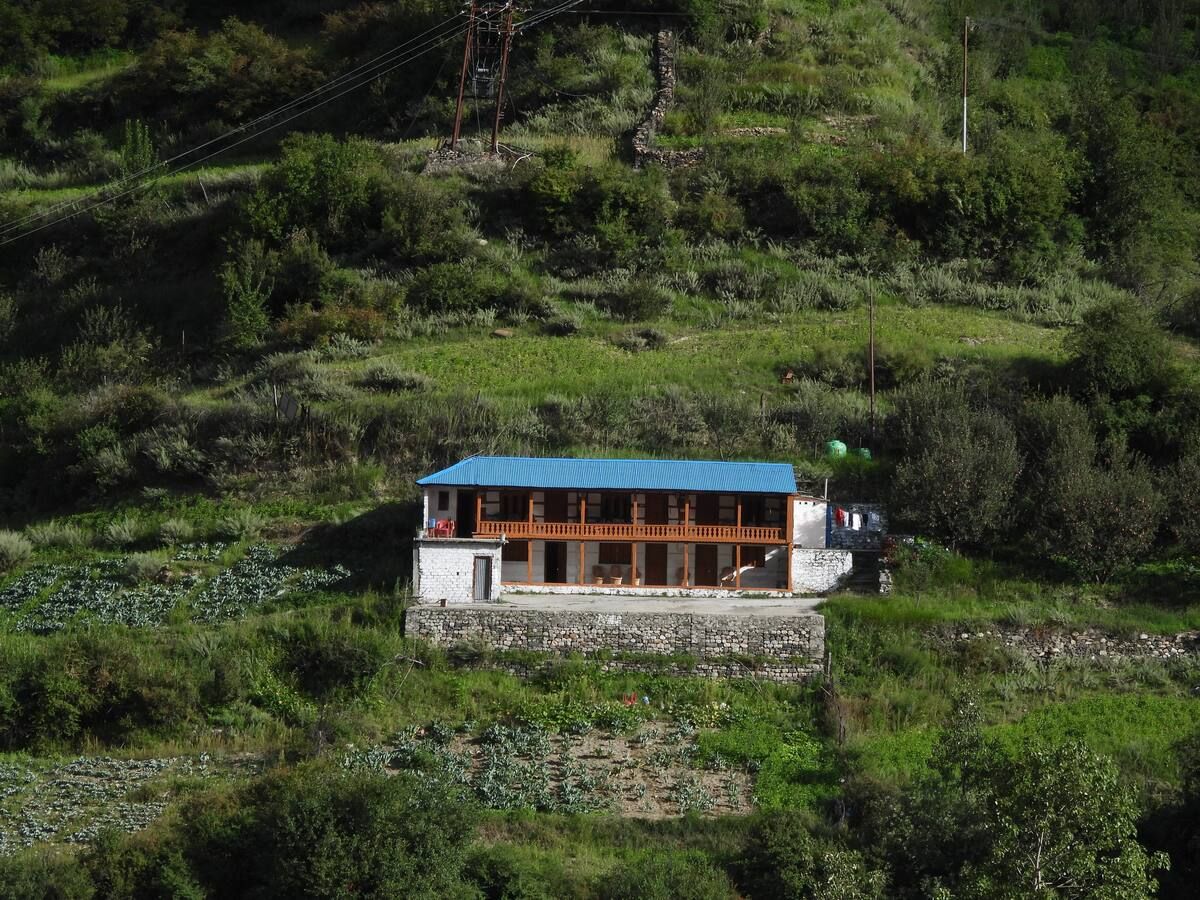
At the start of the trail in gateway villages such as Sankri and Taluka, rustic mountain homestays, simple wooden guest houses, and established base camps provide warmth and authentic local meals before you head into the backcountry.
Travellers looking to book verified trekking camps, local village homestays, and rustic wilderness lodges in the valley can explore options on HireACamp to organize a comfortable and reliable base before and after their high-altitude trek.
Frequently asked questions
Where is Jaundhar Bamak Glacier located?
Jaundhar Bamak Glacier is located in the Garhwal Himalayas within Uttarkashi district of Uttarakhand, deep inside Govind Pashu Vihar National Park beyond the Har Ki Dun valley.
How difficult is the trek to Jaundhar Bamak Glacier?
The trek is rated as moderately difficult to challenging. It requires several days of sustained hiking across rocky trails, river crossings, and unstable moraines at high elevation.
What peaks can be seen from Jaundhar Bamak Glacier?
The glacier offers close views of the Swargarohini massif, along with the high snowbound ridges connecting the Garhwal region with the Kinnaur mountains.
Do I need permits to visit Jaundhar Bamak Glacier?
Yes, because the glacier lies within Govind Pashu Vihar National Park, forest department entry permits are mandatory. Trekkers should check the latest permit requirements and fees locally before starting.
Can beginners attempt the Jaundhar Bamak Glacier trek?
While beginners with strong aerobic fitness and previous hiking exposure can complete the Har Ki Dun section, pushing all the way to Jaundhar Bamak Glacier involves navigating steep moraine terrain best suited to experienced trekkers or those accompanied by experienced mountain guides.
Where you'll be
1 stay nearby shown with prices
Stays near Jaundhar Bamak Glacier
Book a place to stay close by
More places near Jaundhar Bamak Glacier
Within 20 km


Built from 0 Instagram posts by 0 creators. Every tip links back to the post it came from, and where creators disagree we show both sides.






