
Kartik Swami Temple
Temple near Chopta, Uttarakhand
6.5 km from Chopta
The nearest town, for stays, food and fuel.
Kartik Swami Temple is a hilltop Hindu shrine dedicated to Lord Kartikeya, perched high on a sharp mountain ridge near the village of Kanakchauri in Uttarakhand. Set within the Rudraprayag district, it is one of the rare northern temples dedicated to the warrior son of Lord Shiva and Goddess Parvati. Travelers and pilgrims make the short forest trek here to offer prayers, hear hundreds of ringing temple bells, and marvel at a dramatic panoramic view of the snow-clad Greater Himalayas.
Getting there
By road
- From ChoptaNearest town20 min · 14 km
- From Dehradun4 hr 35 min · 212 km
- From New Delhi7 hr 50 min · 425 km
- From Chandigarh8 hr 15 min · 382 km
Typical drive times without traffic. Stations and airports from OLA Maps; distances and typical drive times from OpenStreetMap (© OpenStreetMap contributors); notes from creators' Reels.
About Kartik Swami Temple
Written with AI from map data and general knowledge. Check prices and timings locally before you go.
About Kartik Swami Temple
Kartik Swami Temple occupies a distinct and sacred place in the religious geography of Uttarakhand. Dedicated to Lord Kartikeya, the elder son of Lord Shiva and Goddess Parvati, it is one of the very few shrines honouring this deity across northern India. According to local folklore and Hindu belief, this high ridge marks the sacred location where Kartikeya gave up his flesh and bones in profound devotion to his parents following a celestial contest with his brother Ganesha. The temple is believed to house these sacred remains, drawing devout pilgrims who climb the mountain to pay their respects amidst mountain breezes.
The sanctum itself sits on a precipitous narrow crest surrounded by steep drops on either side. Thousands of brass bells in various shapes and sizes line the stone walkways and boundary railings, tied there by worshippers whose prayers have been fulfilled. Standing on the temple platform under the open sky offers a deeply quiet and spiritually charged atmosphere that feels removed from everyday routines.
The Trek from Kanakchauri
Reaching Kartik Swami Temple involves an invigorating walk that starts at the quiet roadside village of Kanakchauri. The route is approximately three kilometres long and follows a dedicated stone path winding upward through a verdant forest of rhododendron, oak, and pine. Wooden shelters, resting benches, and vantage clearings are placed along the way, giving walkers plenty of places to pause and listen to native Himalayan birds.
The gradient of the trail is mostly gentle to moderate, making it accessible to amateur hikers, families, and regular walkers with a modest level of physical endurance. The concluding stretch of the journey provides the most memorable moments, as the tree canopy clears and the path climbs onto a narrow, rocky ridge with deep valley drops flanking both sides. A final flight of stone stairs guarded by handrails leads directly into the temple courtyard, where mountain winds keep the suspended bells chiming constantly.
Read more
Himalayan Views and Landscape
The natural beauty surrounding Kartik Swami Temple is just as compelling as its religious significance. Elevated more than three thousand metres above sea level, the ridge offers an unobstructed three-hundred-and-sixty-degree view of the Garhwal Himalayan peaks on clear days.
From the temple compound, one can easily gaze upon some of the most revered summits in the country, including Chaukhamba, Trishul, Nanda Devi, Dunagiri, Kedarnath Dome, and Bandarpoonch. The early morning and late afternoon hours are particularly breathtaking, as shifting sunlight paints the icy mountain walls in shades of amber, gold, and pink. Down below, rolling forested ridges, terraced farms, and remote mountain hamlets stretch across the horizon.
Best Time to Visit Kartik Swami
The character of the trail and the surrounding scenery change noticeably with each passing season. The autumn months of October and November offer arguably the best conditions for mountain sightseeing, as monsoon rain leaves the air exceptionally clear and the snowfields crisp against deep blue skies.
Springtime from March to April is another magnificent window to plan a visit. During these weeks, the surrounding forests come alive with the bright red and pink blossoms of blooming rhododendrons, creating a vivid carpet along the stone trail. Winter brings frigid winds and occasional snow flurries between late December and February, transforming the ridge into an alpine winterscape that appeals to cold-weather enthusiasts. The summer monsoon from July to August brings heavy downpours, slippery rock paths, and lingering cloud cover that often masks the mountain peaks, making travel during these weeks less predictable.
How to Reach Kartik Swami Temple
Travelers heading to Kartik Swami generally begin their approach from Rudraprayag, a prominent transit town in the Garhwal hills. From Rudraprayag, a mountain road winds through the hills toward Kanakchauri village, which acts as the official roadhead and base camp for the walking trail.
To reach the region from major cities, you can travel by road or train to Rishikesh or Haridwar, before taking buses, shared taxis, or private cars toward Rudraprayag along the national highway network. The nearest commercial flight hub is Jolly Grant Airport in Dehradun. Because driving through the mountainous terrain takes several hours, many visitors choose to spend the previous night in Rudraprayag or nearby before making the morning journey to Kanakchauri for the hike.
Tips for Your Visit
A little preparation goes a long way toward enjoying your outing at Kartik Swami Temple. Sturdy walking shoes or hiking boots with strong tread are strongly recommended, as stone stairs can be uneven and prone to dew, loose gravel, or thin frost in the early hours.
Carry your own reusable water bottle and light snacks, as vendor stalls along the route are basic and may not always be open outside peak festival days. The weather on the exposed ridge can shift unexpectedly, and temperatures drop quickly once the sun begins to set. Carrying a fleece jacket and a windbreaker will keep you comfortable during windy stretches at the top. To enjoy the clearest mountain vistas, set out early in the morning before daytime clouds drift in to shroud the high peaks.
Places to Visit Nearby
The journey to Kartik Swami can easily be combined with other notable cultural and natural spots throughout the Rudraprayag valley. In Rudraprayag town, the Rudraprayag Sangam View Point allows visitors to observe the confluence of the Mandakini and Alaknanda rivers, while the nearby Koteshwar Mahadev temple is an underground cave shrine set right along the water.
Travelers interested in highland meadows and alpine walking can venture further along the mountain routes toward Chopta Valley, known for its sprawling bugyals and mountain routes. Shrines like Umra Narayan and the revered Dhari Devi Temple can also be included in a wider regional itinerary, offering rich insights into the living devotional heritage of the Garhwal Himalayas.
Where to Stay
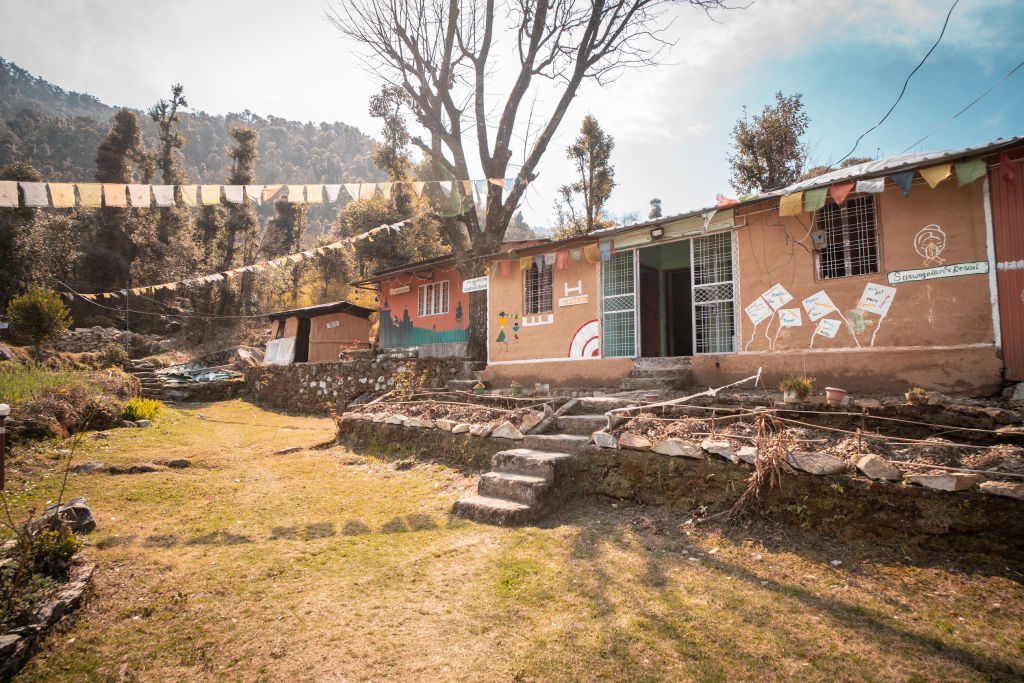
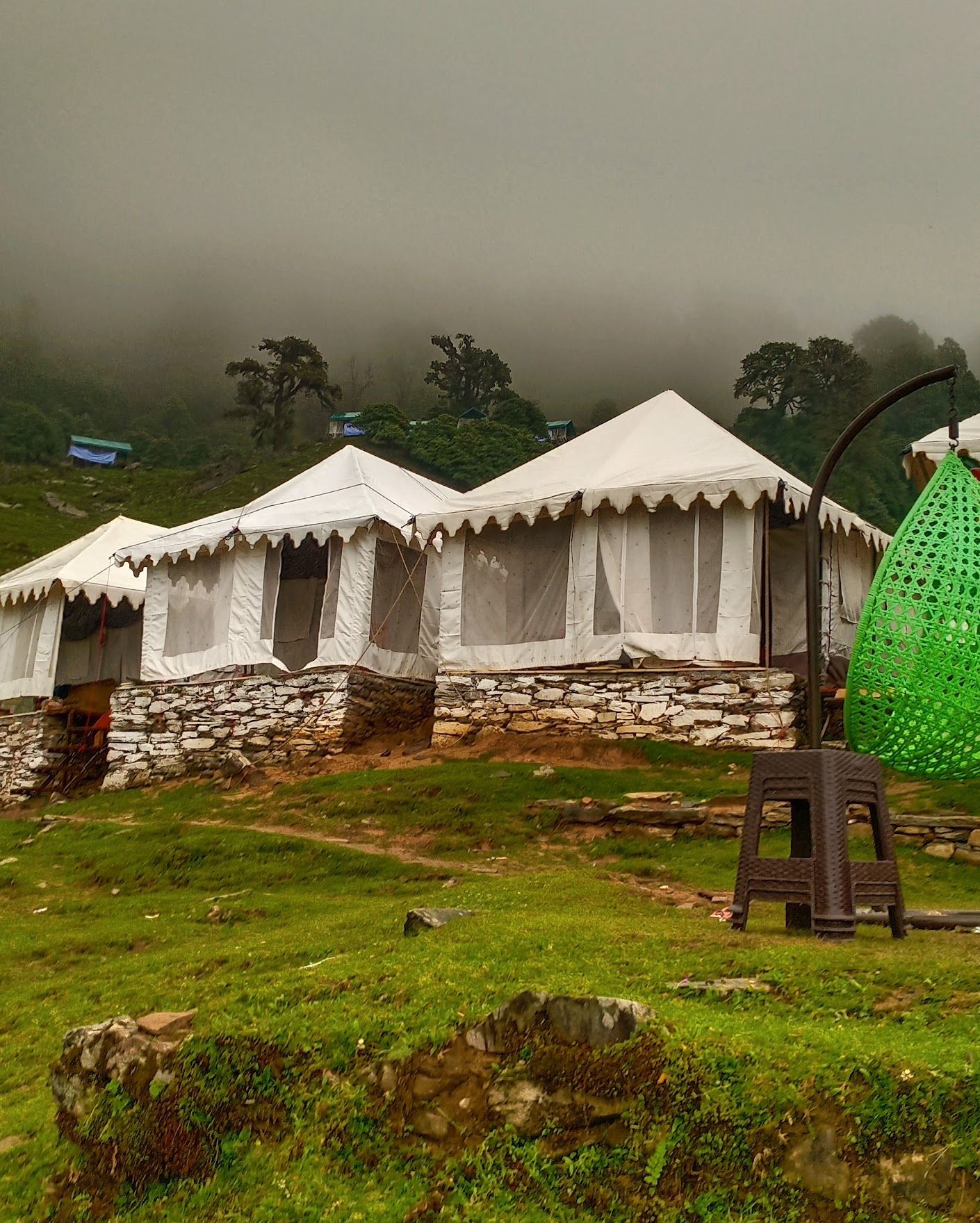
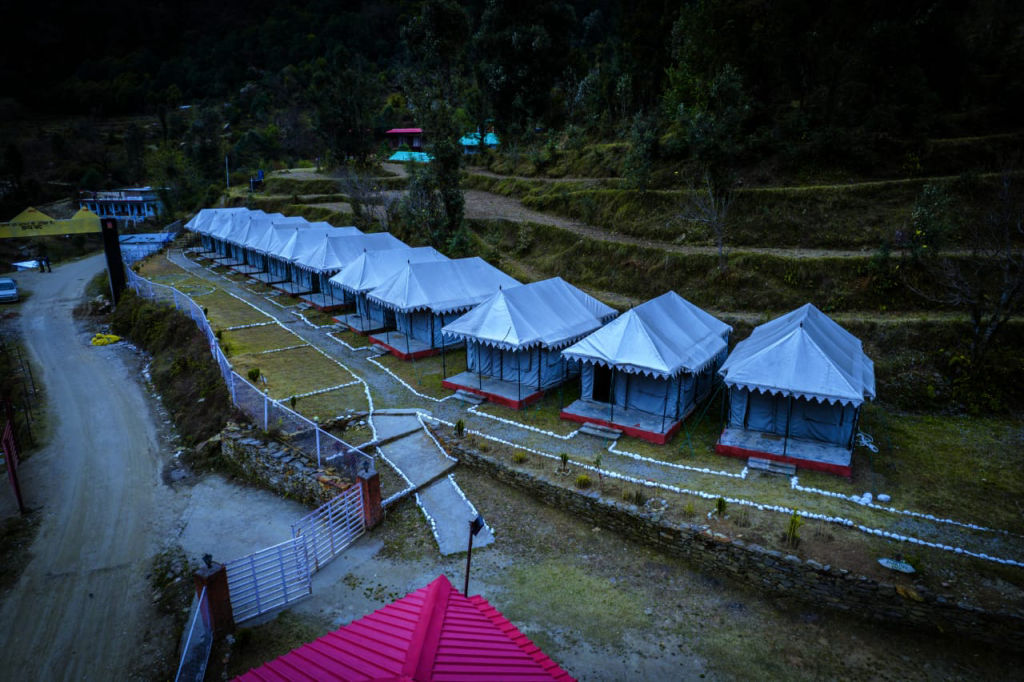
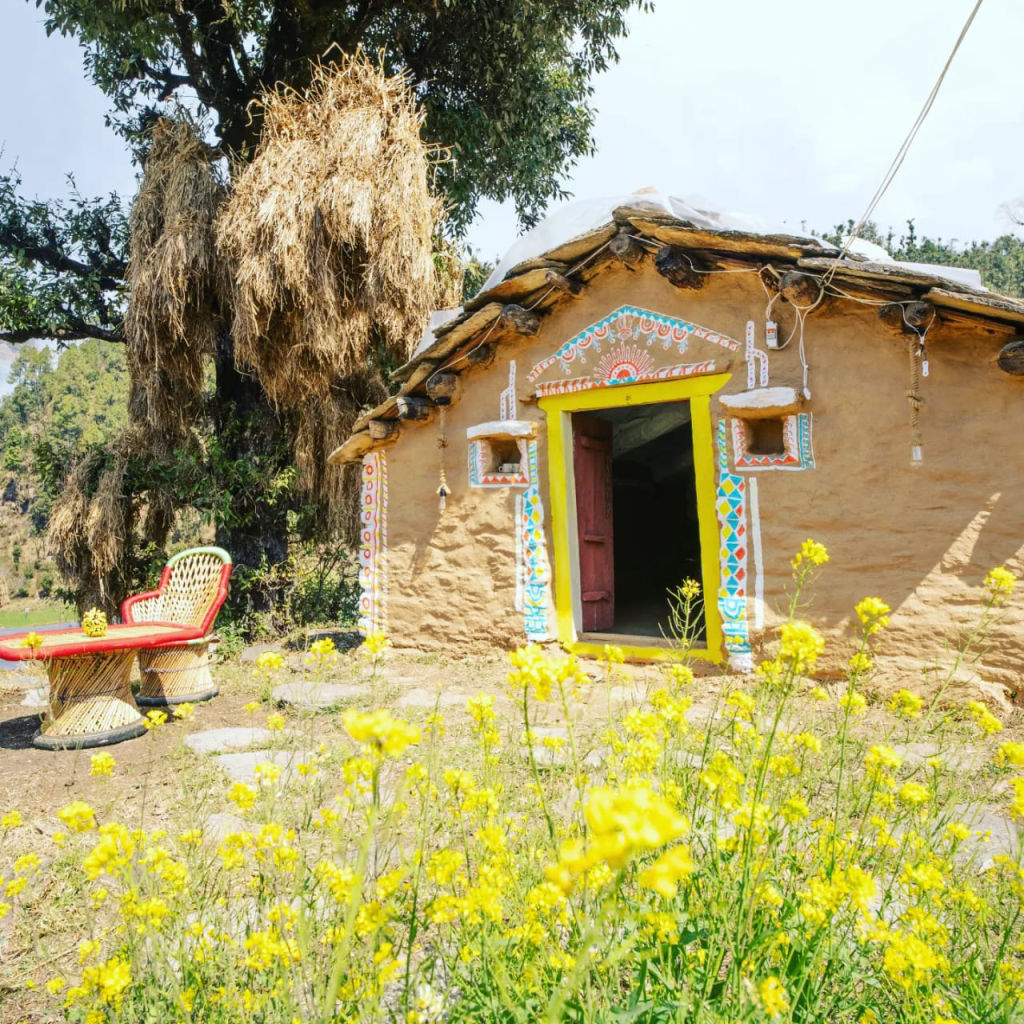
Visitors looking to stay near the base of the trek will find simple guesthouses and local homestays in and around Kanakchauri village. Staying locally allows you to catch the sunrise early on the ridge without the need for a pre-dawn drive.
Those who prefer a broader selection of amenities often base themselves around Rudraprayag or nearby riverside towns along the Mandakini River. If you are searching for scenic campsites, comfortable village homestays, or quiet nature retreats in the area, you can discover and reserve your stay on HireACamp.
Frequently asked questions
How long is the trek to Kartik Swami Temple?
The trek from the base village of Kanakchauri is approximately three kilometres each way. Most walkers complete the uphill route in about one and a half to two hours at a comfortable pace.
Is the Kartik Swami trek suitable for beginners and families?
Yes, the trail follows a paved stone pathway with a gradual incline, making it very manageable for beginners, children, and seniors who are comfortable walking. The final section involves a flight of stairs on a narrow ridge that requires careful footing.
Which Himalayan peaks can be seen from the temple?
On clear days, visitors can view major snow-capped peaks including Chaukhamba, Trishul, Nanda Devi, Kedarnath Dome, Dunagiri, and Bandarpoonch directly from the temple premises.
Does it snow at Kartik Swami Temple?
Yes, the temple ridge experiences snowfall during peak winter months, typically between late December and mid-February, coating the shrine and the surrounding forests in white.
Why are there so many brass bells tied at the temple?
It is a longstanding local tradition for devotees to hang brass bells at the temple as a gesture of gratitude once their prayers and personal wishes are granted by Lord Kartikeya.
Where you'll be
Kanakchauri, Rudraprayag · 4 stays nearby shown with prices
Stays near Kartik Swami Temple
Book a place to stay close by
More places near Kartik Swami Temple
Within 20 km
Built from 0 Instagram posts by 0 creators. Every tip links back to the post it came from, and where creators disagree we show both sides.






