
Nanda Devi Peak
Peak near Nandaprayag, Uttarakhand
11 km from Nandaprayag
The nearest town, for stays, food and fuel.
Nanda Devi Peak is the second-highest mountain in India and one of the most revered summits in the Garhwal Himalayas of Uttarakhand. Rising dramatically in the Chamoli district, it is flanked by a ring of high glaciated peaks that form an extraordinary natural sanctuary. Travellers, trekkers, and pilgrims are drawn to the region to witness its majestic double summit, experience untouched alpine landscapes, and connect with its profound cultural significance.
Getting there
By road
- From NandaprayagNearest town42 min · 14 km
- From Dehradun5 hr 25 min · 241 km
- From New Delhi8 hr 40 min · 453 km
- From Chandigarh9 hr 5 min · 410 km
Typical drive times without traffic. Stations and airports from OLA Maps; distances and typical drive times from OpenStreetMap (© OpenStreetMap contributors); notes from creators' Reels.
About Nanda Devi Peak
Written with AI from map data and general knowledge. Check prices and timings locally before you go.
About Nanda Devi Peak
Nanda Devi stands at an elevation of 7,816 metres above sea level, making it the highest summit located entirely within India's borders. The mountain features a two-peaked massif, with the main eastern and western summits revered deeply in local Garhwal and Kumaon lore as manifestations of the goddess Nanda, a patron deity of the region.
The mountain is encircled by a formidable natural fortress formed by a ring of over seventy peaks, enclosing the pristine inner sanctuary. Due to its fragile ecology and extraordinary biodiversity, the core sanctuary area is strictly protected as a UNESCO World Heritage site and national park, with access tightly regulated to preserve its pristine wilderness.
Landscape and wildlife of the region
The terrain surrounding Nanda Devi transitions rapidly from lush river valleys to stark high-altitude glaciers, alpine meadows, and sheer rock precipices. Glacial rivers, including tributaries of the Alaknanda and Rishi Ganga, carve through deep gorges beneath snow-covered ridges.
The surrounding high-altitude reserves provide vital habitat for rare and endangered Himalayan fauna. The elusive snow leopard, Himalayan musk deer, bharal or blue sheep, and Himalayan black bear inhabit the higher reaches. Avian life is equally rich, featuring species such as the Himalayan monal, snow partridge, and majestic birds of prey soaring across the valleys.
Read more
Best time to visit
The region around Nanda Devi experiences distinct mountain seasons. The summer months from May to June bring pleasant daytime temperatures and clear skies, making it an ideal period for trekking in the outer sanctuary areas and visiting adjacent valleys. During this time, lower alpine meadows begin to carpet with wildflowers.
Post-monsoon, from September through October, offers the crispiest mountain views and the most stable atmospheric conditions before the onset of winter. During these autumn weeks, high peaks stand out sharply against deep blue skies. Winter brings heavy snowfall to the upper elevations, closing high-altitude routes and turning the surrounding landscape into a vast, silent expanse of ice and snow.
How to reach Nanda Devi Peak
Reaching viewpoints and trekking bases near Nanda Devi involves a journey into the upper reaches of Chamoli district. The nearest commercial airport is Jolly Grant Airport near Dehradun, while the closest major railway hubs are located at Rishikesh and Haridwar.
From Rishikesh or Haridwar, roads follow the course of the Alaknanda River along the Badrinath route, passing through major confluences including Devprayag, Srinagar, Rudraprayag, and Karnaprayag. Travellers can hire private taxis or take state transport buses toward Chamoli and Joshimath, which serve as common gateways. High-clearance vehicles are recommended for mountain roads, especially during seasonal transitions.
Tips for your visit
High-altitude travel in the Garhwal Himalayas requires careful preparation and respect for mountain hazards. Acclimatise properly before embarking on any strenuous climbs or treks in the surrounding passes, and stay well hydrated. Mountain weather can change abruptly, so carry warm thermal layers, windproof jackets, and sturdy waterproof footwear regardless of the season.
Be mindful of environmental regulations and local customs. The sanctuary and its surrounding peaks hold immense spiritual reverence for local communities; ensure you leave no trace, carry out all non-biodegradable waste, and refrain from trespassing into protected ecological zones without checking locally for updated permits and guidelines.
Places to visit nearby
The Chamoli region surrounding Nanda Devi is home to historic pilgrimage sites, vibrant mountain towns, and picturesque valleys. Nearby religious landmarks include Mata Uma Devi Mandir and Karan Mandir in Karnaprayag, as well as the historic Adi Badri temple complex, which forms part of the Panch Badri circuit.
To the west, travellers can explore the scenic Chopta Valley, an expansive meadow that serves as the base for trekking to Tungnath Temple and the vantage point atop Chandrashila Peak. Other notable nearby destinations include the Kedarnath Musk Deer Sanctuary, the pristine high-altitude Diur Tal lake, and the ridge-top shrine of Kartik Swami Temple, offering wide panoramic vistas of the southern Garhwal range.
Where to stay
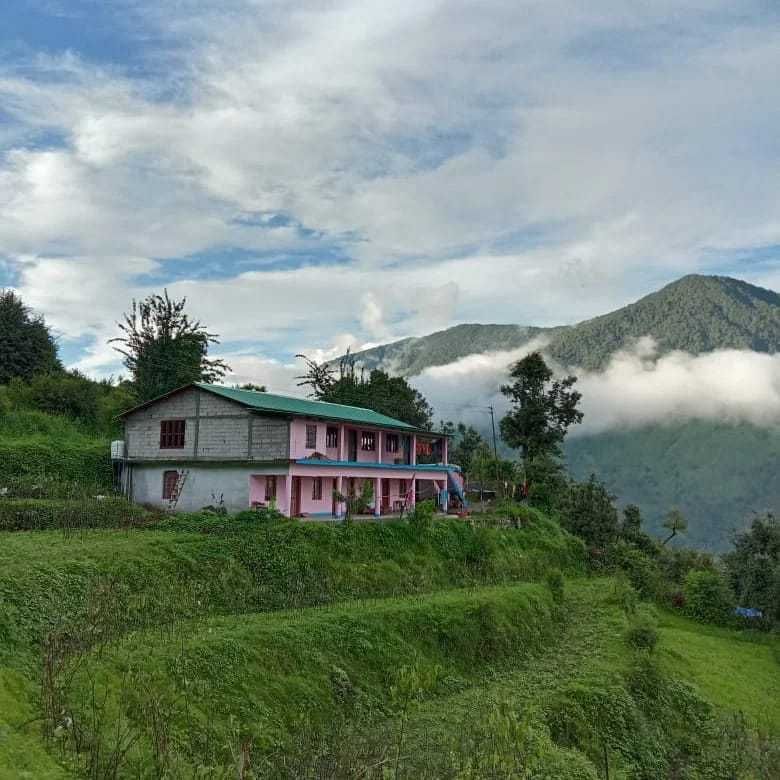
Accommodations near the gateways to Nanda Devi cater largely to trekkers, nature enthusiasts, and pilgrims. Base towns such as Joshimath, Karnaprayag, and villages around Chopta offer traditional guesthouses, riverside eco-retreats, and alpine homestays.
Travellers looking to spend their nights under mountain skies can find scenic campsites, authentic rural homestays, and outdoor getaways in the surrounding valleys listed on HireACamp. Booking in advance is recommended during peak pilgrimage and autumn trekking months.
Frequently asked questions
Can tourists climb to the summit of Nanda Devi?
No, climbing Nanda Devi Peak is strictly restricted by environmental authorities to protect the fragile Himalayan ecosystem and preserve its sacred status. Travellers and trekkers can instead admire the peak from designated viewpoints, surrounding passes, and outer trekking routes.
Where can you see the best views of Nanda Devi Peak?
Spectacular views of Nanda Devi can be obtained from several high vantage points in the region, including the Kuari Pass trek, Chandrashila Peak above Chopta, and vantage points along the Auli meadows.
What is the best season to explore the region around Nanda Devi?
The ideal times to visit are during pre-monsoon from May to June and post-monsoon from September to October, when mountain roads are accessible and skies are clear.
Do I need permits to visit areas near Nanda Devi?
Certain trekking trails and areas entering the outer buffer zone of the Nanda Devi Biosphere Reserve require forest department permits. It is essential to check locally with authorities or registered guides before heading out.
Where you'll be
Nanda Devi Peak, Chamoli Sub-District · 2 stays nearby shown with prices
Stays near Nanda Devi Peak
Book a place to stay close by
More places near Nanda Devi Peak
Within 20 km
Built from 0 Instagram posts by 0 creators. Every tip links back to the post it came from, and where creators disagree we show both sides.






