
Ranthambore Fort
Fort near Ranthambhore, Rajasthan
4.8 km from Ranthambhore
The nearest town, for stays, food and fuel.
Ranthambore Fort stands atop a dramatic hill plateau within the rugged landscape of Sawai Madhopur in Rajasthan. Built by the Chauhan rulers and steeped in centuries of regional history, the fortress overlooks deep forest gorges, scenic water bodies, and the scrublands of the surrounding tiger reserve. Travellers visit to explore its massive stone ramparts, historic temples, and sweeping panoramic views across the wilderness.
Getting there
By road
- From RanthambhoreNearest town57 min · 6.5 km
- From Jaipur3 hr 35 min · 230 km
- From New Delhi5 hr 25 min · 362 km
- From Bhopal8 hr 30 min · 462 km
Typical drive times without traffic. Stations and airports from OLA Maps; distances and typical drive times from OpenStreetMap (© OpenStreetMap contributors); notes from creators' Reels.
About Ranthambore Fort
Written with AI from map data and general knowledge. Check prices and timings locally before you go.
History and architecture of Ranthambore Fort
Perched on a prominent cliff within the convergence of the Aravali and Vindhya hill ranges, Ranthambore Fort has an extraordinary past dating back to the tenth century. Founded during the reign of the Chauhan Rajputs, it grew into a crucial stronghold in western India, witnessing numerous sieges and shifts of power involving figures like Hammir Dev Chauhan, the Delhi Sultanate, the Mughals, and later the Maharajas of Jaipur. Its strategic position atop sheer vertical rock faces made it one of the most formidable defensive bastions of its era.
The fort's architecture showcases a practical blend of Rajput military engineering and subsequent Mughal additions. Heavy stone bastions, winding approach paths, and massive gateways such as the Naulakha Pol, Hathi Pol, and Ganesh Pol were designed to halt invading armies. Within the ramparts, weathered palaces, arched pavilions, stepwells, and military barracks reflect both the splendour of royal life and the austere realities of medieval siege warfare.
What to see inside Ranthambore Fort
The plateau of Ranthambore Fort spans an extensive area dotted with ruins, shrines, and monuments that reward patient exploration on foot. One of the fort's best-known landmarks is the ancient Trinetra Ganesha Temple, which draws pilgrims from across Rajasthan and beyond. Dedicated to the three-eyed form of Lord Ganesha, the shrine has a unique tradition where devotees from around the country send mail, invitations, and letters to seek blessings for significant life events.
Beyond the temple, visitors can wander through the remains of royal residences, including the Hammir Palace and the Rani Haveli. Though worn by centuries of exposure, these stone structures retain decorative pillars, jharokha balconies, and arched corridors. Another striking structure is the Battis Khamba Chhatri, a thirty-two-pillared cenotaph constructed from red sandstone that stands as an impressive example of medieval stonecraft. Ancient stepwells, storage tanks, and reservoirs scattered across the grounds illustrate how the fort collected and managed water during prolonged blockades.
Read more
The wildlife and landscape around the fort
What sets Ranthambore Fort apart from other Rajasthani fortresses is its location enveloped by wilderness. Gazing over the outer ramparts, visitors look down onto steep ravines, thick dry deciduous forest, and open water bodies such as Padam Lake resting beneath the cliffs. The contrast between ancient masonry and wild nature creates an atmospheric setting rarely found elsewhere.
The stone ledges and crags of the fort walls offer nesting sites for various raptors, vultures, parakeets, and owls. Troops of gray langurs inhabit the ramparts, moving freely over the ruins and sitting along the battlements. On quiet mornings, travellers gazing out from the cliff edges often spot spotted deer, sambar, and wild boar foraging along the lake margins, and on rare occasions, large predators can be observed moving through the undergrowth below.
Best time to visit Ranthambore Fort
The most comfortable time to visit Ranthambore Fort is during the cooler months from October to March. During this period, the winter climate in Sawai Madhopur brings crisp mornings, sunny afternoons, and cool evenings, making the uphill walk and outdoor exploration of the plateau pleasant.
As summer arrives between April and June, daytime temperatures rise sharply across eastern Rajasthan. Exploring the open, sun-baked stone structures during peak summer hours can be physically demanding, requiring visitors to start early and carry adequate protection from the sun. The monsoon season from July to September brings rain that revitalises the foliage and turns the valleys emerald green, though damp stone stairs can become slick, so caution is advised while walking.
How to reach Ranthambore Fort
The primary gateway to Ranthambore Fort is the town of Sawai Madhopur, located in southeastern Rajasthan. Sawai Madhopur is a major railway junction with direct train connections to cities like Jaipur, Delhi, and Mumbai. From the railway station and town centre, local transport options including taxis and auto-rickshaws are available to take visitors to the base of the fort.
Travel by road is equally straightforward, with state and national highways connecting Sawai Madhopur to Jaipur and other regional centres. For air travellers, the nearest airport is in Jaipur, from where one can complete the onward journey by road or rail. The final stretch of the journey takes travellers up Ranthambhor Road, leading to the designated parking and walking entrance where the stone stairway begins.
Tips for exploring Ranthambore Fort
Exploring the fort requires walking up a long series of historic stone steps and traversing uneven paths across the high plateau. Wear comfortable shoes with adequate traction to manage the rocky walkways safely. Because the fort area is largely exposed to the sun, a hat, sunscreen, and a reusable water bottle are useful essentials.
Langurs and monkeys reside in large numbers along the main stairs and near the temple; keep personal belongings and snacks packed securely inside bags to avoid tempting them. Visitors should also dress respectfully when visiting active religious shrines like the Trinetra Ganesha Temple. Since the fortress sits in a fragile natural sanctuary, make sure to leave no litter behind and carry all personal waste out of the area.
Places to visit nearby
A visit to Ranthambore Fort easily connects with several other natural and cultural sights in the Sawai Madhopur region. Ranthambore National Park surrounds the fortress area and is famed for its guided wilderness safaris, diverse flora, and rich wildlife populations. Directly below the fort's western ridge lies Padam Lake, notable for its seasonal lily pads and regular animal activity.
Further outward, travellers interested in riverine landscapes can visit the Chambal river basin at Pali Ghat, a tranquil spot renowned for boat rides and aquatic wildlife such as gharials. Those interested in spiritual heritage can take day excursions to the Arneshwar Mahadev Temple or travel to the hilltop Chauth Mata Temple, an important local pilgrimage site offering sweeping views of the surrounding countryside.
Where to stay near Ranthambore Fort
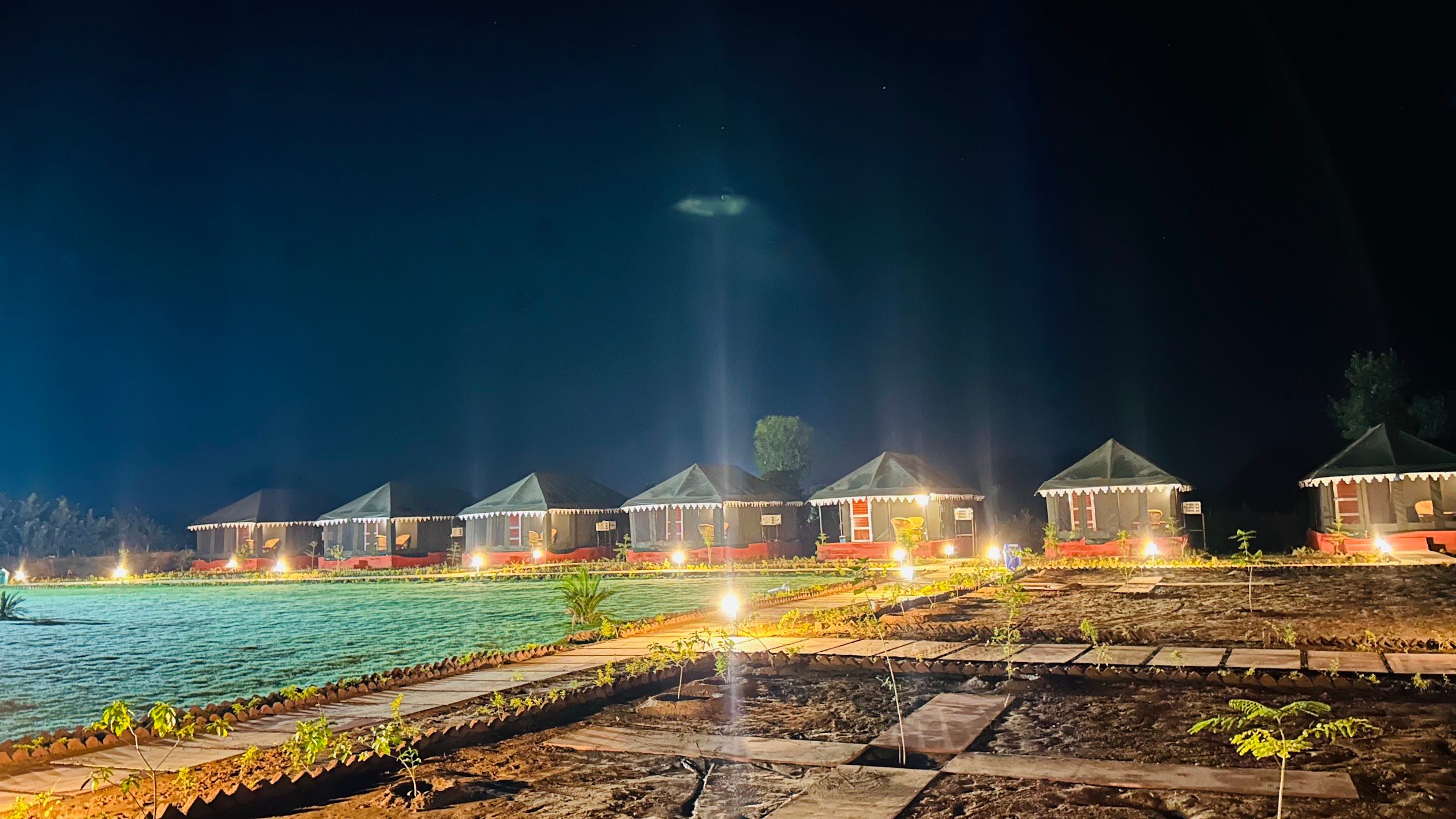
The area around Sawai Madhopur offers a variety of places to unwind close to nature. Travellers can find eco-friendly cottages, experiential camping sites, and welcoming village homestays that provide a tranquil base away from busy city streets.
Staying in a tented camp or local homestay lets you experience authentic Rajasthani hospitality, regional cuisine, and peaceful night skies near the edges of the wild reserve. You can browse and book unique camps, homestays, and outdoor stays near Ranthambore Fort on HireACamp. Planning your accommodation in advance is recommended during the peak winter travel season.
Frequently asked questions
Is Ranthambore Fort located inside the national park?
Yes, Ranthambore Fort is situated on a high cliff inside the boundaries of Ranthambore National Park, offering direct views over the surrounding forests and lakes.
Do I need to book a wildlife safari to visit Ranthambore Fort?
A wildlife safari booking is generally not required to visit the fort itself, as it can be reached via a dedicated access road, but visitors should check local regulations and vehicle rules before setting out.
How much physical effort is needed to see the fort?
Visiting Ranthambore Fort involves climbing a series of steep stone steps and walking across a large plateau to reach the palaces and shrines, requiring a moderate level of physical mobility.
What is the Trinetra Ganesha Temple at Ranthambore Fort known for?
The Trinetra Ganesha Temple is an ancient shrine dedicated to the three-eyed form of Ganesha, famously known for receiving wedding invitations and prayer letters mailed by devotees from across India.
What precautions should I take regarding wildlife at the fort?
Be cautious around the resident monkeys and langurs by keeping food items hidden, and remain on marked pathways since the fortress is surrounded by protected forest lands.
Where you'll be
2, Ranthambhor Road, Sawai Madhopur Sub-District · 1 stay nearby shown with prices
Stays near Ranthambore Fort
Book a place to stay close by
More places near Ranthambore Fort
Within 20 km

Built from 0 Instagram posts by 0 creators. Every tip links back to the post it came from, and where creators disagree we show both sides.






