
Ranthambore National Park
Forest near Ranthambhore, Rajasthan
2.1 km from Ranthambhore
The nearest town, for stays, food and fuel.
Ranthambore National Park is one of northern India's most renowned tiger reserves, situated near the town of Sawai Madhopur in southeastern Rajasthan. The park is celebrated for its population of Royal Bengal tigers, sprawling dry deciduous woodlands, and the centuries-old Ranthambore Fort standing above the forest canopy. Travellers and wildlife enthusiasts visit from across the globe to explore its varied safari zones and witness wilderness thriving among ancient architectural ruins.
Getting there
By road
- From RanthambhoreNearest town10 min · 1.1 km
- From Jaipur4 hr 25 min · 236 km
- From New Delhi6 hr 10 min · 368 km
- From Bhopal9 hr 15 min · 468 km
Typical drive times without traffic. Stations and airports from OLA Maps; distances and typical drive times from OpenStreetMap (© OpenStreetMap contributors); notes from creators' Reels.
About Ranthambore National Park
Written with AI from map data and general knowledge. Check prices and timings locally before you go.
About Ranthambore National Park
Ranthambore National Park spans an expansive tract of wilderness where two of India's ancient hill ranges, the Aravalli and the Vindhya, converge. Originally preserved as private hunting grounds for the Maharajas of Jaipur, the forest was declared a wildlife sanctuary in the 1950s and later brought under Project Tiger to safeguard its endangered apex predator. Today, it stands as an exceptional example of wildlife conservation integrated with cultural history.
What makes Ranthambore distinctly memorable is the visual juxtaposition of natural wilderness with historical relics. Crumbling pavilions, arched stone gateways, and moss-draped watchtowers are scattered across the reserve, often serving as resting spots for leopards, tigers, and languid troops of langurs. The surrounding terrain varies from steep hills and plateaus to gentle valleys and perennial water bodies, providing diverse habitats for a wide range of flora and fauna.
Landscape and Wildlife of Ranthambore
The dominant vegetation throughout Ranthambore is tropical dry deciduous forest, with the dhok tree forming the primary tree cover across the rocky ridges. In the valleys and around the lakes, you will encounter ancient banyan trees, peepal, and clusters of date palms. Central to the park are scenic water bodies such as Padam Talao, Rajbagh Lake, and Malik Talao, which remain critical gathering points for wildlife throughout the year.
While the Bengal tiger is the main draw for most visitors, the park is home to a rich community of mammals, reptiles, and birds. Sloth bears inhabit the rocky outcrops and dry scrub, while leopards roam the higher plateaus. Herds of sambar deer, spotted deer, nilgai, and wild boar graze near the meadows, often pursued by predators. In and around the lakes, marsh crocodiles can be seen basking on muddy banks alongside water birds like painted storks, white-breasted kingfishers, and migratory waterfowl during the cooler months.
Read more
Best Time to Visit Ranthambore
The park typically welcomes visitors from October through June, closing during the monsoon season between July and September when rainfall replenishes the water bodies and the terrain undergoes natural regeneration. Each open season offers a very different perspective on the landscape.
The winter months, running from November to February, bring cool mornings, crisp air, and comfortable daytime temperatures. This period is ideal for general sightseeing, birdwatching, and enjoying long drives through the forest, although warm layers are essential for early-morning safaris. From March to June, temperatures rise significantly and the foliage becomes sparse. While the dry summer heat can be intense, it causes wildlife to congregate around the dwindling natural springs and lakes, offering some of the clearest wildlife observations of the year.
Safari Experience and Forest Rules
Game drives inside Ranthambore National Park are regulated by the state forest department across multiple demarcated safari zones. These safaris are conducted using open-top vehicles, usually divided between six-seater light vehicles and larger passenger canters, accompanied by licensed forest guides and drivers. Due to high demand throughout the operating season, safari permits and seats should always be arranged well in advance.
Visitors must respect the sanctity of the wilderness while inside the park boundaries. Forest regulations strictly prohibit loud talking, sudden movements, alighting from vehicles, and discarding litter. Using drones, honking, and feeding animals are strictly prohibited. Travellers should dress in muted, earthy tones such as khaki, olive, or beige to blend into the landscape and avoid startling the animals.
How to Reach Ranthambore National Park
The primary gateway to the park is the town of Sawai Madhopur, located in southeastern Rajasthan. Sawai Madhopur Junction is a major railway hub with frequent train connections linking it directly to prominent cities across India, including Delhi, Mumbai, Jaipur, and Kota. From the station, the park entry gates and peripheral accommodation areas can be reached in a short drive.
For those travelling by air, the nearest commercial terminal is Jaipur International Airport, located approximately one hundred and sixty kilometres away. Taxis and public bus services operate regularly between Jaipur and Sawai Madhopur. The road network connecting the park to major highway corridors in Rajasthan is well maintained, making self-drive journeys and private cabs convenient options from neighbouring urban centres.
Places to Visit Near Ranthambore
Within the park premises sits the imposing Ranthambore Fort, a UNESCO World Heritage site perched high on a hill overlooking the reserve. Dating back to the tenth century, the fort features expansive ramparts, stepwells, and ancient Hindu and Jain shrines, including the famous Trinetra Ganesha Temple that draws pilgrims from across the state.
Beyond the park boundaries, visitors can take short excursions into the surrounding rural landscape. Approximately thirty-three kilometres away stands the Chauth Mata Temple in Chauth Ka Barwara, an important pilgrimage destination set atop a hill with scenic views of the plains. Another quiet spiritual site in the region is the Arneshwar Mahadev Temple, located roughly twenty-seven kilometres away, which offers a peaceful detour into traditional Rajasthani temple heritage.
Where to Stay in Ranthambore
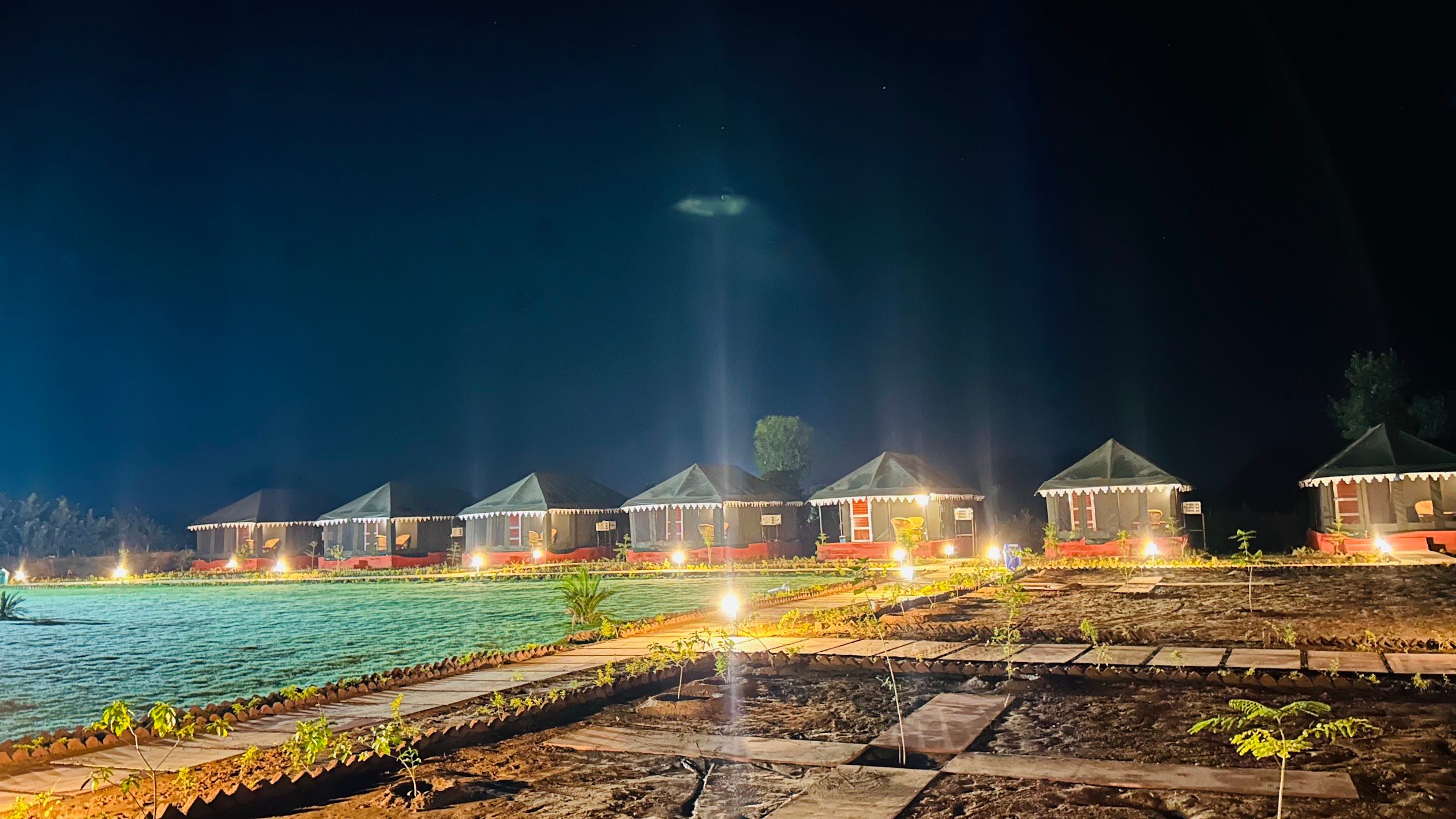
The periphery of Ranthambore National Park and the outskirts of Sawai Madhopur provide a broad range of lodging options tailored to wildlife travellers. You can find rustic tented camps, farm retreats, and welcoming local homestays located along the approaches to the park gates, offering quiet surroundings away from the commercial centre.
Staying in a tented camp or a local homestay allows travellers to experience the quiet night air of the Rajasthani countryside and hear the distant calls of nightjars and owls. To find and reserve experiential stays, wilderness camps, and comfortable homestays around Ranthambore, explore the verified options listed on HireACamp.
Frequently asked questions
What is the best way to travel to Ranthambore National Park?
The most convenient way to reach the park is by taking a train to Sawai Madhopur Junction, which is well connected to major cities like Delhi, Jaipur, and Mumbai. Alternatively, you can fly to Jaipur International Airport and travel the remaining distance by road in roughly three to four hours.
When does Ranthambore National Park remain open?
The park generally opens for safaris from October to June and closes during the monsoon months between July and September. It is recommended to check local forestry department announcements for exact seasonal opening and closing dates.
What wildlife species can be seen in Ranthambore besides tigers?
Visitors to Ranthambore can spot leopards, sloth bears, striped hyenas, sambar deer, chital, nilgai, marsh crocodiles, and a wide variety of resident and migratory bird species.
What should I wear on a safari in Ranthambore?
Wear earth-toned clothing in shades of brown, olive, khaki, or green to blend into the forest surroundings. In winter, pack warm jackets and scarves for early morning drives, while lightweight, breathable fabrics and sun hats are ideal for warmer months.
Can I visit Ranthambore Fort while visiting the park?
Yes, Ranthambore Fort is situated inside the park boundaries and can be visited during designated day hours, offering panoramic views of the forest and lakes below.
Where you'll be
Jaipur · 1 stay nearby shown with prices
Stays near Ranthambore National Park
Book a place to stay close by
More places near Ranthambore National Park
Within 20 km

Built from 0 Instagram posts by 0 creators. Every tip links back to the post it came from, and where creators disagree we show both sides.






