
Salaulim Dam
Dam near Sanguem, Goa
3.5 km from Sanguem
The nearest town, for stays, food and fuel.
Salaulim Dam is an earthen dam built across the Salaulim River near the town of Sanguem in South Goa. Known for its distinct duckbill spillway that creates a misty cascade during periods of high water, the dam is a primary source of drinking water and irrigation for the region. Visitors come to admire the engineering marvel, walk through the adjoining botanical garden, and experience the quieter, forested side of inland Goa.
Getting there
By road
- From SanguemNearest town16 min · 4.5 km
- From Pune10 hr · 459 km
Typical drive times without traffic. Stations and airports from OLA Maps; distances and typical drive times from OpenStreetMap (© OpenStreetMap contributors); notes from creators' Reels.
About Salaulim Dam
Written with AI from map data and general knowledge. Check prices and timings locally before you go.
About Salaulim Dam
Salaulim Dam, also spelled Selaulim, is situated in the taluka of Sanguem in South Goa, roughly five kilometers outside Sanguem town. Built across the Salaulim River, a significant tributary of the Zuari River, the dam was conceived as an irrigation and drinking water project for the southern half of the state. Surrounded by the dense foothills of the Western Ghats, the reservoir forms a vast and tranquil waterbody that contrasts sharply with the crowded coastal stretches of Goa.
The dam stands out among water retention structures across India because of its unusual duckbill spillway. Instead of traditional vertical crest gates that open downward, this ungated semicircular spillway features a curved perimeter over which surplus water naturally spills into a deep concrete trough. When the reservoir reaches full capacity, the falling water creates an imposing sheet and a heavy curtain of mist, drawing travelers, photographers, and local day-trippers to witness the spectacle from nearby watch points.
The Submerged Heritage of Curdi
Beyond its engineering design, the reservoir holds deep cultural and emotional significance for the local population. When the Salaulim Dam was constructed in the late twentieth century, the historic, fertile village of Curdi was deliberately submerged beneath the rising waters. Thousands of residents were relocated to nearby rehabilitation settlements such as Valkinim and Vaddem.
During the peak of summer, typically in May, the reservoir level drops substantially before the onset of the monsoon. As the water recedes, the ruins of Curdi gradually re-emerge from the lakebed. Old foundations, sacred shrines, broken roads, and the weathered walls of ancient homes become visible for a few brief weeks. Relocated families and curious travelers often return during this short window to pay respects and view the historic footprint of a submerged settlement before the heavy rains cover it again.
Read more
Things to See and Do at Salaulim Dam
The primary draw of Salaulim Dam is the observation promenade built overlooking the duckbill spillway. When the reservoir overflows, visitors can stand on the walkway and watch the water plunge into the basin below. The sheer volume of rushing water produces a gentle breeze laced with cool water droplets, making it a refreshing stop during humid afternoons. Safety barriers line the viewing deck, allowing you to view the drop comfortably.
At the base of the dam structure lies an expansive botanical garden designed in a style reminiscent of the Brindavan Gardens in Karnataka. The park features terraced lawns, neat hedges, paved walking paths, and shaded groves under tall indigenous trees. It serves as a relaxed picnic area where families often spend the afternoon strolling along the paths and resting on open grassy banks.
The forested perimeter of the reservoir is also an excellent spot for birdwatching. Because the surrounding countryside is heavily wooded and less disturbed by commercial traffic, the area attracts numerous avian species. Kingfishers, cormorants, egrets, hornbills, and various forest raptors are frequently sighted along the water's edge and among the canopy.
Best Time to Visit Salaulim Dam
The appearance and atmosphere of Salaulim Dam change dramatically across the seasons, making the best time to visit dependent on what you wish to see. The monsoon season, extending from July to September, is widely regarded as the most dramatic period. Heavy rains fill the reservoir to capacity, causing the duckbill spillway to overflow in a powerful rush that creates the famous misty curtain. The surrounding Western Ghats turn vivid shades of green, and the air remains cool and humid.
From October to February, the post-monsoon and winter months offer mild, comfortable weather ideal for leisurely exploration. While the spillway rarely overflows during these months, the reservoir remains full, the garden is well-maintained, and the pleasant daytime temperatures make outdoor walks enjoyable.
Late April and May represent an entirely different travel experience. As water levels reach their annual low point, the submerged village of Curdi is exposed. If you are interested in local history and archaeological remnants, this dry pre-monsoon window provides a rare view of the valley floor.
How to Reach Salaulim Dam
Salaulim Dam is located in South Goa and is accessible primarily by road. The closest major town is Sanguem, located just a short drive away. From Margao, the main rail and transit hub of South Goa, the dam is roughly thirty to thirty-five kilometers away. A drive from Margao takes about an hour under normal road conditions, passing through the villages of Quepem and Tilamol.
If you are traveling from Panaji, the state capital, the distance is approximately sixty to sixty-five kilometers. The drive takes around an hour and a half to two hours via the national and state highways. Private taxis, self-drive rental cars, and two-wheelers are the most practical means of transportation, as local bus services run to Sanguem town but might require an auto-rickshaw or taxi for the final stretch to the dam entrance.
The roads winding through Sanguem taluka are generally scenic, passing through cashew orchards, palm groves, and sleepy Goan hamlets. Road surfaces are largely paved, though seasonal rains can cause temporary rough patches.
Tips for Your Visit
To make the most of your trip to Salaulim Dam, plan to arrive either in the morning or later in the afternoon. Midday temperatures can be warm, particularly when walking along open stretches of the dam or through the park. Carry drinking water, an umbrella for sudden rain showers or strong sun, and wear comfortable walking shoes suitable for paved and gravel paths.
Entry formalities, operating hours for the garden gates, and photography regulations are set by local irrigation authorities, so it is best to check locally upon arrival for the most current rules. Drones and unmanned aerial vehicles are typically restricted near major water installations due to security protocols.
Food options directly at the dam complex are limited to small local stalls selling tea, bottled beverages, and light snacks. For a full lunch, you can stop at casual eateries in nearby Sanguem town or along the highway leading toward Margao.
Places to Visit Nearby
The interior of Sanguem and neighboring talukas offers plenty of opportunities to explore inland Goa beyond the coast. Mainapi Waterfall, nestled deep in the Netravali region, lies approximately eighteen kilometers away in a direct line and attracts trekking enthusiasts who enjoy forest hikes through the Western Ghats.
The surrounding hinterland is also home to lush spice plantations, traditional village settlements, and centuries-old spiritual retreats such as the Shree Samsthana Gokarn Partagali Jeevottam Math situated across the taluka boundary. Combining a morning at Salaulim Dam with a visit to a nearby river trail or a heritage site makes for a fulfilling day away from the coastal towns.
Where to Stay Near Salaulim Dam
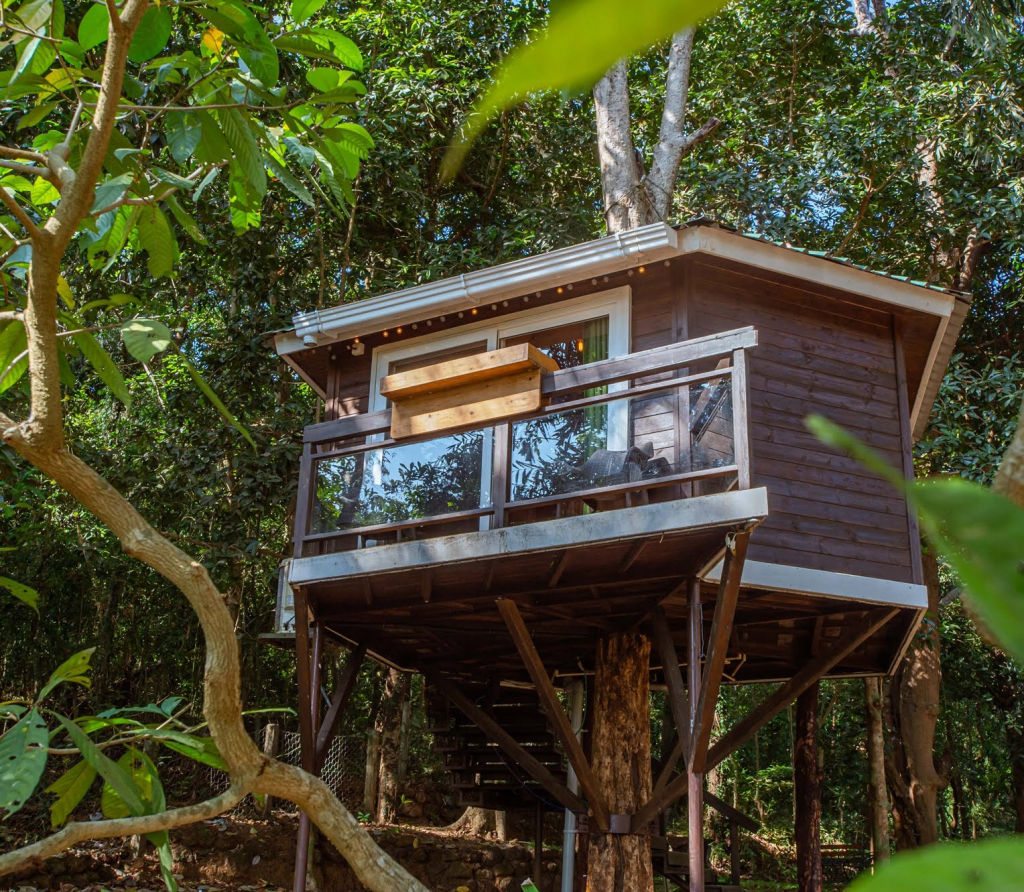
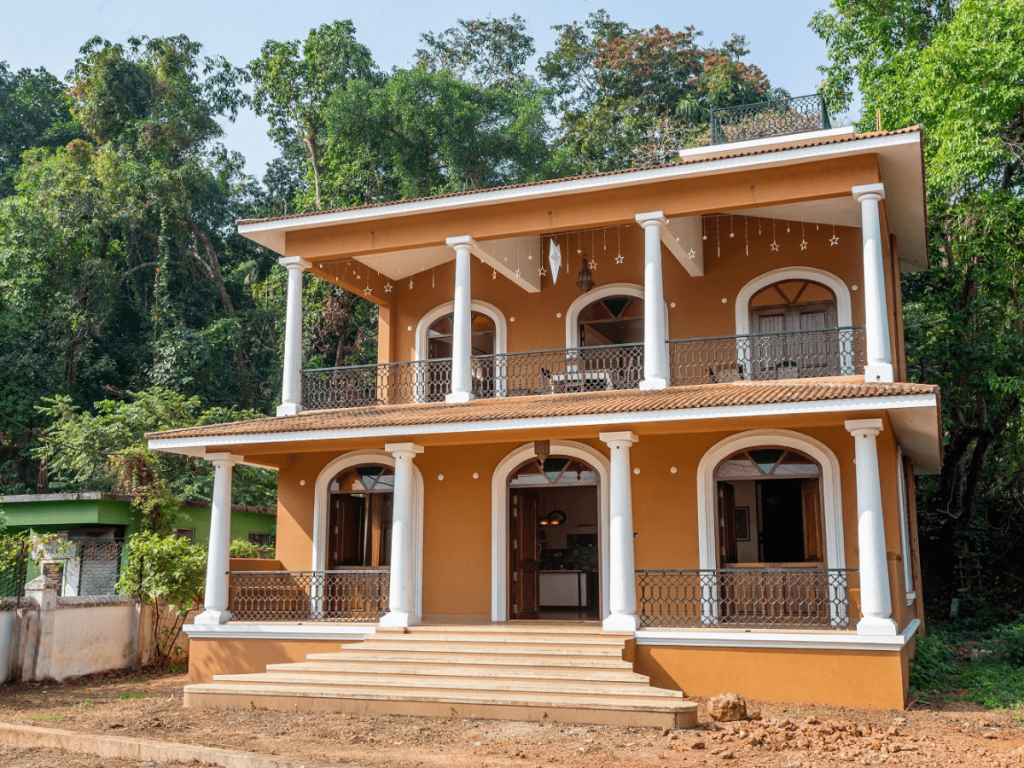
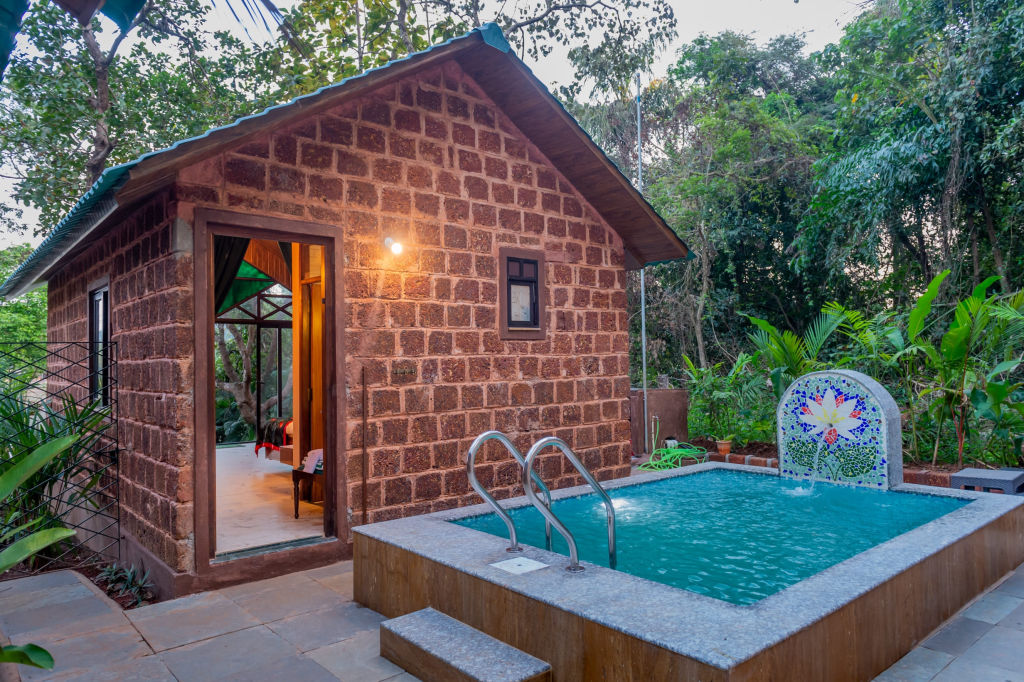
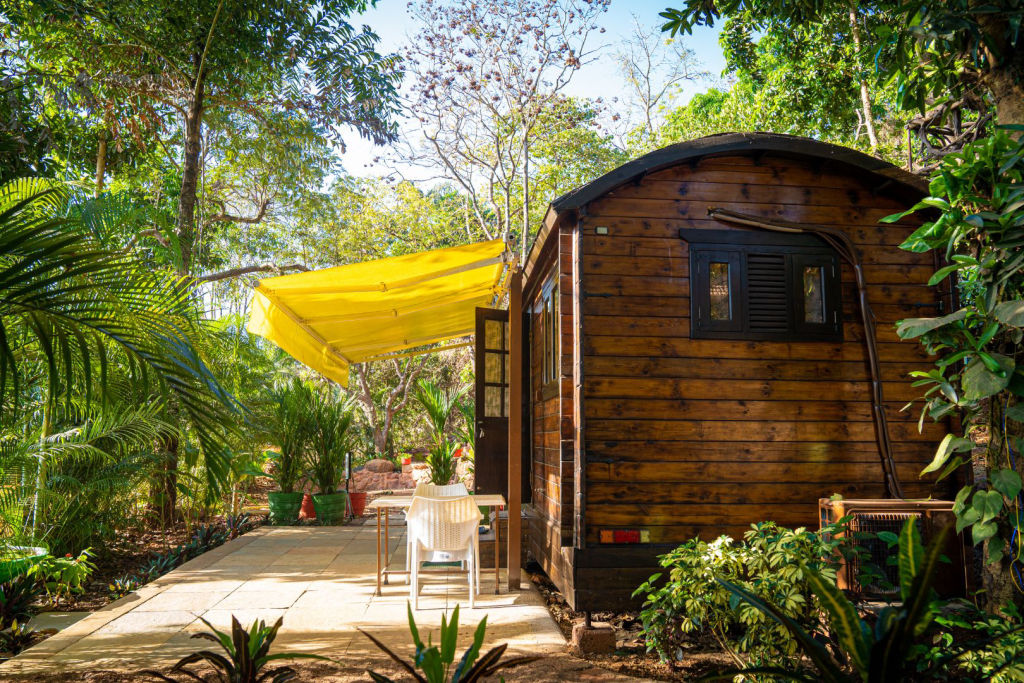
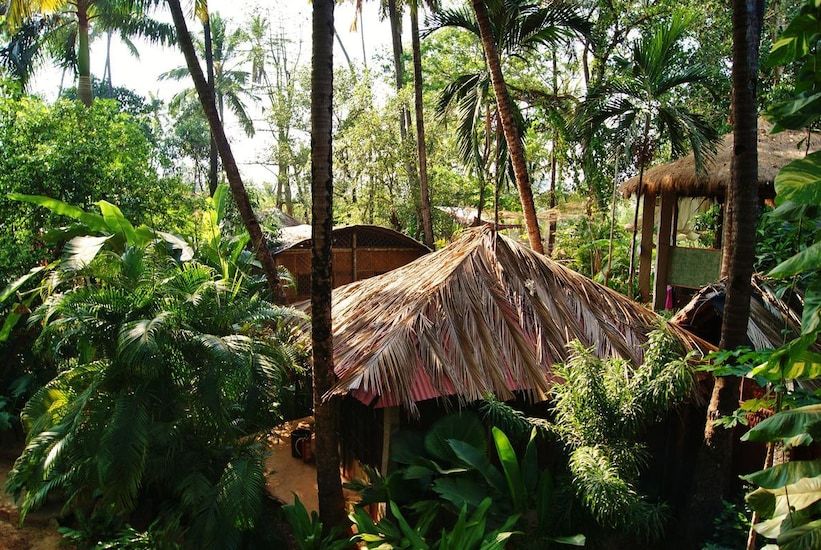
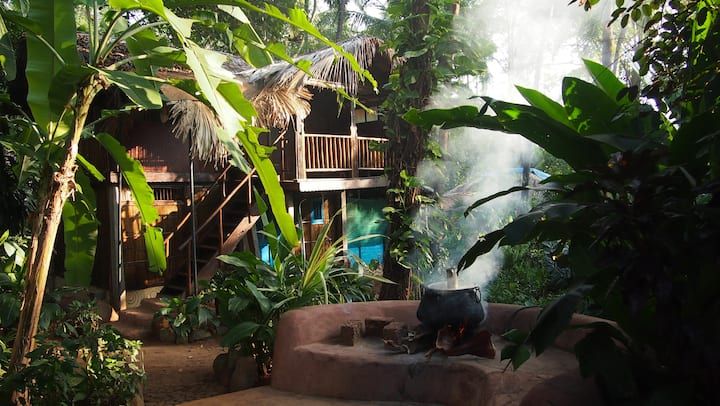
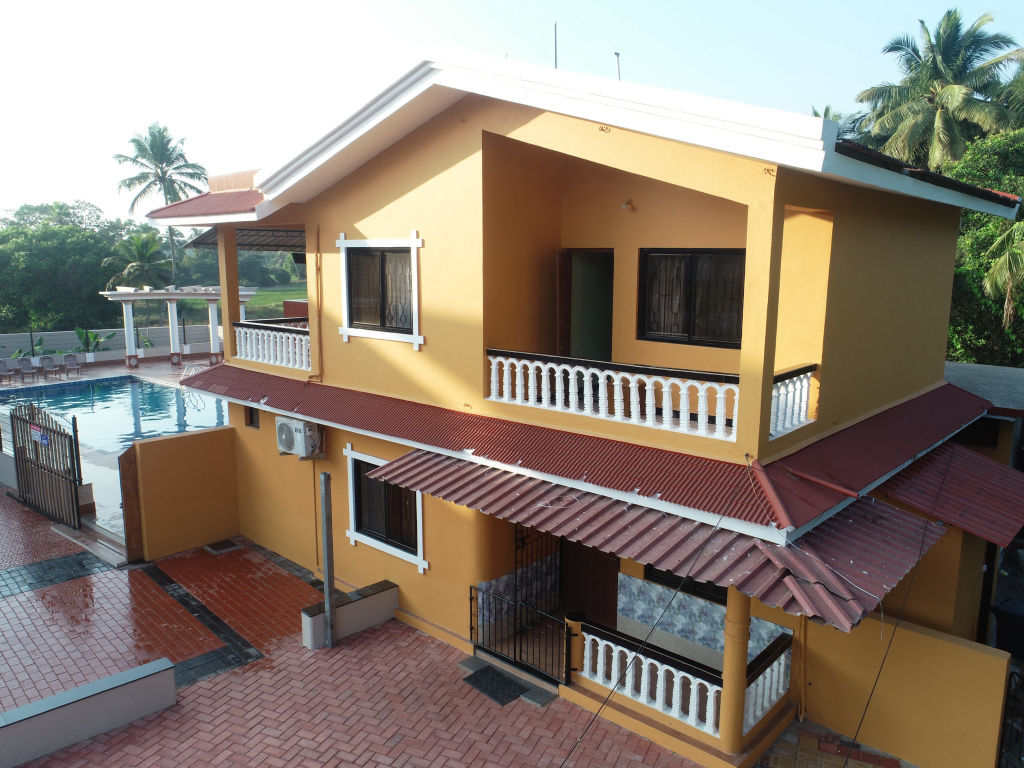
Because the area surrounding Salaulim Dam is quiet and rural, lodging immediately beside the reservoir is minimal. However, the wider Sanguem and South Goa hinterland features a variety of peaceful stays, including nature camps, farm cottages, and rustic homestays nestled among plantations.
Staying in the interior allows you to wake up to birdsong and explore the surrounding forests before day-trippers arrive. You can find well-curated homestays, rural retreats, and eco-camps across South Goa on HireACamp, giving you an authentic base from which to explore Salaulim Dam and the Netravali region.
Frequently asked questions
What is unique about the spillway at Salaulim Dam?
Salaulim Dam features a distinctive duckbill spillway, which is an ungated semicircular structure. When water levels rise, the overflow spills into a central curved vortex that produces an impressive misty fall.
When can you see the submerged village of Curdi?
The remnants of Curdi emerge only during peak summer, typically in May, when the reservoir's water levels fall to their annual minimum. As the monsoon arrives, the ruins are covered once again.
How far is Salaulim Dam from Margao?
The dam is approximately thirty to thirty-five kilometers from Margao by road. The drive takes about an hour depending on traffic conditions.
Is Salaulim Dam suitable for a family day trip?
Yes, Salaulim Dam is well suited for families thanks to its paved viewing platforms, expansive botanical gardens, and spacious grassy lawns that offer room for walks and relaxation.
Can I fly a drone at Salaulim Dam?
Drones are generally not permitted at the dam site because it is an active water infrastructure facility. Visitors should adhere to on-site signage and check regulations with local staff.
Where you'll be
Near Salaulim River, Curdi Vp, Sanguem · 9 stays nearby shown with prices
Stays near Salaulim Dam
Book a place to stay close by


More places near Salaulim Dam
Within 20 km
Built from 0 Instagram posts by 0 creators. Every tip links back to the post it came from, and where creators disagree we show both sides.






