
Tungnath
Destination in Uttarakhand
Perched in the Rudraprayag district of Uttarakhand, Tungnath is renowned for housing the highest Shiva temple in the world and serving as the third shrine in the sacred Panch Kedar circuit. Surrounded by alpine meadows, dense rhododendron forests, and sweeping views of the Garhwal Himalayas, it attracts both spiritual pilgrims and trekking enthusiasts. The destination also acts as the gateway to the summit ridge of Chandrashila, offering panoramic vistas of major Himalayan peaks.
Getting there
By road
- From Dehradun5 hr 5 min · 246 km
- From New Delhi8 hr 20 min · 458 km
- From Chandigarh8 hr 45 min · 415 km
Typical drive times without traffic. Stations and airports from OLA Maps; distances and typical drive times from OpenStreetMap (© OpenStreetMap contributors); notes from creators' Reels.
About Tungnath
Written with AI from map data and general knowledge. Check prices and timings locally before you go.
What makes Tungnath special
Tungnath is situated at an elevation of more than 3,600 metres above sea level, making its ancient stone temple the highest dedicated shrine to Lord Shiva anywhere on earth. Associated deeply with Indian mythology, the temple is believed to have been constructed by the Pandavas to atone for the kurukshetra war, forming an essential link in the revered Panch Kedar pilgrimage.
Beyond its spiritual importance, the landscape around Tungnath is defined by classical high-altitude Himalayan beauty. The trail cuts through windswept bugyals, which are alpine meadows that change colour with the seasons, transitioning from lush emerald green in summer to golden-brown in autumn and blanketed in pristine snow through winter. The backdrop features jagged, snow-capped peaks including Chaukhamba, Nanda Devi, Trishul, and Bandarpunch, giving the entire region a dramatic mountain setting.
Things to do in Tungnath
The primary activity for visitors is the trek up to the sacred Tungnath temple from the road-head at Chopta. The trail is well-defined and paved for most of its length, ascending through forests of oak, pine, and rhododendron before opening out into wide grassy slopes. Walking up at an unhurried pace allows you to soak in the crisp mountain air and admire the shifting views of the valleys below.
Continuing past the temple, adventurous trekkers often push on toward the summit of Chandrashila, located roughly a kilometre further up the ridge. Reaching the peak rewards you with an expansive 360-degree vista of the Garhwal Himalayan range. Sunrise from Chandrashila is particularly unforgettable, as early dawn light paints the surrounding high peaks in soft shades of orange and gold.
Birdwatching and nature photography are equally rewarding pursuits in the area. The high-altitude ecosystem is home to diverse Himalayan avian species, including the iridescent Himalayan Monal, the state bird of Uttarakhand. Enthusiasts can spend quiet hours capturing glimpses of wildlife, alpine flora, and dramatic cloud formations rolling across the peaks.
Read more
Getaways and places to visit nearby
Tungnath sits in a region rich with scenic detours. The immediate base for the trek is Chopta, widely admired for its sprawling meadows, dense evergreen canopies, and serene outdoor camping grounds. Chopta is an ideal spot to unwind, take short day walks, or simply enjoy unobstructed views of the night sky free from light pollution.
Another rewarding detour is Deoria Tal, a pristine alpine lake located near the village of Sari. Enclosed by thick forests, the lake is famous for the striking reflection of the Chaukhamba peaks on its calm waters in the morning. The short uphill hike to Deoria Tal makes for an easy half-day excursion that pairs seamlessly with a trip to Tungnath.
Travellers interested in exploring further along the pilgrim trail can head towards the tranquil villages of Ukhimath and Guptkashi. Ukhimath serves as the winter seat of the idols from Kedarnath and Madhyamaheshwar, while the historical temples and peaceful terrace farms in the surrounding valleys offer insight into traditional rural life in the Garhwal hills.
Best time to visit Tungnath
Tungnath experiences distinct seasons, each offering a unique mountain experience. The spring months of April and May bring pleasant daytime temperatures and the spectacular blooming of rhododendrons, which turn the surrounding hillsides into carpets of vivid pink and scarlet. This is one of the most comfortable times for hiking and clear-sky photography.
Summer from May to June brings mild weather, making it the peak season for pilgrims and trekkers seeking respite from the plains. While monsoon arrives between July and August bringing lush greenery, it also brings heavy rainfall, slippery trails, and the risk of landslides in the lower valleys, requiring extra caution on mountain roads.
Autumn, from September to November, is widely considered the best window for crisp, unobstructed Himalayan vistas. Post-monsoon skies are exceptionally clear, and the air turns cool and bracing. By December, heavy snowfall typically envelops the region, leading to the seasonal closure of the main temple while transforming the trails into a winter wonderland for experienced snow trekkers.
How to reach Tungnath
Tungnath is accessed on foot from Chopta, which serves as the roadhead and base point. To reach Chopta by road, travellers typically travel via Rishikesh, Devprayag, and Rudraprayag, continuing onwards through Ukhimath or Kund. State transport buses, shared jeeps, and private taxis run along this route, although hiring a private vehicle or driving offers the most flexibility on winding mountain roads.
The nearest major railway station is in Rishikesh, with the railhead at Haridwar serving as another major transit hub with extensive nationwide train connectivity. From these railway hubs, the drive to Chopta takes roughly seven to nine hours depending on traffic and road conditions.
For air travellers, Jolly Grant Airport in Dehradun is the closest airport. From Dehradun, one can hire a taxi or board buses heading towards Rudraprayag and Ukhimath before catching local transport up to Chopta.
Tips for your visit
Because Tungnath sits well above 3,500 metres, altitude sickness is a genuine consideration. Take your time during the ascent from Chopta, hydrate frequently, and avoid rushing up the steep sections. Spending a night in Chopta or a nearby village beforehand helps your body acclimatise to the thinner air.
Weather in the high mountains is famously unpredictable, and temperatures can plummet rapidly, even during the peak summer months. Pack sturdy trekking shoes with good grip, thermal layers, a windproof outer jacket, a rain poncho, and a warm fleece. Walking poles are immensely helpful on both the ascent and the descent.
Carry sufficient drinking water, high-energy snacks, and basic personal medications, as facilities on the trail are sparse. Mobile network connectivity can be erratic or completely absent along the upper slopes, so download offline maps and inform family of your plans in advance. Please practice responsible tourism by carrying all personal plastic waste back down with you.
Where to stay around Tungnath
Accommodation directly at Tungnath is very basic and primarily intended for pilgrims during the open temple season. Most travellers choose to base themselves lower down in Chopta, Duggalbitta, or the quiet pastoral hamlets of Sari and Ukhimath.
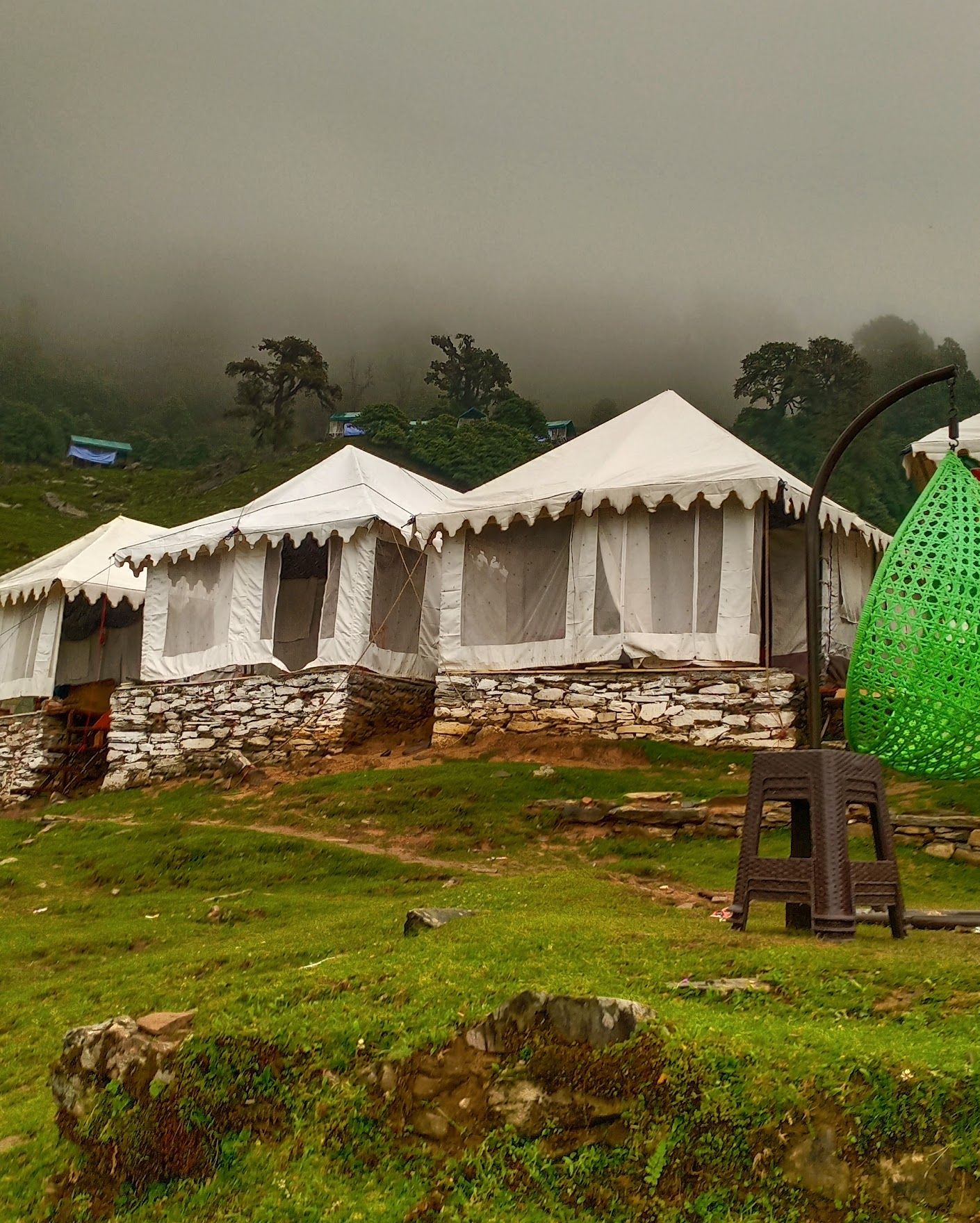
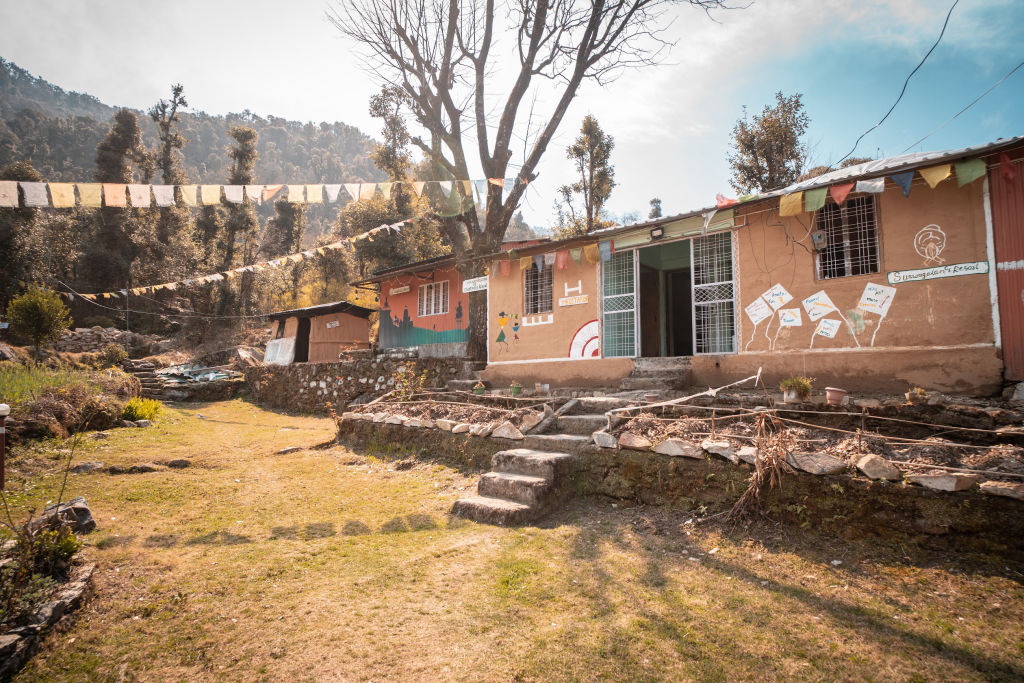
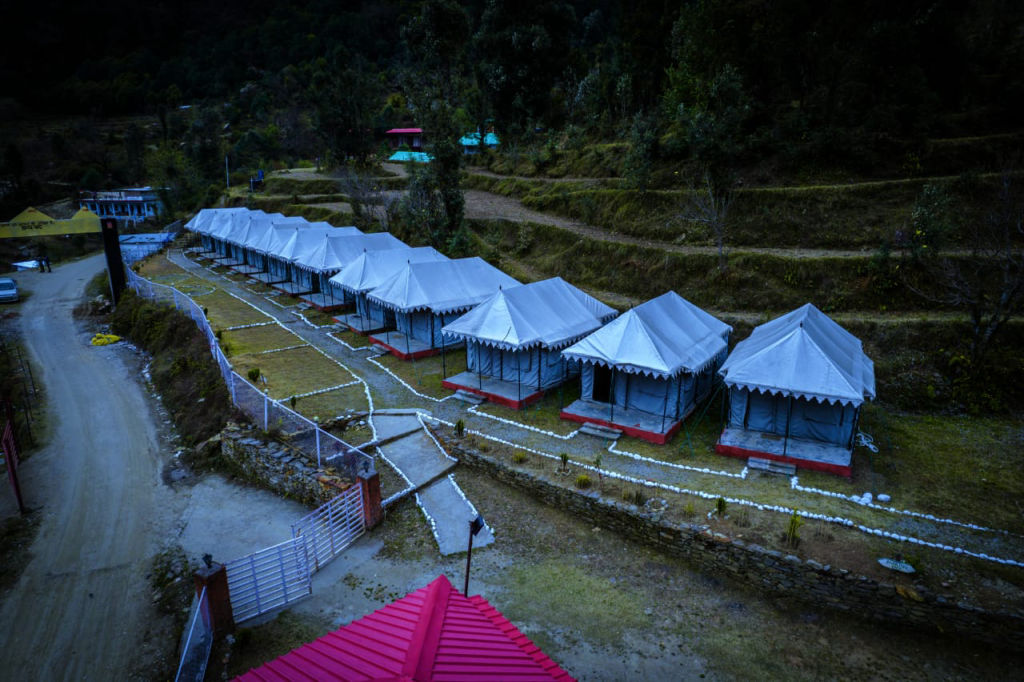
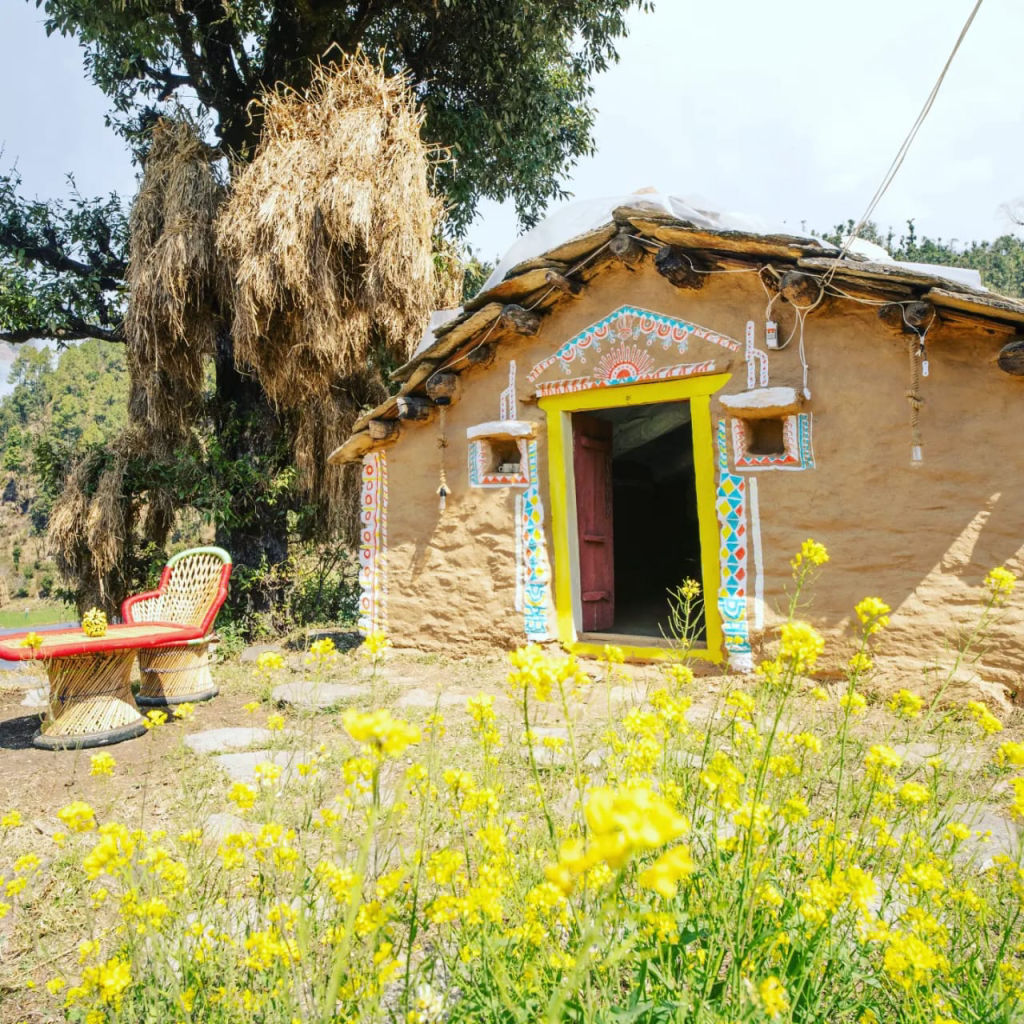
These surrounding areas offer a wide range of stay choices, including outdoor camps set amidst open grasslands, rustic homestays run by local families, and cosy mountain cottages. Staying in a homestay allows you to enjoy traditional Garhwali hospitality and locally grown meals, while camping under the stars offers an immersion in the wilderness. You can find camps, homestays, and outdoor getaways around Chopta and Tungnath on HireACamp.
Frequently asked questions
How long is the trek to Tungnath?
The trek from the road-head at Chopta to the Tungnath temple is approximately three to four kilometres. It typically takes between two and four hours to complete the uphill climb at a steady, moderate pace.
Is the Tungnath trek difficult for beginners?
The trek is rated as easy to moderate because the trail is well paved and clear, but the steep incline and high altitude can make it strenuous for first-time hikers. Walking slowly, staying hydrated, and using trekking poles makes the trail manageable for most people with basic fitness.
Does Tungnath remain open throughout the year?
The Tungnath temple remains open to visitors from roughly May to November, after which the deity is moved down to Makkumath for the winter due to heavy snowfall. While the temple doors close in winter, snow trekkers still hike the route when trail conditions permit.
Can you visit Chandrashila along with Tungnath in a single day?
Yes, Chandrashila peak is located about one to 1.5 kilometres further uphill from the Tungnath temple. Many travellers start early from Chopta, visit the temple on the way up, reach the peak for sweeping mountain views, and return to Chopta by late afternoon.
What should I pack for a trip to Tungnath?
Pack sturdy walking shoes, warm thermal layers, a windproof and water-resistant jacket, gloves, a woollen cap, a reusable water bottle, sunscreen, and sunglasses. Even in summer, evenings and mornings at this altitude are brisk.
Where you'll be
4 stays nearby shown with prices
Stays near Tungnath
Book a place to stay close by
Things to do in Tungnath
48 places creators recommend within 30 km

Built from 0 Instagram posts by 0 creators. Every tip links back to the post it came from, and where creators disagree we show both sides.






