
Mata Kheer Bhawani Temple
Temple near Khir Bhawani, Jammu and Kashmir
200 m from Khir Bhawani
The nearest town, for stays, food and fuel.
Mata Kheer Bhawani Temple is a revered Hindu shrine dedicated to the goddess Ragnya Devi, situated in the village of Tullamulla near Lar in Ganderbal, Jammu and Kashmir. It is built over a sacred natural spring whose waters are believed to change colour to reflect prevailing regional events. Pilgrims and travellers visit this peaceful sanctuary to offer traditional rice pudding, seek spiritual solace, and admire its towering chinar trees.
Getting there
About Mata Kheer Bhawani Temple
Written with AI from map data and general knowledge. Check prices and timings locally before you go.
About Mata Kheer Bhawani Temple
Mata Kheer Bhawani Temple, dedicated to Ragnya Devi, is one of the most venerated places of worship in the Kashmir Valley. The temple complex is situated in the hamlet of Tullamulla in Ganderbal district, close to the town of Lar. Constructed on a hexagonal island in the middle of a sacred spring, the shrine is framed by ancient, leafy chinar trees that cast deep shade across the stone courtyards.
The name Kheer Bhawani derives from the traditional offering of kheer, a sweet milk and rice preparation, that devotees bring to the goddess. The natural spring surrounding the main sanctum holds special spiritual significance for Kashmiri Pandits and visitors from across the country. Folk belief holds that the water of the spring changes colour in response to natural changes and major historic events, turning shades of white, green, blue, pink, or dark grey.
History and cultural significance
The roots of the temple date back hundreds of years, woven tightly into the spiritual heritage of the Kashmir Valley. While local traditions link the shrine to ancient epics, the modern stone sanctum was commissioned in the early twentieth century under the patronage of Maharaja Pratap Singh and later completed by Maharaja Hari Singh. The marble shrine stands at the center of the spring, surrounded by paved stone walkways where pilgrims circumambulate.
Every year, usually in May or June, the temple hosts the annual Mela Kheer Bhawani, coinciding with the festival of Jyeshtha Ashtami. During this time, thousands of devotees, particularly displaced Kashmiri Pandits, journey back to the valley from all across India and abroad. The festival is characterized by a warm, communal atmosphere where local residents often assist with arrangements and welcoming the visiting pilgrims, underscoring the enduring syncretic culture of Kashmir.
Read more
The temple complex and surroundings
Entering the temple complex brings an immediate sense of calm. The expansive courtyards are paved with smooth stone and shaded by gigantic chinar trees, which keep the compound cool even in the middle of summer. Birdsong from the surrounding orchards and nearby wetlands frequently drifts over the grounds.
The sacred spring itself is clear and framed by a low wall. Pilgrims approach the edges to offer flowers, milk, and kheer into the spring waters before praying before the deity inside the central shrine. Surrounding the inner sanctum are dharmashalas, resting pavilions, and prayer halls where visitors can sit quietly in meditation. The setting alongside the rural landscape of Tullamulla, with its apple orchards and winding streams, gives the entire area a distinct sense of quiet grace.
Best time to visit Mata Kheer Bhawani
The best time to visit Mata Kheer Bhawani Temple is between April and October, when the weather in the Kashmir Valley is pleasant and conducive to travel. Spring brings blossoming orchards, fresh greenery, and crisp air, making the journey especially picturesque.
Summer, spanning June to August, features mild temperatures and long daylight hours. Visiting during the annual Jyeshtha Ashtami festival in summer offers a chance to experience the temple at its most vibrant, though visitors should expect heavy crowds and tightened logistical arrangements. Autumn, from September to November, brings comfortable sunny days and the changing of chinar leaves to brilliant shades of gold and amber. Winters bring severe cold and occasional snowfall; while the temple remains open, travel along rural roads can be slower during snowy periods.
How to reach Mata Kheer Bhawani Temple
Mata Kheer Bhawani Temple is situated in Tullamulla, Ganderbal, which lies north of Srinagar. The nearest major transport hub is Srinagar, which is connected by regular commercial flights to major Indian cities through Sheikh ul-Alam International Airport. Srinagar also has bus connections from Jammu and neighboring states.
From Srinagar, the drive to Tullamulla takes roughly one hour depending on traffic conditions. Taxis, private vehicles, and shared public transport can be boarded from Srinagar to reach Lar or Ganderbal, from where local transport directly serves the temple gates. The route travels along paved roads past lush fields, willow plantations, and regional waterways. Travellers heading from the northern parts of the valley or the Sonamarg route can easily add a detour to Tullamulla.
Tips for visiting the temple
As with most sacred places in Kashmir, modest attire covering shoulders and knees is appropriate when visiting Mata Kheer Bhawani Temple. Footwear must be deposited at the designated counters before entering the inner sanctum and walkways around the sacred spring.
Security checkpoints are maintained near the approach to the shrine; carry a valid government-issued photo identity card for smooth entry. Photography policies can vary, particularly around the core shrine and security points, so it is best to ask local attendants before taking pictures. Morning visits tend to be quieter and more atmospheric, allowing you to walk beneath the chinars without hurry. Keep cash handy for small offerings or local transport, as mobile connectivity and digital payments can be intermittent.
Places to visit nearby
A visit to Mata Kheer Bhawani Temple can easily be paired with other attractions in the Ganderbal and Srinagar areas. Just seven kilometers away lies Manasbal Lake, celebrated for its deep, clear waters, summer lotus blooms, and birdlife. It is an excellent spot for quiet boat rides and scenic strolls.
Heritage lovers can explore the ancient stone ruins of the Wangath Temple complex located roughly five kilometers distant in the foothills. To the south, heading back toward Srinagar, one can visit Anchar Lake and the Hokersar Wetland, an internationally recognized bird sanctuary teeming with migratory waterfowl during the cooler months. The historic Hazratbal Dargah, Nigeen Lake, and the hilltop fort of Hari Parbat are also within easy driving distance, making Tullamulla a seamless stop on a broader Kashmir itinerary.
Where to stay
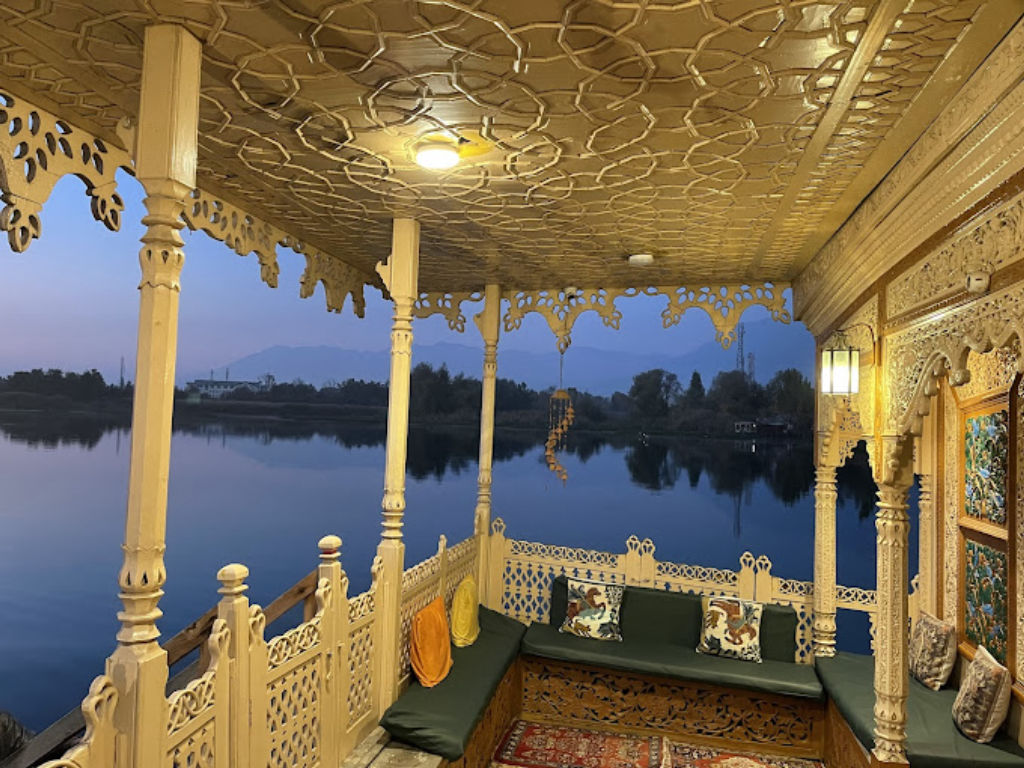
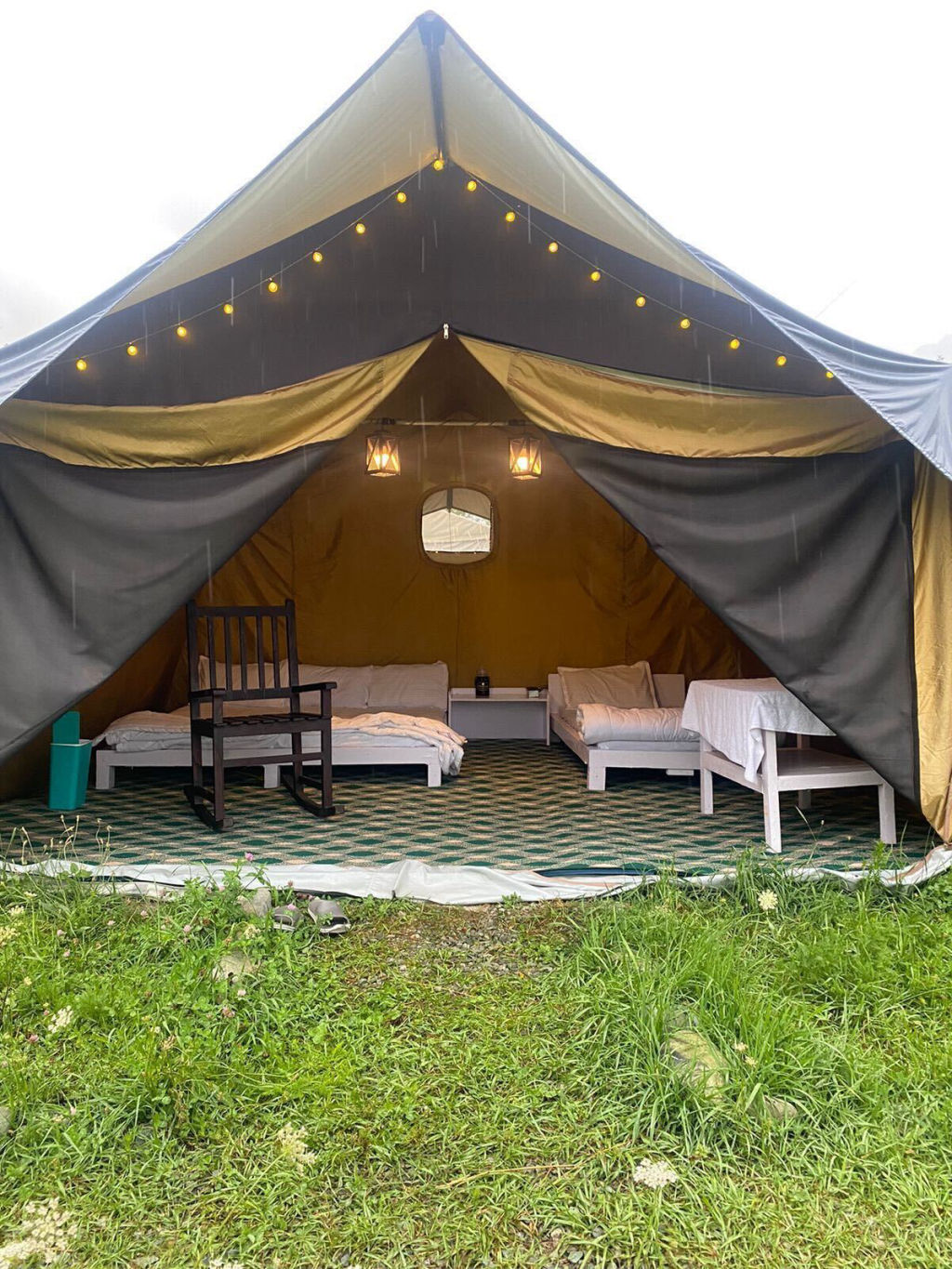
Travellers visiting Mata Kheer Bhawani Temple usually choose to stay in nearby Ganderbal, along the shores of Manasbal Lake, or in Srinagar, which offers the widest range of options. Staying outside the main city provides a quieter experience closer to nature and the countryside.
For those looking for authentic local hospitality, outdoor riverside retreats, or comfortable homestays surrounded by walnut and apple orchards, verified options can be explored on HireACamp. Booking in advance is recommended during the summer tourist season and around festival dates.
Frequently asked questions
What is unique about the spring at Mata Kheer Bhawani Temple?
The temple is built over a sacred spring whose water is known to change colour into shades of green, blue, pink, white, or dark grey. Devotees believe that these shifts in water hue reflect the well-being and fortunes of the region.
How far is Mata Kheer Bhawani Temple from Srinagar?
The temple in Tullamulla is located approximately 25 to 30 kilometers north of central Srinagar, typically taking around an hour by road depending on local traffic.
What offering is traditionally made at the temple?
Devotees traditionally offer kheer, a sweet milk and rice dish, into the holy spring, alongside floral tributes and milk. The name of the temple is derived from this sacred custom.
When is the annual Mela Kheer Bhawani held?
The annual festival takes place on Jyeshtha Ashtami according to the Hindu lunar calendar, which usually falls in May or June, bringing thousands of pilgrims to the shrine.
Is photography permitted inside the temple complex?
Photography may be restricted in certain parts of the complex, especially near security installations and the inner sanctum. It is best to check locally with shrine attendants before taking photographs.
Where you'll be
Tullamulla, Ganderbal, Lar · 2 stays nearby shown with prices
Stays near Mata Kheer Bhawani Temple
Book a place to stay close by
More places near Mata Kheer Bhawani Temple
Within 20 km
Built from 0 Instagram posts by 0 creators. Every tip links back to the post it came from, and where creators disagree we show both sides.






