
Rumbak
Destination in Ladakh
Rumbak is a remote, high-altitude village nestled deep inside Hemis National Park in Ladakh. Known worldwide as a prime habitat for the elusive snow leopard, the hamlet attracts wildlife enthusiasts, high-altitude trekkers, and cultural travellers. Surrounded by rugged valleys, dramatic scree slopes, and towering Trans-Himalayan peaks, Rumbak offers an authentic glimpse into traditional Ladakhi mountain life.
Getting there
About Rumbak
Written with AI from map data and general knowledge. Check prices and timings locally before you go.
What Rumbak is known for
Rumbak sits in an amphitheatre of jagged brown mountains and alpine pastures within the Hemis National Park. The village comprises a small cluster of whitewashed mud-brick houses with flat roofs, fluttering prayer flags, and terraced barley fields fed by glacial meltwater.
Globally, Rumbak is celebrated as the snow leopard capital of the world. In the colder months, the rare big cat descends from high ridges into the valley bottoms in search of natural prey like blue sheep. Beyond its fame in wildlife photography and documentary circles, Rumbak is also known for pioneering community-based conservation and eco-tourism, where villagers open their homes to host visitors while actively protecting local wildlife.
Things to do in and around Rumbak
Tracking wildlife is the premier activity around Rumbak. Accompanied by local spotters with high-powered spotting scopes, visitors spend hours scanning ridgelines and scree slopes for movement. Aside from snow leopards, the area is home to bharal or blue sheep, Asiatic ibex, Ladakhi urial, Tibetan wolves, red foxes, and Himalayan marmots.
Birdwatching in the valley is equally rewarding. Birders frequently spot high-altitude species such as the golden eagle, lammergeier, wallcreeper, chukar partridge, Himalayan snowcock, and several varieties of mountain finches foraging along scrub patches and river beds.
Day hikes around the village lead to neighbouring settlements like Yurutse, or up towards mountain viewpoints that reveal stark vistas of the Zanskar and Ladakh ranges. Walking around Rumbak itself allows visitors to observe everyday agro-pastoral rhythms, from livestock grazing to threshing barley, and to experience the genuine warmth of Ladakhi hospitality.
Read more
Trekking routes connected to Rumbak
Rumbak serves as an integral junction for several classic trekking circuits in central Ladakh. Most notably, it lies on the introductory leg of the famed Markha Valley trek, serving as the first or second night's halt before hikers cross into higher terrain.
Trekkers bound for the high mountain pass of Ganda La pass through Rumbak before making the stiff ascent towards Yurutse. Crossing Ganda La opens the trail to the wider Markha basin, with its ancient ruined fortresses, remote gompas, and riverside willow stands.
Another challenging route links Rumbak to Stok over the Stok La pass. This steep crossing rewards trekkers with breathtaking panoramas of the Indus Valley and Stok Kangri before descending down to Stok village, making it an ideal shorter traverse for well-acclimatised adventurers.
Best time to visit Rumbak
The best time to visit Rumbak depends entirely on whether your focus is trekking or wildlife spotting. The summer season, extending from June through September, brings clear skies, warm daytime temperatures, and fully accessible high mountain passes. During these months, the village fields turn vibrant green, wild roses blossom, and walking conditions are comfortable.
For travellers hoping to spot snow leopards, winter between December and March is prime time. As heavy snow blankets higher elevations, snow leopards follow blue sheep down to the lower slopes and valley floors around Rumbak. Winter conditions are severe, with temperatures dropping far below freezing, requiring specialised cold-weather clothing and sturdy gear.
The shoulder months of April, May, and October bring fewer crowds and crisp weather, though temperatures remain chilly and some passes may still hold snow.
How to reach Rumbak
Reaching Rumbak requires travel to Leh first, which is connected by scheduled flights to major Indian cities such as Delhi. Alternatively, road routes from Manali or Srinagar lead to Leh during the summer months when the high highway passes are open. Proper acclimatisation in Leh for at least two to three days is critical before travelling higher into Hemis National Park, as Rumbak sits above 4,000 metres.
From Leh, visitors typically drive to the trailhead at Zingchen, a journey that winds along the Indus River and turns into the narrow canyon of Zingchen Gorge. The drive usually takes between one to two hours, depending on road conditions.
From the roadhead near Zingchen, travellers walk up along the stream through dramatic rock ravines to reach Rumbak. The trek takes approximately three to four hours at a steady pace. Porters or pack ponies can often be arranged at the trailhead to assist with baggage.
Places to explore nearby
Because Rumbak lies deep within the national park, nearby attractions are primarily geographic landmarks, historical settlements, and Buddhist sanctuaries. A short distance beyond Rumbak is the settlement of Yurutse, distinctive for having only a single sprawling household set against vast barren mountains.
At the mouth of the valley on the banks of the Indus lies Spituk, famous for the cliffside Spituk Monastery. The monastery holds centuries-old murals, statues, and chambers that provide insight into the Gelug tradition of Tibetan Buddhism.
Across the river lies Stok village, home to the historic Stok Palace and museum. The palace houses royal heirlooms, ancestral crowns, thangkas, and ancient weaponry, offering a deep connection to Ladakh's royal heritage.
Where to stay in Rumbak
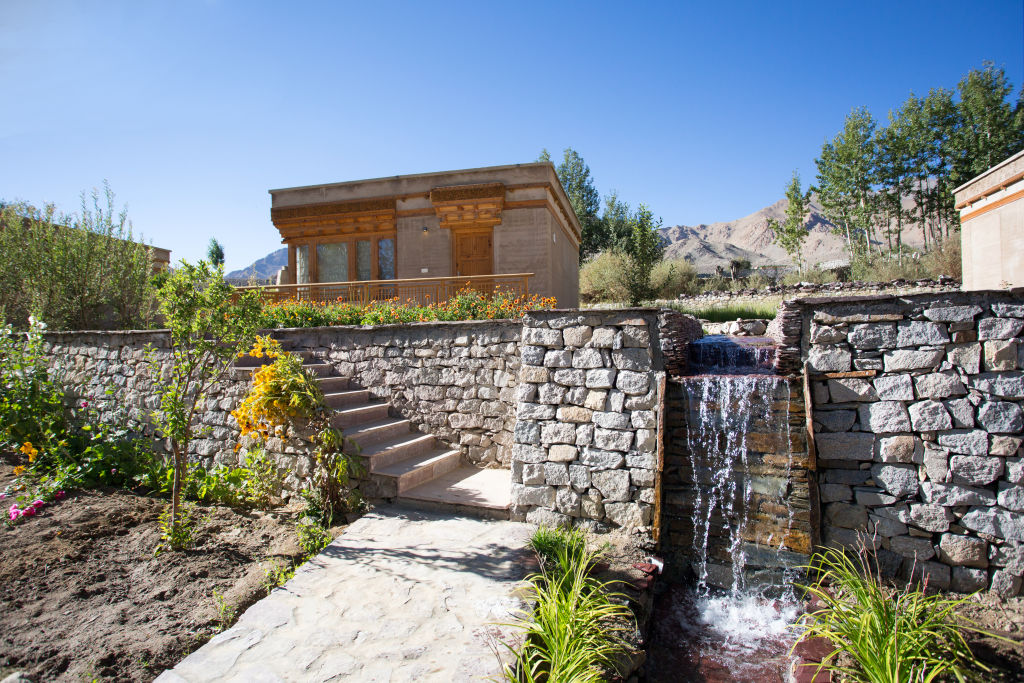
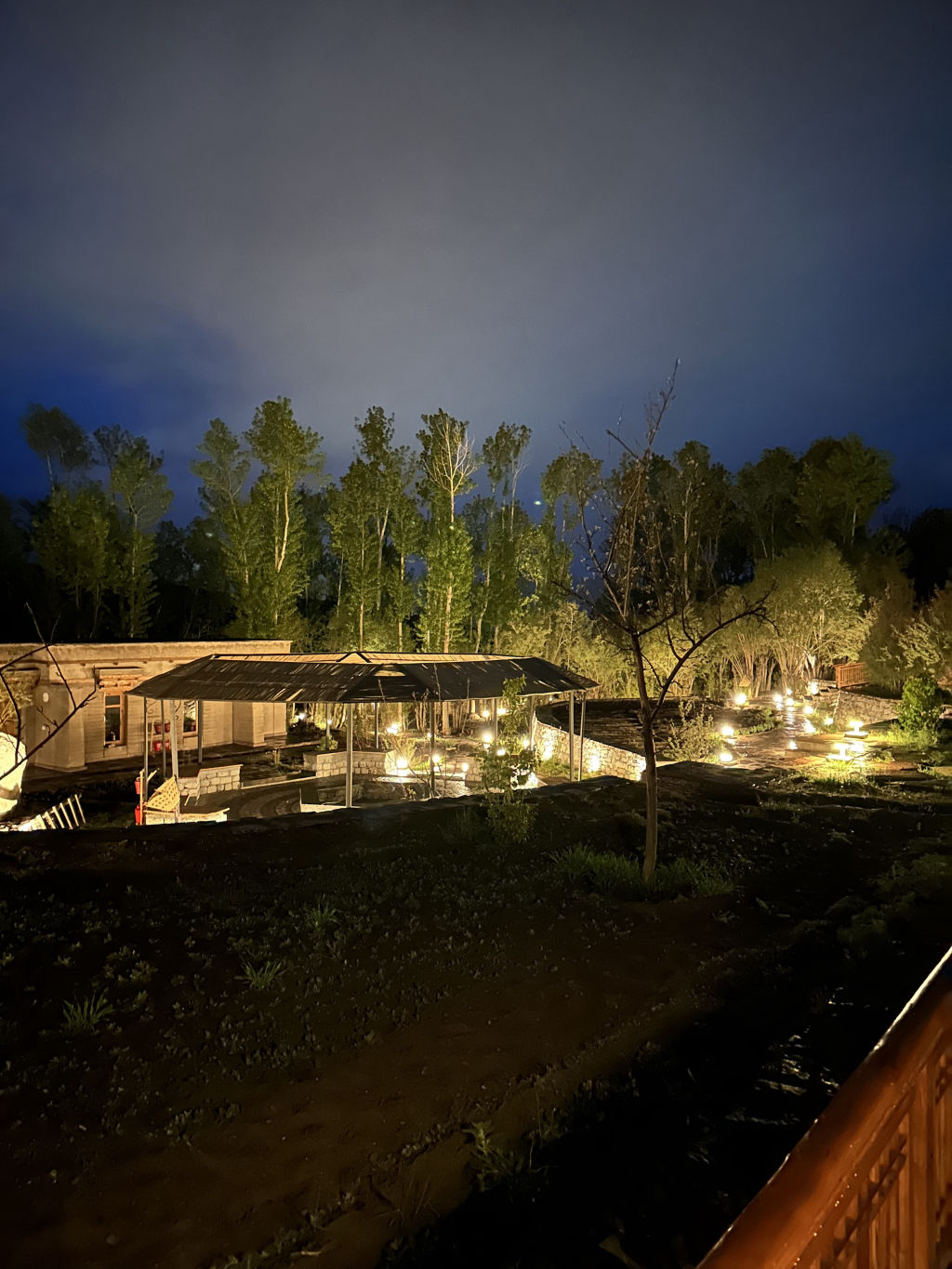
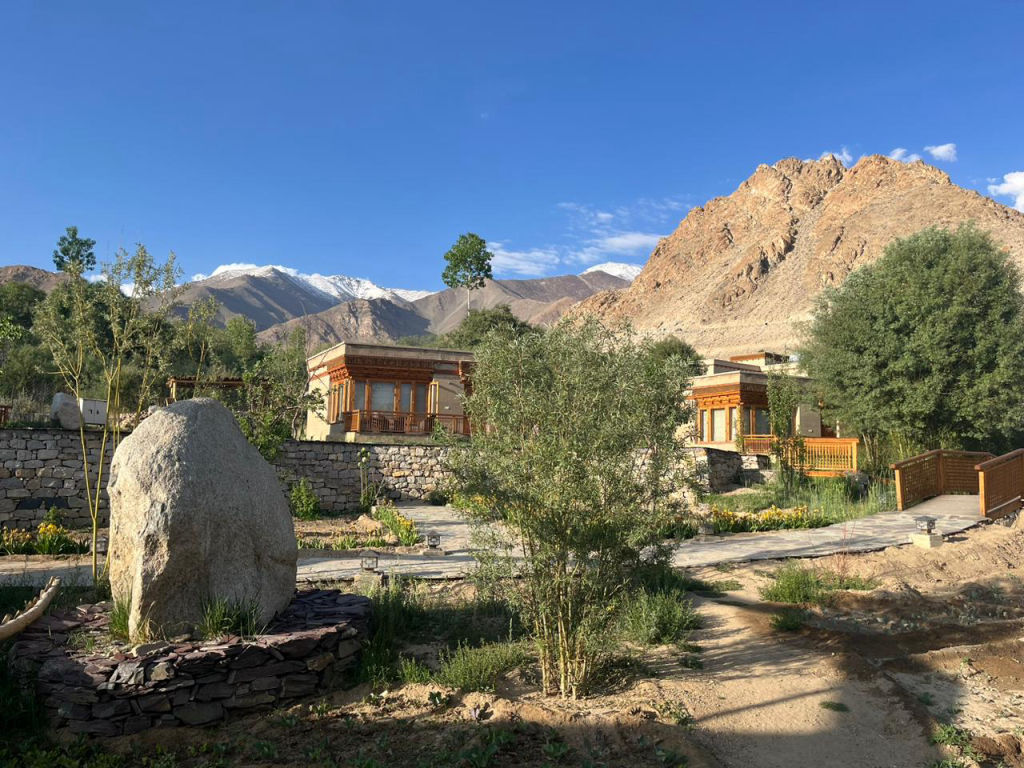
Accommodation in Rumbak consists almost exclusively of authentic village homestays. These traditional homes are constructed from stone, timber, and sun-dried mud bricks, featuring warm central kitchens that serve as the gathering spot for meals and tea. Staying with local families offers a direct, meaningful cultural exchange and directly supports the conservation economy of the national park.
During peak summer trekking months, basic fixed campsites and wilderness tenting areas operate along the valley trails. Facilities are simple, with shared dry-pit eco toilets and limited electricity sourced from small solar panels. You can discover comfortable homestays, wilderness retreats, and adventure camping options in and around Rumbak on HireACamp.
Frequently asked questions
Can I visit Rumbak in winter?
Yes, winter from December to March is the primary season for snow leopard tracking expeditions in Rumbak. Visitors must prepare for sub-zero temperatures, basic homestay heating, and deep snow.
Is a permit required to visit Rumbak?
Because Rumbak is located inside Hemis National Park, visitors must obtain wildlife department entry permits and relevant Ladakhi inner line permissions. These requirements should be checked locally before departing from Leh.
How difficult is the trek to Rumbak?
The trek from the Zingchen roadhead to Rumbak is moderately easy to moderate, taking around three to four hours on a gentle uphill gradient. However, because the altitude exceeds 4,000 metres, thorough acclimatisation in Leh is essential before starting.
Is mobile network available in Rumbak?
Mobile network coverage in Rumbak is extremely limited or non-existent due to the enclosed valley terrain. Travellers should inform family and plan for a complete digital break while staying in the village.
What should I pack for a trip to Rumbak?
Essential gear includes sturdy broken-in trekking boots, thermal base layers, a high-grade down jacket, UV-filtering sunglasses, high-SPF sunscreen, a reusable water bottle, and a warm sleeping bag if visiting outside mid-summer.
Where you'll be
3 stays nearby shown with prices
Stays near Rumbak
Book a place to stay close by
Things to do in Rumbak
48 places creators recommend within 30 km
Built from 0 Instagram posts by 0 creators. Every tip links back to the post it came from, and where creators disagree we show both sides.






