
Gangotri National Park
National park near Gangotri, Uttarakhand
300 m from Gangotri
The nearest town, for stays, food and fuel.
Gangotri National Park is a protected high-altitude sanctuary in the Uttarkashi district of Uttarakhand, cradling the origin of the Bhagirathi River. The park features vast glaciers, towering granite massifs, and fragile alpine meadows that attract seasoned trekkers and mountaineers from around the world. Travellers visit to experience rugged Himalayan wilderness, witness the Gaumukh glacier, and sight rare high-altitude wildlife.
Getting there
By road
- From Dehradun5 hr 20 min · 235 km
- From Chandigarh8 hr 35 min · 427 km
- From New Delhi8 hr 50 min · 465 km
Typical drive times without traffic. Stations and airports from OLA Maps; distances and typical drive times from OpenStreetMap (© OpenStreetMap contributors); notes from creators' Reels.
About Gangotri National Park
Written with AI from map data and general knowledge. Check prices and timings locally before you go.
About Gangotri National Park
Gangotri National Park is one of the most prominent high-altitude protected areas in northern Uttarakhand, covering a vast expanse of the upper Bhagirathi River catchment. Situated in the Uttarkashi district, the park serves as an ecological corridor connecting Govind National Park with the Kedarnath Wildlife Sanctuary. The park's dramatic geography spans dramatic elevations, transitioning from temperate coniferous woodland in the lower valleys to jagged moraines, massive icefields, and permanent snow peaks.
At the physical and cultural core of the park lies the Gaumukh glacier, the traditional source where the Bhagirathi River emerges before journeying down to form the Ganga. Beyond its sacred riverhead, the park protects a raw and untamed landscape dominated by dramatic granite spires, including Mount Shivling, Meru Peak, and the Bhagirathi massif. It remains a magnet for mountaineers, high-altitude trekkers, and nature lovers seeking untamed Himalayan wilderness.
Landscape and wildlife in Gangotri National Park
The terrain within Gangotri National Park reflects the intense geological forces of the Greater Himalayas. Deep river gorges carved by glacial melt give way to expansive lateral moraines, debris-covered glaciers, and high alpine meadows known locally as bugyals. In the lower valleys, mixed coniferous forests of chir pine, deodar, blue pine, silver fir, and rhododendron thrive. Higher up, tree cover disappears, replaced by alpine scrub, dwarf junipers, and vast stretches of scree and bare rock.
This rugged terrain provides habitat for several threatened wildlife species specially adapted to sub-zero temperatures and high elevations. Gangotri National Park is an important refuge for the snow leopard, which preys on herds of bharal, or Himalayan blue sheep, grazing along the cliffs. The park is also home to musk deer, Himalayan tahr, brown bears, and red foxes. Bird life is equally diverse, featuring the Himalayan monal, snow partridge, Tibetan snowcock, and large raptors such as the golden eagle and the bearded vulture.
Read more
Trekking in Gangotri National Park
The primary way to experience Gangotri National Park is on foot, with the trek to Gaumukh and the high meadow of Tapovan being the most celebrated route. The path begins near the pilgrimage town of Gangotri and ascends gradually alongside the roaring Bhagirathi River, passing through campsites such as Chirbasa and Bhojbasa before reaching the snout of the glacier. Trekkers who cross the boulder-strewn glacier to reach Tapovan are rewarded with close-up perspectives of the pyramid-like Mount Shivling.
Due to the park's environmental sensitivity and high elevation, visitors must acquire permits before crossing the checkposts, and daily visitor entries are regulated by local forest authorities. Trekking in this region requires sound physical endurance and deliberate acclimatization, as trail altitudes frequently exceed 3,500 to 4,300 metres above sea level. Weather conditions can change rapidly in the mountains, making sturdy footwear, cold-weather clothing, and careful navigation essential.
Best time to visit Gangotri National Park
The operating window for Gangotri National Park is determined by the extreme Himalayan climate of northern Uttarakhand. The park is typically open to trekkers during two seasons: late spring to early summer from May to June, and autumn from September to October. During the summer months, daytime temperatures are comfortable, trail snow recedes, and alpine flora begins to bloom across the lower valley beds.
Autumn is considered by many to be the best time to visit because the monsoon rains clear the atmosphere, leaving behind crisp blue skies and exceptional mountain visibility. This makes September and October ideal for photography and technical trekking. The monsoon months of July and August present heightened risks of landslides, falling rocks, and swollen mountain torrents along the road network. By November, intense winter chills and heavy snowfall blanket the entire valley, bringing normal trekking activities to a halt until the following spring.
How to reach Gangotri National Park
Gangotri National Park is accessed via the road corridor that follows the Bhagirathi River into the high hills of Uttarkashi. The nearest major railway station and commercial airport are situated down in Rishikesh and Dehradun. From these regional transit hubs, the journey proceeds entirely by road through Himalayan towns such as Chamba, Tehri, and Uttarkashi, following roads carved alongside steep mountain flanks.
The town of Gangotri serves as the primary base and roadhead for entering the national park. The overland drive from the plains takes significant time, and travellers typically break the journey with an overnight halt in Uttarkashi or the Harsil valley to rest and adjust to the increasing altitude. Shared taxis, private vehicles, and state transport buses run along this route during the pilgrimage and trekking seasons, though private vehicles allow for a more flexible travel pace.
Places to visit near Gangotri National Park
Travellers visiting the national park can explore several scenic destinations situated along the Bhagirathi valley. Approximately 19 kilometres before Gangotri lies the peaceful Harsil valley, renowned for its dense deodar forests, traditional wooden houses, and terraced apple orchards. Harsil offers an unhurried mountain setting ideal for acclimatization, short village walks, and riverside relaxation.
Further down the valley, roughly 26 kilometres away, is Gangnani, well-known for its natural thermal sulphur springs where travellers stop to bathe in the warm water. Travellers with extra time in the Uttarkashi district can also plan a trek to Dayara Bugyal, a massive high-altitude meadow offering uninterrupted views of the Bandarpunch peak and surrounding Garhwal summits. These nearby destinations provide a well-rounded glimpse into the natural variety and pastoral lifestyle of the region.
Where to stay near Gangotri National Park
Within the core areas of Gangotri National Park, accommodations are limited to self-supported wilderness camping at designated halts along approved trekking trails. Trekkers staying within park borders must carry their own gear or travel with self-contained trekking groups, adhering strictly to leave-no-trace wilderness practices and park regulations.
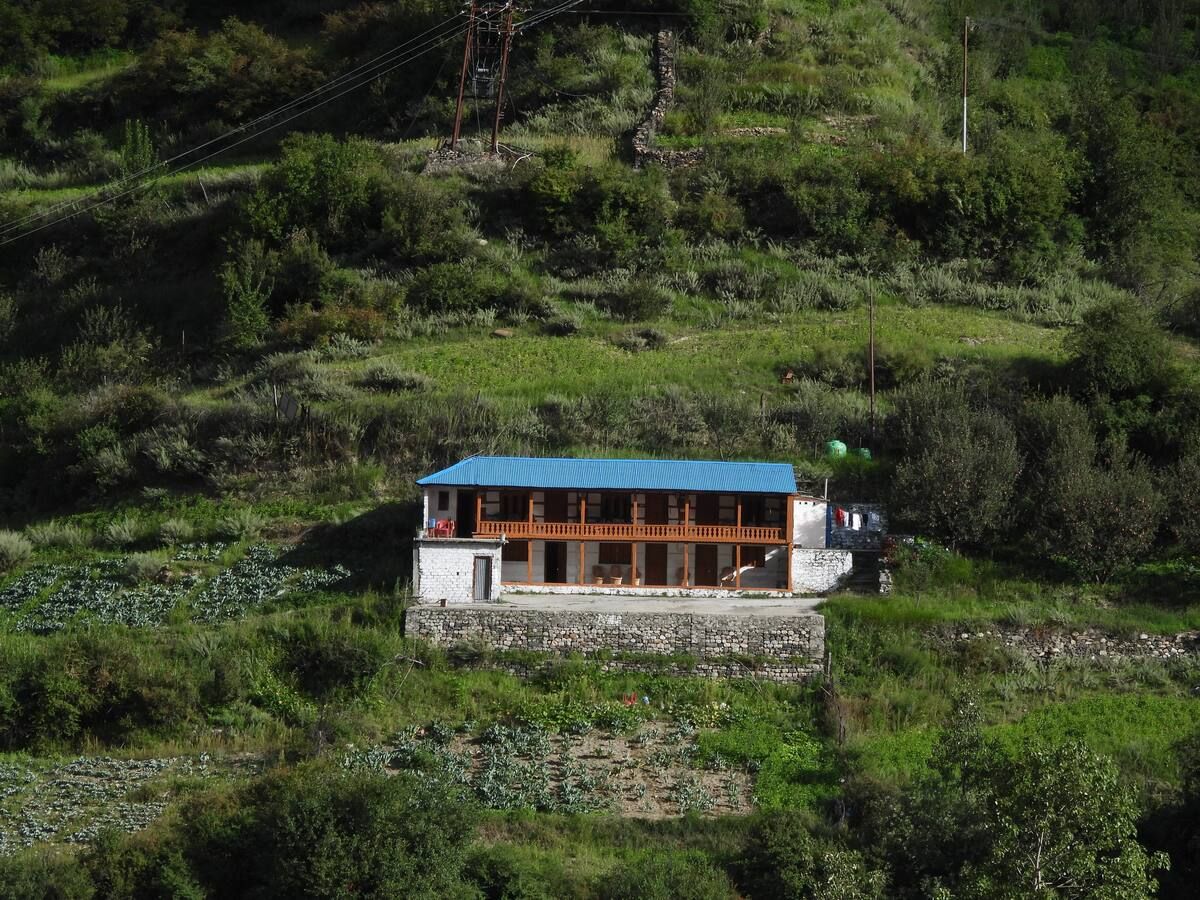
For roofed accommodations before or after entering the park, the base town of Gangotri offers basic seasonal guesthouses, lodges, and dharamshalas. Travellers who prefer more peaceful surroundings surrounded by nature often choose to stay down in the Harsil valley or neighbouring riverside settlements, where comfortable village homestays, cottages, and scenic tented sites are available. You can discover and book verified homestays and outdoor stays across the Bhagirathi valley on HireACamp.
Frequently asked questions
Where is Gangotri National Park located?
Gangotri National Park is situated in the Uttarkashi district of Uttarakhand, India, with its primary access gate located near the town of Gangotri.
Do I need a permit to enter Gangotri National Park?
Yes, permits are required from the local forest department to enter the park, and a daily quota on visitor numbers is enforced to preserve the fragile high-altitude environment.
What is the best time of year to visit Gangotri National Park?
The park is best visited from May to June for pleasant summer weather and from September to October for clear mountain views and stable conditions.
What wildlife can be seen in Gangotri National Park?
The park provides habitat for high-altitude wildlife including the snow leopard, bharal or blue sheep, Himalayan tahr, musk deer, brown bears, and birds like the Himalayan monal.
Can beginners trek inside Gangotri National Park?
While the main Gaumukh route follows a defined valley trail, the high elevation and rough glacial terrain demand good physical fitness, proper acclimatization, and sensible mountain preparation.
Where you'll be
Gangotri · 1 stay nearby shown with prices
Stays near Gangotri National Park
Book a place to stay close by
More places near Gangotri National Park
Within 20 km

Built from 0 Instagram posts by 0 creators. Every tip links back to the post it came from, and where creators disagree we show both sides.






