
Mukhwa Village
Temple near Harsil, Uttarakhand
200 m from Harsil
The nearest town, for stays, food and fuel.
Mukhwa Village is a serene Himalayan settlement in the Uttarkashi district of Uttarakhand, renowned as the sacred winter abode of Goddess Ganga. Perched across the Bhagirathi River near the Harsil Valley, the village draws pilgrims and nature travellers seeking spiritual solace and authentic mountain culture. With its traditional carved-wood houses, apple orchards, and panoramic views of snow-dusted peaks, Mukhwa offers a quiet look into Garhwali heritage.
Getting there
By road
- From Dehradun4 hr 50 min · 210 km
- From Chandigarh8 hr 5 min · 402 km
- From New Delhi8 hr 20 min · 440 km
Typical drive times without traffic. Stations and airports from OLA Maps; distances and typical drive times from OpenStreetMap (© OpenStreetMap contributors); notes from creators' Reels.
About Mukhwa Village
Written with AI from map data and general knowledge. Check prices and timings locally before you go.
About Mukhwa Village
Mukhwa Village, sometimes spelt Mukhba, is a traditional Himalayan village situated high on the slopes above the Bhagirathi River in Uttarakhand. It sits close to the popular Harsil Valley and functions as an enduring cultural and religious anchor for the entire region. The village is surrounded by pine forests, terraced fields, and sprawling apple orchards that bloom vibrant pink and white in the spring before bearing fruit in late summer.
The settlement is composed primarily of the Semwal Brahmin community, who have served as the traditional priests of the revered Gangotri Temple for generations. Walking through the stone-paved alleys of Mukhwa offers an authentic glimpse of classic Garhwali architecture, where multi-tiered homes built of deodar wood, slate stone, and mortar stand firmly against harsh winter conditions. Intricate wood carvings adorn door frames, windows, and temple pillars throughout the village, reflecting craftsmanship that has endured for centuries.
Spiritual significance of the winter shrine
The primary claim to fame for Mukhwa Village is its status as the winter seat of Goddess Ganga. Each year, following the festival of Diwali on Bhai Dooj, the high-altitude Gangotri Temple is shuttered for the harsh winter months due to heavy snow and sub-zero temperatures. In a deeply ceremonial journey, the holy idol or 'utsav murti' of Goddess Ganga is carried down the valley in a decorated palanquin accompanied by traditional brass bands, conch shells, and chanting priests.
Upon arriving in Mukhwa, the deity is installed in the local village temple with elaborate Vedic rituals. For the next six months, until the auspicious day of Akshaya Tritiya in late spring, daily worship and offerings are conducted here. Because the Gangotri shrine remains inaccessible in winter, pilgrims from across India travel to Mukhwa to seek the blessings of the river goddess, making it one of the most vital winter pilgrimage destinations in the Garhwal Himalayas.
Read more
Things to do in Mukhwa Village
A visit to Mukhwa is an opportunity to slow down and experience village life in the upper Himalayas. The central activity is paying respects at the Ganga Temple, where visitors can witness morning or evening aartis conducted by resident priests. The atmosphere inside the temple courtyard is calm and contemplative, enveloped by the scent of burning incense and cedarwood.
Beyond the temple, wandering along the stone pathways that wind through the village reveals centuries-old residential homes with carved balconies and slate roofs. Travellers can spend time exploring the surrounding apple and apricot orchards, which stretch down towards the river banks. Birdwatchers will appreciate the presence of Himalayan whistling thrushes, redstarts, and soaring birds of prey. Photography enthusiasts will find endless inspiration in the contrast between rustic wooden homes, green terraced fields, and the snow-strewn peaks of the Greater Himalayas that frame the horizon.
Best time to visit Mukhwa Village
Mukhwa Village can be visited throughout the year, with each season offering a distinctly different landscape and experience. The spring and summer months, running from April to June, bring pleasant daytime temperatures, blooming orchards, and lush green valleys. This is an ideal window for travellers looking for comfortable weather, leisurely village walks, and clear mountain vistas.
Autumn, from September to November, brings crisp air, golden foliage, and exceptional mountain clarity, coinciding with the grand return procession of the deity from Gangotri to Mukhwa around Diwali. Winter, lasting from December through March, turns the village into a peaceful, snow-clad landscape. While temperatures frequently drop below freezing and road conditions require caution, visiting during the winter lets travellers participate in the sacred rituals of the winter shrine away from the intense crowds typical of the main summer pilgrimage season.
Places to visit around Mukhwa
Mukhwa is situated within easy reach of several notable destinations in the upper Bhagirathi basin. Just across the river sits the Harsil Valley, renowned for its deodar forests, quiet riverbanks, and quaint wooden suspension bridges. Harsil serves as a primary access point for exploring the broader area and provides a scenic base for relaxed afternoon walks.
Further up the highway, approximately twenty kilometres away, is the Gangotri Temple and the boundary of the Gangotri National Park. While closed in winter, this region in summer is the starting point for high-altitude expeditions such as the Gomukh and Tapovan treks, set against the towering backdrop of Mount Shivling and the Bhagirathi massifs. Travellers heading down the valley toward Uttarkashi will pass Gangnani, a well-known spot featuring natural thermal sulfur springs where visitors stop to bathe in the warm mineral waters.
How to reach Mukhwa Village
Mukhwa is located in the Bhatwari block of Uttarkashi district along the route leading to Gangotri. The nearest major railhead is in Rishikesh, while the nearest airport is Jolly Grant Airport in Dehradun. From either Dehradun or Rishikesh, the journey proceeds by road along the scenic mountain route via Chamba, Uttarkashi, and Bhatwari.
The final stretch winds upward through pine-clad gorges toward Harsil and Dharali. From the main road near Dharali or Harsil, reaching Mukhwa Village involves crossing a footbridge over the river followed by a short, gradual uphill walk on a paved trail. Visitors can hire private taxis from Uttarkashi or take shared regional jeeps that ply the route daily. Mountain driving conditions can change quickly, so checking local weather and road advisories before departure is always sensible.
Where to stay near Mukhwa Village
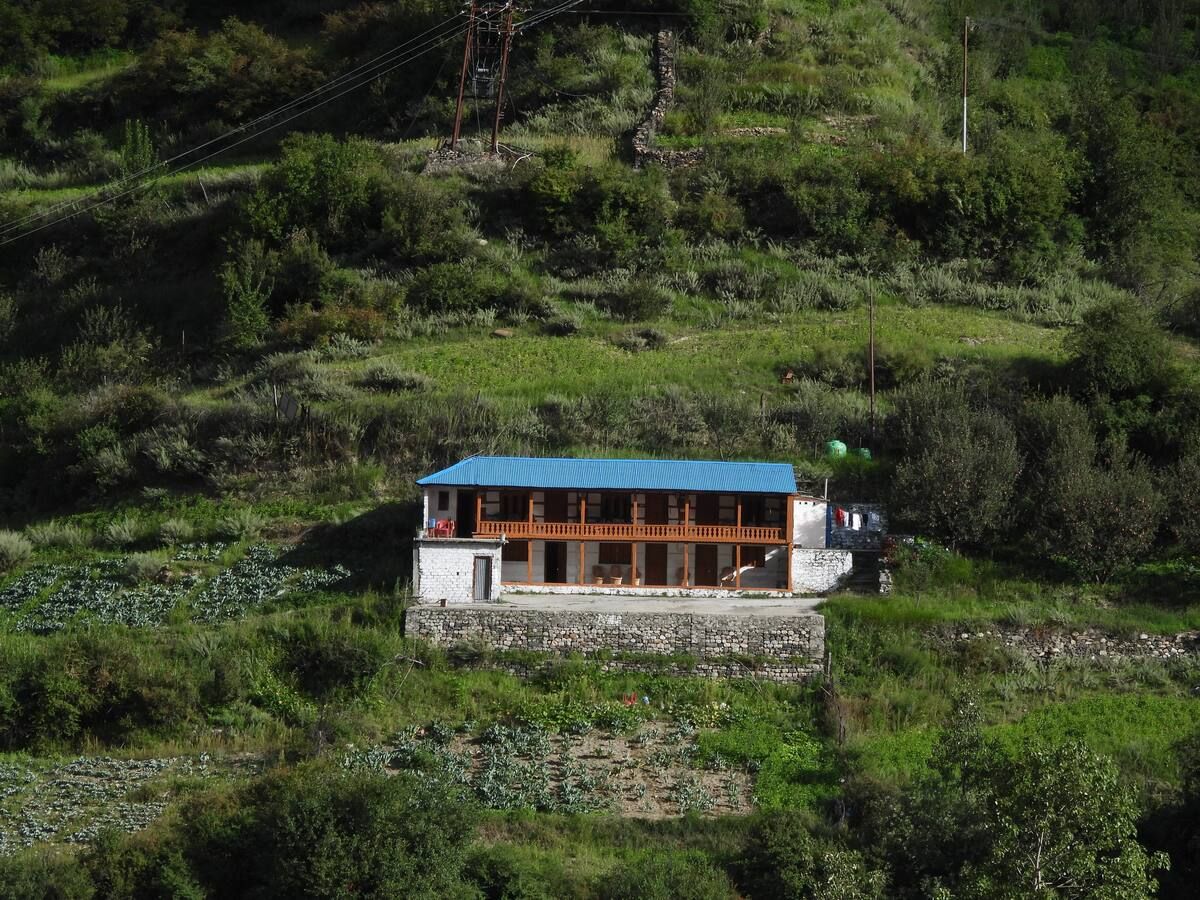
Because Mukhwa is a small residential village, accommodation options within the village itself are limited primarily to modest homestays that offer basic amenities and traditional Garhwali home-cooked meals. Staying with a local family provides an immersive window into mountain hospitality and seasonal routines.
For a wider range of stays, travellers usually base themselves in the adjoining Harsil Valley or around Dharali. The area features riverside campsites, wooden cottages, and rustic guest houses set among pine and cedar groves. You can discover comfortable camps, verified homestays, and unique outdoor retreats in and around Harsil on HireACamp to suit your travel style.
Frequently asked questions
Why is Mukhwa Village famous?
Mukhwa is famous as the winter abode of Goddess Ganga. When the Gangotri Temple closes due to heavy snow in winter, the sacred idol is brought down to Mukhwa, where daily worship continues until spring.
How far is Mukhwa from Harsil?
Mukhwa is located roughly one kilometre from Harsil, situated on the opposite slope across the river, and can be reached via a short walk from the nearby crossing points.
Can I visit Mukhwa during the winter months?
Yes, Mukhwa is accessible during winter, and this is the specific time when the winter shrine of Goddess Ganga is active. Travellers should carry heavy woollens and thermal clothing, as temperatures often drop below freezing.
What is the traditional architecture seen in Mukhwa?
The village features classic Garhwali vernacular architecture, characterized by multi-storey houses built using local slate, stone, and intricately carved deodar timber designed to withstand severe alpine winters.
Is a permit required to visit Mukhwa Village?
No special inner-line permit is required to visit Mukhwa Village or the temple itself, though travellers planning to trek into the nearby Gangotri National Park further up the valley must arrange park permits locally.
Where you'll be
Mukhwa, Bhatwari · 1 stay nearby shown with prices
Stays near Mukhwa Village
Book a place to stay close by
More places near Mukhwa Village
Within 20 km


Built from 0 Instagram posts by 0 creators. Every tip links back to the post it came from, and where creators disagree we show both sides.






