
Amarnath Temple
Temple near Baltal, Ladakh
9.7 km from Baltal
The nearest town, for stays, food and fuel.
Amarnath Temple is one of the most revered mountain shrines in India, nestled inside a high-altitude natural cave amidst the Greater Himalayas. Famous for the naturally forming ice lingam that waxes and wanes with the phases of the moon, it draws hundreds of thousands of pilgrims each summer. The rugged journey through dramatic gorges, snowmelt streams, and alpine passes makes visiting the temple both a spiritual pilgrimage and an extraordinary high-altitude expedition.
Getting there
By road
- From BaltalNearest town1 hr 20 min · 10 km
Typical drive times without traffic. Stations and airports from OLA Maps; distances and typical drive times from OpenStreetMap (© OpenStreetMap contributors); notes from creators' Reels.
About Amarnath Temple
Written with AI from map data and general knowledge. Check prices and timings locally before you go.
The Significance of Amarnath Temple
Amarnath Temple sits in an ancient natural cave at an altitude of approximately 3,888 metres above sea level, surrounded by glaciers and snowy mountain peaks. In Hindu tradition, this secluded mountain cavern is believed to be the sacred spot where Lord Shiva revealed the secret of immortality and cosmic creation, known as the Amar Katha, to Goddess Parvati. According to the legend, Shiva left behind all his worldly companions and earthly elements along the trek route to ensure complete secrecy, giving names and religious significance to numerous stopping points that pilgrims still traverse today.
The primary draw inside the cavern is the naturally occurring ice stalagmite, known as the ice lingam. Water trickles down from the cave ceiling during late spring and early summer, freezing solid as it touches the floor to create tall, gleaming column formations. Along with the main central formation, smaller ice pillars traditionally representing Parvati and Ganesha also take shape. The visual grandeur of the ice formation against the dark cave walls has inspired awe among devotees and mountain wayfarers for centuries.
The Landscape and Natural Setting
The terrain surrounding Amarnath Temple is raw, dramatic, and intensely mountainous. Located in a high glacial valley flanked by rugged peaks, including the formidable Amarnath Peak just a couple of kilometres away, the cave overlooks narrow valleys carved by meltwater and ancient ice sheets. The air is crisp and thin, and barren scree slopes give way to vast fields of snow and patches of alpine meadow.
Weather conditions here are notoriously fickle. Even during midsummer, clear sunny skies can transform within minutes into dense cloud cover accompanied by bone-chilling winds, sleet, or unseasonal snowfall. The fragile landscape is bordered by high glaciers such as the Kolahoi Glacier and the Hoksar Glacier, which feed pristine glacial streams that run down into the lower valleys. This high-altitude Himalayan wilderness creates an environment of stark, unforgiving beauty that requires patience and respect from everyone who enters.
Read more
Trekking Routes to Amarnath Temple
Travellers and pilgrims generally access Amarnath Temple via two established high-altitude trekking routes: the traditional Pahalgam route and the shorter, steeper Baltal route. Both offer distinct challenges and landscapes, winding through dramatic mountain terrain.
The traditional Pahalgam route is longer and unfolds over several days. It meanders past deep pine forests, along the roaring waters of the Lidder River, and climbs progressively through high alpine meadows. Along this path, walkers encounter sacred halting places such as Chandanwari, Pissu Top, and the breathtaking high-altitude waters of Sheshnag Lake, before crossing the windswept Mahagunas Pass toward Panchtarni. This route allows better gradual acclimatisation to the thin air, though it demands sustained physical stamina across multi-day walking.
The alternative route starting near Baltal is considerably shorter, allowing fit hikers to make the journey to the cave and return to the valley in a single day. However, this path is steep, narrow, and cuts directly across precipitous cliff faces. It ascends rapidly, offering little time to acclimatise, making it a rigorous test of endurance. Both routes converge near Sangam before the final staircase ascent to the cave entrance.
Best Time to Visit Amarnath Temple
Amarnath Temple is accessible to visitors for only a short window each year, typically between late June or July and August. During the rest of the year, the cave and its surrounding valleys remain buried under deep snow drifts, making access virtually impossible and highly dangerous.
Even during the short open window, the mountain environment requires careful preparation. July generally offers warmer daytime temperatures, though early monsoon showers can cause slippery paths and occasional landslides along the approaches. August tends to have slightly more settled mornings, but nights remain very cold, with temperatures frequently dropping near or below freezing. The ice stalagmite inside the cave also changes over the course of the season, typically reaching its largest size early in summer and gradually melting as the weeks progress. Travellers should always monitor local weather updates closely before embarking on the ascent.
Tips for Your Visit to Amarnath Temple
Preparing for a trip to Amarnath Temple requires thoughtful physical training and proper gear. The high altitude means that oxygen levels are noticeably lower, so spending a couple of days acclimatising at lower base camps before attempting the climb is crucial to reducing the risk of altitude sickness. Drink plenty of water along the way, walk at a steady, unhurried pace, and listen carefully to your body.
Sturdy, broken-in trekking boots with excellent grip are indispensable, as paths are composed of loose shale, wet mud, and packed snow. Dressing in multiple layers is essential: start with moisture-wicking thermal innerwear, add an insulating fleece or down jacket, and carry a windproof and waterproof outer shell. Carry essentials such as high-energy snacks, sun protection, a personal first-aid kit, a headlamp, and warm gloves. Official registrations and medical certificates are generally mandated for the pilgrimage, so make sure to check local administrative procedures well in advance.
Places to Explore Nearby
The valleys and ridges around the Amarnath region contain some of the most striking natural landscapes in the northern mountains. Sheshnag Lake, situated along the traditional trail, is an emerald-hued alpine lake ringed by snowy ridges, while other secluded tarns like Har Nag, Sona Sar, and Doda Sar reward dedicated trekkers with pristine wilderness.
Further west lie the majestic Kolahoi Peak and Kolahoi Glacier, the primary source of the turquoise Lidder River, whose banks offer tranquil rest spots lower down in the valley. High-altitude meadows such as Mini Switzerland near Baisaran provide rolling pastures framed by dense fir forests. Closer to settled foothill settlements, shrines such as Gauri Shankar Mandir offer serene cultural stops where travellers can unwind after returning from the high passes.
Where to Stay Near Amarnath Temple
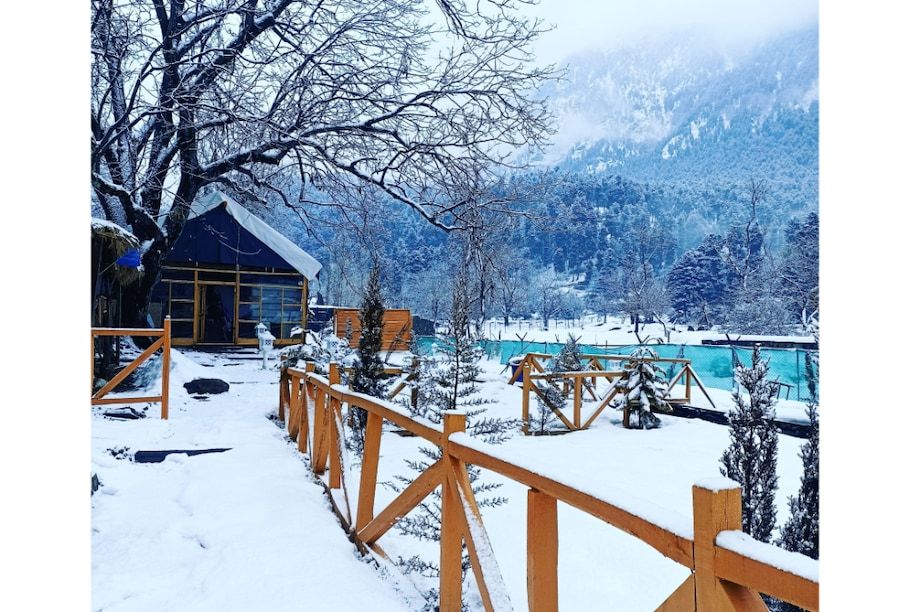
Because permanent constructions are not feasible at the cave itself due to environmental and weather factors, overnight accommodation directly near the shrine is limited to temporary high-altitude tented camps set up during the visiting window. These camps provide basic shelter with warm blankets and shared facilities at key halts such as Baltal, Nunwan near Pahalgam, Sheshnag, and Panchtarni.
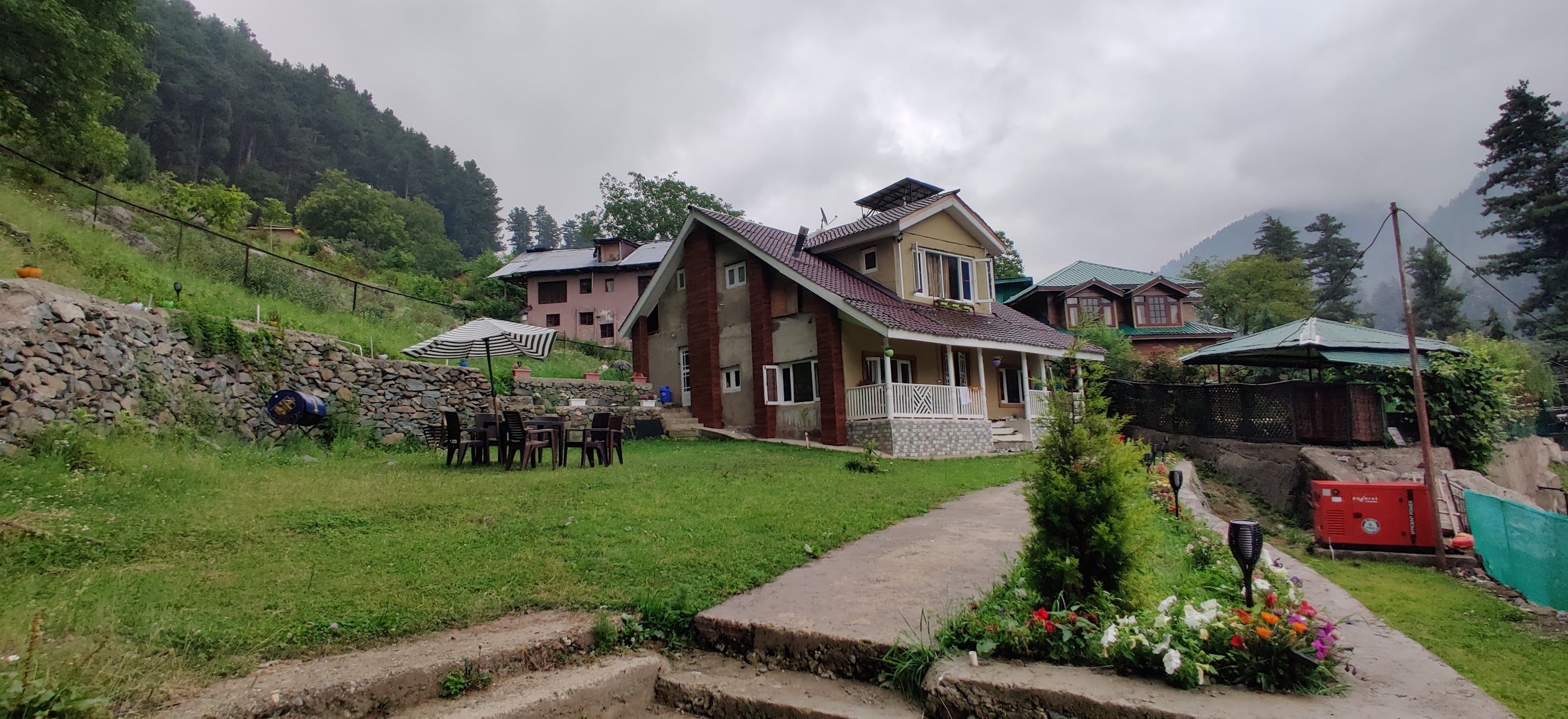
For travellers seeking comfortable homestays, nature retreats, or peaceful riverside camps before and after their mountain ascent, the wider valley hubs offer a range of scenic choices. You can explore and book verified experiential stays and camping sites across the region on HireACamp, giving you a relaxing base to recover after the strenuous mountain journey.
Frequently asked questions
What is the best time of year to visit Amarnath Temple?
The temple is accessible only during the summer window, typically between late June or July and August. Outside of this brief period, heavy snow makes the route completely impassable.
Which route to Amarnath Temple is easier?
The traditional Pahalgam route is longer and takes multiple days, but it offers a gentler climb that helps with altitude acclimatisation. The Baltal route is much shorter and can be done in a day, but it is steep, strenuous, and more demanding on the knees.
How physically fit do I need to be for the Amarnath trek?
A high level of cardiovascular fitness and endurance is essential, as the trek involves steep climbs above 3,500 metres in unpredictable mountain weather. Regular walking, jogging, and stair climbing in the weeks prior to the trip are strongly recommended.
Where can I stay during the Amarnath journey?
Temporary tented settlements operate along the trekking path during the season at points like Baltal and Panchtarni. For homestays, cottages, and scenic outdoor campsites in base towns before or after the trek, you can find and book options on HireACamp.
Where you'll be
Srinagar · 2 stays nearby shown with prices
Stays near Amarnath Temple
Book a place to stay close by
More places near Amarnath Temple
Within 20 km
Built from 0 Instagram posts by 0 creators. Every tip links back to the post it came from, and where creators disagree we show both sides.






